Feeds:
Posts
Comments

Archive for December, 2011

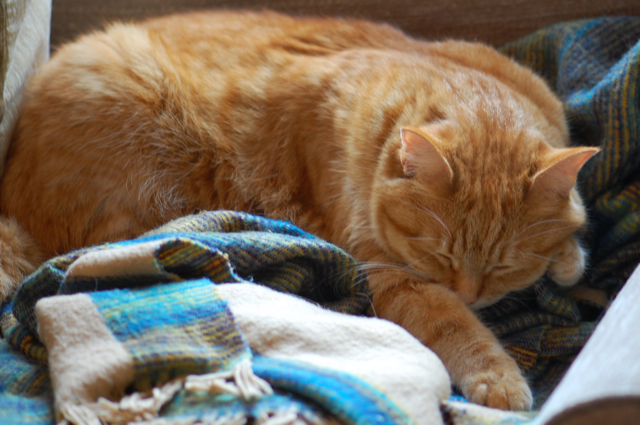
Humans often have a very different idea from we Zen Kitties as to what constitutes success. They like to accumulate – possessions, trophies, medals, accolades, money, titles and so on and so on – where as we like to experience the wonder of each moment as it arises without any attachment or expectation (except of course, where biscuits are concerned.)

By human standards you might consider my life something of a failure. After all, I achieve little in the material sense and I am still that chubby ginger kitten with a bad leg who, once upon a time, nobody wanted. But I enjoy my life as a rich tapestry of experiences and few could claim to be as adored as I am now.

In fact, I consider myself to be the greatest success of all and perhaps you could also begin to think of yourself as such, no matter what anyone else might say.

“Just stop for a moment and turn your attention to life–whether it’s a good life, a bad life, a successful life, or a failure of a life. Life… Just the wonder of that can obliterate all of the dishonoring of it in an instant. In this instant.”   Ganga-ji

Wishing you all a splendidly, successfully open and present New Year!

Read Full Post »

Firstly, apologies for not having posted the final cream recipe yet, I ran out of time before Christmas and have been having a little holiday from the computer so it will be with you in the New Year instead.

However as 2011 draws to a close, I would like to take a few moments to look back over the Hawthorn trees which I have been observing throughout the year as part of The Tree Year project. Inspired by the UN’s announcement that 2011 would be the International Year of Forests it encouraged people to pick a tree to observe closely for one year and record some of their findings in whatever way seemed appropriate to them.

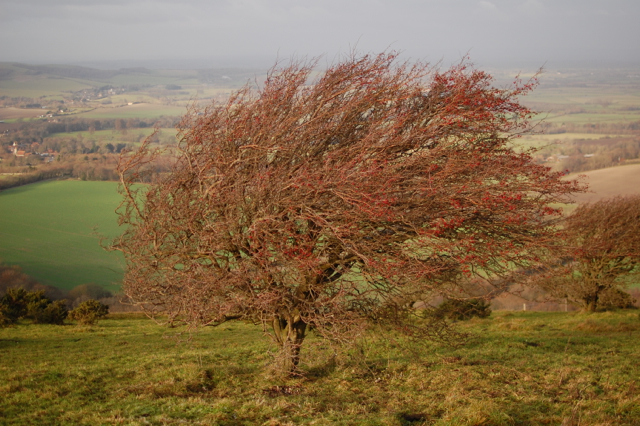
I followed these trees which sit atop the Sussex Downs from Winter to Summer and back again, observing not only their individual transformations, but the way they have been shaped by their landscape and by the myriad influences of humans and nature.

For many years I have appreciated the Hawthorn as a fantastic source of medicine and food, not just for humans but for wildlife as well. This project gave me the opportunity to learn more about some of its other facets however and the more I learnt, the more I appreciated its story as that of a true survivor. It thrives in many environments, from cities and gardens to woodland edges, hedgerows and open grassland and it flourishes where other trees could not. The Downs themselves would once have been covered in woodland in all but the most exposed sites but centuries of animal grazing have ensured the trees have not returned. Only the hardiest survive atop these windswept and rain blasted escarpments with their shallow, chalky soil. And they are mainly gorse and hawthorn.

Sheep grazing the Downs prevent the return of natural woodland in more sheltered spots.

Here in the UK, the eighteenth and nineteenth centuries saw the privatisation of huge amounts of open fields and common land and the removal of  access rights of local people through the Enclosure Acts. This saw the planting of miles of Hawthorn hedging throughout the country as hawthorn grows quickly and densely and has sharp thorns – the perfect way to keep people out. This rapid growth gave rise to one of Hawthorn’s old common names, Quickthorn. I often think that perhaps one of the only good things to come out of such a travesty was the Hawthorn hedges which are now such a distinctive and cherished part of our countryside and support such a wide variety of wildlife.

The hawthorn is home to up to 300 different insects and provides food and shelter for many birds. Blackbirds, greenfinches, yellowhammers, robins and wrens all make use of it along with migrant birds like redwings and fieldfares. They spread seed through their droppings making this a mutually beneficial arrangement. Small mammals like voles and wood mice also eat the fallen berries and seek shelter amongst the dense growth of hawthorn branches.

Whilst I love the hedges, Hawthorns are by far the most beautiful when allowed to grow into their full splendour as small trees. They will grow well in most soil types, though they need some sun, as their root system is not too extensive and doesn’t require large amounts of nutrients. They are often seen standing alone on hilltops, each one a unique individual having been shaped by natural forces. In folk mythology it was thought that these lone Hawthorns were inhabited by faeries and Hawthorn is still considered one of the faery trees to this day.

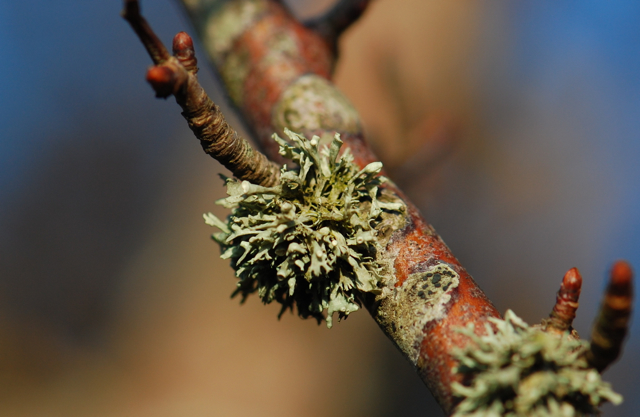
New leaf buds forming in early spring.

It is used as a rootstock for grafting pears and medlars and the wood was apparently one of those preferred by the Druids for making runes. A fascinating fact (which I am sure you will all find very useful) is that some myths claim hawthorn wood to be the best for staking vampires! I wonder if this refers to the long association with qualities of protection, part of which must come from all the many species it shelters and provides uses for.

Unfurling spring leaves – delicious in salads.

It is a tree that looks beautiful in each of its manifestations throughout the changing seasons. The small buds emerging early in the year give way to tender green leaves which are delicious in salads before they toughen up later in the year.

The blossom has equally fantastic medicinal properties as the berries and the two preparations are often used together by herbalists. You can read my accounts of some of the medicinal benefits of Hawthorn here and here.

Blossom buds.

One of the most beautiful sights of spring.

The blossom can be used to make teas, tinctures, herbal honeys, elixirs, flower remedies or to sprinkle on salads. Some people find the smell offensive but others, including myself, find its sweet headiness quite pleasant.

The oldest Hawthorn in the country is in a village in Norfolk and is thought to be about 700 years old! I would very much like to take a little trip to visit it this coming year. There is said to be one more than twice as old again in France, though apparently this hasn’t been verified.

Summer green glory.

The summer hawthorn is all green fullness and abundance. I often wonder how the leaves stay on in such windy conditions!

After the blossom dies back, small green berries begin to form which ripen into the wonderful red fruits we so associate with late summer and autumn. These can be made into all sorts of delicious syrups and elixirs as well as being used for tinctures and decoctions. You can read about my Hawthorn syrup here.

Early blushing berries.

Autumn harvest for wildlife (including herbalists!)

Hawthorn has a use for every season; food, medicine and wildlife habitat, it also keeps us warm in the winter months as its hard, dense wood burns hot without being too smoky.

The latin name, Crataegus, comes from the Greek word for strong. Whilst this is thought to reflect the qualities of the wood, I suspect it may actually refer to the nature of the tree itself which is resilient, tough, hardy and above all abundant and unfailingly generous.

Like many of the plants we consider weeds and many of our wilier animal friends like crows and foxes, the hawthorn has only survived and flourished in a changing habitat due to its ability to adapt.

I look forward to many more years of knowing, appreciating and working with this remarkable plant.

Read Full Post »

It’s time for the next instalment of our cream making recipes, this one using emulsifying wax.

Emulsifying wax can be made from either vegetable wax or petroleum wax mixed with a detergent, so do ensure that you know which you are getting. I always use the vegetable derived one which is what most herbal suppliers will be selling. It comes as a flaky white solid which melts at fairly low temperatures and helps to thicken and emulsify fats and waters to make a cream. You will see from the recipe that this cream includes a much higher proportion of water compared to the last one I posted about, enabling you to make a cream that is not quite so rich and sinks in easily.

Here in the UK many herbal suppliers sell emulsifying wax including Baldwins here, Neal’s Yard here, Woodland herbs here and Aromantic here. All these will ship internationally but I’m sure most countries will have their own suppliers.

Pros to this cream include that it is simple and potentially quite cheap to make, it doesn’t involve any special equipment, just a few bowls and a whisk, and it is more stable than the cream without emulsifiers which can tend to sweat when exposed to temperature fluctuations.

Cons are that it is not completely natural and can sometimes tend to leave a slight residue behind when massaged into the skin. With this recipe it’s important to use a preservative because it has a high water content and will potentially go off quite quickly.

This recipe will make about about half the quantity of the last one incase you didn’t want to experiment with quite such a large amount.

Ingredients:

Waters:
200ml of spring water, floral water or herbal tea.

Oils and Waxes:
20g emulsifying wax
10g beeswax
50ml herbal infused oil or plain base oil

Extras
2.5ml vitamin E
1 ml essential oils
Preservative of choice according to instructions

Method:
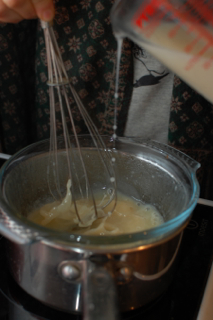
First melt the beeswax and emulsifying wax in a bain marie or double boiler adding the oil and waiting until it is all completely melted. Whilst that is happening place the waters in another pan and heat until fairly hot but not boiling. When both are ready turn the oils off the heat and place the waters in a heat proof jug and begin to pour very slowly into the oil mixture whisking vigorously as you go.

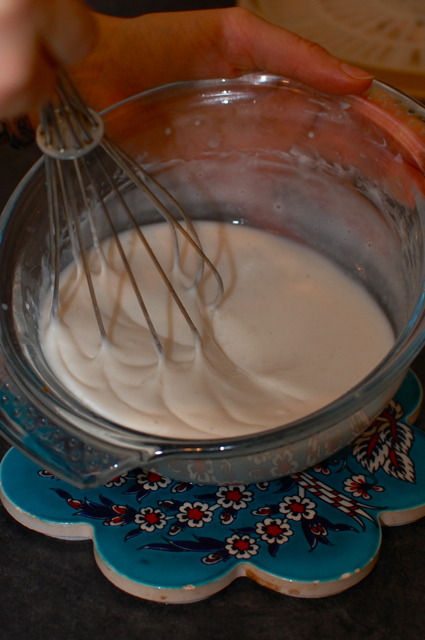
Keep pouring and whisking until all the waters are incorporated into the oils. As they are still hot they will have a thin texture, a bit like milk.

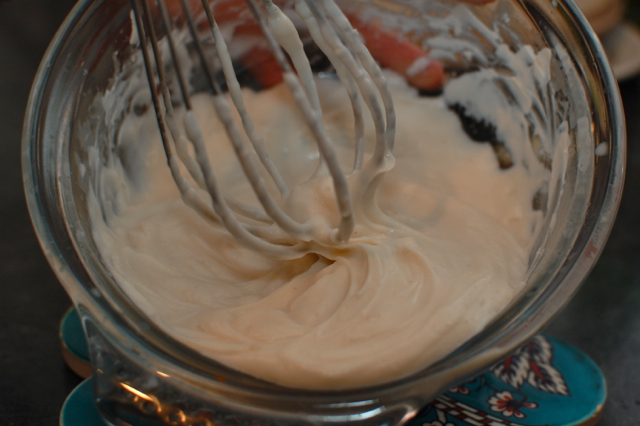
Keep whisking until it starts to thicken, then add in your vitamin E, essential oils and preservatives (I use Preservative Eco sold by Aromantic).

Keep stirring, it should end up fairly firm and deliciously creamy, by which time your arms will be ready to fall off!

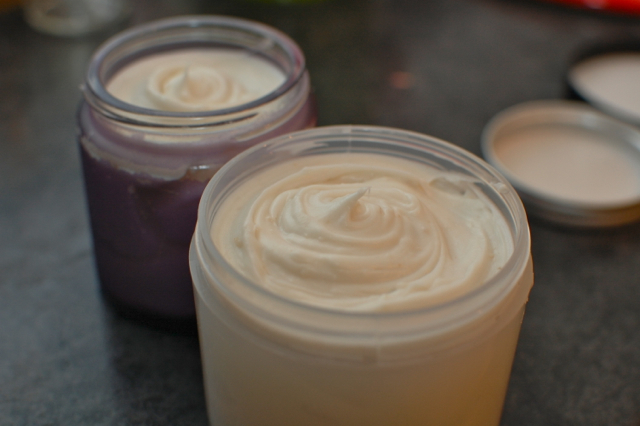
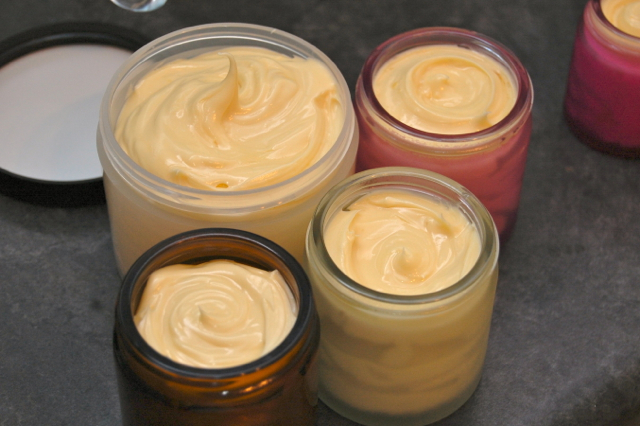
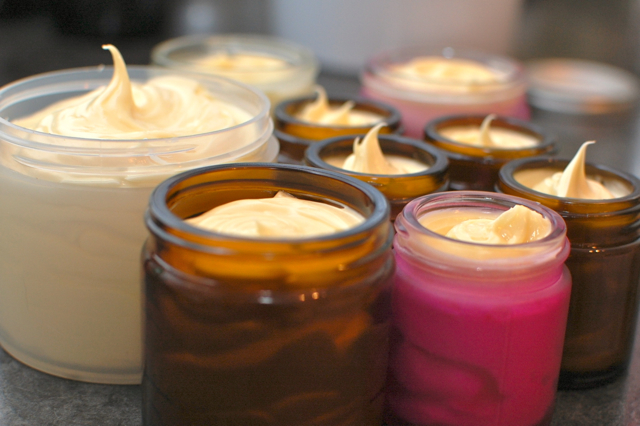
Spoon into jars, swirl the top and that’s all there is to it!


Read Full Post »

This is my absolute favourite cream recipe. It’s rich, it’s luscious, it leaves my skin silky smooth and it can be adapted in numerous ways. Though it has a higher oil content than creams which use emulsifiers and can therefore feel quite oily when applied, my experience is that it sinks in really well when applied to damp skin and doesn’t leave any residue.

In some ways it is the most simple of the recipes and certainly the most natural as it uses no emulsifiers (though the beeswax can help to bind it) and potentially no synthetic preservatives. In other ways it is the most complicated as it requires waters and oils to mix and can take a few tries to get just right, though if you follow these instructions and use good quality ingredients it should turn out well first time.

Other pros include the fact that it is almost edible so fits with that old saying, ‘you shouldn’t put anything on your skin that you wouldn’t put in your mouth.’ The high oil content makes it great for dry skins or skin conditions – it’s the recipe I used to make my calendula and chamomile cream which you can see here and also this wonderfully protective and strengthening hand cream here. You only need to use a tiny amount so it lasts for ages and it has a lovely look and feel to it.

Cons are that it can be more expensive to make than many other creams (which have a high amount of water and only a little infused oil or butters) and it will not last that long if you don’t add a preservative. Also it can be too rich for some people who like very light creams or have oily skins. Finally this recipe requires a fairly decent blender, it doesn’t have to be top of the range but if it’s a very cheap one you may find it hard to keep the motor running for long and have to add small amounts of water at a time, turning the blender off in between which can increase the chances of it separating.

N.B. Being in Europe I do my measurements in grams rather than ounces. I hope that is not a problem for those in the US, there are online conversion charts or if that is confusing let me know and I will attempt to convert it myself for you.

Ingredients: (variations in brackets)

Waters
250ml Herbal infusion or floral water (or 200 ml waters with 50ml aloe vera juice)
1 tsp vegetable glycerine

Oils
175ml herbal infused oil (or plain base oil)
75g Coconut oil (or a mixture of coconut and cacao)
25g beeswax

Extras
5ml vitamin E
2.5ml Essential oil

Method:

Melt your beeswax and butters in a bain marie or double boiler, then add the liquid oils and allow to become completely liquified, like so.

Melted oils in a bain marie

Pour these oils into your blender and allow to cool.

Whilst that is happening mix together the waters. You can use just floral water but the glycerine does add an extra silkiness. Aloe vera is great to add for sensitive skins or use herbal tea cooled to room temperature (make it double strength) for additional therapeutic value.

After a short while, depending how warm your room is, the oils should turn from this…

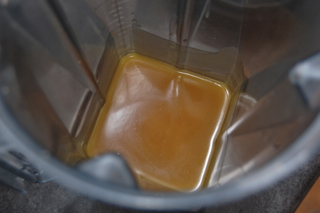
In the bottom of the blender

To this…

Butters and oils starting to cool

Like in the picture below, it will appear to be setting but when you move the jug you see that it is still liquid though much thicker than when you first poured it in. Don’t let it over solidify, though there may be a small amount on the sides that is set. If so just get a small spatula or wooden chopstick and scrape it down – don’t worry if it looks a bit lumpy at this stage.

Opaque but still fluid

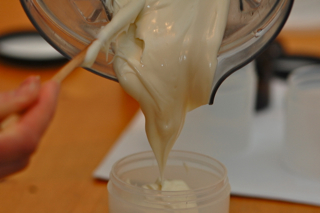
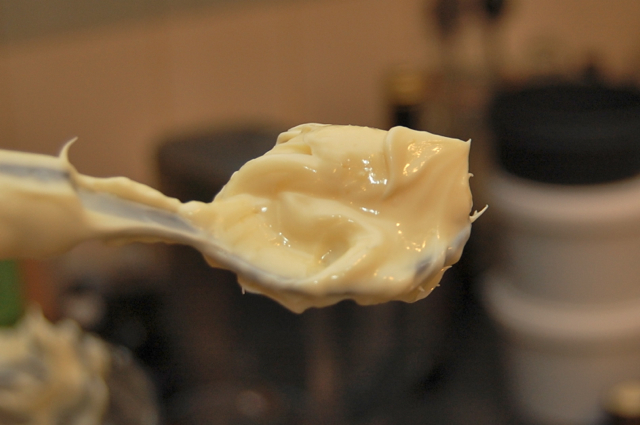
Now turn the blender on to a lowish speed and start to pour the waters in in a slow trickle. If the blender gets stuck turn it off, scrap the sides down with a spatula and turn it back on again adding a bit more of the water part at a time till the full amount is incorporated. After which the cream should look like this.

Mix in the vitamin E and essential oils of choice by hand and pour into suitable jars.

Thick but just about pourable!

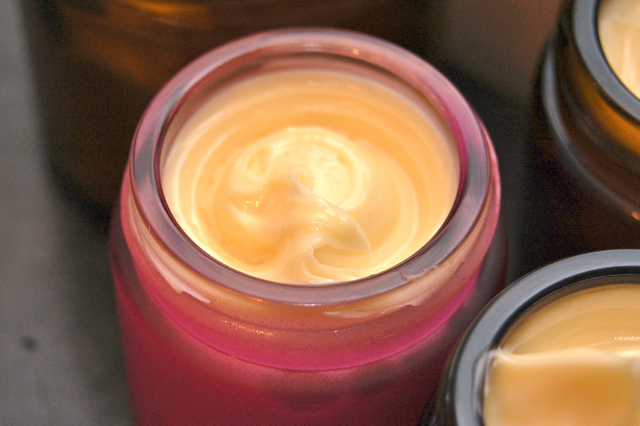
Spoon the last bits in then use a chopstick to swirl the top so it looks like the icing on a cupcake.

Almost edible!

This recipe contains no preservatives but if you would like it to last longer than a month you will need to add one. As it has a higher oil to water ratio compared to most creams it will last much longer however the inclusion of any water in a recipe makes it susceptible to bacteria. If you live in a warmer climate it would be advisable to store it in the fridge. I have never had mine go off and I’ve kept jars for a few months but I live in a cool climate. Also it is good to be aware that creams can be going off before they show visible signs of doing so.

You would need to add add a synthetic preservative if you wanted to ensure your creams lasted longer or were planning on selling them. (See part I of this series for more information on preservatives.) I would say if you are just making them for gifts, then keep them lovely and all natural but be sure to use them up quickly.

Read Full Post »

With the weather staying mild so late this year, Christmas has snuck up on me before I am ready for it and I realise now, with just three weeks to go, that it’s time to get into action.

Since beginning this blog, the topic I have been questioned about more than any other is how to make creams. Unlike simple salves and balms  cream making can be notoriously tricky as it requires mixing together oils and waters which naturally want to separate. There are a number of ways to achieve a nice cream with a good consistency and, over the next couple of weeks, I’ll be posting the main recipes I have used, hopefully in time for you to make some for your own Christmas presents too.
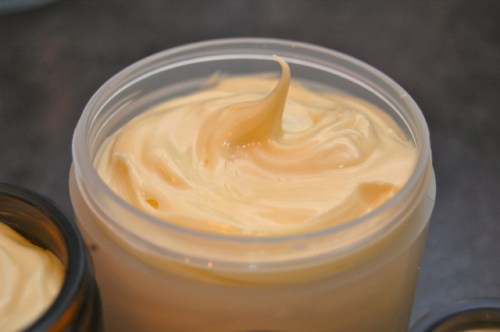
In this post I want to introduce some of the ingredients which can be used in cream making to enable you to adapt the recipes more to your own specifications. There are so many different base oils, herbs, essential oils etc. that its impossible to cover them all here, but I’ll include the main ones I have found useful after much experimentation. If you have any questions or want anything clarifying then do ask in the comments section and I will try to answer if I am able.

The three recipes I will post are:
A simple cream involving no emulsifier – my own variation on Rosemary Gladstar’s classic.
A cream using emulsifying wax – as seems to be most popular in herbal recipe books.
A cream with VE and MF emulsifiers – as used by many UK herbalists and popularised by Aromatic in their courses.

In my experience, different recipes work better for different people. I’m a firm fan of the first but others I have met prefer to use emulsifying wax. It’s all down to personal preference as some like a richer cream whilst others like something lighter with a higher water content. If your cream is for therapeutic use then you need to consider whether the condition you are treating is dry, flaky and in need of protection, in which case a richer cream with a higher oil content is preferable, or whether it is red, itchy, weeping  and hot, in which case a lighter cream with a higher water content and cooling, astringent oils will have better results.

Ingredients used in Creams include the following:

Base oils and herbal infused oils – Base oils are usually vegetable oils, pressed from nuts, seeds, kernels and other fatty parts of fruits and vegetables. Things to be aware of when choosing base oils include the consistency and smell. Some oils are rich and moisturising and good for drier skins like avocado, hemp, macadamia, argan and rosehip. Often you would only use these in a smaller percentage along with a lighter oil like almond or apricot. Oils like rosehip, hemp and macadamia can have quite a strong aroma, especially if they’re high quality and unrefined so factor this into your recipe and don’t use too much. Lighter oils that are good for oiler skins include hazelnut, grapeseed and jojoba. Sensitive skins respond well to apricot oil. As this topic is something of a vast one, I will dedicate a post to exploring some different base oils in further detail soon. Be aware that some wonderfully nutritious skin oils like borage and evening primrose have a very short shelf life, around 6 months, so ensure you get them from a good supplier and store them in the fridge. Never buy oils that smell rancid and be aware of using nut oils on those with allergies. Herbal infused oils are simply vegetable oils infused with herbs. You can read my post on how to make them here.

Solid oils and butters – These include cacao butter, coconut oil, avocado butter, mango butter and shea butter and they are rich and moisturising as well as adding body to a cream. For a lighter effect which sinks in to the skin easily use coconut, or for a rich, nourishing hand cream opt for shea. Cacao is nice in both body and face creams and, if you get it food grade, it lends a delicious chocolatey aroma to your finished product.  Somewhere between a liquid oil and beeswax or plant waxes in consistency, fats will partly absorb into the skin but will leave something of a protective film behind.

Beeswax and plant waxes – These thicken and add body to creams and also help a little with emulsification. They are not well absorbed into the skin creating a protective barrier that helps it maintain its own moisture and keeps it hydrated, especially during these wintery months with their high winds.

Waters – These include spring water, floral waters, herbal teas and aloe vera. You can vary them endlessly to suit your purpose. If you are making a plain base cream try using just spring water or if it’s a luxury face cream then use rose floral water. If you want a soothing cream with anti-inflammatory properties then try a strong tea of chamomile and calendula.

Vegetable Glycerine – Glycerine is a sweet, syrupy, clear liquid that helps draw moisture to the surface of the skin. In very dry climates it can apparently take the moisture from deeper layers of skin so best to avoid using it, but if you live in the damp UK, it can be a nice addition and improve the consistency of your creams.

Tinctures – A small proportion of a suitable herbal tincture will add therapeutic value as well as helping to preserve your cream. Try calendula in a soothing cream, comfrey in a bruise healing cream or yarrow in an anti-inflammatory cream. Do beware though that alcohol can irritate sensitive skins.

Essential Oils – The volatile oil content of the plant is distilled, pressed or extracted with solvents leaving a highly concentrated and powerfully aromatic liquid that can be used for strong therapeutic benefits or simply to make the product smell delicious.

Emulsifiers – These help the water and oil parts of a cream to mix and leave a homogenous finish. Common ones include emulsifying wax, vegetal and VE/MF emulsifiers all derived from vegetable sources, albeit after some intense processing! Another commonly used and readily available emulsifier is borax, though I have heard mixed reports of its safety and prefer not to use it myself.

Vitamins and minerals – These can be added to creams and usually come as a powder or in liquid form. Vitamins A, C and E are the ones most commonly used as they are good anti-oxidants and can help prevent oils going rancid.  Sometimes minerals like zinc are added to sun creams to create a barrier against the suns rays.

Natural preservatives – These include rosemary extract and grapeseed extract. Both are powerful anti-oxidants that can increase the shelf life of creams. They have some anti-bacterial action but most agree it is not powerful enough for products sold commercially. Grapefruit seed extract is more powerfully anti-microbial but there is much evidence out there that suggests it is harmful so I suggest reading the research yourself before using it.

Synthetic preservatives – Creams are much like food. If you plan to use them quickly (how quickly will depend on the recipe) and keep them cool then you have no need to go down this route but if you are planning to keep them for longer than a few weeks or if you wish to sell them you will need to add a synthetic preservative which will protect against moulds, yeasts, bacteria etc. Though there is conflicting evidence as to whether all types of parabens are carcinogenic, I personally avoid them altogether. Some of the safest ones seem to be Preservative 12 and Preservative Eco, both sold by Aromantic. I often avoid using these where possible but for creams with a high water content they are always necessary.

I will post the first recipe in the next couple of days so check back soon.
Read Full Post »