Feeds:
Posts
Comments

Archive for August, 2011

The snow goose need not bathe to make itself white.
Neither need you do anything but be yourself.
Lao-Tse

One of the many things we Zen Kitties have mastered is the simplest act of being ourselves. Whilst humans spend a vast amount of time and energy creating a persona that they call ‘themselves’ and continually affirming it, making it better, berating its faults or comparing it to the personas of others, we put our efforts into being exactly as we are. Which in fact, amounts to very little effort at all.

If you happen to have some time on your hands today I suggest you stop using it to create a character that doesn’t really exist anyway and spend it embracing yourself as the open awareness you really are. Then, however you appear, you will be a reflection of truth.

Life will be infinitely more interesting as a result.

Read Full Post »

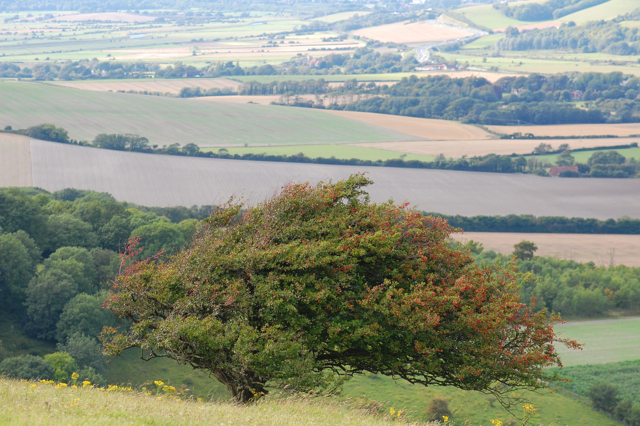
It’s been a while since I posted about the beautiful Hawthorns that I have been observing as part of the Tree of the Year project. They sit atop the Downs, relentlessly battered by wind and rain, and as a result they differ from many of the other Hawthorns in this area. With everything being early this year, most of the trees already had bright red berries at the beginning of August, not quite ready for harvest, but not far off. On these trees however, the berries were still small and green, reflecting how the harshness of their environment affects their development.

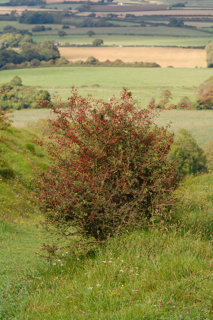
Nearly a month on they are reddening up nicely and the trees from a distance have that exquisite blush which tells you autumn is around the corner.

There is no doubt that the constant high winds we have had all summer have taken their toll. The trees look less healthy than this time last year with many of the leaves browning and some branches swept almost bare. Like people whose lives have been filled with hardship, they are weathered and worn.

It’s interesting to observe how bare of berries the side of the trees that faces the wind is compared to the relatively more sheltered branches.

I feel these trees teach me a lot about resilience, tenacity and strength and about adaptability in the face of hardship. They speak of the beauty of form and motion and of holding fast to this living edge of surrender. Perhaps most importantly they show that, in spite of difficulties, it is still possible to give generously.

Elsewhere on the Downs other Hawthorns tell their stories, each as unique as snowflakes.

I loved this one, entangled with the wild rose like lovers.

And everywhere the berries are fat and red and perfect. I’ll be out next week to get the first harvest in. Who wants pills when your medicine can look like this?

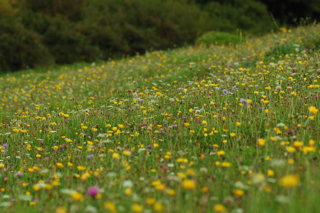
The Downs themselves are carpeted with wild flowers at present.

The yellows and whites of bedstraw, yarrow, burnet saxifrage and cat’s-ears mix with the mauves and purples of two of my favourite wild flowers;

Small Scabious

and Round-headed Rampion.

Whilst lone stalks of agrimony wave in the breeze.

Read Full Post »

Poultices and compresses are very useful ways to utilise herbs for ailments both external and internal. They are not much used in today’s herbal medicine, primarily because they are a little more time consuming and potentially messy than bottles of tincture, teas or capsules and unfortunately, most of us in today’s world are always in a rush.

Still, they can be powerful aids to healing and are well worth having a play with for conditions as diverse as skin rashes, constipation, wounds, sprains, IBS and respiratory problems.

Compresses and poultices are both external applications that involve placing a herbal preparation over the affected part of the body to enable the healing constituents of the herb to absorb into the tissue. The difference between them is only that poultices use whole plant material, either fresh or dried, and compresses use a liquid preparation of the herb, such as a tea. I prefer to use compresses for aches and pains, digestive issues and headaches and poultices for skin irritations, minor wounds and burns. I find both to be helpful for respiratory problems.

Compresses:

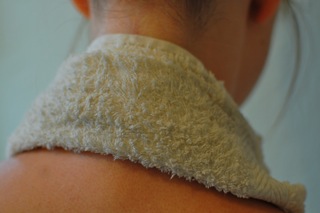
Compresses involve soaking a cloth or flannel in a liquid herbal preparation such as a tea, diluted tincture or an oil, wringing it out well, then placing over the body. They are usually applied warm but can also be used cold in cases of swelling, inflammation etc. For ease they can be wrapped in cling film to keep in place and avoid staining clothes, sofas, beds etc. In cases where a deeply warming action is needed, a towel and a hot water bottle can then be placed on top. They would usually be left in place for about 10 minutes and sometimes repeated with fresh liquid once or several times.

Compresses are particularly useful where heat or cold are appropriate as it is easy to warm up or cool down liquids to a suitable temperature. Here are some ideas for using compresses at home.

  • A compress of strong lavender tea can be useful at the onset of a headache. You can apply it warm to the base of the neck if muscular tension is a contributing factor or chilled across the forehead if the headache feels hot and throbbing.
  • A compress of hot thyme tea is useful laid over the lung area for coughs, colds and other respiratory problems where there is phlegm and congestion.
  • A chamomile tea compress on the stomach may soothe nervous digestion. If the digestion is sluggish, nervous or constricted it is particularly nice to apply alternating compresses of hot and cold chamomile tea across the abdomen to increase circulation and stimulate vital force. Make the tea and keep half in a flask so it stays hot, then chill the other half in the fridge. When it has chilled completely soak a flannel in the hot tea (it should be as warm is as is completely comfortable, be careful not to apply anything too hot to the skin) and apply to the abdomen for 1 minute, then soak another cloth in the cold liquid, remove the hot and apply the cold for another minute. Alternate between hot and cold 5 times each, beginning with hot and ending on cold.
  • Alternating hot and cold compresses are also particularly useful for sprains to speed healing and repair. Herbs such as elder leaf, ginger, comfrey or horsetail could be of use here.
  • Warm compresses of ginger tea can be useful to strengthen kidney function if laid over the lower back. Don’t do this if you are suffering from a kidney infection, though it can help to prevent them if used at other times.
  • Castor oil packs. Many people have heard of castor oil packs for easing congestion and I find them very useful in practice if people have the time and inclination to do them. They are useful for easing period pains, liver stagnation and constipation when applied over the abdominal region. To do a castor oil pack you need to warm about two tablespoons of castor oil very gently in a pan then pour onto a clean, slightly damp, warm flannel. Check carefully not to overheat it as you most definitely don’t want to be applying too hot oil directly on to your skin. It should be nice and warm but quite comfortable on the skin. Apply the flannel (oil side against the skin) over the abdominal area either centrally or slightly to the right over the liver area. Wrap with cling film and cover with a towel and hot water bottle. Lie down and relax for at least an hour before removing and washing off the oil.
  • Rose water and apple cider vinegar, or rose infused cider vinegar diluted in water, can be used as a compress for sunburn. Aloe vera juice is also lovely applied cool on a soft cloth.
  • In the absence of fresh plant material a compress can be used in place of a poultice such as a cool calendula tea for rashes or some plantain or yarrow tincture for minor wounds.
A good rule with compresses and poultices is that if it feels uncomfortable then remove it immediately. Anything that is too hot or causing irritation or itching is best removed and allowed to cool or discarded.
You can also make compresses with a few drops of essential oil dispersed in warm or cold water in place of teas or tinctures.

Poultices:

Poultices use whole herbs, usually mashed up into a paste and applied onto the problem area. The simplest form of poultice is the spit poultice, made my chewing up a bit of herb and applying to the skin. Plantain can be applied this way to stings and minor wounds and yarrow is great for staunching bleeding if you cut yourself whilst out walking and need a spot of first aid. A plantain poultice is also useful for drawing out splinters and boils. You can also mash the herbs with a little water and honey in a pestle and mortar or blend then down and apply directly to the site. You can also grate the plant material, as with ginger or potato which was used traditionally as a poultice for boils. If using spicy herbs such as ginger and mustard, you need to put several layers of fine muslin cloth between them and your skin to prevent irritation. Maurice Messegue, the French herbalist who was famous for his many cures, often used only external preparations such as foot and hand baths and poultices. He writes, “the herbs can be placed in a bag of finely woven cloth before being placed on the area to be treated. Which one of these methods is chosen depends on how strong the active elements in the plant are. If it is a gently acting herb, such as cabbage, there need be no hesitation in letting it come in contact with the skin. But if it is irritant or acid, with a tendency to cause redness, then it needs a brake on its action and the skin should be protected by a cloth. This precaution must always be taken with the true revulsives such as mustard.”

If I am at home I often use dried herbs in powder form to make a poultice as this is straightforward, not too messy and can be done all year round even if there is no fresh plant material available. I mix my herbs with an equal part slippery elm powder which is healing, demulcent and drawing in its own right, then add a little warm water and honey (preferably herbal infused honey if I have some to hand) and mix into a thick paste. I then spread it over the area in question and bandage in place.

Here are some useful poultices that are easy to prepare at home:

  • Cabbage. The cabbage poultice must be one of the most traditional of kitchen remedies around. Used for inflammations and swellings, particularly mastitis, it is very simple to prepare. All you do is iron a few cabbage leaves to warm them up and break them down a bit then wrap them over the offending area and secure in place. Many women with mastitis just wear the leaves inside their bras.
  • Mustard. Another traditional poultice for respiratory problems, make sure the skin does not come into direct contact with the mustard, see above. The onion poultice is another variation often used for respiratory ailments though in truth, I tend to stick to thyme compresses for such issues.
  • Calendula and yarrow. Great as a spit poultice or made into a paste from powdered herbs to treat minor wounds and skin rashes.
  • Comfrey. Well known for its usefulness in speeding the healing of sprains, strains and broken bones, you can mash up the herb and apply directly on the site or, if it is in plaster, just apply to the area above and below the cast.
  • Clay. An effective drawing poultice for splinters and infections, clay packs are popular amongst naturopaths and horse owners!
What are your favourite compresses and poultices?

Read Full Post »

An Abundance of Roses

For the most part I prefer plants as close to their natural state as possible and would always take a wildflower over a showy cultivar any day. Not only are they more beneficial for insects and other wildlife but are also much easier to look after, more robust and better suited to their environment.

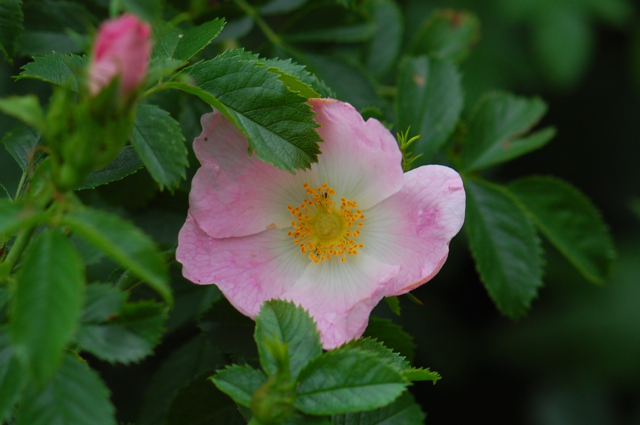
So my obsession with big, beautiful, temperamental and highly scented roses is quite out of character. I don’t love the exquisite wild roses of our hedgerows any less because of it and from them I make a lovely cooling and astringent tincture as well as using the hips later in the year. Our wild roses are not that highly scented however so to make the delicious, sweet, aromatic rose tincture that makes even the iciest of hearts begin to thaw, I really need to use cultivated roses. That’s my excuse anyway.

Wild Rose - Rosa canina

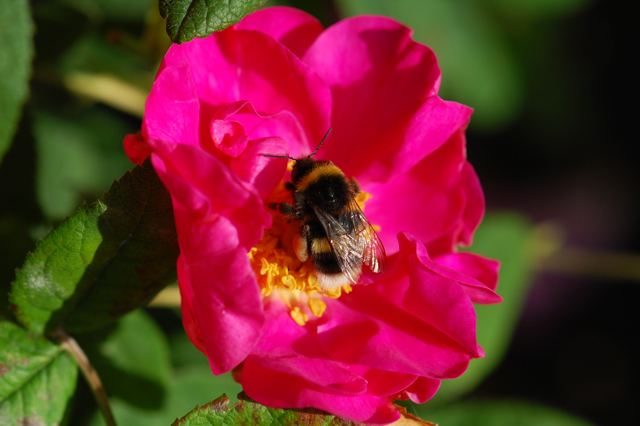
Most people tend to use either Rosa damascena, The Damask Rose, or Rosa gallica, The Apothecary’s Rose, to make aromatic tinctures and both produce some lovely medicines.

 Apothecary’s Rose

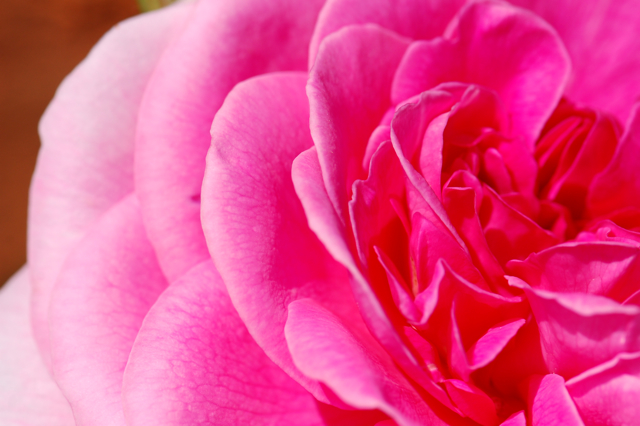
I’ve been quizzing different herbalists for a while about which roses they prefer for tincture making but it was Stephen and Carol Church, whose rose tincture is the most divine I have yet to taste, whose advice and method I have stuck with. They recommended using ‘Gertrude Jekyll’ a lovely pink English rose with a beautiful, strong scent. It apparently has the highest yield of volatile oils of all roses. I bought one last year and have been experimenting this summer with their directions.

Gertrude Jekyll
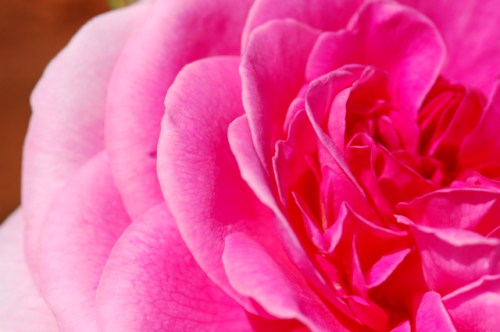
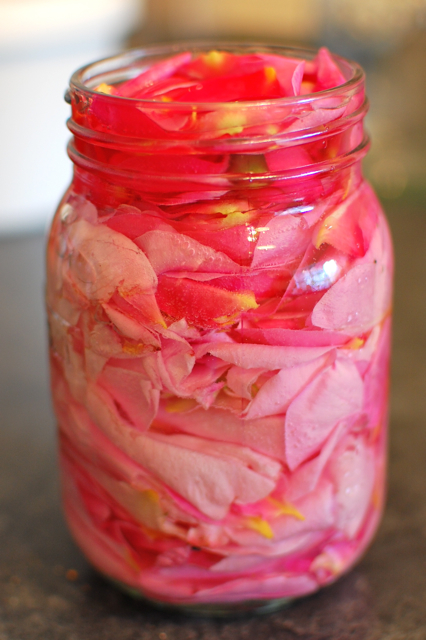
They advise macerating the petals in the alcohol for no more than 24 hours, a much shorter amount of time than usually allowed for tinctures. What this achieves is extraction of the volatile oils but without all the tannins which make rose tincture quite drying. Part of the nature of rose as a medicine is that it is cooling and drying but there are plenty of times when I want to work with the aromatic healing qualities of rose without using a medicine that is overly astringent. Besides, it tastes so much more delicious this way and that, as you know, is a big part of the magic of Rose. In her first growing year, my plant has yet to produce the abundance of flowers that Stephen and Carol’s do so I have just been experimenting with small quantities this summer. To make a specific tincture, that is one from fresh petals, try using a 4o% vodka, 1:2, which means one part rose petals by weight to two parts vodka by volume. Remember that rose petals are very light however so you need to cram a lot in! I actually didn’t have enough flowers blooming all at once to get the right proportion so I double infused it instead and it has still come out nicely.

Here ends the informative part of this post, the rest is just gratuitous rose indulgence. You have been warned!

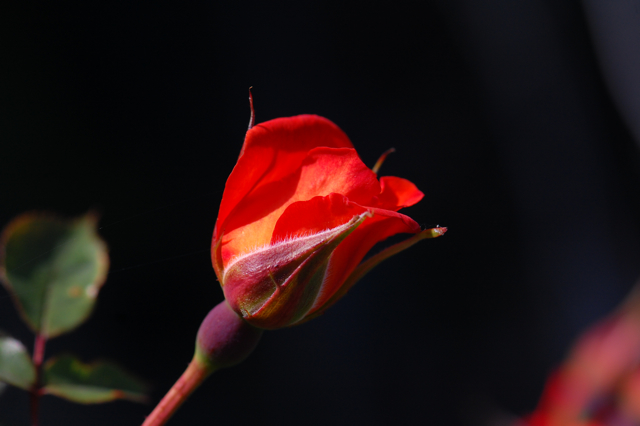
My husband’s favourite rose in the garden and possibly mine, were I to have favourites, is the floribunda Margaret Merril. She has it all, beauty, elegance, scent and attractiveness to insects. She starts as a perfect creamy bud with a blush of pink…

Margaret Merrill

…and opens to form a perfect, white, deliciously scented bloom.

Along with the Apothecary’s Rose and Gertrude Jekyll, I have one more pink rose, ‘Scepter’d Isle’. Though not as sweetly fragranced as some of the others, she has a delicacy of presence that is healing just to look upon. This picture, taken after a heavy rain, does not really do her justice.

Sceptr'd Isle

All three pink roses in a jar.

We have two miniature roses on the kitchen windowsill. The pink one I found in the middle of the road last year without a pot. I always wonder how it could have ended up there, victim of a lovers quarrel perhaps? I was quite happy to give it a home and it is much loved and admired now.

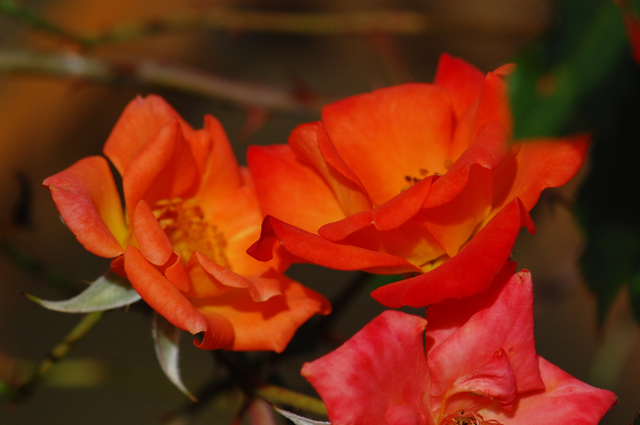
I have also found a passion for orange, yellow and apricot roses this year. I fell in love with ‘Graham Thomas’ during our trip to Mottisfont Abbey, home of the National Collection of Old Roses, and found it impossible to leave without one.

Graham Thomas

‘Lady Emma Hamilton,’ my most recent acquisition, has the cheeriest disposition and the sweetest of scents.
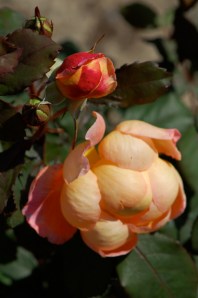
Lady Emma Hamilton

‘Wollerton Old Hall’ is another new addition, a very generous early birthday gift from my lovely colleague and fellow rose obsessor, Laura. Isn’t it just beautiful?
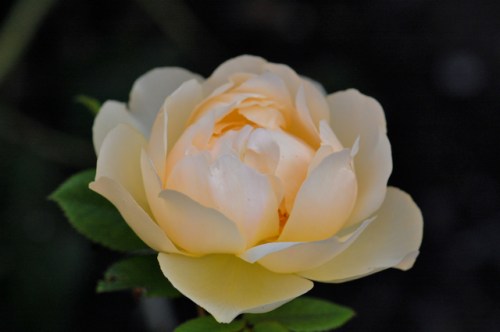
Wollerton Old Hall

And I have shown off my joyful little miniature climber ‘Warm Welcome’ before. Bred by my uncle and given to me by my Dad, its a firm favourite in my garden and is covered with small but wonderfully vibrant blooms.
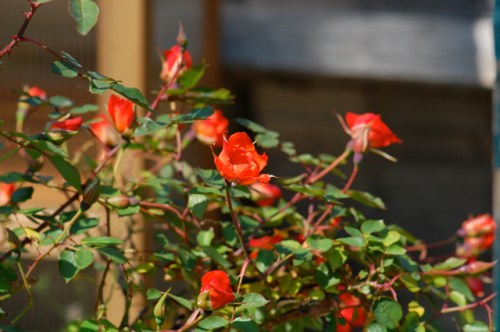
Warm Welcome

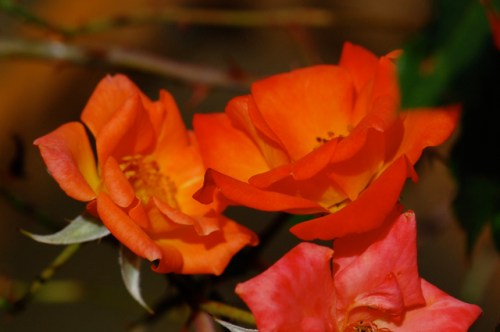
My wish list is ever expanding and includes the gorgeous dark bloomed Rosa gallica ‘Tuscany’, a rambler to cover the ugly old tank by the gate and the lovely ‘Rhapsody in Blue’ which I have much admired at The London College of Physicians gardens. We are in the process of getting rid of our car parking space in order to accommodate them all!

What are your favourite roses? For medicine making or for pure enjoyment?

Read Full Post »

My vision for our small garden is that it will not only provide food and medicine for us but also be a haven for wildlife and other creatures.

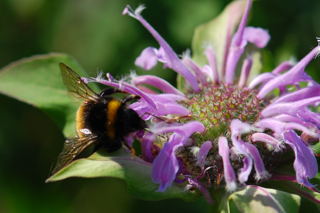
The bees have been very happy here this year and I have seen many fat bumblebees and hoverflies hanging off the hyssop and monardas.

Lavender is nearly over now but every last flower is being made use of. The Apothecaries Rose was also a favourite when it was in flower.

There’s been a whole host of caterpillars, mostly fat and green, and some interesting spiders too. So it was with all these little residents in mind that I decided to add an insect hotel to the quietest area of the garden.

Ok, compared to some grand affairs this is more of an insect caravan but its a start and will hopefully provide a bit of shelter for a few needy wayfarers. If you have space you can make a very large, 5 star affair by stacking pallets full of different materials on top of each other but, if like me, you garden is more ‘bijou’ then you can make more of a boutique bug residence with a wooden box or old drawer filled with pine cones, straw, moss, hollow bamboo canes for solitary bees, bits of wood with holes drilled into them and other such items. Tuck it away into a quiet corner and you’ll be encouraging bio-diversity even in a tiny garden.

There has also been a number of butterflies like this beautiful Comma resting on the echinacea and this poor raggedy old Red Admiral on the nettles. Up on the Downs behind our house I also saw this lovely Chalkhill Blue.

The keen observer will spot other wild beasts lurking amongst the flowers.

We have also been joined recently by four new additions in the form of some highly spirited rescued ex-battery farm chickens. They live in the back garden, well away from my prized salad crops, and have settled into life outside a cage very quickly. We got them through The British Hen Welfare Trust which is a great charity and well worth supporting. They were in a sorry state when they came to us, straight from the battery farm that morning, but already their feathers are growing and they are gaining confidence by the day. For anyone who has hens or is interested in keeping them I would recommend reading this great article by Kym Murden on The Herbarium which gives lots of tips for herbs to grow around your chooks and other natural health tips. Ours are currently enjoying garlic and nettle tincture in their water, nettle seeds in their feed, lavender in their bedroom and rose petals in their nest box. They are as friendly as can be and make it their mission to sneak into the house whenever the opportunity arises.

Here is Primrose stretching out her wing for the very first time.

Violet and Clover discover they have a taste for my once lush Mizuna.

They have earned their keep by helping with the weeding. Not a scrap of ground elder remains now.

Honeysuckle and Clover check to see whether they’ve been busted sneaking in.

Finally, whilst on the subject of birds, bugs and beasts, I would like to urge you all to take a few moments to sign one (or all) of the petitions against the proposed badger cull that the government hopes to enforce next year. As badgers are known TB carriers, the government is hoping that their mass slaughter will halt its spread amongst cattle. Most of the available scientific evidence shows that this is not the case and implies that the cull may in fact make matters worse as it did in Ireland. The problem is due to poor farming practices not badgers and the only pro- badger cull arguments I have read are financially motivated as farmers do not want to lose money from their herds. Healthy animals are much less likely to be infected so all resources should be put into better farming practices not into killing one of our most treasured wild species. The plan is for 70% of badgers to be slaughtered. It breaks my heart that this is even a possibility.

You can read more about the issue in this Q and A document from The Badger Trust.

And if you feel strongly about the issue too there are petitions available to sign on the following sites:

38 degrees here.

The League Against Cruel Sports here.

Save Me here.

And you can reply to the consultation by following the guidelines here:
http://www.brianmay.com/save-m​e/badgers/DEFRA_E-mailer.html


(N.B. The final image of the badgers is from google images, source unknown, all other photos are my own.)

Read Full Post »