Feeds:
Posts
Comments

Archive for May, 2012

From floods and thick jumpers one day, to soaring temperatures and shorts the next, this year the transition from spring into summer has been a dramatic one.

Everything in the garden is on the brink of blooming and soon we will find ourselves in the dreamlike summer days of vanilla scented valerians and sweet smelling roses. I do love this time of year, so full of promise and anticipation, but before we immerse ourselves completely in those heady days of aromatic floral delights, I would like to say goodbye to Spring by paying homage to the simple, and often overlooked, leaf. For the leaf is the emblem of spring, fresh, green new growth that is both nourishing and cleansing after the winter months.

Burdocks and yellow docks are huge and healthy after all the rain and subsequent sun. The way the light plays through their leaves is so beautiful, illuminating veins and cell lines. In nature, structure and aesthetic are one seamless whole.

Is there anything more lovely than the soft-as-bunny-ears leaves of mullein? I could spent hours stroking them.

Silverweed carpets the paths and field edges with it’s feathery lightness. Such a pretty plant though generally trodden on and ignored. Cinquefoil with its characteristic five pointed leaves grows along the banks next to vetch and young horsetails.

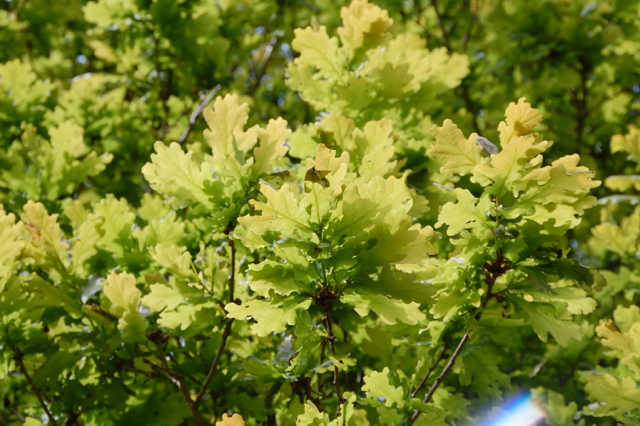
The ash trees are finally in full leaf, they were so late this year. There is an old country saying, ‘Oak before ash, we’re in for a splash. Ash before oak we are in for a soak.’ Well maybe this year was the exception that proves the rule.

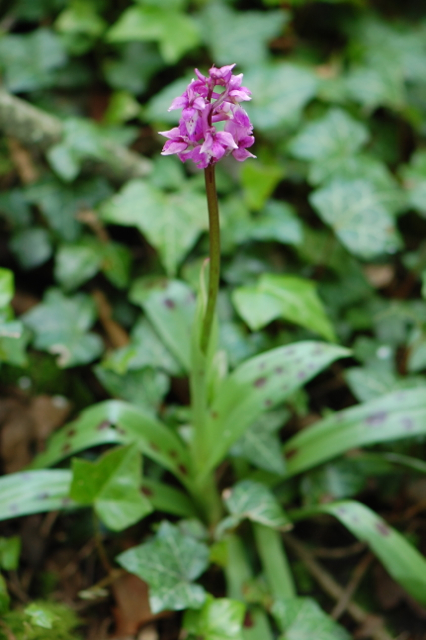
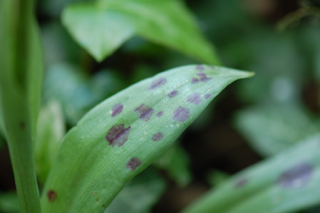
In the copse is this lovely early purple orchid with it’s distinctive spotted leaves.

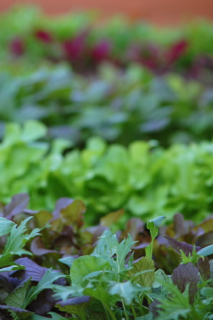
And in the garden is Alchemilla, the alchemist’s plant, in all her dew dappled splendour, along with the wonderfully healthy and vigorous growth of motherwort and wormwood. Salad leaves are also growing up lush, juicy and flavourful and are gracing our plates each day.

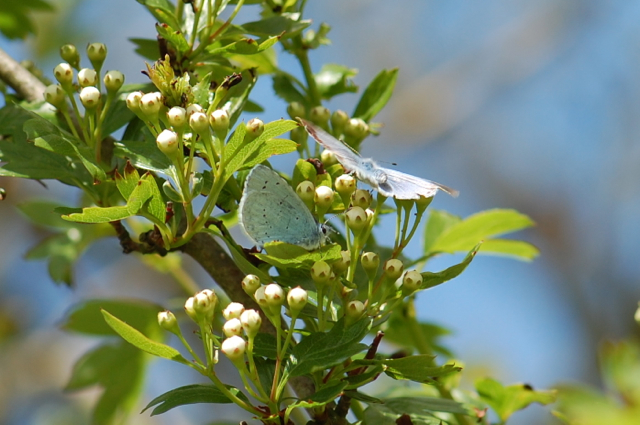
What a joy to see the regular visitors enjoying the garden as much as I am. This female holly blue (distinguishable by the black tips to her wings) sunned herself on the ivy for several minutes before heading off to seek adventure elsewhere. Ladybirds are always welcome and what could be more joyful that the fat bottomed bumbles flitting from blossom to blossom?

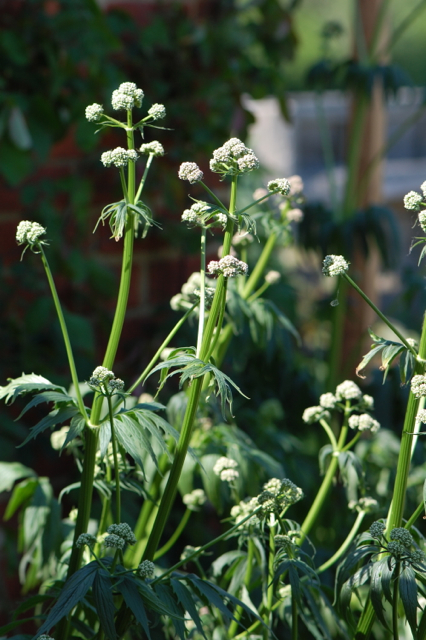
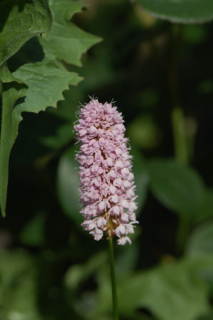
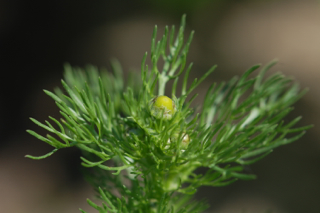
Finally I couldn’t resist sharing a few early blooms. Wild Edric is now covered in flowers, bistort is cheering the garden with her pink candy tufts and chamomile and valerian have shot up and are just on the point of opening.

Wishing you all a wonderful turning of the season.

Read Full Post »

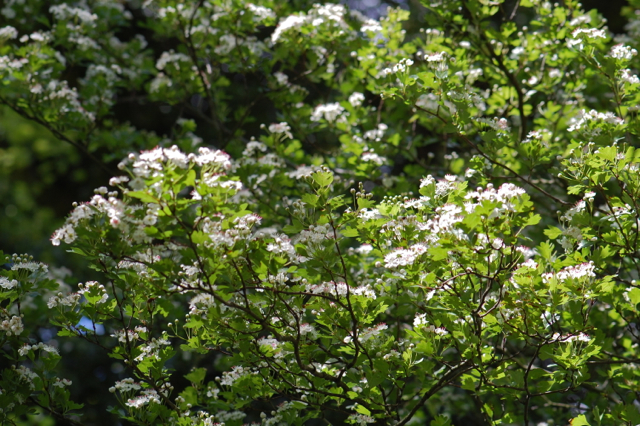
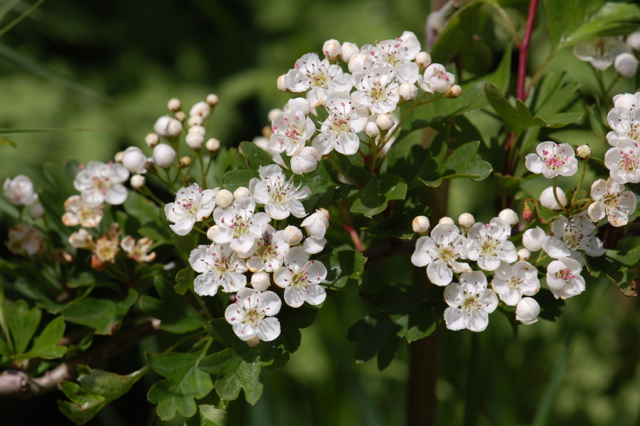
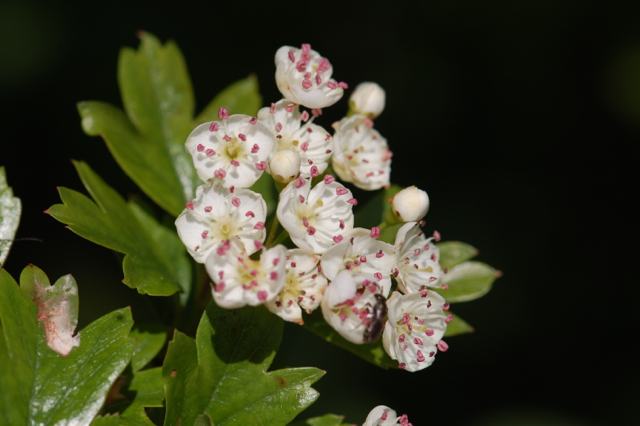
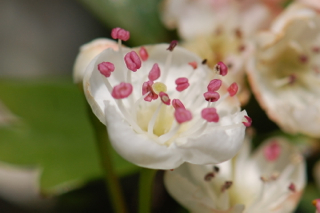
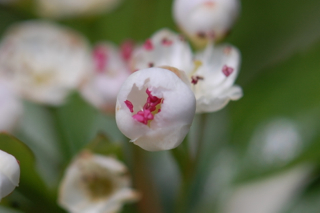
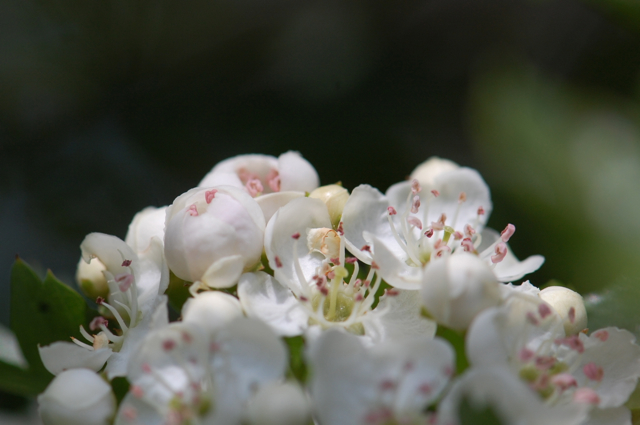
The May, Whitethorn, Quickthorn, all are country names for this most remarkable of trees that blooms so prolifically throughout much of the month. I believe I have written about hawthorn more than any other plant, yet every season and every year affords me fresh insights into her great worth.

The blossoming of the May is one of the highlights of my herbal year. Though many dislike the smell, which is deep, musky and often compared to rotting meat  (I don’t see the resemblance myself!) I find it nothing short of delightful – earthy, sensual and rich.  It ties me to a sense of time and place and fills the countryside with wonder for the few short weeks it is in flower.

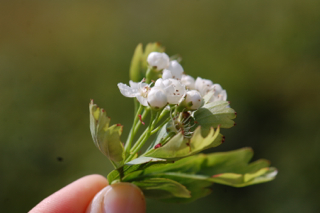
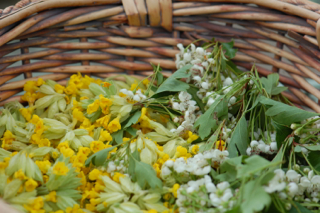
If you live in this corner of the world, the South of England, now is the time to harvest hawthorn flowering tops for teas, tinctures, elixirs and anything else you fancy. It is usual to pick a little bunch of the blossom, either just before or just after opening, with the first few leaves attached, as both blossom and leaf have important medicinal constituents. The photo below shows the amount that I usually pick for drying or tincture making.

Do remember when harvesting not to over pick from a single tree and to just take a little from each one as the blossoms will become berries in the autumn which are an important source of food for the birds and other creatures, as well as being food and medicine for us. Hawthorns are pollinated by a variety of insects including solitary bees and, due to dwindling insect populations, there are said to have been declining numbers of berries in recent years. They are still abundant in most parts and we humans, without the benefit of flight, tend to pick from lower branches whilst the birds feast on higher ones but it’s always good to bear in mind how many other creatures rely on exactly the same species that are so beneficial for us.

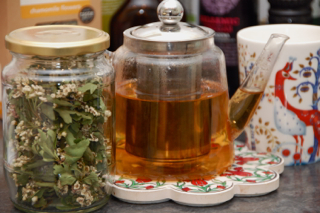
Hawthorn flowers are often acknowledged for their benefit in treating heart conditions and are typically included in preparations alongside the berries for a range of cadiovascular and circulatory disorders ranging from angina to chilblains. This is in part due to their antioxidant content found in the form of phenolic compounds which are actually even higher in the leaves and blossoms than they are in the berries. We tend to think of antioxidants occurring mainly in highly coloured foods like berries but you can see that the colour of the tea made from the flowering tops is also rich and deeply hued after being left to infuse for fifteen minutes or so.

Though truly enjoyable when drunk as a simple, hawthorn blossom also combines with a variety of other herbs to make any number of delicious teas. Here are some of my favourites:

Spicy – Combine 2-3 flowering tops with a couple of slices of ginger and an inch of cinnamon stick to wake the circulation and protect the heart.

Floral – Hawthorn blossom is both deeply calming and nurturing when combined with rose petals and linden blossom in a beautifully heart opening brew.

Seasonally Sleepy – A few cowslips flowers along with hawthorn blossom make a great bedtime tea as mentioned in my last post.

Sensual – Hawthorn tops, rose petals and half a vanilla bean thinly sliced make for a sweet, earthy and fragrant tea.

Despite being placed firmly in the category of a ‘heart herb’ in Western herbal medicine, hawthorn has a multifaceted personality, just like so many of our herbal allies. I consider the blossoms in particular to be a primary nervine tonic as they are deeply relaxing and calming to states of anxiety and over stimulation. I like to use them alongside other nervine herbs, like avena, for people who are sensitive to everything; loud noises, strong colours, smells and sensations and need to be calmed and comforted. In 19th century France an infusion of the blossoms was used to treat insomnia and herbalist Maurice Messegue writes “I myself make use of the hawthorn for nervous spasms, arteriosclerosis, angina and obesity and it is one of my favourite tranquiliser herbs.” It therefore makes an exceptional choice in problems where the circulatory and nervous systems are both affected such as nervous palpitations, restlessness and arrhythmia.

The powerful combination of antioxidants makes hawthorn blossoms and berries good food for the immune system as well and modern research suggests they have an inhibitory effect on the breakdown of collagen, therefore aiding healing and having an all round rejuvenating effect. Hawthorn is a very safe medicine that is tolerated by almost everyone though it is of course wise to consult with a herbalist before taking it alongside medications. It has been traditionally eaten as food, the young leaves in spring salads and the berries in jams and preserves later in the year so it can be incorporated in our lives in any way that suits us best.

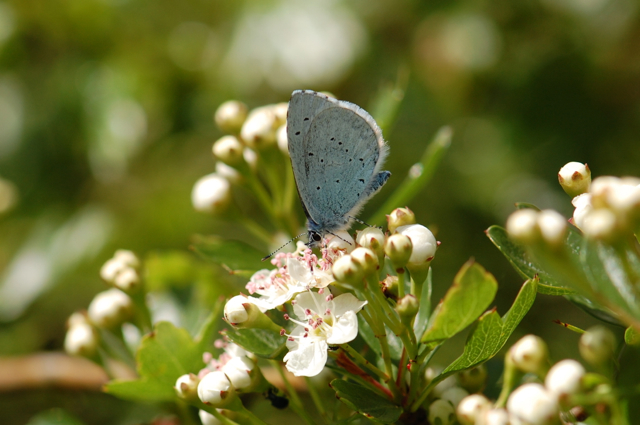
The blossoming of Hawthorn has long been associated with reawakening life; with spring, with fertility and with love and it leaves you with a kind of lightness of spirit that dusts away the very last of the wintery drear. These two holly blue butterflies flew along the hedgerow beside me for a time, flirting in and out of the branches and rejoicing in the return of the sunshine. And I rejoiced along with them, for the return of this most cherished of herbal medicines and dearest of friends.

Read Full Post »

It has been so wonderful to enjoy a few rays of sunshine this weekend after the continuous downpours of previous weeks. Whilst I deeply appreciate the rain, there is something so vital and enlivening about the sunshine at this time of year, plus our vey real need to top up our vitamin D stores after winter.

Finally, all the reasons why May is one of my favourite months were apparent; the garden, growing up so lush and vibrant and about to burst into bloom, the cowslips carpeting the Downs and, very best of all, the musky sweet scent of hawthorn blossom on the air.

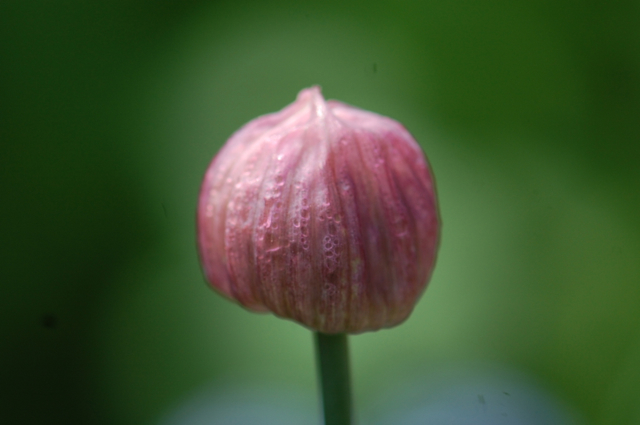
As I set off harvesting yesterday I stopped down the garden path to admire these beautiful chive buds. Look closely and you will see the little beads of moisture on the inside. Exquisite no? Like the flowers are gently breathing their way open.

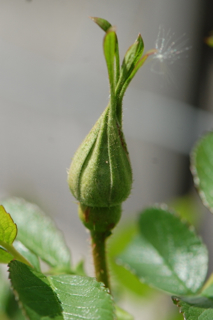
Valerian and roses are all set to flower too. I love the pattern formed by the valerian buds and the spiral of the rose sepals unfurling. This was a new rose for me last autumn, bought for half price from the garden centre. It is called Wild Edric and is supposed to be especially hardy for organic growers as well as beautifully fragrant. Well you know roses are my one weakness….


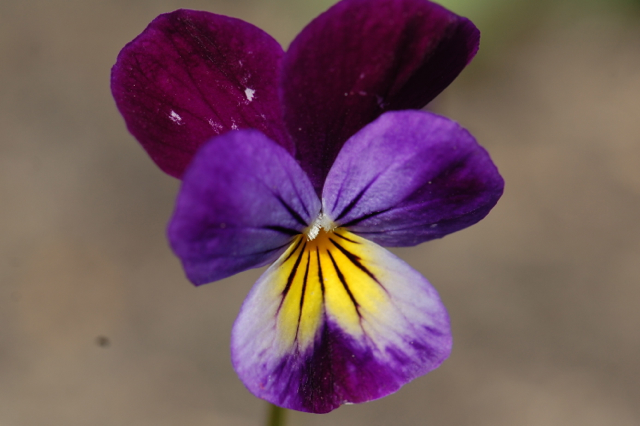
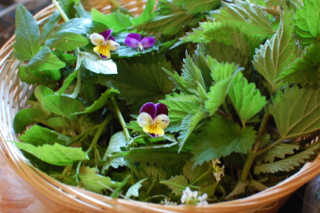
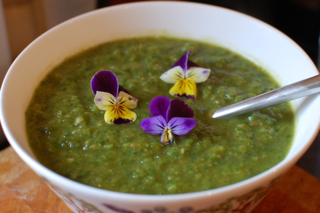
Already in flower and pretty as the day is long are the heartsease. To my mind this is one plant that certainly lives up to its name as it lifts my spirits and enlivens my heart every time I see it.

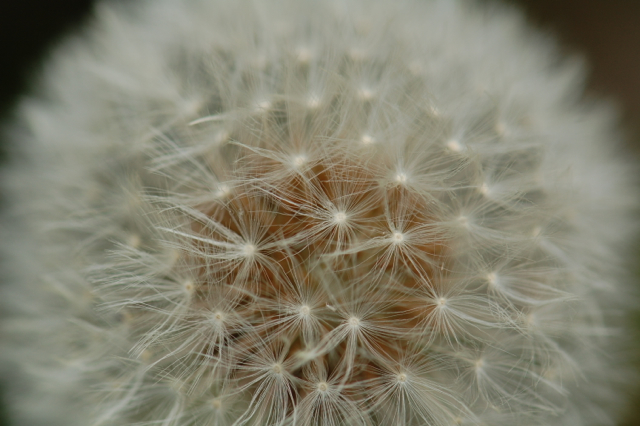
And gone to seed are the dandelion heads. Much as I love my dandys, I snip most off and just leave a few to populate the garden with their offspring. These downy globes of tiny seeded parachutes are both beautiful and very well adapted for survival.

Then out of the garden and onto the hills, where the wild things grow and the sea winds blow.

This sweet little flower is black meddick which enjoys coastal areas and lime rich soils.

Growing next to it was this chickweed, busting into tiny flower-stars and adorned with tufts of enthusiastic dandelion.

Red campion brings splashes of bright colour to the spring hued greens and yellows of the hedges.


And speedwell, one of my favourite of all wildflowers, grows rampant at the field edges.

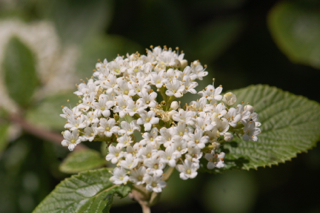
The blossoms of wayfaring tree, Viburnum lantana, bridge the time gap between the flowerings of blackthorn and hawthorn,  continuing the thread of hedgerow beauty that passes to the elder as the hawthorn blossom begins to fade.

Wayfaring Tree

Buds of Elder

Cowslips are all over the escarpment, enabling me to harvest just enough for tea and a small quantity of infused oil. Remember cowslips are endangered in many parts, though they grow freely here, so cultivate them in your garden for a sustainable harvest unless you have a very prolific source nearby.

One of the things I love best about this time of year is the ability to pick herbs so freely for fresh teas. I am enjoying again my old favourite of lemon balm and rosemary from the garden and there is nothing like a tea of cowslip and hawthorn tops for relaxing in the evening and ensuring a good night’s rest.

My oils are left out in the day, infusing in the full sun, then bought into the warm at night. Like this they should be ready in only about three days. This would not be sufficient time for tougher plants but these fresh flowering tops will give up their constituents quickly in the bright warm sunlight and may risk rancidity or losing their vitality if left out too long.

I have bombarded you with enough pictures for one post but I’ll be sharing thoughts and images from the first hawthorn blossom harvest sometime next week.

What are your favourite things in May?

Read Full Post »

Ballad For A Foraged Lunch

At lunch time Lucinda
Went down to the kitchen
To make for herself a wee snack,
But when she got there
The fridge it was bare
And the outlook for lunch it was black.

There was nothing in view
but a carrot or two
She said ‘I’d better think fast.’
With nothing to eat
Neither savoury or sweet
My health it is sure not to last.

So off to the hedge
she went with her knife
To see just what could be found.
Of nettle and Jack*
There sure was no lack
And ground elder growing all around.

From the garden she got
Some lovage for the pot
Then oregano, marjoram and chives.
‘Well this little bounty
On which I was counting
Will be sure to keep me alive.’

She cooked it all up
In a big iron pan
With the half a potato not green,
And when it was done
She said ‘oh what fun’
It’s the best lunch that ever I’ve seen.

* Jack by the hedge.

Read Full Post »

Dandelion Medicine

Common name: Dandelion
Latin: Taraxacum officinale
Family: Asteraceae/ Compositeae – daisy family.
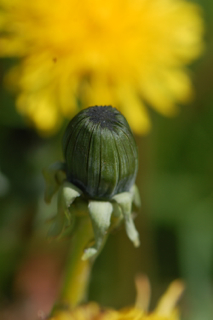
Botanical features: Herbaceous perennial  with single yellow flower heads each made up of numerous florets on unbranched, hollow stems. Leaves are toothed or deeply lobed and form a basal rosette growing from a mostly unbranched taproot. The fruits are borne on silky pappi forming a globe which is easily blown apart by wind or by wish-makers alike.

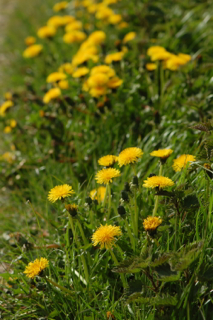
Dandelion flowers are surely one of the most joyful sights at this time of year, carpeting roadsides and fields with their merry abandon. They have long been considered heralds of the return of the sun, blooming in spring, opening with the day and closing at night. True to form, this last week they have remained stubbornly closed in the incessant grey-skied drizzle.

Dandelion is another of those plants that blurs the line between food and medicine as all parts can be used for culinary and medicinal purposes. It is not without irony that plants commonly viewed as weeds like nettle and dandelion are some of the most nutritious foods and helpful medicines we have available to us. The sorry result of living in a time and place of seeming plenty is that we forget to give value to that which is most worthy of it. Dandelions should always be encouraged in our gardens, not just for our own wellbeing but because they also support a variety of butterflies, moths and other insects.

Look closely to see how each flower is actually a flower head comprising many individual florets. This is a feature common to members of the asteraceae family.

The actions of dandelion are many and varied but include; hepatic, cholagogue, diuretic, alterative, anti-rheumatic, aperient, tonic, nutritive and digestive.

Dandelion flowers are the part least used in medicine but they do have some of both the cleansing and nutritive properties of the leaf and root. They are good infused in apple cider vinegar, either alone or with the whole plant, left for a month to six weeks and then strained to make a useful addition to salads, stir fries, soups and veggies.

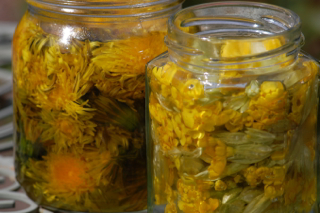
They also make a lovely infused oil but be careful to pick them on a dry, sunny day when all the dew has dried as the high moisture content can easily spoil your oil. This is commonly used as a rub for fatigued and aching muscles after infusing for a week on a sunny windowsill and then straining. I like to combine dandelion, St. John’s wort and rosemary infused oils to make a warming and healing massage oil for everyday back aches and pains. Susun Weed also recommends it as a breast massage oil which is interesting because the greens were used in the past as a poultice for swollen breasts and breast cancers.

Dandelion flower fritters are a wild food staple and Danielle has a lovely recipe for them here. You can also learn to make dandelion flower wine with Rosalie here, something I have yet to try!

Do take a little care when picking though as the milky latex contained in the stem can cause contact dermatitis in some sensitive individuals.

_______________________________________________________________________________________

The leaves are tasty in salads when used sparingly. They are bitter so I tend to just use a few amongst the spicier tastes of mustards or wild garlic and the sweeter taste of lettuce but if you want the full medicinal effect then you can make a salad consisting entirely of dandelion leaves. I recently came across this wonderful video from 94 year old Clara about how she makes her dandelion leaf salads, definitely worth checking out! Culpepper recommended it as a pot herb, made into broth with a few Alexanders. Alexanders are growing freely right now so it’s a good time to give this a try.

The leaves are one of, if not the, primary diuretic used in modern herbal medicine. They affect the water balance in our bodies by encouraging excretion of excess fluids but they also strengthen the entire urinary system. They are well known for their country name Pissabed, or the French pissenlit, but interestingly they were also used in the past to treat bed wetting and incontinence, as well as causing it. They are a useful addition to a constitutional formula where there is oedema due to heart failure or high blood pressure as they will not aggravate the cause whilst treating the symptoms as pharmaceutical diuretics have been shown to. This is because, rather than depleting it, they restore the body’s natural balance of potassium as the areal parts of the herb can contain as much as 4% of this vital mineral. Dandelion greens also contain iron, calcium and a host of vitamins including A, B’s and C.

As well as being eaten in foods they can be dried and added to teas or made into tincture.
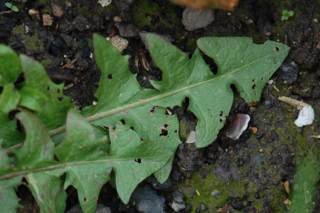
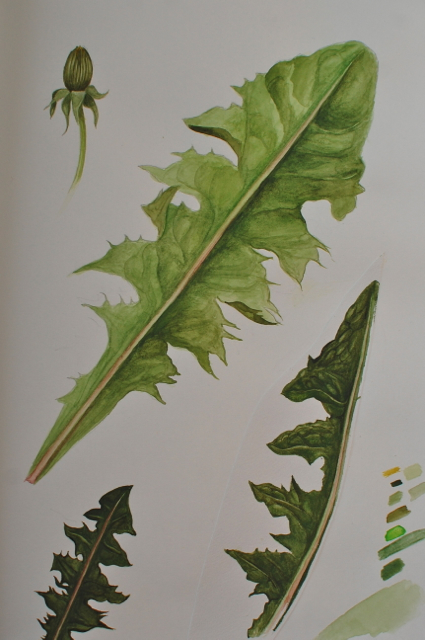
They can vary in size and colour depending on where they grow as this page from my journal attempts to capture. The larger, leafier ones are nicer in salads in my opinion as the smaller, darker leaves can be a little tough.

The root of dandelion is the part that is commonly used to support the liver and gallbladder though the whole herb has enough bitterness to get the bile flowing and tone digestion. All tap roots have a nourishing quality to them as they act as a storehouse for vital nutrients and dandelion’s roots go deep into the earth to access minerals held in the subsoil. It is a helpful medicine anywhere that there is heat or stagnation in the liver as it demonstrates, in Cupepper’s words, an ‘opening and cleansing quality.’ It both stimulates the release of bile from the gallbladder and the production of more in the liver so it can help in our ability to digest fats and can also work as a mild laxative or aperient by toning the whole digestive system. Moving liver congestion can help our bodies to work more efficiently on many levels and assist in conditions from headaches to skin conditions to foggy headedness and inability to concentrate. The liver also processes hormones so dandelion root can be very helpful in PMS and other hormonal complaints.

Dandelion root is an excellent tonic for the pancreas as it works on both the exocrine and endocrine functions of this important organ. By stimulating the release of gastric juices it aids the digestive capacity and by increasing insulin secretions it helps to balance blood sugar levels.

Roots are commonly harvested in autumn or spring. In autumn the long tap root is busy storing nutrients and polysaccharides away for the winter and the resulting medicine will be sweeter and richer in inulin so more appropriate for people who need building and nourishing, general digestive support or help balancing blood sugar levels. In spring the roots will be nice and bitter and great for people who have symptoms that indicate more heat and inflammation in the liver. Having said that most people can benefit from a more stimulating bitter in spring and a more nourishing bitter as the cold months come around so there is something to be said for making batches of both to use at the appropriate time as well as just looking at the energetics of the individual.

The energetics of dandelion are interesting. It is considered cooling due to it’s bitterness, and drying, primarily for its diuretic properties. Therefore it is often used for people who are hot, red faced, liverish and irritable, swollen, stressed and with high blood pressure. For the most part the leaf does tend more towards the cooling, drying and cleansing end of the spectrum but the root I find to be more complex. I currently have three dandelion tinctures sat on my shelf and each one is completely different from the next. This is partly due to the time of year they were harvested as explained above but also due to other environmental factors. One of the tinctures is so thick, sweet and nutritious that I would almost classify it as moist rather than dry and would always think to use it for people who were depleted, weak or fatigued. This is one reason why it’s so important to taste your herbs and get to know them rather than assuming all dandelion tinctures will be the same. I happily use dandelion root for a variety of people who need some liver support, though I would balance it with other herbs as appropriate to the individual.

Dandelion has often been associated with joy and I like to think it encourages happiness both actively, through the unfettered cheeriness of its flowers, and passively, by releasing anger and emotions held in the liver and allowing the happiness that is naturally our nature to shine through.

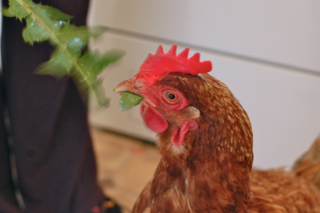
Everyone enjoys a few dandelion leaves in our house!

 I will finish with a quote from Culpepper which I found most amusing. Always one to call it as he saw it you can understand why he was so unpopular with the medical establishment of his day. I wonder how much has changed in the intervening years. “You see here what virtues this common herb hath, and that is the reason the French and Dutch so often eat them in the Spring; and now if you look a little farther, you may see plainly without a pair of spectacles, that foreign physicians are not so selfish as ours are, but more communicative of the virtues of plants to people.”

Read Full Post »