Feeds:
Posts
Comments

Archive for the ‘Herbs’ Category

After a long day in London studying, there’s nothing like coming home to a hot, steamy bath full of herbal wonders.

Avena, or as we commonly call her Oats, is a lovely choice for such times, when you are both exhausted from the early morning, travel and long hours in a classroom, as well as over stimulated from the bright lights, loud noises and hectic pace of the big city. A classic tonic to the nervous system, Avena can help us deal effectively with periods of stress, anxiety and nervous tension. She can help soothe and protect us when we are suffering from the sensory overload usually induced by spending time in a busy city and enable a deep and restorative nights sleep. Oats are also rich in silicon which helps build the skin, nails and hair.

The classic way to have an oat bath is to tie a handful of rolled oats in a square of muslin cloth and hang it under the taps as you run the bath to release a creamy oat milk which is soothing for sensitive, dry skin.

I like to pack my baths with as much medicinal value as possible as we have the ability to absorb many substances into our bodies through the skin. This oat and chamomile bath takes a bit of pre-planning but is quick to do and captures many of the beautiful healing properties of these two wonderful green allies.

If you know you’ll have time for a bath that evening, make a strong infusion of oatstraw herb and chamomile in the morning and leave on the side for the rest of the day to extract all the goodness from the herbs.
I usually use a large handful of oatstraw, with a large pinch of chamomile, in a jar or cafetiere with pint or so of freshly boiled water.

When your ready for your bath strain the herbal infusion into a blender and add a couple of handfuls of porridge oats.
Blend up into a cream.
Stir in 4 drops Roman Chamomile, 2 drops Lavender and 2 drops Sandalwood, or any of your favourite relaxing essential oils.
Pour into a freshly run, hot bath, get in and feel the days stresses melt away.

Magic.

Read Full Post »

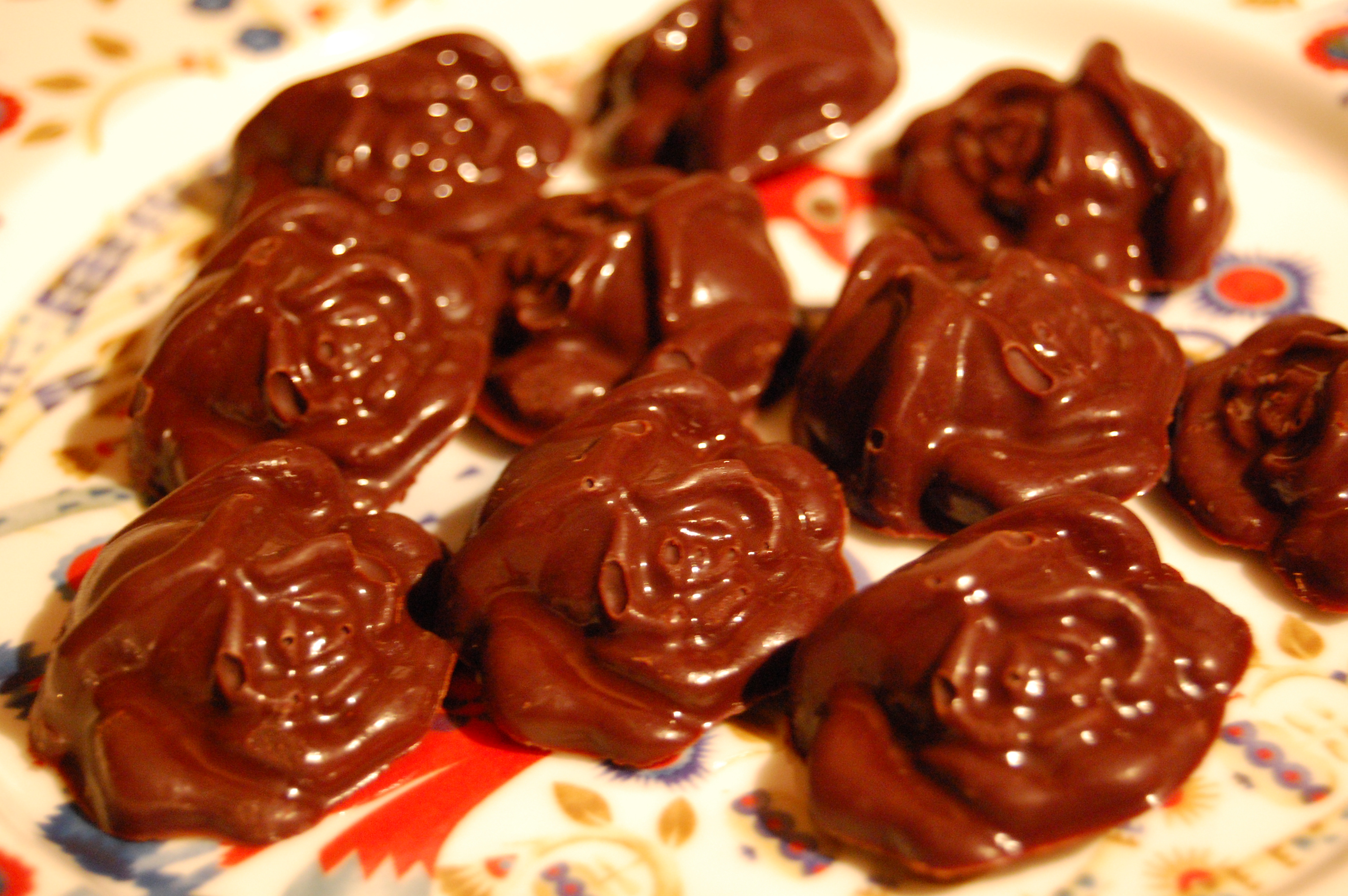
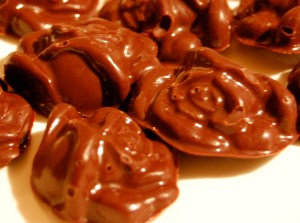
As promised, here is the recipe for my rose and cardamom chocolates. I’ll give you the basic chocolate recipe which can then be varied in infinite ways to make any flavour you fancy indulging in. I made nearly 400 of these for my wedding last year and added in a little sprinkle of aphrodisiac herbs and some flower remedies that resonate with the heart to complete the effect.

The basic recipe could not be easier and contains only 4 ingredients, plus the flavourings, should you choose to use them. These chocolates are raw and vegan so are fine for most people. Chocolate has been shown to have many health benefits, such as a high magnesium and antioxidant content, however most commercially available chocolate also has a lot of sugar and dairy which detracts from this. Despite the benefits, chocolate is still a stimulating herb so I would recommend you do as I say and not as I do, and eat it in small quantities. 🙂 The ingredients are a little pricey to purchase but will last a long time if you get a reasonable amount. They are mostly available from good health shops or online retailers like Raw Living and Indigo Herbs. Practitioners, students or those in the trade can get great discounts buying through Tree Harvest.

These amounts are enough for 3 to 4 chocolate moulds depending on their size and depth. I have bought all my moulds from Cakes, Cookies and Crafts, which do a fabulous selection, including leaves, flowers, hearts, dinosaurs and even halloween themed skulls and spiders!

Ingredients:
120g raw cacao powder
100g raw cacao butter
20g virgin coconut butter
80g agave nectar
Tiny pinch of crystal or sea salt

2 drop rose essential oil
2 drop cardamom essential oil
Flower remedies (optional)

The easy rule is that the total weight of the butters equals the total amount of chocolate powder. This makes a fairly intense chocolate but you can add more butters if you want it less so. You can also play around with the proportions of the butters. I only add a small amount of coconut butter as it can be quite ‘fatty’ and give the finished chocolates a very low melt point but you could add more, or omit it altogether and just use cacao butter, as you like. Equally you can add a little more agave, up to about 100g, if you want the end product to be sweeter.

So what you do is melt the butters, gently, in a bain marie/ double boiler and when they are completely liquid stir in the sieved chocolate powder and agave syrup until well mixed and the consistency of melted chocolate. Add a pinch of salt and 2 drops each of your chosen essential oils and stir well. Using a spoon, fill your moulds and pop in the fridge for an hour before tucking in. It really couldn’t be simpler!

I use rose otto and cardamom essential oils in this recipe but you could substitute ground cardamon, though the finished chocolate would not have quite such a smooth consistency. Rose on its own is also beyond divine!

I recommend adding just four drops of your chosen essential oils for this quantity of chocolate. Drop them onto a teaspoon first to prevent any extra falling in the mixture as they are so intense it can alter (and ruin) the whole thing. It’s imperative when using essentail oils internally to buy only organic, food grade quality oils as many of the cheaper brands are diluted or mixed with solvents and could be quite toxic. I mostly buy oils from Materia Aromatica.

Some of my favourite flavours for chocolates are;
Orange and Geranium
Lavender
Peppermint
Lime with Chilli
Orange and Ginger

You can also add nuts, dried fruits, herbal powders, crystalised ginger, pollen… the possibilities are endless.

For rose chocolates I like to use a few drops of flower remedies that work with the heart chakra such as Hawthorn and Lime flower as well as a pinch of a suitable herb such as powdered Hawthorn Berry. If using the Dr Bach essences, Holly would be a good choice. For orange chocolates energising essences like Olive (Bach) or Sycamore are nice and for Lavender, calming and soothing essences work well. Dr Bach’s White Chestnut would be a good choice.

Due to its stimulating nature chocolate works quite well as a carrier herb, helping deliver the other medicinal ingredients throughout the body. I always see food as a medicine and adding herbs, flower remedies and essential oils to my chocolates, soups, smoothies, honeys, vinegars, salad dressings, pretty much everything really, has become second nature.

I hope you enjoy making these little treats and experiment with them as freely as I have!

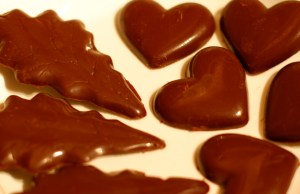
Peppermint, Ginkgo and Gotu Kola oak leaves and Lavender and Ashwagandha hearts .
Read Full Post »

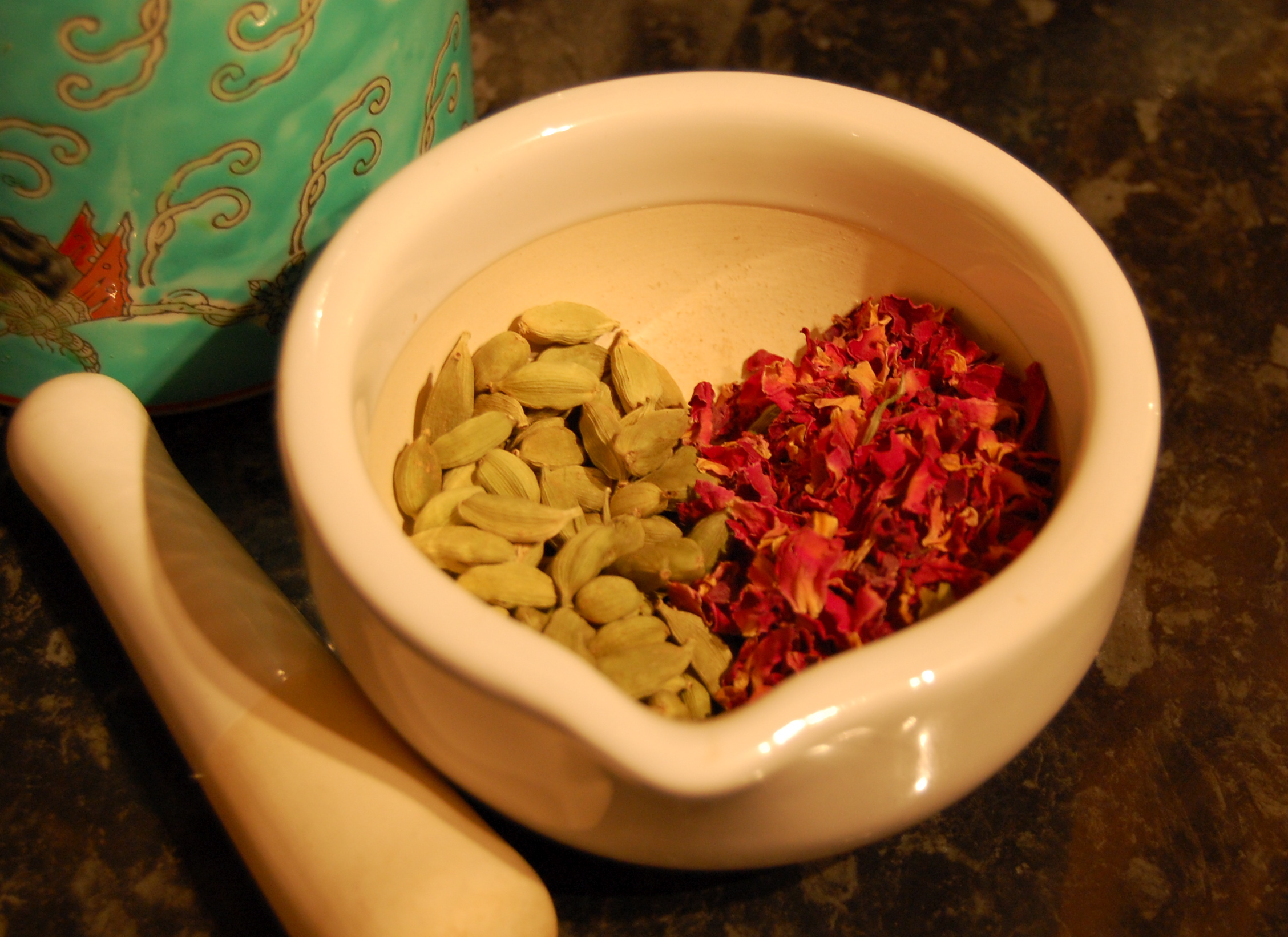
Whenever I need a bit of luxury in my life, rose and cardamom tea is just the ticket. These two herbs not only taste beautiful together but also have some great medicinal properties that help balance us when things get stressful.

They both have a long history of use as aphrodisiacs and were key ingredients in any number of ancient love spells. As they both aid the release of nervous tension and stress and have exquisite aromatic flavours, it’s not hard to see why this would be so.

Cardamom is wonderfully warming and soothing to the digestive tract and is a first rate choice for bloating or gas. Rose petals are usually considered cooling but also have some important digestive properties in increasing bile flow and protecting the liver.

They also both help to dry up congestion and mucus so can be useful at this time of year for those pesky ‘change of season’ runny noses.

Enjoy half an hour before meals to maximise the digestive properties or at anytime for the wonderful flavour and balancing, heart opening, love inducing effects. Just crush a few cardamom pods and add a small teaspoon of rose petals per cup.

If you really need some pampering, take a leaf out of my book and indulge in this tea with some homemade rose and cardamom chocolates (recipe to follow soon), whilst relaxing in a rose and cardamom bath… pure heaven.

Read Full Post »

I’m very happy to be joining in the UK Herbarium’s monthly blog party, the topic of which is ‘emerging from winter with herbs’.

This immediately makes me think of fresh spring growth to tonify and cleanse the system after the stagnancy of winter months. However it’s still a wee bit early for harvesting nettles for soups, cleavers for green juices and chickweed and young dandelions for strengthening salads. So I decided to think about this topic practically instead of intellectually. What am I actually taking at the moment?

It’s still cold outside, though the first glimmers of spring are tantalisingly close, whispering of new shoots and green buds and the gentle stirrings of our own awakening senses. As a constitutionally chilly being I’m still loving my warming herbs but have been drinking less spicy teas and can’t seem to get enough of one of my favourite all time brews, Rosemary and Melissa. Rosemary is a wonderful warming herb and Melissa is also said to improve the circulation and the two together have a lovely, balancing effect on the emotions. Rosemary is a herb of the Sun and Melissa of Jupiter, so they are both joyful and cheering on a gloomy day when we are beginning to wonder if winter will ever end. I often team them up as essential oils too, for use in the bath and massage blends. Together they smell divine!

The other thing I’m having a lot of at the moment is the adaptogenic herbs, especially the Ayurvedic herbs Tulsi, Shatavari, Ashwaganda and Gotu Kola. Though the latter is not always classified as an adaptogen, it has many of the same properties and is classed as a rejuvenating herb, or rasayana, in India. Though I primarily use western herbs that I can grow or forage myself, I do have a somewhat guilty love of Ayurvedic plants, probably born of many happy months spent in India. I had a somewhat unsuccessful attempt at growing Ashwaganda last year but my Gotu Kola has done well so far and, as all my gardening currently takes place in pots, I shall be sure to try again when I have a more suitable situation. Adaptogens are so great during these strange ‘inbetween’ times, neither winter nor quite yet spring, when energies are starting to move in us and runny noses and colds can result from the body ridding itself of the congestion of winter. Inbetween times have a special magic all of their own, like twilight or those strange, still moments during a break in a long journey. Adaptogens are great to strengthen and support the system during times of change as they help us cope with mental, physical and environmental stresses as well as being wonderful for our immune systems.

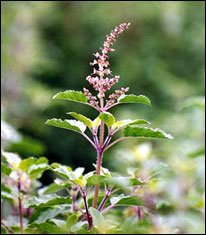
As one of our feline companions, and soon to be guest blogger, goes by the name of Tulsi, I thought I’d say a little more about this beautiful herb.

The first time I saw Tulsi, often referred to as Sacred or Holy Basil, (Ocimum sanctum, Ocimum gratissimum) it was growing plentifully in a temple in India. Revered as the holiest of plants it is seen by some as the physical incarnation of the Goddess, reborn on Earth for the benefit of mankind. A leaf held in the mouth at the time of death is said to ensure passage to the heavenly realms and watering the plants is thought to purify one of many sins.

Tulsi is antiviral and antibacterial which, along with its immunomodulating properties and high levels of antioxidants, make it protective and strengthening. Energetically it’s classed as pungent, sweet and warm, perfect for this time of year and it has been shown to help rid the body of mucus, aid in the treatment of bronchitis and lower fevers. It’s also antidepressant, so good for banishing those winter blues. Add into the mix its hepatoprotective (liver protecting) qualities and its ability to balance blood sugar and you can start to see why it’s valued as one of the most important herbs in Ayurvedic medicine. Ancient writings also speak of its efficacy in treating kidney disease, arthritis and skin disorders and its use in purifying polluted air and as an antidote to insect and snake bits.

David Winston and Steven Maimes write in their book on adaptogens that Tulsi is “capable of bringing on goodness, virtue and joy in humans.” I have certainly found this true for both the varieties of Tulsi pictured below. 🙂

Read Full Post »

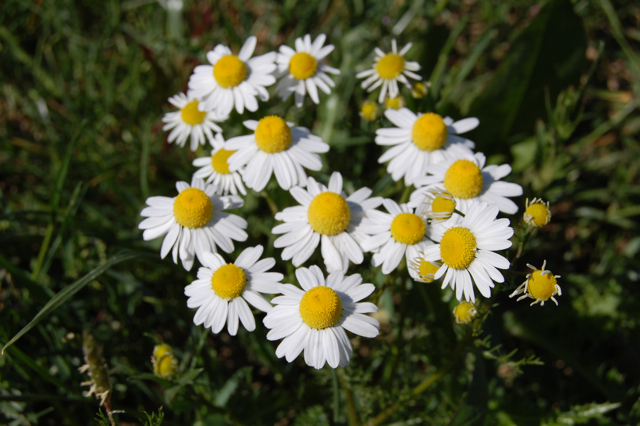
The world would certainly be a better place if people were more like chamomile.

It is white and yellow face smiles brightly up, cheering all those who pass by, though it is in no way garish, having a softness and subtlety that could allow it to be overlooked. It has long been associated with humility due to the fact that, when planted in lawns, it grows better the more it is trodden on. In this way it teaches us strength and endurance and the ability to turn difficult circumstances to our advantage. In the Victorian language of flowers it represented patience in adversity.

We all know the calming effects of chamomile, much needed in these busy times, as well as its ability to ease the digestion. On an emotional, as well as physical level it can help us to better ‘digest’ and assimilate difficult events or situations.

Mrs Grieves writes about chamomile’s wonderful ability to heal plants as well as people:

The Chamomile used in olden days to be looked upon as the ‘Plant’s Physician,’ and it has been stated that nothing contributes so much to the health of a garden as a number of Chamomile herbs dispersed about it, and that if another plant is drooping and sickly, in nine cases out of ten, it will recover if you place a herb of Chamomile near it.

The Chamomile is a true example of what it means to be medicine, completely and fully, so that everything around can benefit from our presence. This surely should be the aim of all healers and herbalists and indeed all people seeking a better world for themselves and other beings.

Read Full Post »

« Newer Posts