Feeds:
Posts
Comments

Archive for the ‘Herbs’ Category

I finally managed to get out onto the top of the Downs last week to collect my harvest of yarrow. It was the prefect day for it, with bright sunshine to dry off the dew without being so hot that the volatile oils were too quick to evaporate. Now the tincture is steeping away and the flowers are dried for teas so it seems like the perfect time to share a few words about this most valuable of healing remedies.

Yarrow atop the South Downs.

Despite being one of the most important medicines in my healing repertoire, I have been avoiding posting about yarrow for quite sometime. This is for the simple reason that it is useful for so many things it’s hard to know where to start, yarrow really requires an entire book to itself! For simplicity’s sake I will stick to the basics here but I will revisit this wonder herb with more specific information in the future.

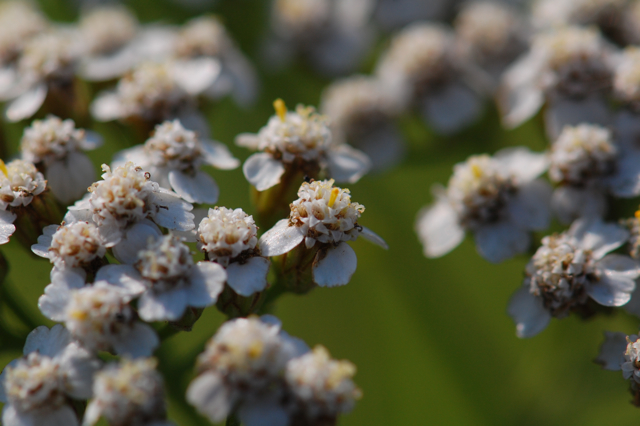
Yarrow is a common weed native to the Northern hemisphere that grows freely in grassland, chalk land, roadsides and other sites with well draining ground. It is instantly recognisable due to its feathery leaves, strong stems and broad white flower heads made up of many small individual flowers.

Yarrow as a Wound Healer:
This is perhaps yarrow’s most famous and most ancient use. Yarrow was found amongst other medicinal herbs in the Neanderthal burial site in Iraq which dates from around 60,000 BC and has become famous in herbal medicine as one of the earliest indications of human’s use of medicinal plants.  Myth tells us it was given to Achilles by the centaur Chiron so he could use it on the battlefield and its Latin name, Achillea millefollium, still reflects this tale. Its common names too included Soldier’s herb, herba militaris, Knight’s milfoil, carpenter’s grass and nosebleed. Yarrow is one of the most useful wound herbs we have as it staunches bleeding and is antimicrobial and pain relieving too.

Yarrow for Colds and Fevers:
It’s next greatest claim to fame is it’s ability to make us sweat. When fever is building, drinking hot teas of yarrow can help it to break by relaxing the circulation and the pores of the skin, allowing us to sweat freely and ridding the body of infection. Dr Christopher once wrote, “Yarrow, when administered hot and copiously, will raise the heat of the body, equalise the circulation and produce perspiration.” It may seem inadvisable to raise the body heat in cases of fever but by using yarrow we are supporting the body in responding to infection naturally. The classic formula for colds and flus is yarrow, peppermint and elderflower which should be drunk as a hot tea as soon as possible. The the patient should then wrap up warmly, keeping a hot water bottle at their feet and wait to sweat. When there is a high body temperature but no sweating, this formula is especially useful to help release the heat via the skin. Now is the time to get these herbs in stock before the cold and flu season strikes.

Yarrow for the Circulation:
Yarrow’s affinity for the blood and circulation can be seen internally as well as externally. It tones the blood vessels at the same time as dilating capillaries and moving the blood, thus giving it a wide range of applications. It has been used to treat high blood pressure, often in combination with Hawthorn and Lime blossom and it has a reputation for being able to prevent blood clots. It’s tonifying action makes it particularly useful for treating varicose veins and haemorrhoids. Yarrow really is a great equaliser, it moves where necessary and tones where needed. This dual action is what has given it is reputation for being able to both cure and cause nosebleeds!

Yarrow for the Digestion:
Being bitter, pungent and aromatic means that yarrow is particularly useful for stimulating the digestion and getting the bile and pancreatic juices flowing. Because of it’s affinity to the circulation as well it can help move congested blood in the portal vein which, in turn, helps the liver. Matthew Wood talks about using it for colitis and diverticulitis because of it’s ability to tone and heal the mucus membranes of the digestive tract. It was also an old traditional remedy for bloody diarrhoea and dysentery.
Yarrow for the Reproductive and Urinary Systems:
Maria Treben considers yarrow “first and foremost… a herb for women” and quotes Abbe Kneipp in saying “women could be spared many troubles if they just took yarrow tea from time to time.” It is such a wonderful herb for the reproductive systems because it can both staunch heavy bleeding and stimulate scanty bleeding. It is also wonderful when there is congestion resulting in dark clotted blood and period pains. It is useful for vaginal infections or irregular discharge as well as spotting between periods.

Yarrow is a good urinary anti-septic and, when drunk as a warm or cool (rather than hot) infusion, the diuretic properties are emphasised making it a useful remedy for cystitis and urinary tract infections. It has also been praised for helping cases of urinary incontinence. Culpepper informs us that it “helps such as cannot hold their water.”

If we think about some of the ways in which yarrow might work we can start to draw together all these different facets of it’s healing ability. When you taste yarrow it is pungent and aromatic with quite a bitter aftertaste. The volatile oils which make it so aromatic and warming are dispersive in nature and therefore are one of the things that gives yarrow this wonderful ability to move congestion and stagnation, equalise the circulation and open up the skin. Volatile oils are also often anti-microbial. The bitterness balances it’s warmth with more cooling qualities and also stimulates the digestion. Though the bitter gets our juices flowing and the aromatic qualities get things moving, you can also tell yarrow is an astringent which is what makes it so helpful for toning blood vessels. It may seem like a plant of contradictions but yarrow is just another example of how wonderfully complex our herbs can be. They demand that we know them, rather than just a list of their actions, and that we let go of linear thinking and delve into the realms of experiential understanding instead.

Preparations are usually made from the areal parts including leaf, flower and some stem, though I usually leave out the toughest bits. They can then be used in a variety of ways:

Tea – Take hot for colds and flus and warm or cool for cystitis. Or use as a wash for grazes or rashes.

Tincture – For chronic congestion in the reproductive system and high blood pressure (teas could also be used here).

Baths – For skin irritations.

Sitz baths – For cystitis, vaginal infections, bleeding fibroids, haemorrhoids, post-partum healing, heavy periods etc.

Footbaths – For chilblains.

Infused Oil – For first aid healing ointments or soothing creams for irritated skins.

Poultice or Compress – Spit poultices for wounds and first aid situations, compresses for larger areas of grazed skin.

Wound powder – Finely powdered dried herb can be sprinkled on minor wounds.

Spray – The tincture or herb infused in witch hazel can be sprayed on to varicose veins to tone and move stagnant blood.

Flower Essence – Said to be protective for those who are overly sensitive to their environments and the emotions of others.

Essential Oil – A wonderful anti-inflammatory for skin conditions.

Please note, yarrow is best avoided during pregnancy.

Yarrow was also considered a sacred herb by many cultures of the world and has lots of interesting folklore attached to it. I’ll save that for another post though!

Read Full Post »

The Harvest Moon shone bright and beautiful in the sky at the beginning of the week and it seems there is no denying it any longer, autumn is here.

Autumn signifies many things to many people but for me, aside from its obvious beauty, it represents a time of community and friendship. I normally like to go out harvesting alone and wander in silence amongst the plants and the trees but in autumn there is something so special about gathering together with a friend and filling your baskets with the glorious bounty of the land. Now is the final celebration of the abundance and generosity of Mother Nature before we start to withdraw against the harsh onslaught of the winter months and what better way to celebrate than with each other.

I have been blessed to go out berry harvesting with two lovely friends and wonderful herbalists, Therri and Mindy this month and have spend a great afternoon with my lovely husband collecting Hawthorn berries and sloes.

Mindy amongst the Hawthorn

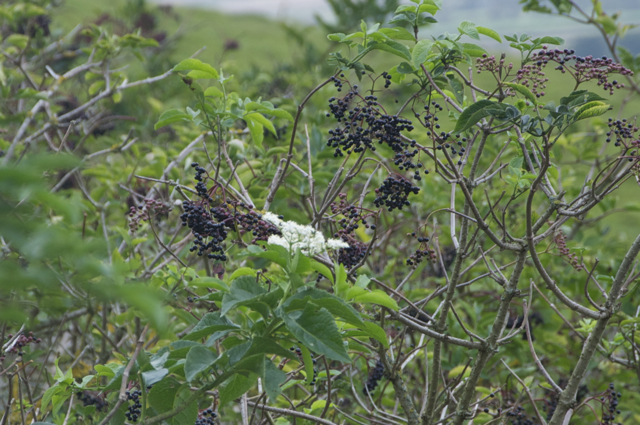
When up in my favourite elder picking spot we noticed both flower and fruit on the same tree. This is something I have never seen before, have you? Excuse the poor quality photo, the light wasn’t great that day.

Flower and berries on the wise Elder Mother.

The result of these outings was lovely fresh tinctures, dried berries and lots of delicious syrups!

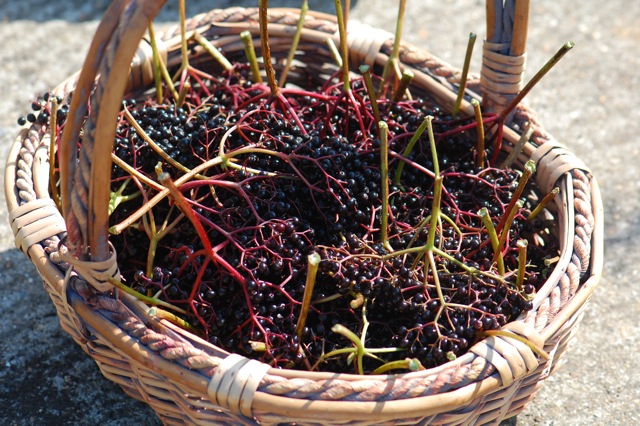
The first elderberry harvest.

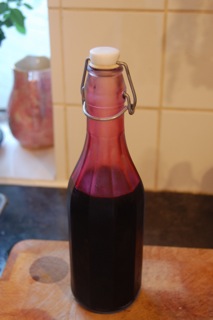
My first syrup making session was with elderberry, unbeatable for tastiness and immune supporting goodness for the colder months. I have already posted my method for elderberry syrup making here, so I won’t repeat myself but this year I added a vanilla bean to the ginger, cardamom, clove and orange peel and it turned out really well, so tasty I keep sneaking to the fridge for an extra spoonful.

Next up was the hawthorn berry syrup. The Hawthorns round here have been so fat and large this year and the trees literally dripping in them. I wonder if that means we are in for another hard winter.

I made a simple hawthorn and ginger syrup by simmering them together in a pan with enough water to cover, straining the liquid and adding an equal amount of raw honey once the liquid had cooled sufficiently. I use a fair amount of ginger because I love the resulting taste of the two combined but you can adjust according to preference.

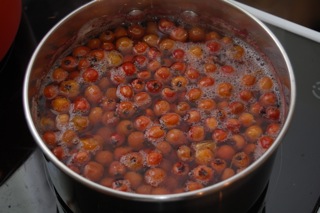
You can tell when it is almost ready because the berries start to loose their colour. I simmered mine on a low heat for about half an hour.

Berries starting to loose their colour.

At the time of straining they have gone a yellowy colour.

It’s basically the same technique as the elderberry syrup but it’s good to store your hawthorn syrup in jars rather than bottles because the berries are high in pectin which means it can set like a jelly and you’ll need to be able to spoon it out. The more of the thicker, mushy liquid you strain into the end product the more likely it will set. There is lots of goodness in this bit too however, so I say go for it. Do be warned though as I can’t imagine many things more dissapointing than being unable to get at all my delicious syrup because it had set in the bottle.

Look how firm the resulting syrup/ jelly is here on our morning porridge.

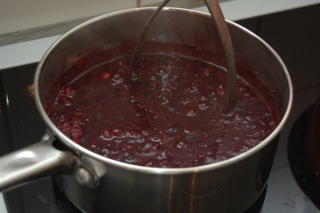
Finally, the pièce de résistance was the five berry syrup I made which included elderberries, blackberries, hawthorn berries, rose hips and sloes. I used the same technique again but this time added no spices or other flavourings and just let the natural flavour of the berries shine through. It’s so yummy I am wishing I had made litres of it!

Simmering berries.

Give them a good mash to get all the goodness out.

This syrup feels so vital and nourishing and is packed with antioxidants and other immune supportive constituents.

Another advantage is that it gives you a wonderful opportunity to polish up your Lady Macbeth impression.

“Out, damn’d spot! out, I say!—One; two: why, then
’tis time to do’t.—Hell is murky.—Fie, my lord, fie, a soldier, and
afeard? What need we fear who knows it, when none can call our
pow’r to accompt?—Yet who would have thought the old man to
have had so much blood in him?”

Watch out amateur dramatics… here I come.

I hope your autumn has also been full of harvests and community or anything else that nourishes your soul.

Read Full Post »

Calendula – aka Superherb

Calendula officinalis, also known as pot marigold (different from the African marigold or Tagetes) is one of those herbs that is constantly surprising. The more you use it, the more you love it. I used to be guilty of that most heinous of crimes, categorising it as a herb for external use only, but now I use it for a wide variety of ailments, and find it to be mostly exceptional at whatever it turns its hand to. Calendula is best known for treating external complaints but it’s a shame to relegate it to such narrow confines when it has a whole host of benefits to offer us.

Having said all that, as an external remedy it’s one of the best. Being vulnerary (wound healing), haemostatic (stops bleeding), anti-inflammatory (calms redness and inflammation), bacteriostatic (stops bacteria multiplying), anti-fungal (retards fungal infection), rich in antioxidants (healing, anti-aging), astringent (tones and tightens) and demulcent (soothes and protects) its easy to see why it has the reputation is does for treating all kinds of skin ailments, minor wounds, ulcers and the like. David Hoffman says, “The value of this exceptional herb cannot be exaggerated when it comes to treating skin problems like wounds, bruises or burns. Its properties make it a healing plant that reduces soreness and inflammation whilst also acting as an anti-microbial, which makes it a primary first aid herb for any problem.”

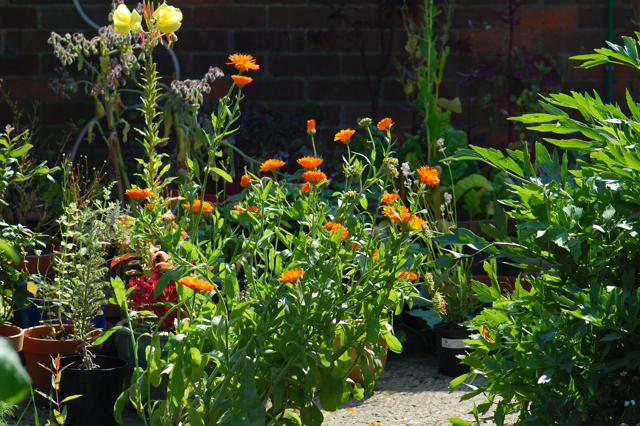
Calendula welcomes visitors along my garden path.

I use Calendula in all preparations for sensitive, red and dry skin as its thick resinous consistency not only heals but also protects the skin. It’s often seen in baby care products to gently guard against and heal nappy rash. Its astringency makes it wonderful for wounds and slow healing ailments like ulcers as well as varicose veins for which it is a primary herbal treatment, both internally and externally.

It’s often prepared as an oil by infusing the flowers in a base oil like sunflower or sweet almond, preferably twice in the same oil. You can read about how to make an infused oil here which can then be made into a salve or cream such as this one here. I also like to use calendula flowers in a wash, compress or poultice, especially for weeping sores where using a salve may keep the area too moist and thus encourage infection, even when using anti-microbial herbs.

Infusing Calendula oil on a bright windowsill

If we think about how Calendula works externally however, we can see that it might well have some powerful actions inside the body too, especially on the mucus membranes which are a bit like the skin inside our bodies’ passageways. Being anti-inflammatory, astringent and demulcent makes it ideal for many gut problems such as ulcers and inflammations where it can help to soothe, heal and protect the stomach and intestines. Add to this the fact that it is anti-fungal and bacteriostatic and you have a great remedy for treating gut dysbiosis and leaky gut type issues where it can simultaneously help balance intestinal flora and heal the gut wall.  And it doesn’t stop there. Problems such as these are thought to exacerbate immune function as larger particles of food waste escape into the lymphatics and cause heightened immune response. How incredibly convenient then that Calendula is also a powerful lymphatic and immune supporting herb. Do you ever get the impression nature knows what she’s doing?

Calendula is one of my favourite herbs for treating the lymphatic system. If there are swollen glands, a feeling of low grade infection that never really manifests into anything and tiredness and fatigue, it is a great remedy to choose. I use it more as a support for chronic issues, where as I might use echinacea or other herbs for acute issues. Maria Treben used it as both a preventative and healing agent in cancer treatment and it was traditionally considered a gentle but powerful blood cleanser.

It also contains some bitter principles which make it useful for gallbladder and liver support and it has been used traditionally for gallbladder inflammations, jaundice and chronic hepatitis. The liver and gallbladder are generally considered to reflect the emotions of anger, irritability and frustration and I always think a herb as cheerful as calendula can’t help but dispel our wrath!

Bartram calls it  “one of the most versatile and important herbal medicines” and recommends it is taken after all surgical operations. This makes a lot of sense when we consider it is healing, immune supportive and gently cleansing.

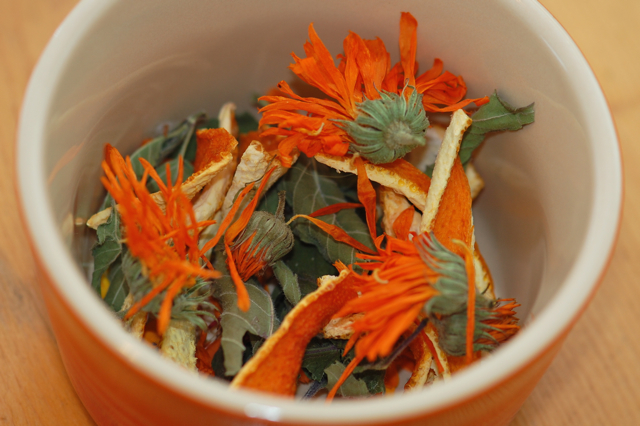
Though I use Calendula as a tincture, I like it best for internal treatment when taken as a tea. If I feel a bit under the weather I like it with self heal, lime blossom and monarda and if I feel like something cheering to dispel frustrations, it’s lovely with rose and chamomile. Below it’s combined with orange peel and monarda to make a tasty and warming ‘sunshine tea’ that will aid digestion, support the immune system and promote feelings of wellbeing.

Sunshine tea.

A Calendula tea or infusion also makes a great treatment for red, tired eyes due to its soothing and astringent properties as well as its anti-inflammatory and antioxidant properties. Calendula contains carotenoids like carrots, though I can’t promise it will help you see in the dark!
Try Calendula infusions as footbaths for treating athletes foot or in a sitz bath for thrush or cystitis (though of course lifestyle adjustments will also be needed in any condition like this). Calendula sitz baths are also often recommended for women after giving birth to help heal the tissues and prevent infections.

This incredible herb has also been used to treat menstrual irregularities and other women’s health issues, though I have little experience of using it this way. Maurice Messegue says, “I would suggest taking a cure of marigold a week before the period is due, and that will ensure it will come and go without any difficulty.” Elizabeth Brooke also says, “Marigold is one of the remedies I use for any problems with the cervix.”

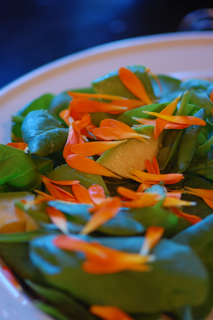
Finally, Calendula is gentle and nourishing enough to add to our foods as well as our medicine and the petals look beautiful sprinkled on salads, soups and stews.

Calendula petals adorn a summer salad.

Gather Calendula in the morning sun and dry somewhere warm and airy, away from bright lights. I have always found home dried Calendula to be much more vibrantly orange than anything I have bought, even from well respected suppliers.

Tradition says you should gather Calendula when the sun is in Leo or Virgo (August and most of September) but practically it can be collected any time it’s in flower, which luckily for us, is nearly all the summer long.

Herb of the Sun

Read Full Post »

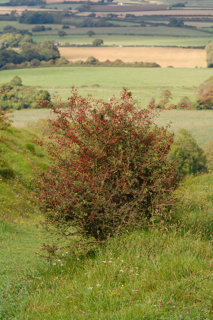
It’s been a while since I posted about the beautiful Hawthorns that I have been observing as part of the Tree of the Year project. They sit atop the Downs, relentlessly battered by wind and rain, and as a result they differ from many of the other Hawthorns in this area. With everything being early this year, most of the trees already had bright red berries at the beginning of August, not quite ready for harvest, but not far off. On these trees however, the berries were still small and green, reflecting how the harshness of their environment affects their development.

Nearly a month on they are reddening up nicely and the trees from a distance have that exquisite blush which tells you autumn is around the corner.

There is no doubt that the constant high winds we have had all summer have taken their toll. The trees look less healthy than this time last year with many of the leaves browning and some branches swept almost bare. Like people whose lives have been filled with hardship, they are weathered and worn.

It’s interesting to observe how bare of berries the side of the trees that faces the wind is compared to the relatively more sheltered branches.

I feel these trees teach me a lot about resilience, tenacity and strength and about adaptability in the face of hardship. They speak of the beauty of form and motion and of holding fast to this living edge of surrender. Perhaps most importantly they show that, in spite of difficulties, it is still possible to give generously.

Elsewhere on the Downs other Hawthorns tell their stories, each as unique as snowflakes.

I loved this one, entangled with the wild rose like lovers.

And everywhere the berries are fat and red and perfect. I’ll be out next week to get the first harvest in. Who wants pills when your medicine can look like this?

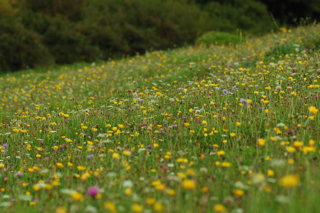
The Downs themselves are carpeted with wild flowers at present.

The yellows and whites of bedstraw, yarrow, burnet saxifrage and cat’s-ears mix with the mauves and purples of two of my favourite wild flowers;

Small Scabious

and Round-headed Rampion.

Whilst lone stalks of agrimony wave in the breeze.

Read Full Post »

Poultices and compresses are very useful ways to utilise herbs for ailments both external and internal. They are not much used in today’s herbal medicine, primarily because they are a little more time consuming and potentially messy than bottles of tincture, teas or capsules and unfortunately, most of us in today’s world are always in a rush.

Still, they can be powerful aids to healing and are well worth having a play with for conditions as diverse as skin rashes, constipation, wounds, sprains, IBS and respiratory problems.

Compresses and poultices are both external applications that involve placing a herbal preparation over the affected part of the body to enable the healing constituents of the herb to absorb into the tissue. The difference between them is only that poultices use whole plant material, either fresh or dried, and compresses use a liquid preparation of the herb, such as a tea. I prefer to use compresses for aches and pains, digestive issues and headaches and poultices for skin irritations, minor wounds and burns. I find both to be helpful for respiratory problems.

Compresses:

Compresses involve soaking a cloth or flannel in a liquid herbal preparation such as a tea, diluted tincture or an oil, wringing it out well, then placing over the body. They are usually applied warm but can also be used cold in cases of swelling, inflammation etc. For ease they can be wrapped in cling film to keep in place and avoid staining clothes, sofas, beds etc. In cases where a deeply warming action is needed, a towel and a hot water bottle can then be placed on top. They would usually be left in place for about 10 minutes and sometimes repeated with fresh liquid once or several times.

Compresses are particularly useful where heat or cold are appropriate as it is easy to warm up or cool down liquids to a suitable temperature. Here are some ideas for using compresses at home.

  • A compress of strong lavender tea can be useful at the onset of a headache. You can apply it warm to the base of the neck if muscular tension is a contributing factor or chilled across the forehead if the headache feels hot and throbbing.
  • A compress of hot thyme tea is useful laid over the lung area for coughs, colds and other respiratory problems where there is phlegm and congestion.
  • A chamomile tea compress on the stomach may soothe nervous digestion. If the digestion is sluggish, nervous or constricted it is particularly nice to apply alternating compresses of hot and cold chamomile tea across the abdomen to increase circulation and stimulate vital force. Make the tea and keep half in a flask so it stays hot, then chill the other half in the fridge. When it has chilled completely soak a flannel in the hot tea (it should be as warm is as is completely comfortable, be careful not to apply anything too hot to the skin) and apply to the abdomen for 1 minute, then soak another cloth in the cold liquid, remove the hot and apply the cold for another minute. Alternate between hot and cold 5 times each, beginning with hot and ending on cold.
  • Alternating hot and cold compresses are also particularly useful for sprains to speed healing and repair. Herbs such as elder leaf, ginger, comfrey or horsetail could be of use here.
  • Warm compresses of ginger tea can be useful to strengthen kidney function if laid over the lower back. Don’t do this if you are suffering from a kidney infection, though it can help to prevent them if used at other times.
  • Castor oil packs. Many people have heard of castor oil packs for easing congestion and I find them very useful in practice if people have the time and inclination to do them. They are useful for easing period pains, liver stagnation and constipation when applied over the abdominal region. To do a castor oil pack you need to warm about two tablespoons of castor oil very gently in a pan then pour onto a clean, slightly damp, warm flannel. Check carefully not to overheat it as you most definitely don’t want to be applying too hot oil directly on to your skin. It should be nice and warm but quite comfortable on the skin. Apply the flannel (oil side against the skin) over the abdominal area either centrally or slightly to the right over the liver area. Wrap with cling film and cover with a towel and hot water bottle. Lie down and relax for at least an hour before removing and washing off the oil.
  • Rose water and apple cider vinegar, or rose infused cider vinegar diluted in water, can be used as a compress for sunburn. Aloe vera juice is also lovely applied cool on a soft cloth.
  • In the absence of fresh plant material a compress can be used in place of a poultice such as a cool calendula tea for rashes or some plantain or yarrow tincture for minor wounds.
A good rule with compresses and poultices is that if it feels uncomfortable then remove it immediately. Anything that is too hot or causing irritation or itching is best removed and allowed to cool or discarded.
You can also make compresses with a few drops of essential oil dispersed in warm or cold water in place of teas or tinctures.

Poultices:

Poultices use whole herbs, usually mashed up into a paste and applied onto the problem area. The simplest form of poultice is the spit poultice, made my chewing up a bit of herb and applying to the skin. Plantain can be applied this way to stings and minor wounds and yarrow is great for staunching bleeding if you cut yourself whilst out walking and need a spot of first aid. A plantain poultice is also useful for drawing out splinters and boils. You can also mash the herbs with a little water and honey in a pestle and mortar or blend then down and apply directly to the site. You can also grate the plant material, as with ginger or potato which was used traditionally as a poultice for boils. If using spicy herbs such as ginger and mustard, you need to put several layers of fine muslin cloth between them and your skin to prevent irritation. Maurice Messegue, the French herbalist who was famous for his many cures, often used only external preparations such as foot and hand baths and poultices. He writes, “the herbs can be placed in a bag of finely woven cloth before being placed on the area to be treated. Which one of these methods is chosen depends on how strong the active elements in the plant are. If it is a gently acting herb, such as cabbage, there need be no hesitation in letting it come in contact with the skin. But if it is irritant or acid, with a tendency to cause redness, then it needs a brake on its action and the skin should be protected by a cloth. This precaution must always be taken with the true revulsives such as mustard.”

If I am at home I often use dried herbs in powder form to make a poultice as this is straightforward, not too messy and can be done all year round even if there is no fresh plant material available. I mix my herbs with an equal part slippery elm powder which is healing, demulcent and drawing in its own right, then add a little warm water and honey (preferably herbal infused honey if I have some to hand) and mix into a thick paste. I then spread it over the area in question and bandage in place.

Here are some useful poultices that are easy to prepare at home:

  • Cabbage. The cabbage poultice must be one of the most traditional of kitchen remedies around. Used for inflammations and swellings, particularly mastitis, it is very simple to prepare. All you do is iron a few cabbage leaves to warm them up and break them down a bit then wrap them over the offending area and secure in place. Many women with mastitis just wear the leaves inside their bras.
  • Mustard. Another traditional poultice for respiratory problems, make sure the skin does not come into direct contact with the mustard, see above. The onion poultice is another variation often used for respiratory ailments though in truth, I tend to stick to thyme compresses for such issues.
  • Calendula and yarrow. Great as a spit poultice or made into a paste from powdered herbs to treat minor wounds and skin rashes.
  • Comfrey. Well known for its usefulness in speeding the healing of sprains, strains and broken bones, you can mash up the herb and apply directly on the site or, if it is in plaster, just apply to the area above and below the cast.
  • Clay. An effective drawing poultice for splinters and infections, clay packs are popular amongst naturopaths and horse owners!
What are your favourite compresses and poultices?

Read Full Post »

An Abundance of Roses

For the most part I prefer plants as close to their natural state as possible and would always take a wildflower over a showy cultivar any day. Not only are they more beneficial for insects and other wildlife but are also much easier to look after, more robust and better suited to their environment.

So my obsession with big, beautiful, temperamental and highly scented roses is quite out of character. I don’t love the exquisite wild roses of our hedgerows any less because of it and from them I make a lovely cooling and astringent tincture as well as using the hips later in the year. Our wild roses are not that highly scented however so to make the delicious, sweet, aromatic rose tincture that makes even the iciest of hearts begin to thaw, I really need to use cultivated roses. That’s my excuse anyway.

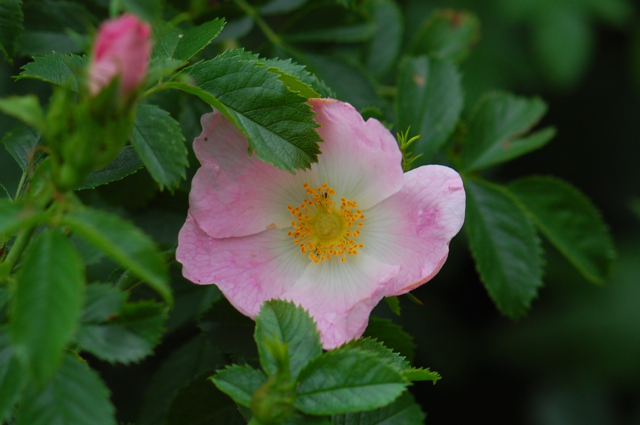
Wild Rose - Rosa canina

Most people tend to use either Rosa damascena, The Damask Rose, or Rosa gallica, The Apothecary’s Rose, to make aromatic tinctures and both produce some lovely medicines.

 Apothecary’s Rose

I’ve been quizzing different herbalists for a while about which roses they prefer for tincture making but it was Stephen and Carol Church, whose rose tincture is the most divine I have yet to taste, whose advice and method I have stuck with. They recommended using ‘Gertrude Jekyll’ a lovely pink English rose with a beautiful, strong scent. It apparently has the highest yield of volatile oils of all roses. I bought one last year and have been experimenting this summer with their directions.

Gertrude Jekyll

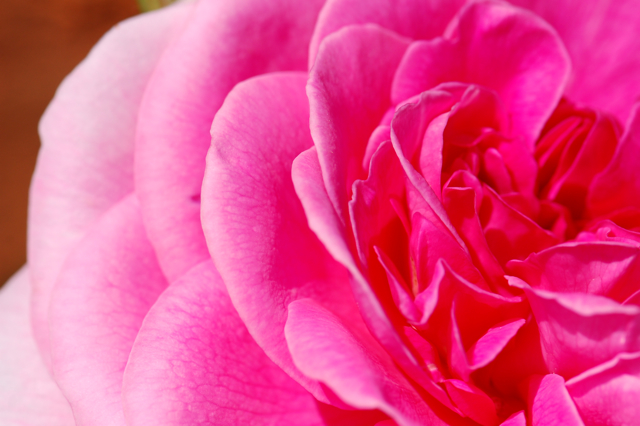
They advise macerating the petals in the alcohol for no more than 24 hours, a much shorter amount of time than usually allowed for tinctures. What this achieves is extraction of the volatile oils but without all the tannins which make rose tincture quite drying. Part of the nature of rose as a medicine is that it is cooling and drying but there are plenty of times when I want to work with the aromatic healing qualities of rose without using a medicine that is overly astringent. Besides, it tastes so much more delicious this way and that, as you know, is a big part of the magic of Rose. In her first growing year, my plant has yet to produce the abundance of flowers that Stephen and Carol’s do so I have just been experimenting with small quantities this summer. To make a specific tincture, that is one from fresh petals, try using a 4o% vodka, 1:2, which means one part rose petals by weight to two parts vodka by volume. Remember that rose petals are very light however so you need to cram a lot in! I actually didn’t have enough flowers blooming all at once to get the right proportion so I double infused it instead and it has still come out nicely.

Here ends the informative part of this post, the rest is just gratuitous rose indulgence. You have been warned!

My husband’s favourite rose in the garden and possibly mine, were I to have favourites, is the floribunda Margaret Merril. She has it all, beauty, elegance, scent and attractiveness to insects. She starts as a perfect creamy bud with a blush of pink…

Margaret Merrill

…and opens to form a perfect, white, deliciously scented bloom.

Along with the Apothecary’s Rose and Gertrude Jekyll, I have one more pink rose, ‘Scepter’d Isle’. Though not as sweetly fragranced as some of the others, she has a delicacy of presence that is healing just to look upon. This picture, taken after a heavy rain, does not really do her justice.

Sceptr'd Isle

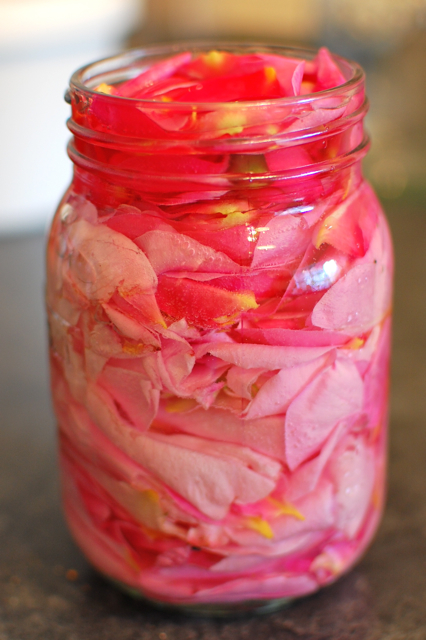
All three pink roses in a jar.

We have two miniature roses on the kitchen windowsill. The pink one I found in the middle of the road last year without a pot. I always wonder how it could have ended up there, victim of a lovers quarrel perhaps? I was quite happy to give it a home and it is much loved and admired now.

I have also found a passion for orange, yellow and apricot roses this year. I fell in love with ‘Graham Thomas’ during our trip to Mottisfont Abbey, home of the National Collection of Old Roses, and found it impossible to leave without one.

Graham Thomas

‘Lady Emma Hamilton,’ my most recent acquisition, has the cheeriest disposition and the sweetest of scents.

Lady Emma Hamilton

‘Wollerton Old Hall’ is another new addition, a very generous early birthday gift from my lovely colleague and fellow rose obsessor, Laura. Isn’t it just beautiful?

Wollerton Old Hall

And I have shown off my joyful little miniature climber ‘Warm Welcome’ before. Bred by my uncle and given to me by my Dad, its a firm favourite in my garden and is covered with small but wonderfully vibrant blooms.

Warm Welcome

My wish list is ever expanding and includes the gorgeous dark bloomed Rosa gallica ‘Tuscany’, a rambler to cover the ugly old tank by the gate and the lovely ‘Rhapsody in Blue’ which I have much admired at The London College of Physicians gardens. We are in the process of getting rid of our car parking space in order to accommodate them all!

What are your favourite roses? For medicine making or for pure enjoyment?

Read Full Post »

This post is part of the July Blog Party hosted by Danielle over at The Teacup Chronicles. Check her blog tomorrow for links to the other entries.

The idea for this blog party was ‘cooling drinks for the dog days of summer’ so it may come as a surprise to some that I have chosen to write about herbal teas (well, I am English after all). I drink teas come rain or shine and there are many lovely cooling herbs that make fine summer teas. Now I know the UK isn’t famous for its scorching weather but folk from hotter climates also enjoy teas on even the warmest days of summer. In India I drank chai, in Morocco it was fresh mint tea and in Mexico we used to have a lovely cinnamon infusion. Some of these drinks, as well as being taken hot, also contain warming spices which we associate more with winter drinks but these can actually open up the pores enabling you to cool down more effectively. Such is the magic of herbs.

To make the perfect cup of tea it’s ideal to use filtered water as the taste will be purer. Warm the pot with a little hot water first, discard then add about a tablespoon per pint of your chosen herbal mix. Pour over hot water that has just boiled but ceased to bubble and leave to infuse for 10/15 mins to extract as much benefit from the herbs as possible. If you need a sweetener then add a little honey after pouring when the tea will have cooled enough to avoid destroying its beneficial qualities. Ayurvedic medicine warns strongly against heating honey. Sip slowly and with gratitude for the multitude of wonderful herbs available to us.

Some of my favourite summer herbs include:

Chamomile – Soothing to the digestion and the nerves, chamomile is a lovely after dinner summer tea and helps calm overheated, irritable children (and adults).

Rose – Cooling, toning, calming and full of love, rose is lovely mixed with gently moistening herbs like Lime blossom and mallow or cooling diaphorectics like elderflower for a harmonising summer treat.

Sweet Woodruff – Cooling, mildly cleansing, good for the digestion and relaxing, this herb is a lovely addition to many summer tea blends with its mild and pleasant taste.

Sweet Woodruff

Elderflower – Cooling, diaphoretic and soothing to the upper respiratory tract, elderflower also has a light and pleasant flavour which is ideal for summer teas.

Hawthorn Blossom – Calms the nerves and opens the heart, if you like the taste, which I do, then this one is a winner.

Lemon Verbena – One of my favourite herbal teas, alone or in combination, not only for the delightful, refreshing taste but for its ability to calm digestion, fevers and nervous tension or anxiety.

Lemon Verbena

Borage – Demulcent, cooling and anti-inflammatory as well as strengthening to the adrenal glands, borage makes a nice addition to blends of summer teas as it doesn’t have much of a flavour by itself.

Lemon Balm – The perfect summer cup of tea! Delicious by itself or with other herbs like rose, other mints and lavender, it uplifts the spirit and cools the body and mind.

Mints – Spearmint, garden mint, peppermint, apple mint, ginger mint, chocolate mint… the choice of mints is endless! My favourites for tea are Moroccan mint and spearmint but I use various others too. What could be more refreshing than a cup of fresh mint tea? It’s also delicious as iced tea, chilled in the fridge with a little ice added before drinking.

Spearmint

Fennel – A great digestive tea, fennel has many uses, from boosting milk flow in nursing mothers to respiratory congestion and lifting low libido. It’s a tasty addition to tea blends and works well with other digestive herbs like chamomile.

Calamint – Sweet, aromatic and warmer in nature than some of the other mints, Calamint is also a good diaphoretic, digestive and expectorant herb.

Marshmallow – One of the best herbal demulcents, Marshmallow is lovely to include in blends for people who get dry in the summer.

Marshmallow

Lime/ Linden Blossom – Calming, cooling and moistening, this is a delicious tea for those who are stressed out and over worked or are having trouble getting off to sleep.

Calendula – Healing, anti-inflammatory and useful to the immune system, Calendula petals add a splash of colour and many benefits to any tea formula.

Lavender – Another great nerve soother and digestive herb, Lavender can help headaches from the heat and is lovely taken just before bed to help ensure a relaxing night’s sleep.

Lavender

Some summer tea combinations I particularly enjoy include:

* Lemon Verbena, Sweet Woodruff and Spearmint.

* Fennel, Calamint and Lemon Balm.

* Elderflower, Rose and Borage.

* Linden, Chamomile and Hawthorn Blossom.

* Apple mint, Monarda and Calendula petals.

And to finish, for those who know the old ditty…

I like a nice cup of tea in the morning,
I like a nice cup of tea with my tea,
And when it’s time for bed,
There’s a lot to be said,
For a nice cup of tea!

Read Full Post »

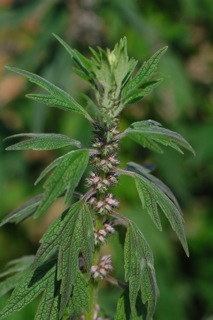
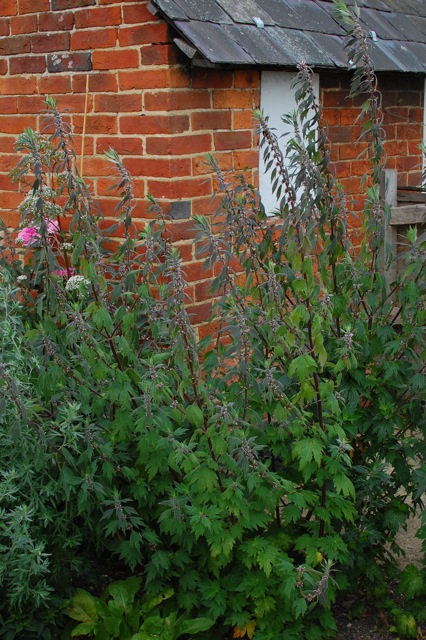
There are some herbs that I would hate to be without in my dispensary and Motherwort is most definitely one of them. Motherwort, Leonurus cardiaca, is a member of the mint family (Lamiaceae) and has their characteristic square stems and opposite leaves though, unlike most other mints, the leaves are deeply toothed and cut into three pointed segments. The pinky flowers appear in whorls around the stem and the calyxes are very prickly so beware when harvesting!

This is the second year I have grown Motherwort but the first in which it has really flourished as it was kept in pots last year and was a little cramped. I only have three plants but it grows large and tall so this is enough for a fairly good harvest – enough for about three litres of tincture and a small amount of dried herb.

Motherwort has been used in herbal medicine since antiquity and was thought to have been a popular remedy with the Celts. It used to grow quite freely in the wild here in the UK but now its much harder to find, growing it yourself is really the best option if you want to ensure a harvest. Gerard, writing in 1597 said of Motherwort, “It joys to be among rubbish, in stony and other rough places, especially about Oxford.”

With this herb, the clues to it’s most popular uses lie in its names, both common and Latin. It’s been known as Motherwort for centuries as it’s often considered a women’s herb, suitable not just for mothers but women of any age from puberty to menopause. Culpepper tells us, “it makes women joyful mothers of children, and settles their wombs as they should be, therefore we call it Motherwort.” It is helpful for painful periods whether the cause is muscular tension or congestion as it is both anti-spasmodic and dispersive. It is considered an emmenagogue as it helps promote delayed menstruation and is useful in labour. Potter’s informs us it, “is especially valuable in cases of female weakness and hysteria, acting as a tonic to the generative organs and allaying nervous irritability.” In modern lingo that means ‘good for PMS’! It is also regularly used for people who feel stressed and restless during the menopause.

The soft pink flowers with their hidden spiky calyxes remind me an archetypal Mother, seemly soft and fluffy but with a very sharp tongue when you cross her or threaten her children.

The second part of its Latin name, cardiaca, refers to its affinity with the heart. The first part, Leonurous, is said to have come about due to the plants resemblance to a lion’s tail but also because Leo was seen as the ruler of the heart. Culpepper wrote, “Venus owns this herb and it is under Leo” indicating that it was a female tonic with particular uses for the heart.

Dr Christopher believed it “vies for the honour of being the best heart tonic known. It calms and supports the heart and nerves and may be used in large doses.” It helps slow and regulate the heartbeat so is useful for tachycardia and has a mild vasodilating effect. Of course it goes without saying that any heart condition needs to be checked out by a professional and consult a herbalist first if you are already on heart medication.

It is particularly indicated for palpitations where the cause is anxiety and nervousness as Motherwort is also a useful nervine. It has been used for sleeplessness, anxiety, nervous tension and feelings of emotional instability. It has also been used to help people with cold hands and feet as its dispersive qualities help equalise peripheral circulation and heat. By relaxing constriction, Motherwort allows energy to move more freely around the body. Considered a useful herb for hyperthyroidism it treats many of the symptoms of this condition; palpitations, anxiety, restlessness, tremors etc.

Motherwort contains essential oils which contribute to its dispersive quality, tannins which help make it a useful uterine tonic along with alkaloids, iridoides and cardiac glycosides which contribute to its nervine and heart tonic properties.

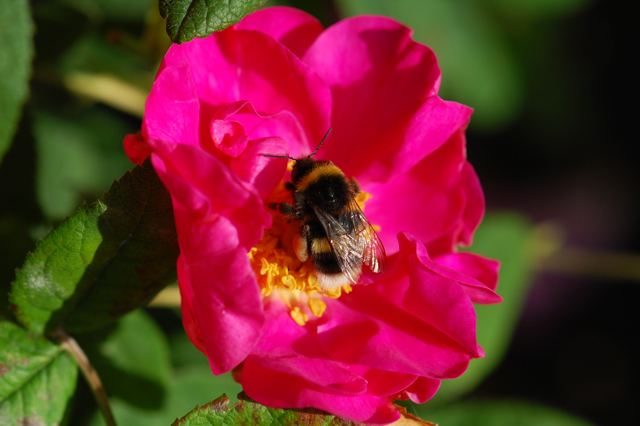
Bees, who are well known for their sophisticated tastes, adore it.

At one time Motherwort was considered a useful diaphoretic, meaning it induces sweating and helps cool a fever. However as diaphoretic herbs are best taken as hot infusions, and Motherwort is not the most pleasant tasting of herbs, this is not something I have used it for myself. It might be worth the effort though if you can stomach it as an old country saying quoted in Bartram’s informs us, “Drink Motherwort tea and live to be a source of continuous astonishment and frustration to waiting heirs.”

Being aromatic and pungent it helps to disperse stuck energy, this is why it is so useful in delayed menstruation, retention of the afterbirth, fevers and poor digestion – it moves. The combination of bitter and pungent tastes make it particularly suitable for ‘kapha’ type people who can tend to be overweight and a little sluggish. The relaxing, nervine qualities can make it good for Pitta or Vata types too, depending on their individual picture.

I don’t dry a huge amount of Motherwort as I really don’t use a lot in teas but I do use it as a compress for menstrual cramps. This is only really suitable to use if you are at home but it can prove very effective in easing pain, spasm and discomfort. All you need to do is make a strong tea of dried Motherwort and soak a flannel in it. Wring the excess liquid out and lie the flannel over the abdomen or lower back, depending on where the pain is most intense, and relax with a hot water bottle on top for a short while. Refresh the flannel with more tea and repeat a few times until you feel better.

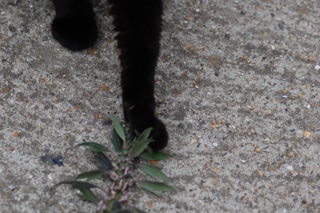
I believe that I may have discovered another use for this remarkable plant this year as it’s proved incredibly popular as a cat toy. Perhaps the temptation to chase the lion’s tail is just too great…

Read Full Post »

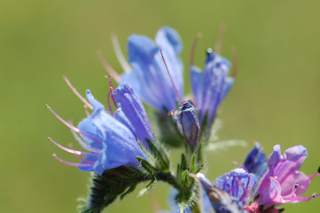
Viper’s Bugloss is without doubt one of the most visually arresting plants that grow wild on the Downs. It’s tall stems of vibrant blue blooms seem almost out of place amongst the mostly small and inconspicuous flowers of this chalk grassland habitat.

Still it is an incredible pleasure to happen upon them, growing in abundance, on a fine summers day. As this area of Downland is protected, I grow Viper’s Bugloss in my garden rather than harvesting from the wild but in some areas, where it is an introduced and somewhat invasive species, I’d have no qualms about wildcrafting it.

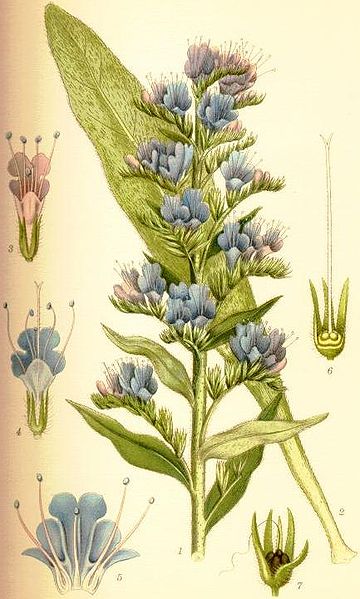
Viper’s Bugloss, Echium vulgare, is a biennial or short lived perennial native to Europe and parts of Asia. It has rough, hairy, lanceolate leaves and can grow up to nearly a meter in height. The flowers start off pinkish in the bud but open to reveal beautiful blue flowers with pink stamens. According to Culpepper, “After the flowers are fallen, the seeds growing to be ripe, are blackish, cornered and pointed somewhat like the head of a viper.” This is perhaps where it got its common name from.

It is beloved by all kinds of wildlife, especially bumble bees, honeybees, painted lady butterflies and these striking burnet moths. In fact, The Bumblebee Conservation Trust referred to it as the very best plant for bumblebees, making it a great addition to any wildlife friendly garden.

A member of the Boraginaceae family which also contains Borage and Comfrey, it has a long history of medicinal use though its fallen out of fashion in recent years. This is partly due to the presence of the infamous pyrrolizidine alkaloids that are found in various members of this family and have caused much controversy around the use of Comfrey. My purpose here is not to discuss the arguments for and against so I suggest you inform yourself well and decide whether or not you feel happy using this herb. Personally I feel comfortable using it internally to treat acute conditions such as those described below, especially as a few drops on the tongue is the usual dose and it is only taken short term. It may be used externally on unbroken skin without the need for caution. I’d avoid internal use if you are pregnant or have compromised liver function.

Medicinally it helps provoke a sweat and has diuretic properties too, thus helping the body expel toxins. Like comfrey it contains allantoin which makes it useful for healing injuries by promoting growth of new cells. It has also been used as a poultice for healing boils. Like borage it was said to dispel melancholy and being demulcent it was used particularly in chest complaints with dry coughs. Hilda Leyel considered it a cordial herb similar to borage and writes that it is “very useful in feverish colds and chest complaints; and cooling and cheering and decorative in wine cups and summer drinks.”

Above all however Viper’s Bugloss, as its name suggests, has been considered one of the main local remedies for snake bites. I learnt recently from Surrey based herbalist and member of the Herbarium, Stephen Church, that the tincture can be used both externally and internally for any number of insect bites as well. He has used it topically with remarkable success for treating bee stings and a friend of mine who is a beekeeper keeps it on hand to stop the reactions she has been known to have to stings. Stephen also tells a tale of his niece who was badly bitten by the dreaded sandflies whilst on Fraser Island in Australia. Cases like hers can require several rounds of anti-biotics to treat and patients are often left with scarring. Luckily he had equipped her with a bottle of Vipers Bugloss tincture before she left the UK and after using it liberally, the Doctor said he’d never seen bites heal so well.

Though I have not found much evidence beyond the anecdotal, it has been enough to convince me to keep a small bottle of Echium tincture in my first aid cabinet to dab on any insect bites I may happen to incur over the summer months. Earlier this year my parents’ dog was bitten by an adder and needed some very strong anti-venom and a stay at the vets in order to ensure his survival. Whilst I would, of course recommend he be taken to the vet as soon as possible, I’ll also be giving my parents a small bottle of tincture of Vipers Bugloss with instructions to use topically and internally, just in case he were ever to stick his eager nose in the path of a grumpy snake again!

For me Vipers Bugloss is a winner all round. It’s beautiful, a very handy first aid plant and perfect for attracting wildlife. I hope my garden will never be without it.

Read Full Post »

For many people anxiety and stress go hand in hand with a tense stomach and disturbed digestion. Whilst stress affects digestion in everyone, some people are particularly prone to experiencing problems.  All digestive issues, from gas to inflammatory bowel conditions are affected by stress, even if there are many other contributing factors.

Our digestion is controlled by the enteric nervous system which is linked to the central nervous system by millions of nerves. When we are stressed we enter the ‘fight or flight’ response which priorities blood flow to the brain and muscles in case we have to run from or outwit a possible danger. This is, of course, useful in situations where there is a real threat but for many of us, our constant deadlines, hectic schedules and million and one expectations lead to a chronic state of stress in which the blood flow to the digestive organs is seriously impaired.  Stress causes everything to contract and constrict and can therefore affect the production of  digestive juices, cause the stomach and or intestines to spasm, create inflammation and encourage infection. When stress becomes chronic, so do digestive problems.

Chamomile

Goethe believed that the gut was the centre of all human emotions. When I used to practice as a massage therapist I would always ask people first if they wanted me to massage their stomach as many people dislike being touched in this area. I can notice this in myself too, if I am feeling anxious at all then my stomach feels far to sensitive to touch. This is because the nerves are all activated, leaving us with sensations such as ‘butterflies in our stomach’ or that awful knot of fear in our solar plexus.

There are many herbs that work on the interface between the nerves and the digestion- Chamomile, Cardamom, Rosemary, Lavender, Lemon Balm and other Mints to name just a few. All these are aromatic, therefore diffuse stuck energy and tension at the same time as stimulating digestion. A calming cup of chamomile tea, taken 2 or 3 times a day, is a great way to gently soothe your nerves and digestion. Specific conditions will need individualised treatment but for those who suffer more general digestive disturbances related to stress these herbs can be very useful.

Catmint

At the moment, everyone I am seeing has some level of stress related digestive disturbance, even if that is not the primary reason they are seeking treatment. Recently I saw someone who was so tense that their appetite had disappeared almost completely, a sure sign that the digestive organs are very constricted. I came up with this tummy rub as a way of not only relaxing the digestive system but also encouraging people to take a few moments in their hectic schedule to be fully present with themselves, take some deep breaths and become mindful of their state of being. It’s easy to gulp down a tincture or tea on your way to work but you have to take a bit of time to massage your stomach and even if you feel like it’s an extra thing to do in the morning, once you have begun you cannot help but calm down a little.

When massaging the stomach, always move in deep rhythmic movements in a clockwise direction (as if the clock were on your abdomen rather than facing you!) as this is the way the intestines move waste along. Take a moment to breathe deeply and become a little more mindful of yourself and the present moment. This need only take a few minutes but that can be enough to relax the digestion, the nervous system and the mind.

Soothing Tummy Rub:

50ml base oil (almond, sunflower, apricot etc)
10 drops Neroli essential oil
5 drops Roman Chamomile essential oil
5 drops Cardamom essential oil

This makes a blend of approximately 2%, perfect for adults and children over 12. For children between 4 and 12, halve the amount of essential oils and for babies to 4 year olds use 5 drops chamomile only to make a 0.5% blend or stick to chamomile infused oil instead. You could also make it into a salve or balm (see my previous post) if that is your preference.

Chamomile is a fabulous essential oil for calming the nerves and soothing digestion, helping to expel bloating, flatulence and gas. Cardamom is warming, carminative and antispasmodic and also has a relaxing and uplifting effect on the nerves. Neroli is one of the best essential oils for the nervous system being deeply relaxing and uplifting. It’s also good for promoting flow of digestive juices.  All three are considered children’s oils as they are safe, supportive, caring and calming.

I’ve had very positive feedback from those trialling the oil so far and I encourage those of you who also suffer from a tense stomach to give it a go too. The perfect way to soothe, nurture and let go.

Read Full Post »

« Newer Posts - Older Posts »