We had a lovely evening at last week’s Potions group in which I taught about how to make your own herbal infused oils.
We made a soothing calendula oil and some salve with comfrey infused oil.

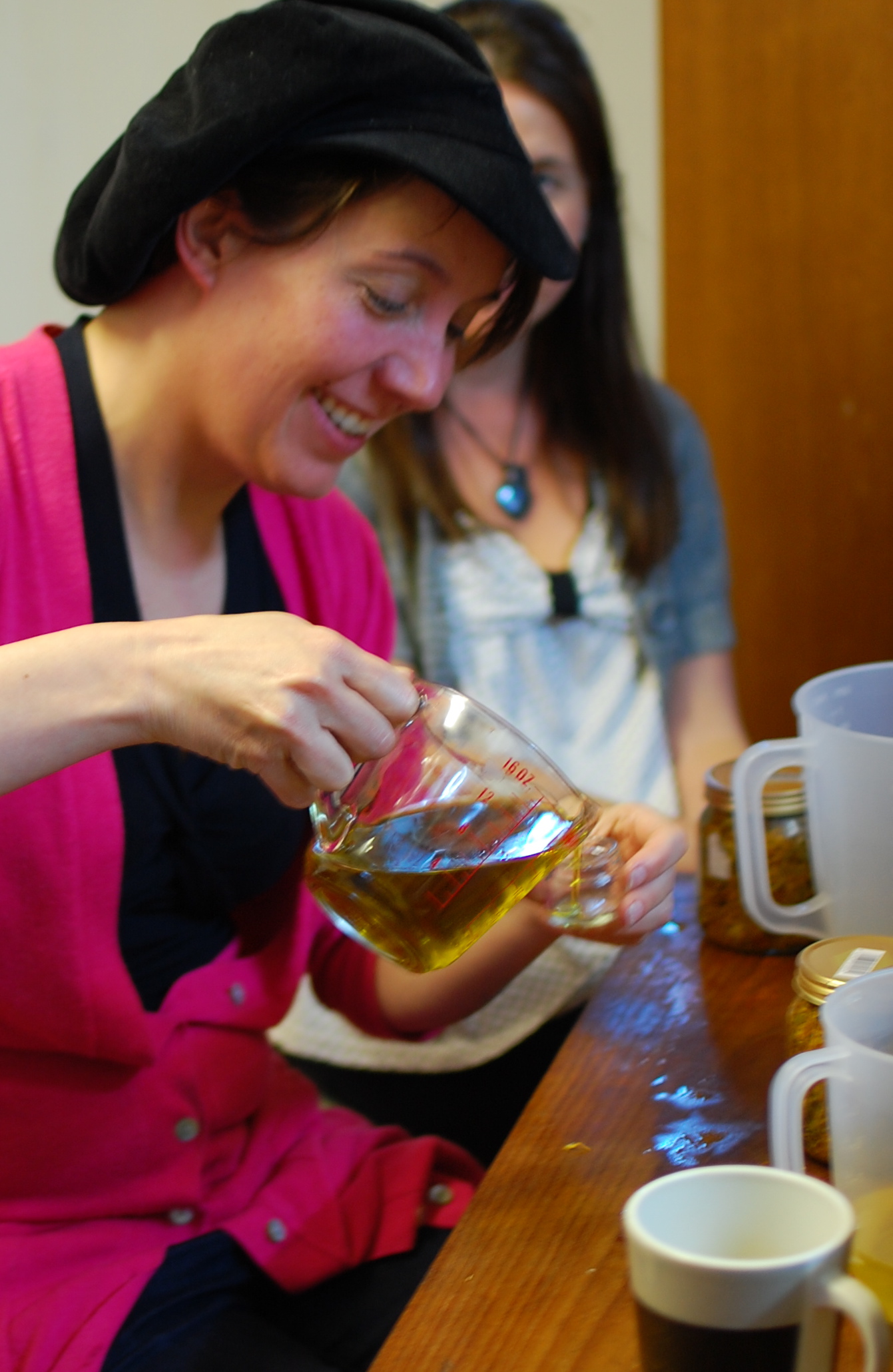
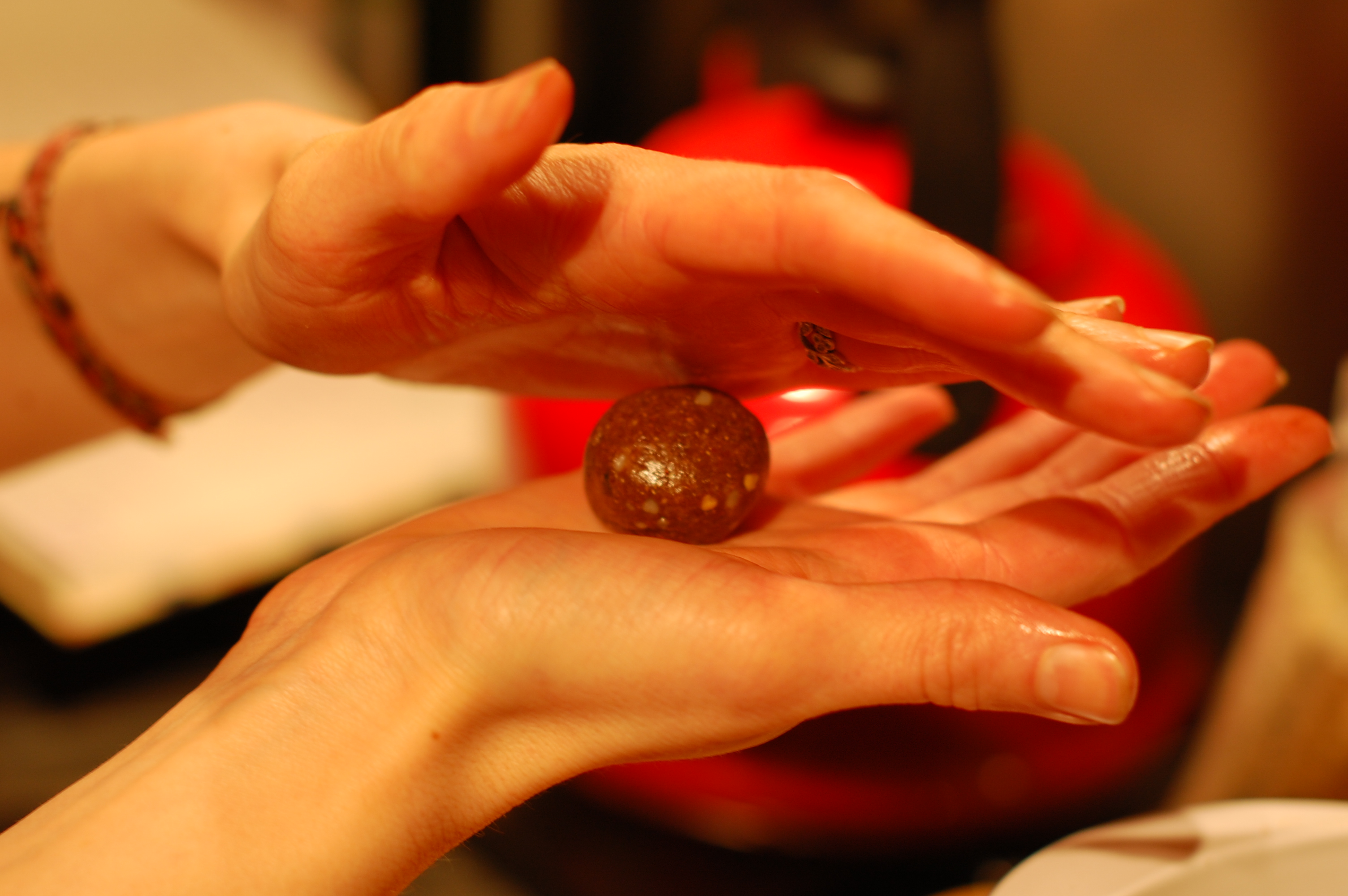
Here are some of the group straining, pouring and bottling their oils.

______________________________________________________________________________
Here are the notes I wrote for the class for those of you who are new to herbal infused oils, including two simple methods and some basic recipes.
Herbal Infused Oils
Oils infused with herbs are a lovely way to utilise the healing properties of plants which contain volatile oils and fats. Unlike essential oils they are easy to make at home and usually very gentle on the skin. You can use them to make massage oils, to heal skin problems, or to make lovely subtly scented balms and creams.
Plants containing volatile oils are generally those commonly used in aromatherapy. Aromatic plants such as lavender, rosemary, thyme and sage make lovely infused oils, as do peppermint, melissa, chamomile, rose, yarrow, juniper and pine. You can experiment with any plants that you know have a high volatile oil content.
Also plants that have a high level of other fat soluble components; including fat soluble vitamins, antioxidants, resins and saponins, can be extracted by macerating in oil. Calendula is a good example. When you pick calendula flowers you can feel how resinous and sticky they are, a good sign they will work well in oil. Other suitable plants include comfrey, St John’s wort, viola, plantain and mullein.
You can use a variety of different oils as the base, or menstrum, for the infusion. Olive is classic for the leafy herbs, sunflower is lovely for calendula, sweet almond or apricot make a great base for creams and jojoba is light and well absorbed.
How to Make Infused Oils:
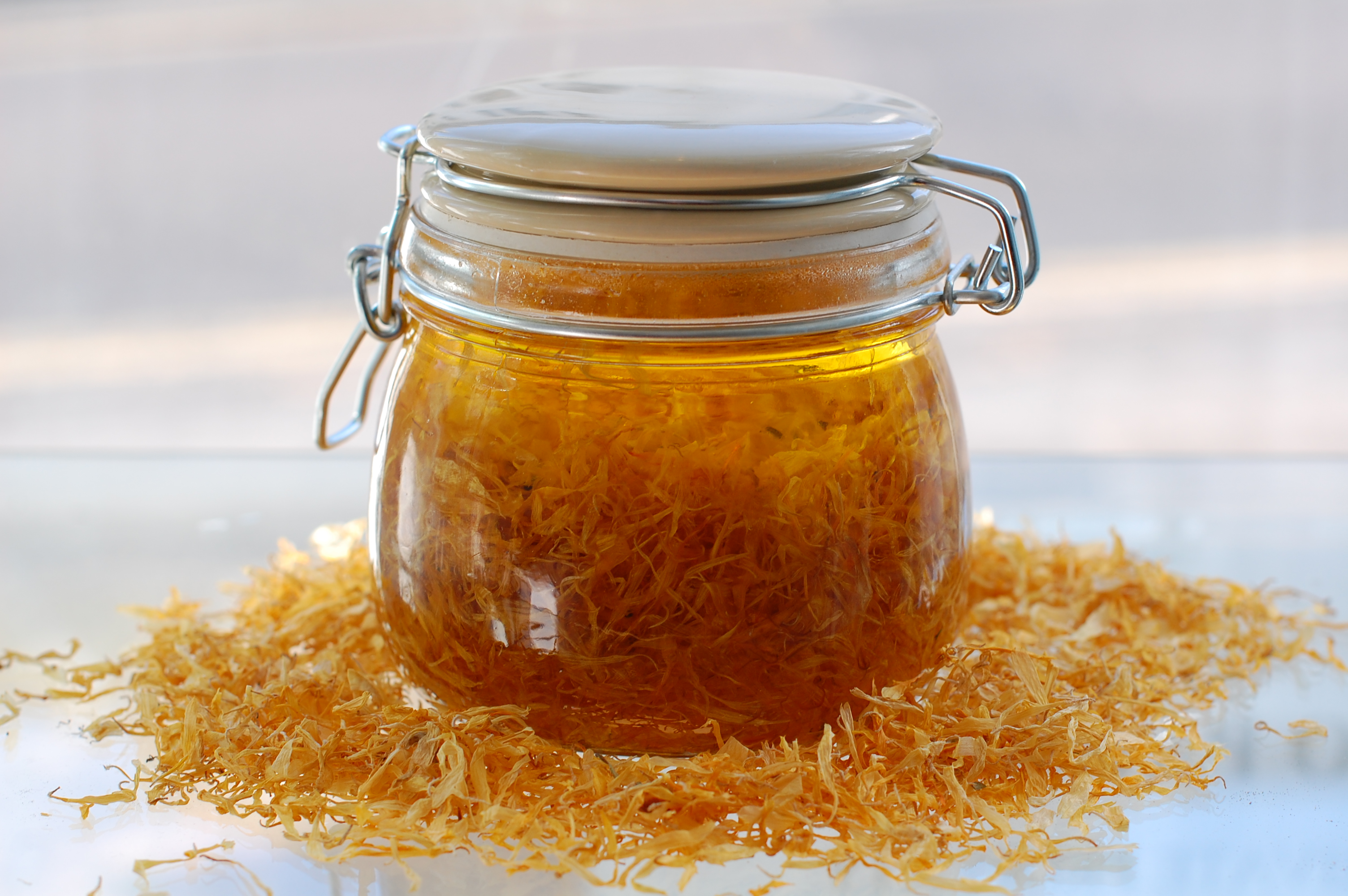
The Sun Method-
- You can generally use dried or fresh plant material when available, though some herbs, such as calendula work better as dried and others, such as comfrey, are better from fresh.
- If using fresh herbs, pick them on a dry day after the sun has dried the morning dew.
- Make sure you pick clean plant material from an area you can be sure has not been sprayed with chemical fertilisers. This is particularly important as you are not going to wash the plant material, you want it to be as dry as possible to prevent spoilage, though you can bush off any dirt with a soft bristled brush.
- If using leaves such as comfrey or plantain, it’s good to let them wilt overnight to reduce some of the water content but flowers are best used fresh.
- Chop fresh leafy herbs finely and lightly fill a completely dry jar with the material. Its important to cut the herb first as it exposes more of the plant to the oil, making for a better infusion. Flowers can be put in whole and dried herbs will most likely come already cut.
- If using fresh herbs you can pour the oil of your choice straight on but if using dried, its nice to warm the oil first in a bain marie to get things going. Fill the jar almost to the brim with oil as an air gap will promote oxidation and spoilage.
- Stir the contents with a wooden chopstick or glass stirring rod until all the bubbles have dispersed and cap with a lid or a piece of kitchen roll held in place with a rubber band. This works well for fresh plant material as it allows moisture to escape.
- You can leave it to infuse on a bright sunny windowsill or in a nice warm spot such as beside the boiler or in an airing cupboard. I like doing calendula in the sun but it’s best to leave it somewhere that is consistently warm and windowsills can get cold at night which encourages condensation.
- Stir every day for the first two weeks then leave to infuse for another two to four, that’s four to six weeks in total. Calendula and some other oils are nice to double infuse- leave for 3 weeks, strain, then fill the jar with fresh flowers and pour the partially infused oil back on top and repeat the process.
- Don’t forget to label your jars so you remember when to strain them. Strain through a sieve covered in cheesecloth or a jelly bag. If you used fresh material it is wise to let it stand for a week and check if any water has settled in the bottom of the jar. If so pour off the oil and discard the water.
- Bottle the resulting oil and label and date.
The Heat Infusion Method:
This is a quicker method if you need to prepare your oil for immediate use.
- Use about 50-75g of dried herb, or 75-100g fresh herb per 300ml base oil. This is an approximate amount as some herbs are bigger and fluffier than others! Basicially you want the oil to just cover the dried herb.
- Place the oil and herbs in a double boiler or bain marie with a tightly fitting lid over a pan of gently boiling water.
- Allow to infuse at a continuous heat for 2 hours making sure the water does not boil away! Stir every half hour or so and check the progress of your oil.
- Strain and bottle or repeat the process if you desire a stronger, double infused oil.
- Always remember to label and date your products.
Some Simple Recipes for infused Oils:
Comfrey Salve:
Ingredients:
70ml Comfrey macerated oil
25g Grated cocoa butter
5g Beeswax
- Melt the cocoa butter and beeswax in a double boiler or bain marie over a pan of boiling water.
- Add the comfrey oil and stir slowly until completely dissolved. Don’t allow the oil to start to bubble, turn the heat down immediately if this happens.
- If you would like to add an essential oil then do so now, mix well and pour into jars. Leave to set in the fridge for a few hours before using liberally.
Comfrey has a long history of traditional use for healing damaged tissues such as strains, sprains, broken bones and slow healing wounds. Its common name was ‘knitbone’ and it possesses profound healing capabilities which enable it to aid in the ‘knitting’ together of tissues. It may also be helpful for inflammation and rashes. Comfrey oil is not recommended for internal use or use on broken skin but you can use this salve freely for bruising or any injury of the muscles or bones. Even if you have to wear a cast you can rub the slave into the skin at the top and bottom to help the bones heal strong and healthy.

Simple St John’s Wort Lip balm for Cold Sores:
Ingredients:
60ml St John’s wort infused oil
15g Cocoa butter
15g Shea butter
10g beeswax
25 drops Melissa Essential Oil
25 drops St John’s wort tincture
25 drops Melissa tincture
- Melt the cocoa butter, shea butter and beeswax in a bain marie over a low heat and when completely liquid add in the infused oil and mix thoroughly.
- Add the Melissa oil and the tinctures and whisk lightly with a fork to ensure the tinctures are well mixed with the oils.
- Pour into small jars and use liberally when you feel the first tingle coming on.
St John’s Wort and Melissa are both anti-viral and therefor helpful for treating the herpes virus that causes cold sores.
Rosemary Warming Massage Oil:
- Infuse fresh rosemary in oil according to one of the methods detailed above.
- To 100ml of the oil add 10 drops rosemary essential oil, 5 drops ginger, 5 drops black pepper and 5 drops cardamom.
- This would be a wonderful oil for promoting circulation and easing sore muscles and joints.










 Whispering Earth