Feeds:
Posts
Comments

Archive for the ‘Home Remedies’ Category

Linden Update

When I wrote my last post on Linden, the blossoms were yet to open. I finally managed to collect my harvest about 10 days ago, when I accompanied the lovely Sarah and Therri on their rounds of the local Tilia trees.

I only collected one bagful but that was plenty for me to make a small quantity of tincture, some infused oil and a lovely linden Elixir. Linden, also known as Lime or Tilia, has a beautiful sweet honey/ floral smell which can make a gentle, subtle infused oil that will help with nervous tension and calm anxiety when massaged into the skin. It’s also antioxidant so lovely in face creams which I’ll be making a batch of soon. I used Jojoba oil to make mine, partly because Jojoba is one of the plant oils that is best absorbed by the skin and partly because it’s the only oil I had sufficient quantity of left! You could use any light, unscented oil however such as sweet almond, apricot kernel or a light sunflower. See here for my post on how to make an infused oil.

Infused Oil and Elixir

I’m particularly excited by the elixir as it’s the first time I’ve made it. I was inspired by the wonderful taste of lime blossom honey (said to be one of the best in the world) and wanted to incorporate it into a medicine which would capture the different properties of Tilia in something delicious and sweet tasting. To make it I filled a jar with Tilia blossom, the flowers and bracts, and covered it to the top with one third Lime blossom honey and two thirds brandy. I then added 7 drops of Linden flower remedy to increase the subtle healing properties of the elixir. I love Tilia as a flower essence, my experience being that it lightens my mood, opens the heart, increases perception and brings a sense of sweetness and calm to my day.
I’ll leave it to infuse for six weeks, giving it a little shake once a day, and then strain out the plant material and take it liberally, either in a little warm water or straight off the spoon! Yum.

Read Full Post »

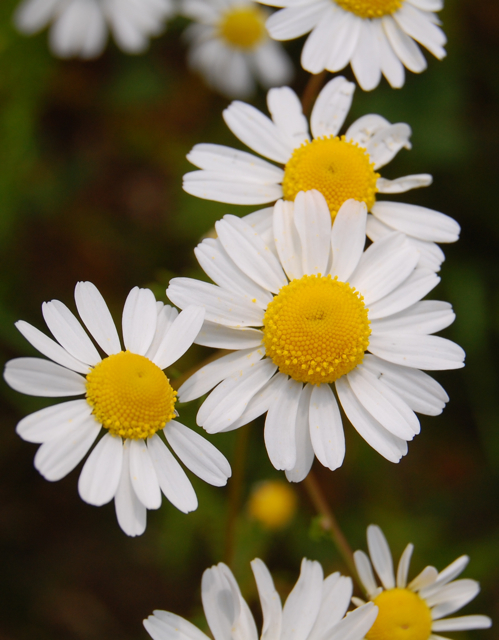
The Elysian fields, final resting place in Classical mythology for the virtuous and heroic, must surely be filled with chamomile. The hypnotic smell, the bright, joyful faces of the flowers, the gentle breeze and humming of insects, all combine to convince you that you have reached paradise.

Many meetings with plants have the ability to transport you to a place of wonder but, for me, sitting in a field of german chamomile (Matricaria recutita) stretching as far as the eye can see, is one of the most enchanting of all.

Chamomile Field

A short while harvesting or relaxing in fields of chamomile is enough to wash away all the drudgery, all the dreariness, all the uncomfortable intensity of city life. I believe (at least during my more optimistic moments!)  that one day people will become attuned enough to the subtleties of their senses that healing and medicine will consist of just sitting amongst the plants, without having to ingest or apply them to get all the benefits they need. I feel this strongly when sitting with the chamomile, which is a favourite plant ally of mine, with its joy and unparalleled generosity beaming all around me.

Chamomile

Chamomile Celebration

I spent a lovely afternoon harvesting with my friend and brilliant herbalist Therri who was collecting enough chamomile to supply herself and various other herbalists she makes tinctures for. After gathering enough for litres and litres, we had hardly made a dent.

It wasn’t long before the bliss was too much to contain!

Hooray for Chamomile!

Yay!

After no time at all I had collected plenty for making up some goodies- enough tincture for my needs, a good quantity of infused oil, a little treat of infused honey and lots of flowers for drying.

Chamomile honey and tincture in vodka.

The tincture only needs about a week to infuse and, after straining it a couple of days ago, I can confirm it’s one of the best chamomile tinctures I’ve tasted. Flowers often need less time to infuse than thicker leaves, stems, woody parts or roots and even less when they are tinctured fresh.

Brigitte suggested a chamomile honey in her comment on my post on uses for dried chamomile a while ago. I’ve been hanging on for the fresh to make this as, though they can make the honey a bit runnier because of the moisture content, I often prefer the flavour of honeys infused with fresh herbs, at least where their use is appropriate.

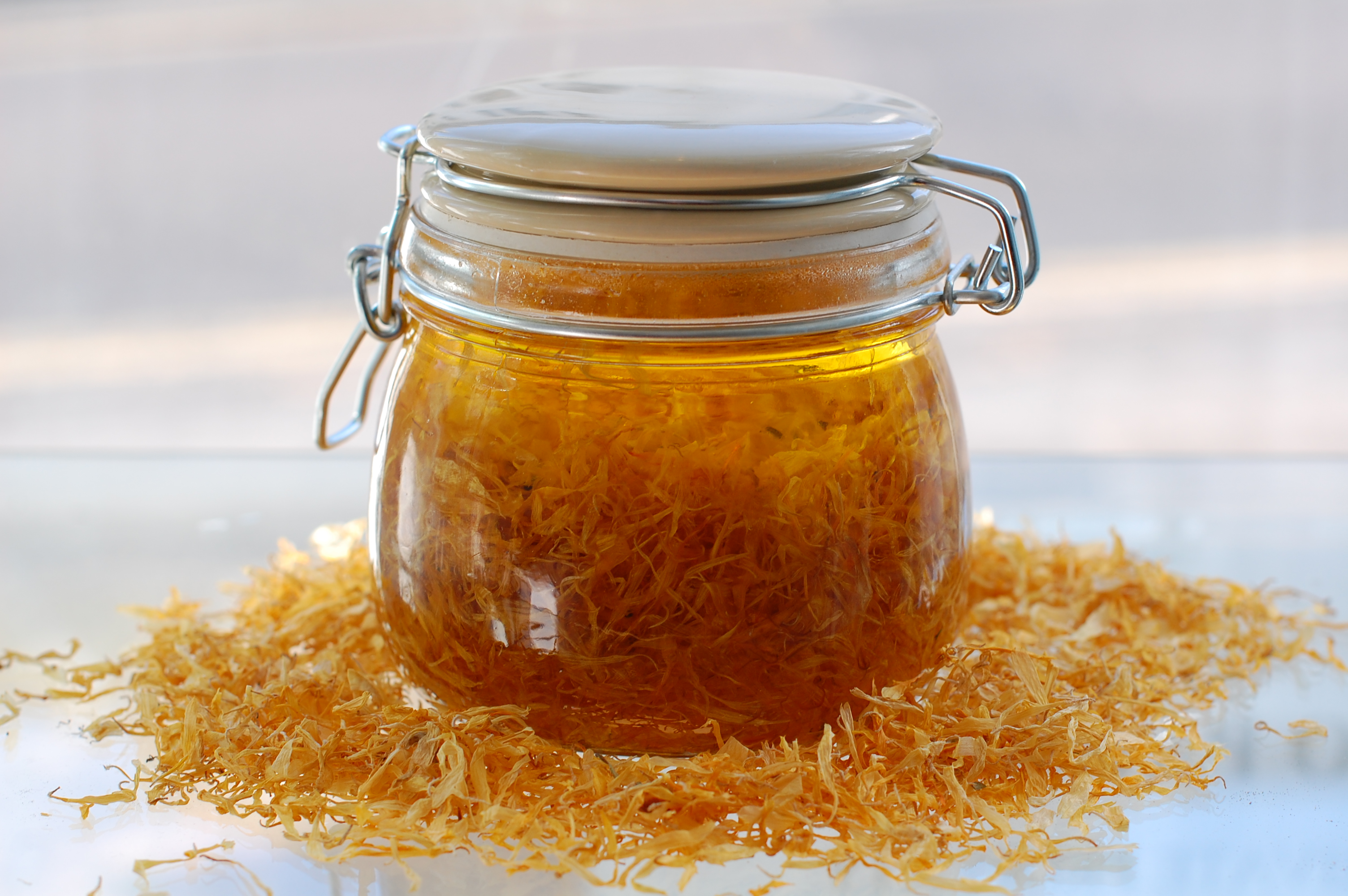
For the oil I used an organic apricot kernel as it is particularly suited to sensitive skins. After a week’s sun infusion it has turned out beautifully, the smell is unbelievably strong and the colour has turned a deep green due to the anti-inflammatory component, azulene, which occurs in the volatile oil of the chamomile. I’ll be using this oil to make a soothing skin cream with calendula infused oil and a healing massage oil for nervous tension with linden and St. Johns wort infused oils.

Chamomile in Apricot Kernel oil, sun infusion.

I’ve dried enough to keep me going for the year and make up my favourite chamomile tea blends.

Drying Chamomile in the Dehydrator

Chamomile is useful for so many ailments and so many people can benefit from spending time with it. I’ll post a full monograph soon to outline some more of it’s traditional and modern uses.

Read Full Post »

Elderflowers

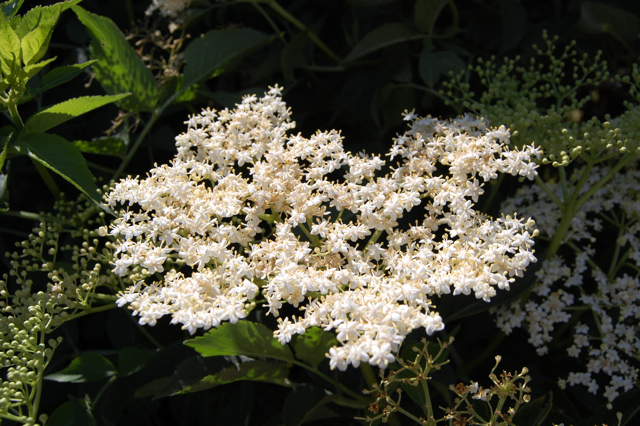
The Elder tree has been held as sacred in various folkloric traditions, as has the Elder Mother who presides over it. Any lady whose age numbers in the thousands has learnt a thing or two about natural beauty and, luckily for us, the Elder Mother shares some of her secrets in the creamy white elderflowers that adorn her trees in May and June. Elderflowers have long been used in skincare recipes for their softening, anti-inflammatory and beautifying properties and infusions have been used to even the skin tone, ease sunburn and prevent wrinkles.

I love elderflower infused oils for use in face and body care recipes so this year I decided to experiment with a few different base oils to see how they captured the fragrance and nourishing properties of the elderflowers. With the resulting products I made a face oil, a day cream and a body butter, the recipes for which are included here.

Along with my usual sweet almond oil infusion, I chose to try safflower oil and macadamia oil as well as a couple of solid oils- coconut and mango butter. Safflower oil is popular in cosmetics because it is high in essential fatty acids. Like sweet almond, it is a light oil with little odour so I thought it would work well for capturing the scent of the elderflowers. Macadamia is a rich, fatty oil that it particularly beneficial for dry or mature skins and has a deep nutty aroma. Coconut oil has a lovely light consistency which is perfect for cream making though its strong smell can detract from the elderflowers, so I also tried the mango butter which has a similar, though slightly creamier consistency, with hardly any smell. Coconut oil is considered cooling and elderflowers have been recommended for sunburn so I thought this would make a nice aftersun if blended with some aloe vera and lavender water.

It’s important to use only organic, cold pressed oils to retain all the therapeutic benefits and ensure there are no traces of harmful chemicals in your products and, of course, make sure you only harvest elderflowers from areas you’re sure haven’t been sprayed.

Fresh Elderflowers give up their scent and beautifying properties quite quickly and will go off if left to infuse too long. I chose to sun infuse my oils for about 10 hours on a bright windowsill which was plenty of time for them to absorb all the goodness without getting that ‘cat’s pee’ smell that can accompany over done elderflowers! With the coconut and mango butters I melted them in a bain marie before pouring them over the elderflowers and allowing to infuse for a day before re-warming and straining. You can use the heat method but the oils can quickly degrade at high temperatures so I prefer to sun infuse where appropriate. For a detailed explanation of how to infuse an oil see my previous post here.

Elderflower Oils

As elderflowers have very fine pollen I chose to strain the liquid oils through a coffee filter to ensure as much of the plant material as possible was removed and prolong the life of the finished oil. The melted butters went quite happily through a muslin cloth however. I was really happy with all the different infusions, especially the mango butter and safflower which, I thought, retained the best smell. The macadamia oil has a really decadent feel but would be too heavy to use alone so I decided to mix equal parts of the three liquid infused oils to make a delicious face oil. By mixing all three you get the benefits of them all with a really nice consistency. Don’t feel you have to use the same oils as me, feel free to use any that you fancy and you can also just use one rather than a combination for ease and practicality.

Elderflower Face Oil:
This recipe makes three 30ml bottles
30ml elderflower infused in safflower
30ml elderflower infused in sweet almond
30ml elderflower infused in macadamia
3ml vitamin E Oil

I use just 3 or 4 drops of this oil massaged into damp skin at night and it feels so soft in the morning.

I also made a face cream for use in the day.

Elderflower and Rose Moisturiser:
50 ml rosewater
25ml aloe vera gel
1/2 tbsp vegetable glycerine
10g beeswax
50ml elderflower infused oil (I did 20 safflower, 20 almond and 10 macadamia)
20ml elderflower infused mango butter (or coconut butter. Use plain if you have none infused)
5ml Vitamin E
5 drops Vitamin A
10 drops Rose Otto essential oil

This makes a really lovely, rich cream so a little goes a long way. Melt the beeswax in a bain marie and add the mango butter and oil when it’s already soft.

In a separate container, mix the aloe vera, rosewater and vegetable glycerine.

Take the oils off the heat and allow to cool slightly before adding the vitamins A and E.

I use a small hand blender to mix them as I’m not making a large enough quantity to use my big blender. You could also use an electric or hand whisk. Begin to blend/ whisk the oil mixture and slowly add in the waters, a drizzle at a time. Continue to blend until you have a nice smooth, even, creamy consistency. Spoon into a jar or jars and stir in the essential oils. Allow to cool completely before putting in the fridge as this will help prevent it separating.

This recipe doesn’t contain a preservative but it you want it to last longer than a month or so you will need to add one.

I have a much more detailed description of cream making here.

Also a description of ingredients including preservatives here.

Elderflower Softening Cream

I’m currently making a toner to go with this by infusing elderflowers in witch hazel distillate. For normal or combination skin mix 25ml of the resulting liquid with 75ml of rosewater and place in a spray bottle to spritz on after cleansing or to refresh the skin throughout the day. For dry skin, drop the witch hazel to 10ml and up the rosewater to 90ml and for oily skin you can increase the witch hazel to 40ml and use 60ml of lavender water instead of rose.

Finally I made a really simple body butter with the following ingredients;
60 ml elderflower infused in sweet almond
30ml elderflower infused mango butter
30ml shea butter
Melt all the ingredients together in a bain marie/ double boiler, mix well and pour into a 120ml jar. Allow to set in the fridge before using liberally.

Do patch tests first to ensure you aren’t sensitive to any of the ingredients in these recipes.

And last but not least, don’t forget to thank the Elder Mother! 😉

Read Full Post »

We had a lovely evening at last week’s Potions group in which I taught about how to make your own herbal infused oils.

We made a soothing calendula oil and some salve with comfrey infused oil.

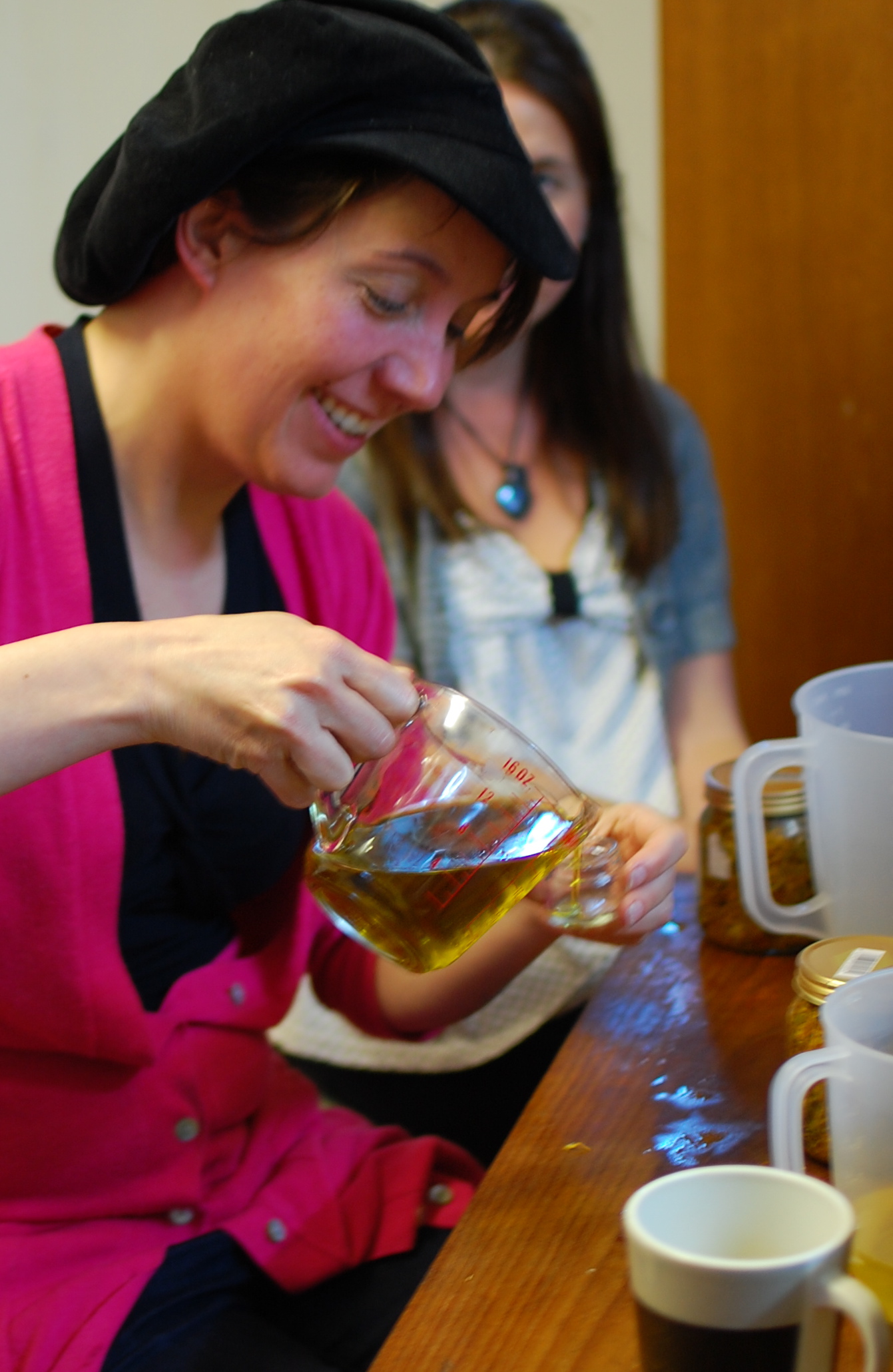
Here are some of the group straining, pouring and bottling their oils.

______________________________________________________________________________

Here are the notes I wrote for the class for those of you who are new to herbal infused oils, including two simple methods and some basic recipes.

Herbal Infused Oils

Oils infused with herbs are a lovely way to utilise the healing properties of plants which contain volatile oils and fats. Unlike essential oils they are easy to make at home and usually very gentle on the skin. You can use them to make massage oils, to heal skin problems, or to make lovely subtly scented balms and creams.

Plants containing volatile oils are generally those commonly used in aromatherapy. Aromatic plants such as lavender, rosemary, thyme and sage make lovely infused oils, as do peppermint, melissa, chamomile, rose, yarrow, juniper and pine. You can experiment with any plants that you know have a high volatile oil content.

Also plants that have a high level of other fat soluble components; including fat soluble vitamins, antioxidants, resins and saponins, can be extracted by macerating in oil. Calendula is a good example. When you pick calendula flowers you can feel how resinous and sticky they are, a good sign they will work well in oil. Other suitable plants include comfrey, St John’s wort, viola, plantain and mullein.

You can use a variety of different oils as the base, or menstrum, for the infusion. Olive is classic for the leafy herbs, sunflower is lovely for calendula, sweet almond or apricot make a great base for creams and jojoba is light and well absorbed.

How to Make Infused Oils:

The Sun Method-

  • You can generally use dried or fresh plant material when available, though some herbs, such as calendula work better as dried and others, such as comfrey, are better from fresh.
  • If using fresh herbs, pick them on a dry day after the sun has dried the morning dew.
  • Make sure you pick clean plant material from an area you can be sure has not been sprayed with chemical fertilisers. This is particularly important as you are not going to wash the plant material, you want it to be as dry as possible to prevent spoilage, though you can bush off any dirt with a soft bristled brush.
  • If using leaves such as comfrey or plantain, it’s good to let them wilt overnight to reduce some of the water content but flowers are best used fresh.
  • Chop fresh leafy herbs finely and lightly fill a completely dry jar with the material. Its important to cut the herb first as it exposes more of the plant to the oil, making for a better infusion. Flowers can be put in whole and dried herbs will most likely come already cut.
  • If using fresh herbs you can pour the oil of your choice straight on but if using dried, its nice to warm the oil first in a bain marie to get things going. Fill the jar almost to the brim with oil as an air gap will promote oxidation and spoilage.
  • Stir the contents with a wooden chopstick or glass stirring rod until all the bubbles have dispersed and cap with a lid or a piece of kitchen roll held in place with a rubber band. This works well for fresh plant material as it allows moisture to escape.
  • You can leave it to infuse on a bright sunny windowsill or in a nice warm spot such as beside the boiler or in an airing cupboard. I like doing calendula in the sun but it’s best to leave it somewhere that is consistently warm and windowsills can get cold at night which encourages condensation.
  • Stir every day for the first two weeks then leave to infuse for another two to four, that’s four to six weeks in total. Calendula and some other oils are nice to double infuse- leave for 3 weeks, strain, then fill the jar with fresh flowers and pour the partially infused oil back on top and repeat the process.
  • Don’t forget to label your jars so you remember when to strain them. Strain through a sieve covered in cheesecloth or a jelly bag. If you used fresh material it is wise to let it stand for a week and check if any water has settled in the bottom of the jar. If so pour off the oil and discard the water.
  • Bottle the resulting oil and label and date.

The Heat Infusion Method:

This is a quicker method if you need to prepare your oil for immediate use.

  • Use about 50-75g of dried herb, or 75-100g fresh herb per 300ml base oil. This is an approximate amount as some herbs are bigger and fluffier than others! Basicially you want the oil to just cover the dried herb.
  • Place the oil and herbs in a double boiler or bain marie with a tightly fitting lid over a pan of gently boiling water.
  • Allow to infuse at a continuous heat for 2 hours making sure the water does not boil away! Stir every half hour or so and check the progress of your oil.
  • Strain and bottle or repeat the process if you desire a stronger, double infused oil.
  • Always remember to label and date your products.
You can also heat infuse your oils as above in an oven on the lowest possible temperature.

Some Simple Recipes for infused Oils:

Comfrey Salve:
Ingredients:
70ml Comfrey macerated oil
25g Grated cocoa butter
5g Beeswax

  • Melt the cocoa butter and beeswax in a double boiler or bain marie over a pan of boiling water.
  • Add the comfrey oil and stir slowly until completely dissolved. Don’t allow the oil to start to bubble, turn the heat down immediately if this happens.
  • If you would like to add an essential oil then do so now, mix well and pour into jars. Leave to set in the fridge for a few hours before using liberally.

Comfrey has a long history of traditional use for healing damaged tissues such as strains, sprains, broken bones and slow healing wounds. Its common name was ‘knitbone’ and it possesses profound healing capabilities which enable it to aid in the ‘knitting’ together of tissues. It may also be helpful for inflammation and rashes. Comfrey oil is not recommended for internal use or use on broken skin but you can use this salve freely for bruising or any injury of the muscles or bones. Even if you have to wear a cast you can rub the slave into the skin at the top and bottom to help the bones heal strong and healthy.

Simple St John’s Wort Lip balm for Cold Sores:
Ingredients:
60ml St John’s wort infused oil
15g Cocoa butter
15g Shea butter
10g beeswax
25 drops Melissa Essential Oil
25 drops St John’s wort tincture
25 drops Melissa tincture

  • Melt the cocoa butter, shea butter and beeswax in a bain marie over a low heat and when completely liquid add in the infused oil and mix thoroughly.
  • Add the Melissa oil and the tinctures and whisk lightly with a fork to ensure the tinctures are well mixed with the oils.
  • Pour into small jars and use liberally when you feel the first tingle coming on.

St John’s Wort and Melissa are both anti-viral and therefor helpful for treating the herpes virus that causes cold sores.

Rosemary Warming Massage Oil:

  • Infuse fresh rosemary in oil according to one of the methods detailed above.
  • To 100ml of the oil add 10 drops rosemary essential oil, 5 drops ginger, 5 drops black pepper and 5 drops cardamom.
  • This would be a wonderful oil for promoting circulation and easing sore muscles and joints.

Read Full Post »


This months blog party is hosted by Sarah Head over at Tales of a Kitchen Herbwife on the topic of ‘Herbs for Aches and Pains.’

Most of us suffer from aches and pains from time to time and, whether it’s the odd twinge or continuous and debilitating muscle pains, herbs are here to help. Most aches and pains tend to fall into the category of either ‘hot’ or ‘cold’ conditions. A hot condition is likely to be inflamed, red, swollen and sore and could be due to rheumatic problems, strains, sprains or other injuries. Cold conditions might manifest as dull muscular aches that are better for warmth and pressure.
Here are a few of my favourite simple herbal tips for easing you through when these afflictions strike.

Baths- The first port of call for any cold, dull, achy, muscular pains is a good soak in a hot bath. Debs and Elizabeth have already mentioned how great Epsom Salts are for adding to the bath water in their posts and I agree whole heartedly! This is because Epsom salts are rich in magnesium, a vital mineral for aiding muscle relaxation and easing tension. Many of us are deficient in magnesium and stress depletes us further, so its important to make sure we are getting sufficient levels by consuming lots of leafy greens and enjoying nettle nourishing infusions regularly. Here is a great bath blend for driving out the ache;

3 cups epsom salts
1/2 cup mustard powder
3 drops black pepper essential oil
3 drops rosemary essential oil
Mix all ingredients thoroughly in a bowl and add to a full hot bath. Stay soaking for at least half an hour to get maximum benefit.

If you feel achey at the onset of a cold or flu try sipping a nice cup of Linden blossom tea whilst you bathe.

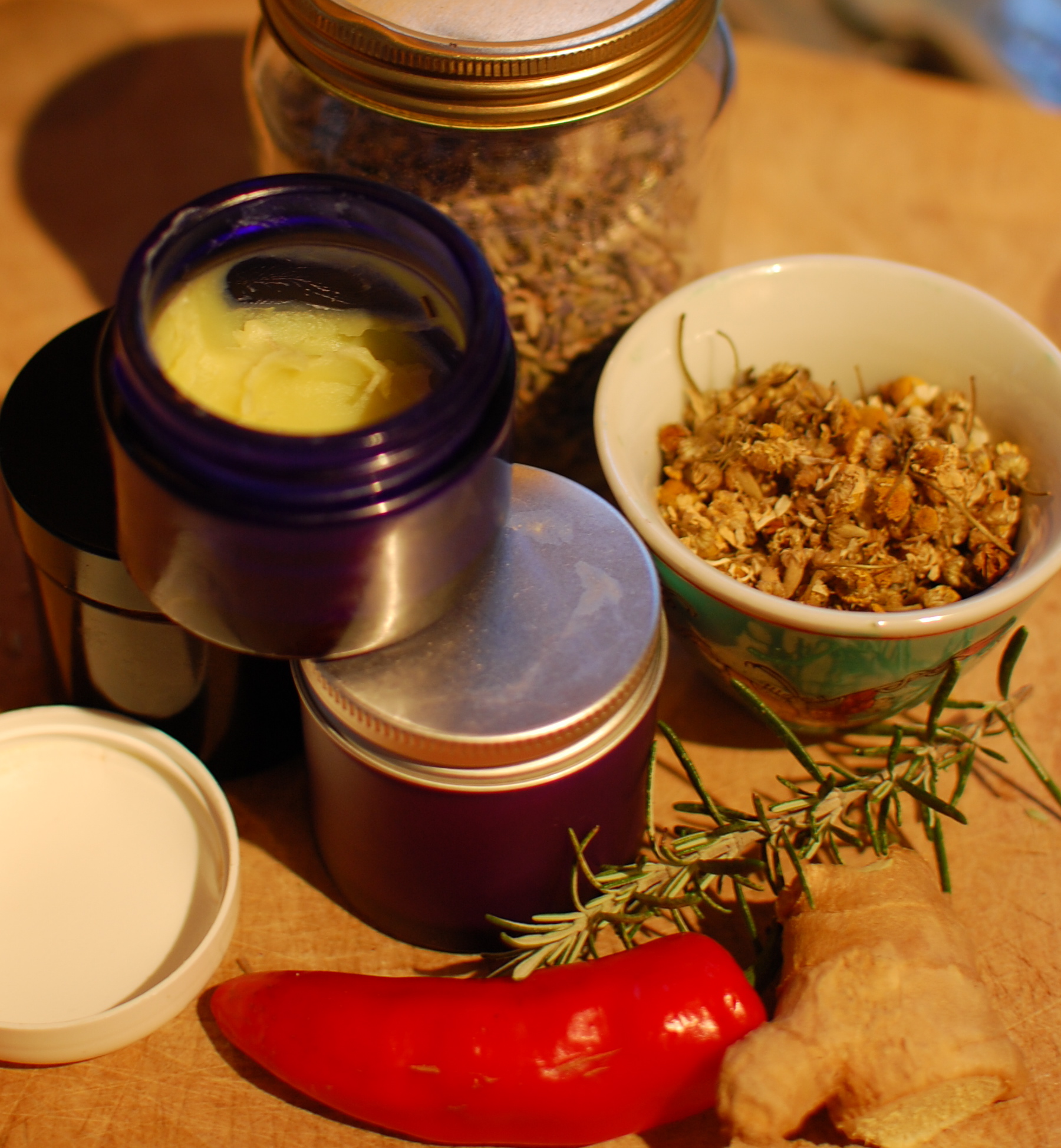
Oils- A good rub down with a herbal infused oil will do wonders for relieving stiffness and soreness and many infused oils are beneficial for aches and pains. If you’re experiencing a cold, dull ache, then oils that are warming and stimulating to the circulation will help ease the pain and tension. My favourite is a combination of Rosemary and Ginger infused oils but Cayenne is also great as, like ginger, it is anti-inflammatory and pain relieving.
If you have joint pains then a simple salve made of comfrey infused oil may be beneficial.
If there is nerve pain St. John’s Wort is the oil of choice, which it is also well suited to back pain.
Lavender and Chamomile infused oils are soothing and pain relieving for tired and aching muscles.

Poultices and Compresses- If the pain is localised, for example in a knee or the lower back, then this is a good way of delivering the healing properties of the herbs directly to the area.
For a cold, tense ache, a fresh ginger poultice can help. Just grate a good inch or two (depending on the size of the area) of fresh ginger root onto a muslin cloth or stretch bandage. Cover well with a couple off layers of the fabric so that the ginger is not in direct contact with the skin. Apply to the area and keep in place with more bandages. Remove immediately if it starts to irritate.
Hot or inflamed joints can benefit from fresh comfrey poultices or a compress of chamomile tea. The difference between a poultice and a compress is that compresses uses a cloth soaked in liquid, usually herbal infusion or tincture in hot water, whilst a poultice uses fresh plant material, moistened, grated or blended with water and laid on the skin, either directly or covered by light cloths. Horsetail infusion also makes a great compress for sore joints and Maria Treben recommends making a Horsetail poultice by steaming the plant material before laying on the problem area.

Teas and Tinctures- A simple chamomile tea can ease tension and sooth mild pain. The tincture of Crampbark, Viburnum opulus is a great muscle relaxant as it works on the smooth muscle found in the intestines and uterus as well as the striated, or skeletal muscle. I love the marshmallowy feeling Crampbark gives me and it seems to help muscle tension and menstrual pains as soon as I swallow it. You can also mix a few drops of Crampbark with a little comfrey salve to have a wonderfully relaxing and soothing topical effect. Wood Betony, Stachys betonica, is also a lovely nervine and pain soother, usually used for headaches and problems associated with the head but useful for aches and pains in general too.

I hope these are ideas prove useful and everyone is enjoying this fine Spring weather 🙂

Read Full Post »

This post is in response to a query from Holly about some of the uses of dried Chamomile. I hope it’s helpful and gives you some new ideas to play with.

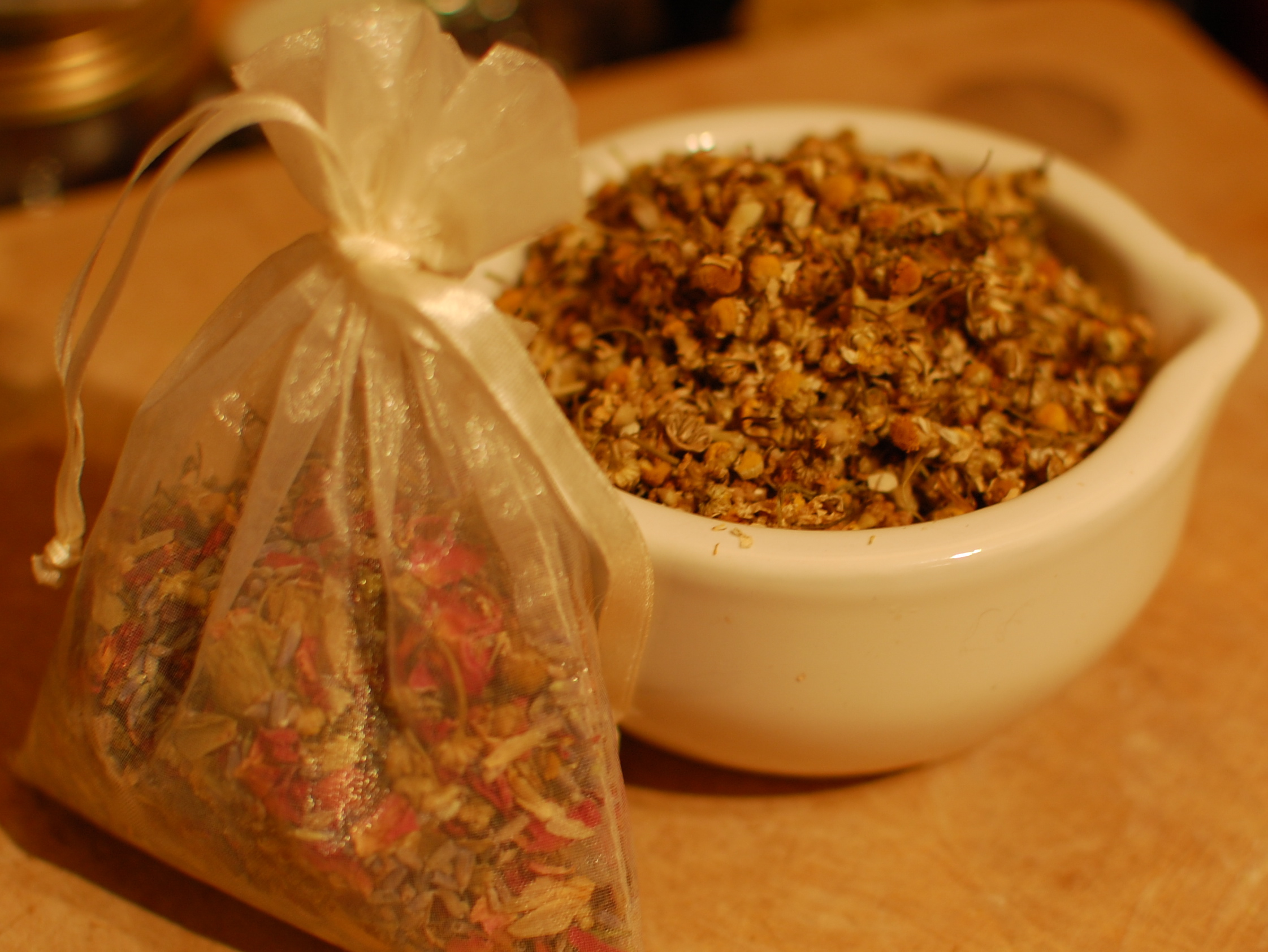
Dried Chamomile and Sleep Pillow

What a joy is Chamomile. A powerful healer, yet gentle enough for children, it has been used throughout history for its numerous beneficial properties. One of the nine sacred herbs of the Anglo- Saxons, its primary uses in modern herbalism are for soothing digestion, anxiety and irritated skin but it’s also been used for coughs, colds, pain relief, asthma, teething and gallstones to name but a few. As a carminative and aromatic it helps dispel bloating and gas which is why it is traditionally drunk after a meal.

I get through lots of dried chamomile and there’s a variety of different things you can do with it.

Teas – Chamomile is probably the most famous herbal tea around, used primarily for easing the digestion and nervous system, it even sorted out Peter Rabbit after he ate too many lettuces! You could harness its relaxing properties by making a blend with equal parts chamomile, rose and oatstraw with a half part lavender for a calming bedtime brew. My absolute favourite tea of all time is chamomile, peppermint and cardamom which makes a great after dinner blend for soothing the digestion and tastes just wonderful.
The plain chamomile tea can also be used as a gargle for mild toothache or as a wash for sore eyes and itchy skin. A strong, hot tea is also useful as a steam inhalation for colds and irritated coughs.

Infused oil – A chamomile infused oil can be helpful in soothing irritated, dry or flaky skin as well as easing tired limbs and rheumatic pains. It can also be made into a beautiful soothing cream with some chamomile infusion and essential oil. To make the infused oil from dried plant material you will need to warm the flowers, with enough oil to cover, in a bain marie or double boiler with the lid on and leave on the lowest heat for several hours making sure the water underneath does not boil away. Alternatively you can add the flowers and oil to a jar and leave in the oven on the lowest heat for 3-4 hours before straining and rebottling. I also like to add a couple of tablespoons of the oil to a bath or use it as a hair conditioner.

Strong infusions – Overnight or long infusions of Chamomile can be a bit strong for drinking, unless there’s a specific medical issue you are hoping to address, but they are great in baths and will help sooth the skin and nervous system when used in this way. They are said to be particularly helpful in exhaustion and convalescence. To make a strong infusion for a bath, add a double handful of flowers to a litre of boiling water and allow to infuse for 4-8 hours. Strain and add the liquid to the bath water. You can use the same preparation as a hair rinse, especially if you have light brown or blond hair. I tried this a few times a while ago and it really brightened my hair and made it look so shiny and healthy, unfortunately I started to dye our pillows yellow so I was banned from using it. Perhaps it’s best for those with dark pillowcases!

Sleep pillow – Making a sleep pillow is a lovely activity and good for doing with children who have difficulty drifting off. If, like me, your sewing is an embarrassment, you can buy little organza bags which you can stuff with herbs and then just tie tightly so no bits escape. Hops are traditional in a sleep pillow but they can give some people bad dreams so my favourite combination is equal parts Lavender, Rose, Chamomile and Linden flowers.

Compresses – Antiseptic and anti-inflammatory, a compress made by soaking a cloth in Chamomile infusion is useful for slow healing wounds and irritated skin. It can also be laid on the stomach to ease period pains.

If anyone else has any favourite chamomile recipes please share them in the comments below.

Read Full Post »

Today was beautiful. The sun shone all day and the world seemed a more cheerful place as everyone stopped to enjoy the fresh, spring air and the warmth on their faces. I spent the afternoon reading in the sunshine after gathering a bagful of spring delights. This evening has been both productive and fun as I’ve whipped up some more goodies for the medicine cabinet accompanied by my trusty familiar.

There was an abundance of violets in the woods today, I don’t think I’ve ever seen so many in one place, so I gathered enough to make an infused oil and a syrup, with a few extras to sprinkle on this evening’s salad. I plan to make the oil into a skin cooling cream, with infused lavender and chickweed oils, after letting it steep for a few weeks. I’m making the syrup with honey rather than sugar, which is more traditional, because its health giving properties are so superior. I’m doing it more or less according to Susun Weed’s recipe which Sarah Head included in her post for last month’s blog party here. I think Violet, Viola odorata, could happily be renamed Viola adorata, as she is just the most adorable plant around. 🙂

The infusion for the syrup yielded the most beautiful coloured liquid.

Violet Infusion

And the oil also looks promising. I used sweet almond oil as the base as its fairly light and therefore good for making creams. Also it doesn’t have a strong smell like olive and unrefined sunflower do.

Violet Infused in Sweet Almond Oil

I also made a delightful cleansing and cooling tea with lemon peel and viola flowers.

Violet and Lemon Tea

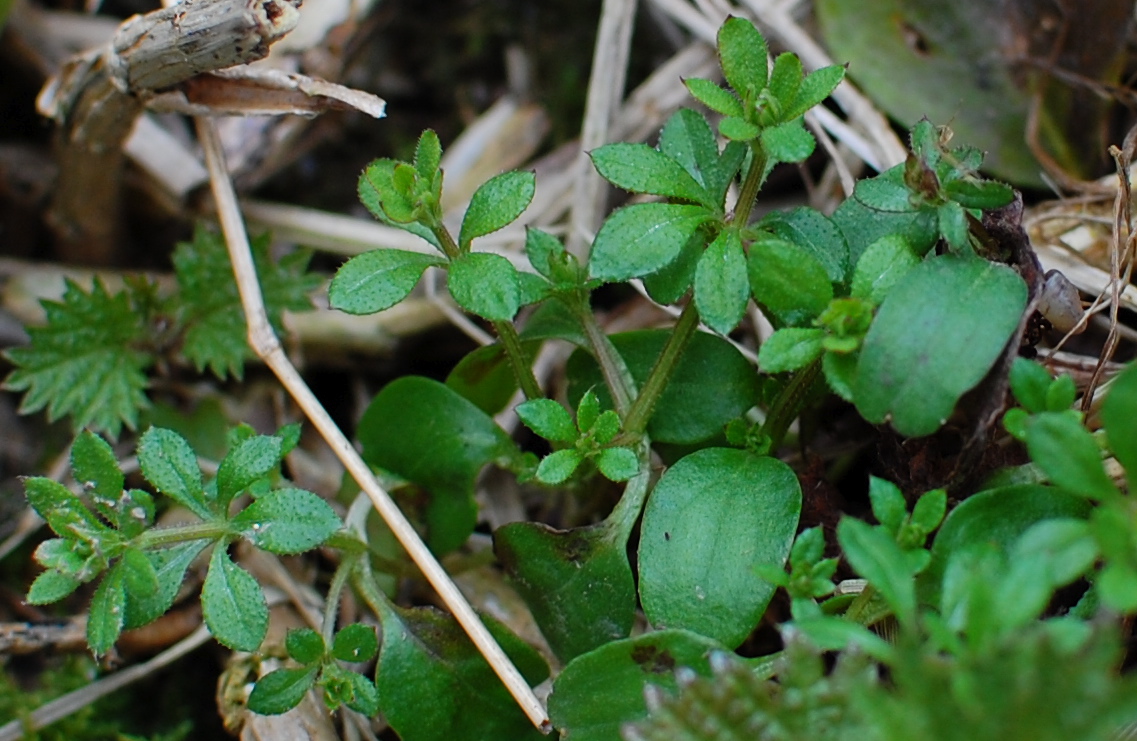
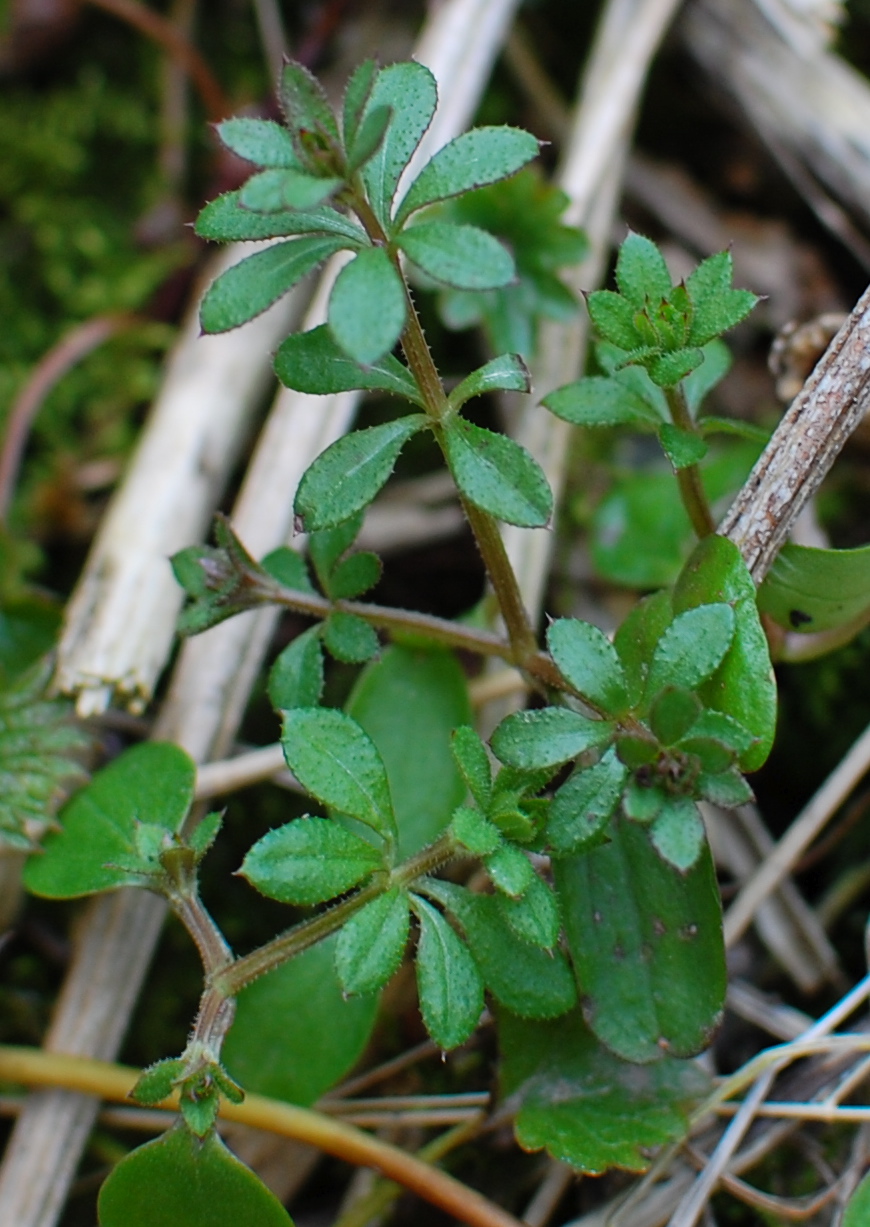
Cleavers were also out in force, vital and green, so I picked a bagful, enough to make a vinegar, the succus that I mentioned in my previous post on Cleavers and an extra few to add to a green juice to revive us when we got in.

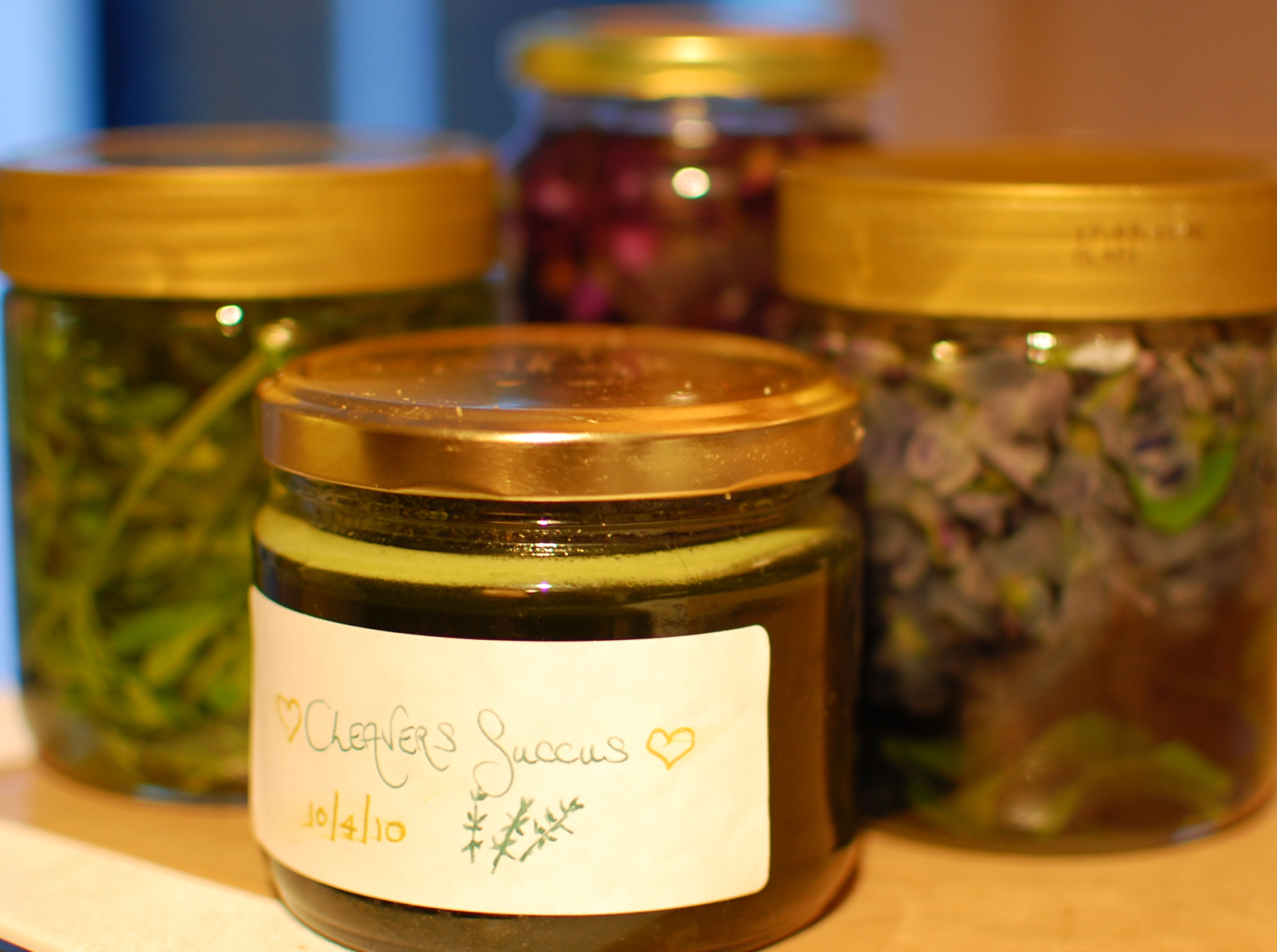
The succus is just divine. Often, when you mix two flavours, one will predominate but this is an exact mix of the grassy green, cleansing taste of cleavers and the sweet earthiness of honey. The colour is also incredible, a deep, emerald green that reminds you of the forests where this remedy originates.

I have heard that the placebo effect accounts for something like 40% of the healing effects of all medicines. If this is true I think it must be especially so for medicines you make yourself. The simple pleasure and creative joy engendered by this most vital of skills must be half the goodness of the finished remedies as they are full to the brim of gratitude for the healing potential of nature and deep love for those you wish to share it with.

Cleavers infused vinegar, Cleavers succus, Viola infused oil and Viola infusion for syrup

Not bad for an evenings work. 🙂

Read Full Post »

This month’s herbal bog party, hosted by the inspiring Brigitte of My Herb Corner, is on the topic of My Herbal Treasures in March. Its so exciting to be thinking about all the new life beginning to stir at the moment as I’ve just started my first Spring harvests.

Its kind of an obvious one, but my favourite March herb is probably the dear and wonderfully weedy Cleavers. Galium aparine
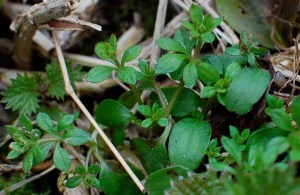
Also known as Goosegrass or Sticky Willy, Cleavers is one of the first of our spring allies to appear, though it was perhaps a little later this year than I remember as I only managed my first harvest last weekend. It’s found mainly in woods and hedgerows and, along with its good friend stinging nettle, is one of the first wild herbs many people learn about.

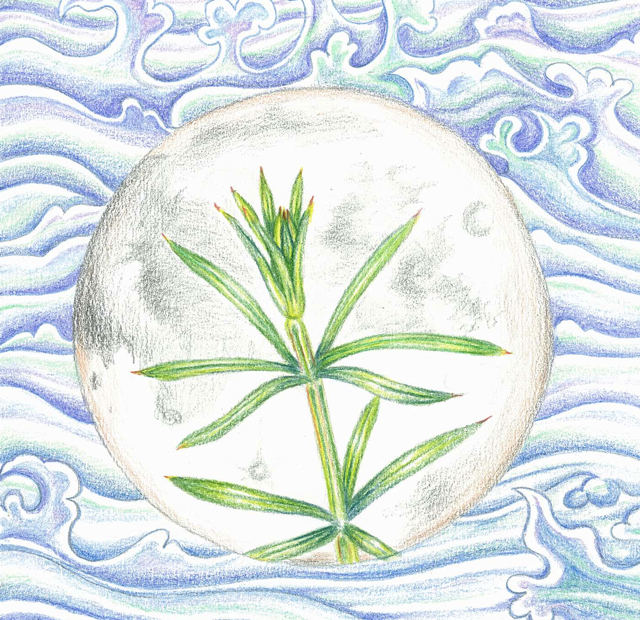
Cleavers is a herb of the moon and is governed by the element of water and this is key to my understanding of how it works in the body. As a medicinal herb it is most commonly used to treat the lymphatic system, a network of vessels which runs alongside the blood circulation carrying waste materials in lymph fluid ready for processing in the lymph nodes and organs such as the tonsils, thymus and spleen. The lymph has no pump of its own so is reliant on the movement of blood and muscles to aid its journey, so exercise is vital for a healthy lymphatic system. It’s functions are primarily to aid cleansing of the tissues and assist the immune system by transporting white blood cells and antibodies.

To me, the lymph relates very closely to the water element in us and, as we know, the moon affects fluids in all of nature by governing flows and tides. The nature of water is to be fluid, we can easily see how polluted stagnant water becomes, and the lymph must also be flowing in order to perform its functions within the body. In the winter we can become more stagnant and accumulations tend to build up, stressing the lymphatic system and resulting in lowered immunity, swollen glands and sluggishness.
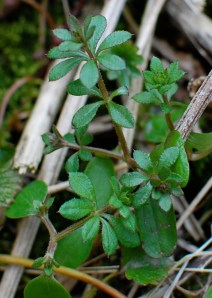
Cleavers is all about getting things moving and flowing again. I see it as an initiator and indeed it is meant to be auspicious to drink it before a journey. It doesn’t force change, just gently encourages the body to wake and clear itself, helping to remove excess fluids through its diuretic action. This quality means it is also a good urinary tonic, especially in inflammatory conditions of the urinary tract as it is also anti-inflammatory. Its useful for clearing the skin, partly due to its general alterative properties, and it has been used to treat cancers, both internally and externally as a poultice.

The water element also governs the emotions and Cleavers can help us to gently let go of the past and be ready to embrace the new growth and change that Spring awakens.

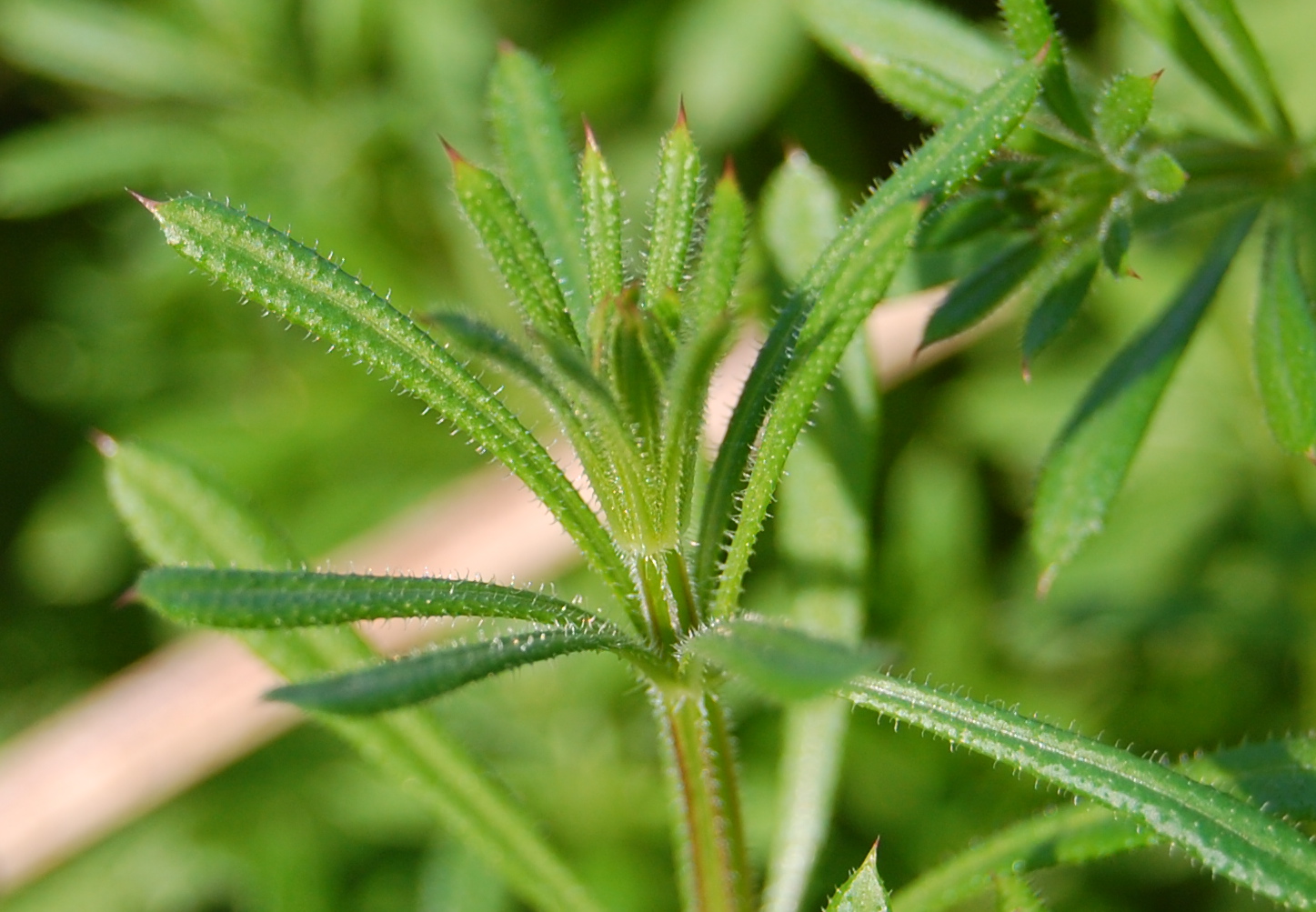
Cleavers is covered in tiny little hooked bristles which you can see in the close up below which I took last year, later in the season when the plant was more mature.

I see Cleavers as a plant of youth, not only because of it’s appearance early in the spring but due to it ability to entertain the child in us all when, on long walks, we can engage in the game I never grow tired of, how many cleavers can you stick on someone’s back before they notice 🙂

I think the real reason Cleavers grab on to us as we go by is because, in a damp climate like the UK, we could all do with a bit of lymphatic support and she is generously reminding us of the great service she can offer.

The plant itself is strong yet supple. It is flexible enough to be twisted round itself and apparently, country folk used to use it in this way to make a sieve for straining milk. It uses its little hooks to grow up other plants to get to the light, yet its strong enough to support them too when needed.

Here are a few ways to incorporate Cleavers into your life, they are always better used fresh than dried:

Cleavers Green Juice
Juice is my favourite way to take them and also the most potent as we are ingesting the life blood of the plant which is an incredible gift. It does require the use of a juicer but if you don’t have one you could whizz it in the blender with some water and then strain, though I haven’t tried it this way. I juice a big handful of cleavers with some apple, fennel, lemon, ginger and celery. This makes a delicious cleansing and revitalising drink for bright Spring mornings.

Cleavers Vinegar
Make your Cleavers into a delicious green vinegar by lightly packing a jar with them then covering in unpasteurised apple cider vinegar. Cap with a plastic not metal lid (vinegar corrodes metal) and allow to infuse for three weeks before straining and rebottling. This makes a lovely spring salad dressing with a drizzle of olive oil.

Cleavers Salad
At this time of year you can finely chop the young cleavers and add to salads, though later in the Spring they become too tough and stringy. Enjoy them now while they’re tender!

Cleavers Cold Infusion
Many people prepare their cleavers as a cold infusion by popping a handful in a glass, covering in cold water and leaving overnight to infuse. Strain and drink in the morning for a refreshing start to the day.

Cleavers Succus
This one comes from Matthew and Julie Bruton-Seal’s wonderful book Hedgerow Medicine which I would recommend to anyone interested in wildcrafting herbs. Juice fresh cleavers, measure it and add an equal amount of runny honey. Bottle and label. It will last much longer this way and would be a lovely soothing and effective remedy for tonsilitis.
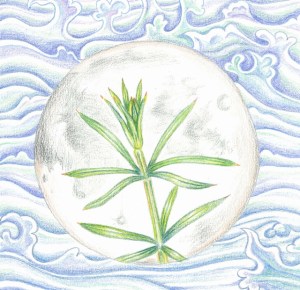

In early Spring the Cleavers Moon
Draws up from depths of wintery slumber
Our waking tides.
From ripple to wave she speaks of cycles
Of change, of flow,
Of newest growth already held in visions.
She invites us too to grow, along with her,
Weedy and wild,
Supple yet unyielding as the waters she guides
She helps to carry us all.

Some other things to be happy about in March:
My first dandelion.
Young Comfrey leaves appearing.
Fresh, young nettles.

Also Lesser Celandine (or pilewort), Viola and other lovelies are out and about.

Spring love and loveliness to all.

Read Full Post »

« Newer Posts