Feeds:
Posts
Comments

Archive for the ‘Photos’ Category

Early Winter Sun

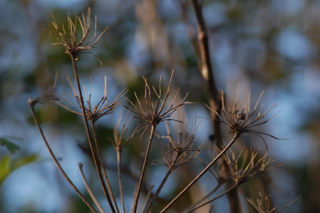
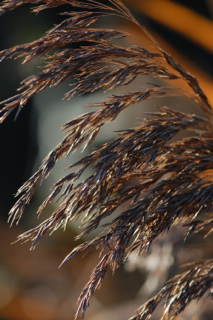
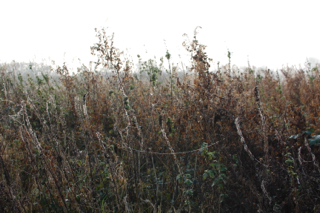
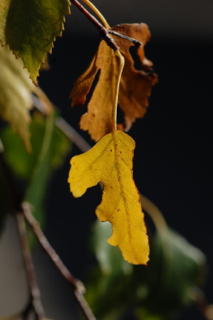
Despite the warmer weather we are merely days from December and, even if the temperature is mild, the low winter sun orientates me at the change of season. I love to go out walking on days like these when the sun gleams through the leaves and even the dead stems of roadside plants are lit up with beauty.

The juxtaposition of vibrantly green grass, golden leaves and bare grey/brown branches against a bright blue sky makes for a starkness that is at once deathly and vibrantly alive.

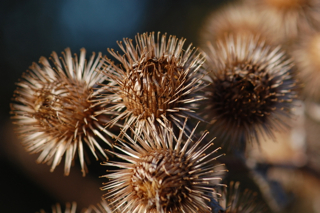
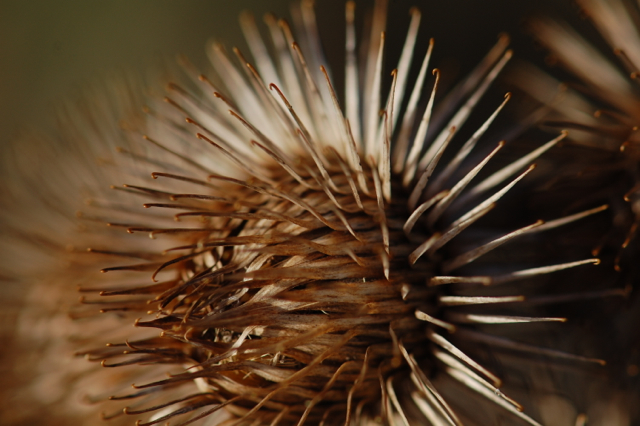
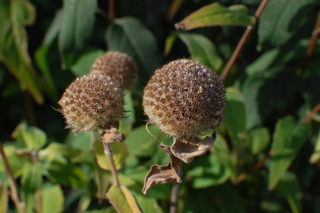
The Burdock seeds catch on my coat and ensure I slow down enough to appreciate their perfect form and subtle beauty. Can you see all the little hooks they use to ensure they are carried near and far? Look a little closer…

Rosehips still bedeck the hedgerows with little flashes of colour whilst Hawthorns are now browning and becoming dull. Their sinewy branches and great thorns look somehow prehistoric and wild as the leaves die back and expose them fully in all their savage beauty.

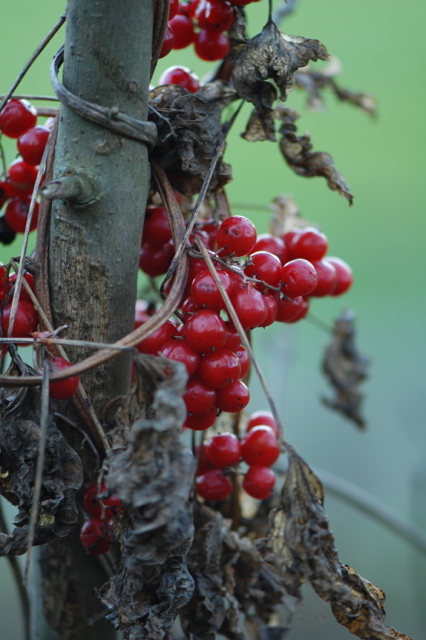
One of the plants that catches my eye most at this time of year is the wonderfully witchy Black Bryony which winds and twines amongst the branches of other plants. She dangles temptingly juicy red berries like little Christmas ornaments draped through the trees, just ready to seduce the unwary passer by into an eternal sleep. Though it was once used sparingly in herbal medicine, the whole plant is highly poisonous. Maude Grieve tells us, “Death in most painful form is the result of an overdose, while the effect of a small quantity, varying not with the age only, but according to the idiosyncrasies of the patient, leaves little room for determining the limit between safety and destruction.”

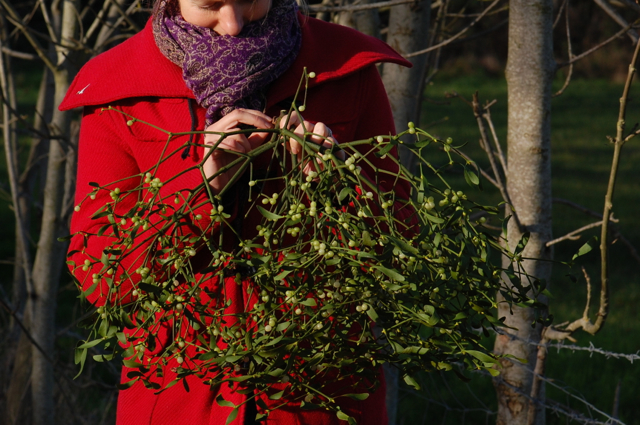
And on the subject of Christmas decorations. It’s almost time to hang some mistletoe in our house, just to ensure a maximum number of kisses throughout the month of December!

Read Full Post »

This Too Shall Pass

Many have heard the story of the great king and his search for truth but, as this evening is a cold one and I hope you are sitting at home around the fire, perhaps sipping some chai or a little sloe gin, I shall wait for you to get comfortable and then I will tell it. At least I will tell it as I think it may have happened.

Once upon a time, in a land far away to the east, there lived a wise old king. His palace was great, his court was fine and his accomplishments were many. He never wanted for anything and was constantly engaged in one entertainment or another. He was very learned and had read the great treatises and scriptures of many a land and many a faith. Though he had realised much and people far and wide thought him to be deeply wise, still he felt something was missing.

So one day he gathered together the very cleverest of his advisers and all the wise men and great sages of the land and he charged them with finding something that was always true. Something that was true when he was happy and true when he was sad, that was true in the springtime and true in the winter and that was true in his greatest victories and also in his greatest defeats. The wise men were perplexed, ‘what is that which is always true?’ they asked themselves. They each set off to the far ends of the Kingdom and then further beyond still, to many distant lands, intent on discovering this truth that the king had asked from them. They agreed to meet back at the Kingdom after one full year and tell the King what they had discovered.

All but one.  He stayed in his little cottage at the edge of the woods and tended to his garden. When the villagers and courtiers passed by they said, ‘ that is the lazy wise man, he hasn’t even gone to meet with the priest in the next town, just sits in his garden watching the birds and the clouds or gazing into the trees. The King surely won’t be pleased with him.’  And so the year went on and the wise man observed how the spring turned to summer which turned to autumn and how the plants in his garden died and returned again. He saw how the birds came and went and even the great trees would pass eventually, and when they did, they would give new life to many insects and creatures.

After the year had gone by all the wise men met up in the Court ready to astound people with all the clever things they had learnt. They told tales and riddles from lands far and near, spoke words of subtlety and cunning and made every man’s head present hurt with the thinking. But the King was still not satisfied. Finally our own wise man, from the cottage by the woods, stepped forward and said to the king, ‘Sire, I have seen that which is true. It is true in my garden and true in the forest.’ At this the people laughed, ‘silly old fool’ they thought. ‘It is true throughout your Kingdom and true even to the very ends of the Earth. And it is true in my own heart.’

‘So’ said the King, ‘what is this truth of which you speak?’

The old man bent his head and spoke softly as the last leaves of Autumn drifted through the windows and on to the Palace floor. ‘And this too shall pass’ he said, then turned away and walked back to his cottage in the forest.

At last the King was satisfied.

Read Full Post »

More Autumnal Delights

I have never been able to decide which is my favourite season, they all have their beauty and each fills me with its own unique sense of magic. Right now though, I can’t imagine what could be better than these bright autumn days and chill evenings spent reading and drinking chai by the first fires of the cold months to come.

There are so many things to love about this time of year. The crackle of fallen leaves…


and the fantastic fungi.


This last one I believe is Ganoderma adspersum a native relative of the much celebrated Reishi mushroom. You can read Stephen Church’s account of it’s medicinal uses here.

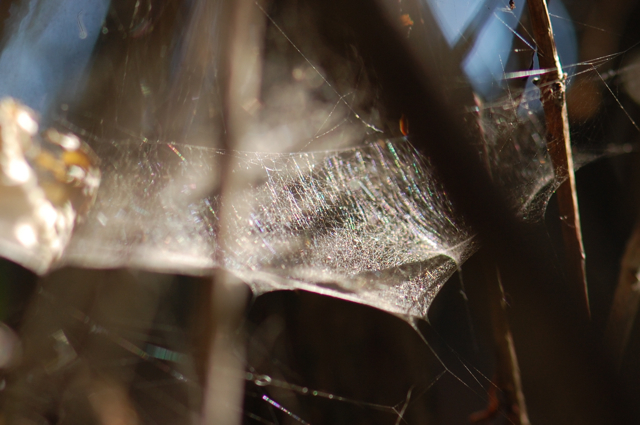
The glistening cobwebs that catch the light and leaves as if gathering mementos of the season’s fading beauty.

And of course the trees themselves, all burnished bronze and breathtaking in their passing.

Then there is the food too. Squashes and berries, fresh walnuts cracked open with a hammer, kale and  mushrooms. From the first ripening berries through to the last fading leaves, autumn is truly a season to delight the senses.

Now is the time for nourishing our bodies, our minds and our souls with good food, rest, time spent in nature and loving company before the arrival of the harsh winter months. This simple pumpkin soup was blended with plenty of onion, garlic and ginger and topped with tamari fried mushrooms. Easy to digest and full of goodness, it’s perfect for this time of year.

Read Full Post »

The Autumn King

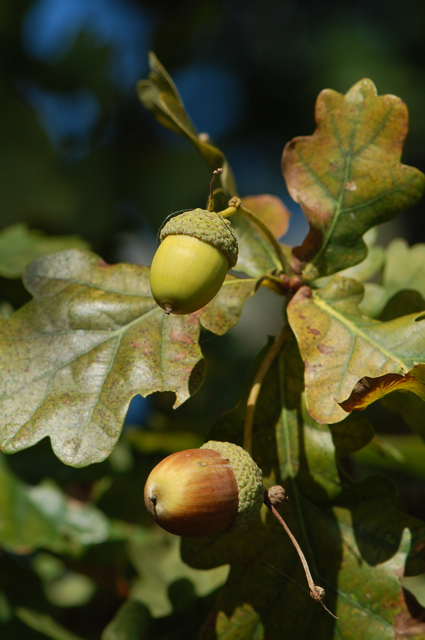
If the Oak is the King of the woods than at no time is his reign more glorious than in autumn when his leaves glow gold and many beings are nourished from his acorns.

Whenever I have lived or wandered abroad I cannot think of Britain without thinking of oak trees. Perhaps then it’s appropriate that I have ended up in a village whose name means ‘place covered with oaks’ or ‘overshadowed by oaks’. Nowadays there are not so many great oaks remaining but sometimes, my husband and I like to stand atop the Downs and dream of the time when everything before us; the farmer’s fields, the gardens, the roads would all have been covered with oak trees.

Whilst the autumn colours of the oak are not as showy as some of the more exotic trees that are visible at this time of year in parks and gardens, their subtle beauty is somehow more deeply fulfilling. I said to my husband as we walked at the weekend, ‘the maples are pleasing to my eyes, but the oaks are pleasing to my heart.’

Oaks were said to be sacred to the Druids. Some suggest the name ‘Druid’ actually comes from the old Gaelic name for oak, Duir, though others have dismissed this saying that instead, it originates from Dru – meaning ‘highest’ and vid – meaning ‘knowledge.’ Who knows the truth, but I cannot imagine any race who lived amongst the oaks would not have held them sacred. Oaks appear in the mythology of many lands and there are about 600 species in the genus across the world.

The oak has many associations with protection and strength, partly because of the numbers of creatures that it shelters in its bows. Apparently it houses the greatest biodiversity of herbivorous insects of any British plant. Even in death it is home to a great many insects. In the Bach flower remedies, oak is given to those who offer their strength to others and keep persevering until they themselves end up drained and exhausted. Taking the remedy is thought to re-establish the positive qualities of oak, those of courage, protection, strength and endurance.

The oak tree was also associated with weather gods as apparently, it is hit by lightning more often than other trees. It has featured alongside the Gods of thunder and lightning in many European cultures, from Zeus of the ancient Greeks, to the Norse Thor and the Baltic Perkunas. This weekend however, it was also resplendent in the sunshine.

Acorns were of great importance to country folk as  a primary food source for their pigs in autumn. Before this, they were  also an important food source for people themselves and were eaten by a variety of cultures from all over the world. To eat acorns they must be soaked or boiled first to remove the tannic acid. I read a recipe for acorn muffins the other day, it sounded perfect for eating round the fire with a spicy herbal chai when the dark days of winter are upon us.

And of course the oak has its place in herbal medicine as well. A very useful astringent, the bark can be used to staunch bleeding of all kinds from haemorrhoids to a mouthwash for bleeding gums.

In pagan mythology the Oak King was said to reign from mid-winter to mid-summer, after which the Holly King took his turn on the throne for the second half of the year. But for me, Autumn will always be the time of the oak.

What is your favourite autumn tree?

Read Full Post »

Outrageously Orange

“In my garden there are now purple roses, red roses, even yellow roses… But not orange. I draw the line at orange.”

Katherine Swift – The Morville Hours

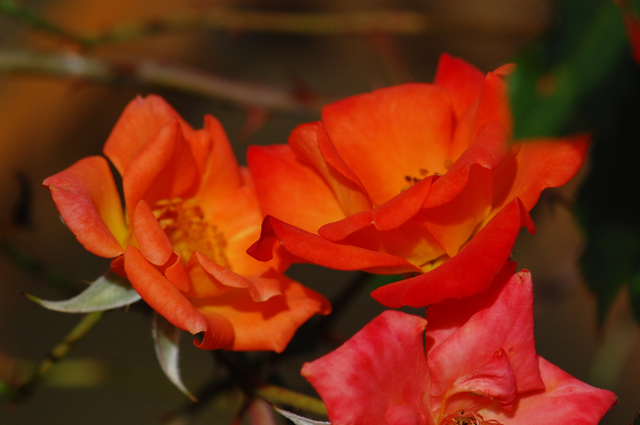
Since writing my last post on Calendula a few days ago, I’ve been noticing even more than usual how cheerily beautiful these flowers are. In fact, every time I walk through the garden I stop to appreciate their intensity of colour, which like the sun, rather than detracting from the other softer-hued blooms, seems only to enhance their radiance. However it has come to my attention of late that many gardeners consider orange flowers some thing of a faux pas. Perhaps seen as garish and lacking in modesty amongst the gentle pinks, blues and whites of many popular garden flowers, several writers I have been reading recently seem to have taken against the use of orange in the garden. Even the equally exuberant yellow and red flowers get a better press than the orange.

Well call me tasteless, lacking in class or otherwise aesthetically impaired if you will but I adore orange flowers. Some of my favourite bits of the garden are populated with orange.

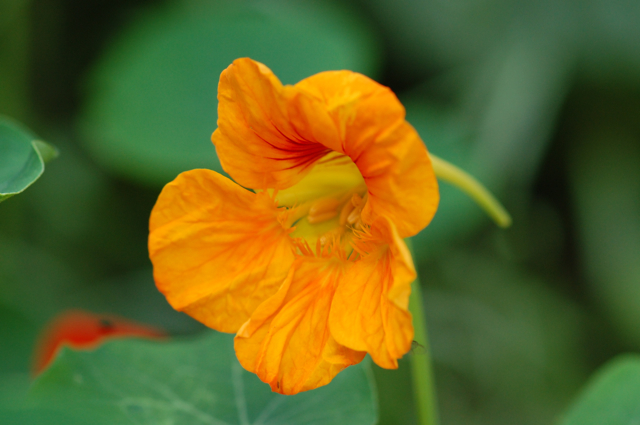
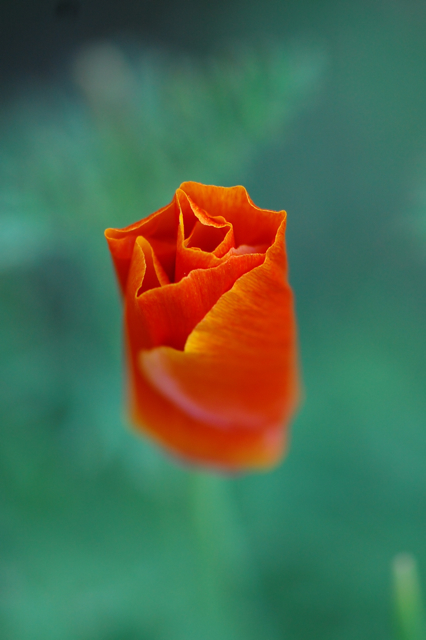
Like these nasturtiums and Californian poppies.

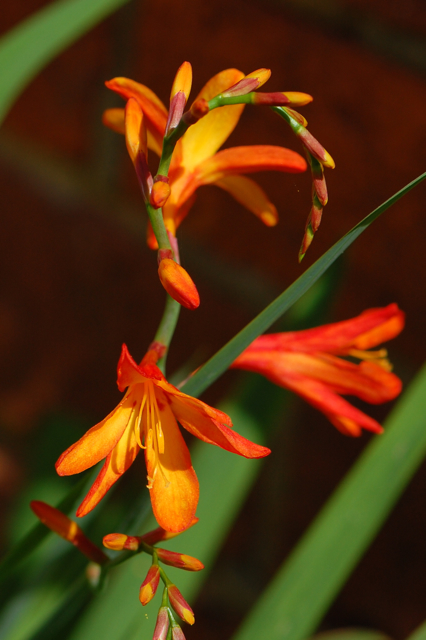
I also love these little crocosmia, the only flower that was already in the garden when we moved in.

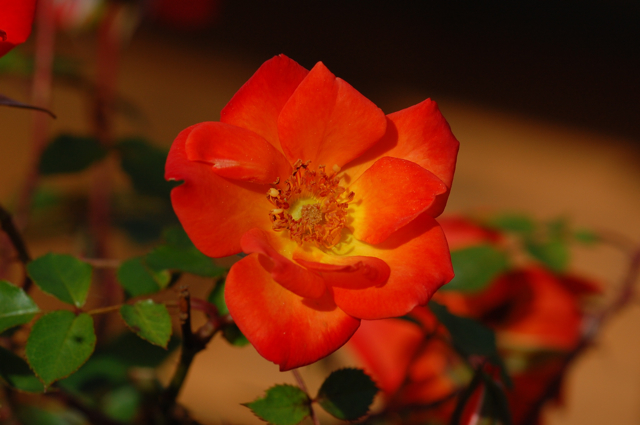
Those who read this blog regularly will have heard me rave about my lovely little rose ‘Warm Welcome’ and I’m getting much pleasure from the softer apricot tones of ‘Lady Emma Hamilton’ too.

I think the vibrant hued oranges blend beautifully with softer shades like this creamy peach rose with the nasturtiums.

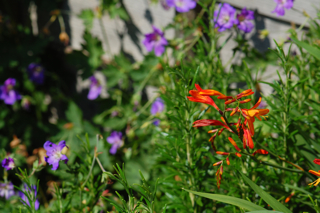
I love planting oranges alongside mauve or blue flowers, like the crocosmia with this blue geranium. I think I get this from my Dad who always grew mountains of love-in-a-mist with Californian poppies.

And to make matters worse, I even like oranges and pinks together!

When it comes to matters of taste, it seems there’s no hope for me at all.

Read Full Post »

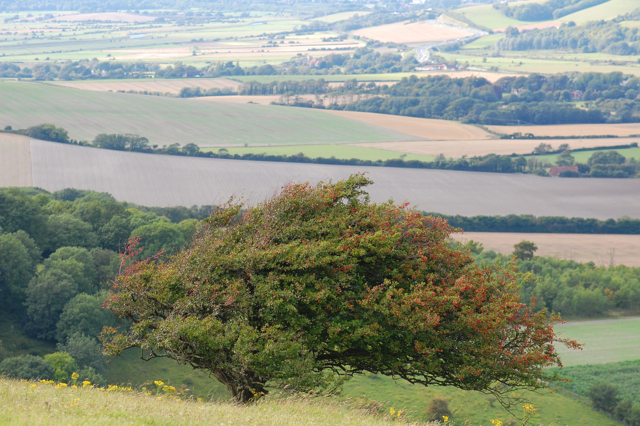
It’s been a while since I posted about the beautiful Hawthorns that I have been observing as part of the Tree of the Year project. They sit atop the Downs, relentlessly battered by wind and rain, and as a result they differ from many of the other Hawthorns in this area. With everything being early this year, most of the trees already had bright red berries at the beginning of August, not quite ready for harvest, but not far off. On these trees however, the berries were still small and green, reflecting how the harshness of their environment affects their development.

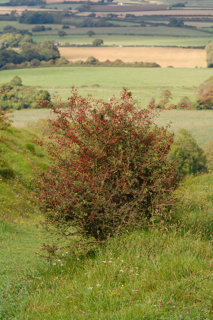
Nearly a month on they are reddening up nicely and the trees from a distance have that exquisite blush which tells you autumn is around the corner.

There is no doubt that the constant high winds we have had all summer have taken their toll. The trees look less healthy than this time last year with many of the leaves browning and some branches swept almost bare. Like people whose lives have been filled with hardship, they are weathered and worn.

It’s interesting to observe how bare of berries the side of the trees that faces the wind is compared to the relatively more sheltered branches.

I feel these trees teach me a lot about resilience, tenacity and strength and about adaptability in the face of hardship. They speak of the beauty of form and motion and of holding fast to this living edge of surrender. Perhaps most importantly they show that, in spite of difficulties, it is still possible to give generously.

Elsewhere on the Downs other Hawthorns tell their stories, each as unique as snowflakes.

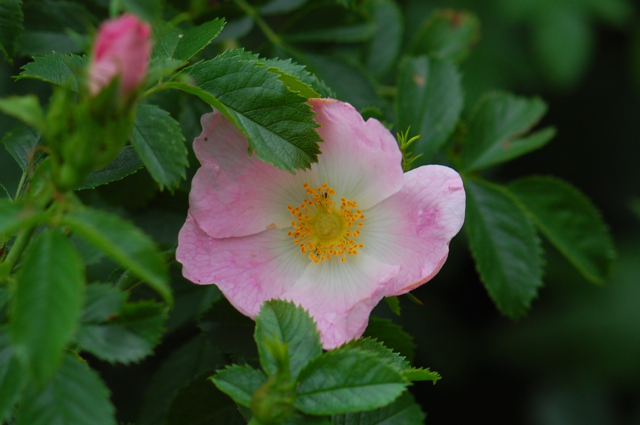
I loved this one, entangled with the wild rose like lovers.

And everywhere the berries are fat and red and perfect. I’ll be out next week to get the first harvest in. Who wants pills when your medicine can look like this?

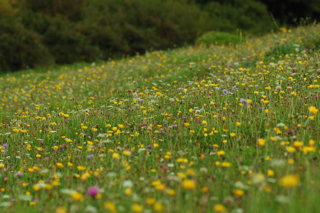
The Downs themselves are carpeted with wild flowers at present.

The yellows and whites of bedstraw, yarrow, burnet saxifrage and cat’s-ears mix with the mauves and purples of two of my favourite wild flowers;

Small Scabious

and Round-headed Rampion.

Whilst lone stalks of agrimony wave in the breeze.

Read Full Post »

An Abundance of Roses

For the most part I prefer plants as close to their natural state as possible and would always take a wildflower over a showy cultivar any day. Not only are they more beneficial for insects and other wildlife but are also much easier to look after, more robust and better suited to their environment.

So my obsession with big, beautiful, temperamental and highly scented roses is quite out of character. I don’t love the exquisite wild roses of our hedgerows any less because of it and from them I make a lovely cooling and astringent tincture as well as using the hips later in the year. Our wild roses are not that highly scented however so to make the delicious, sweet, aromatic rose tincture that makes even the iciest of hearts begin to thaw, I really need to use cultivated roses. That’s my excuse anyway.

Wild Rose - Rosa canina

Most people tend to use either Rosa damascena, The Damask Rose, or Rosa gallica, The Apothecary’s Rose, to make aromatic tinctures and both produce some lovely medicines.

 Apothecary’s Rose

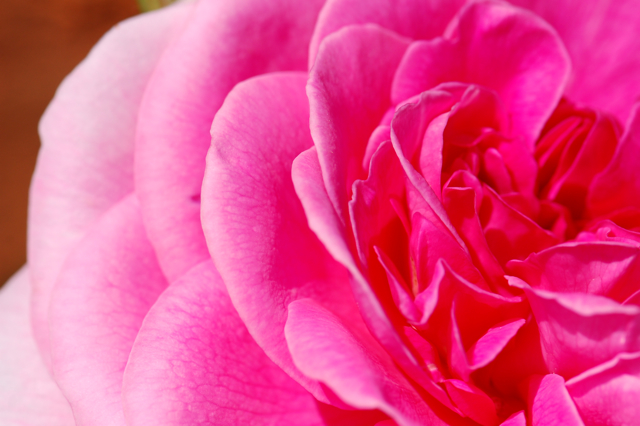
I’ve been quizzing different herbalists for a while about which roses they prefer for tincture making but it was Stephen and Carol Church, whose rose tincture is the most divine I have yet to taste, whose advice and method I have stuck with. They recommended using ‘Gertrude Jekyll’ a lovely pink English rose with a beautiful, strong scent. It apparently has the highest yield of volatile oils of all roses. I bought one last year and have been experimenting this summer with their directions.

Gertrude Jekyll
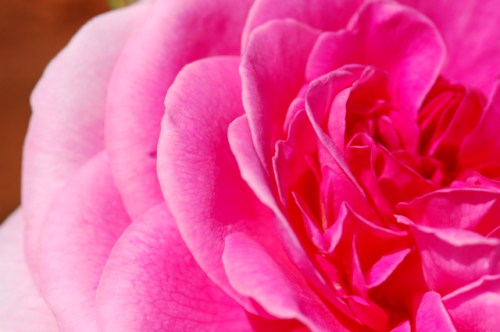
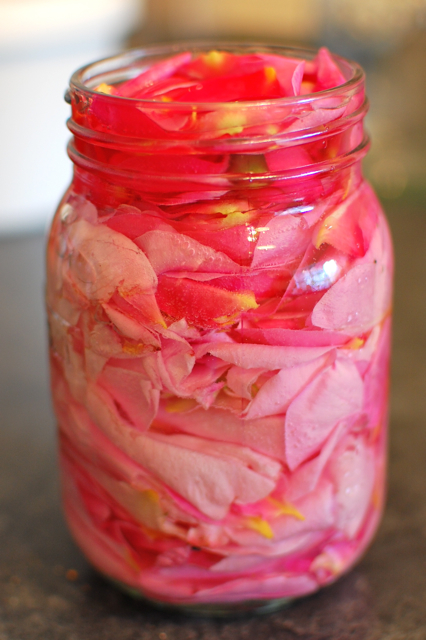
They advise macerating the petals in the alcohol for no more than 24 hours, a much shorter amount of time than usually allowed for tinctures. What this achieves is extraction of the volatile oils but without all the tannins which make rose tincture quite drying. Part of the nature of rose as a medicine is that it is cooling and drying but there are plenty of times when I want to work with the aromatic healing qualities of rose without using a medicine that is overly astringent. Besides, it tastes so much more delicious this way and that, as you know, is a big part of the magic of Rose. In her first growing year, my plant has yet to produce the abundance of flowers that Stephen and Carol’s do so I have just been experimenting with small quantities this summer. To make a specific tincture, that is one from fresh petals, try using a 4o% vodka, 1:2, which means one part rose petals by weight to two parts vodka by volume. Remember that rose petals are very light however so you need to cram a lot in! I actually didn’t have enough flowers blooming all at once to get the right proportion so I double infused it instead and it has still come out nicely.

Here ends the informative part of this post, the rest is just gratuitous rose indulgence. You have been warned!

My husband’s favourite rose in the garden and possibly mine, were I to have favourites, is the floribunda Margaret Merril. She has it all, beauty, elegance, scent and attractiveness to insects. She starts as a perfect creamy bud with a blush of pink…

Margaret Merrill

…and opens to form a perfect, white, deliciously scented bloom.

Along with the Apothecary’s Rose and Gertrude Jekyll, I have one more pink rose, ‘Scepter’d Isle’. Though not as sweetly fragranced as some of the others, she has a delicacy of presence that is healing just to look upon. This picture, taken after a heavy rain, does not really do her justice.

Sceptr'd Isle

All three pink roses in a jar.

We have two miniature roses on the kitchen windowsill. The pink one I found in the middle of the road last year without a pot. I always wonder how it could have ended up there, victim of a lovers quarrel perhaps? I was quite happy to give it a home and it is much loved and admired now.

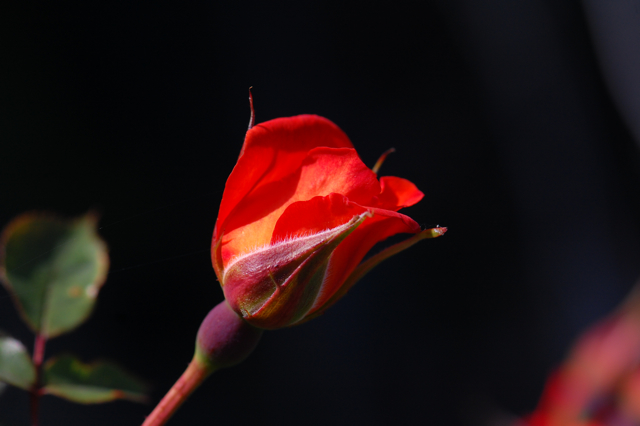
I have also found a passion for orange, yellow and apricot roses this year. I fell in love with ‘Graham Thomas’ during our trip to Mottisfont Abbey, home of the National Collection of Old Roses, and found it impossible to leave without one.

Graham Thomas

‘Lady Emma Hamilton,’ my most recent acquisition, has the cheeriest disposition and the sweetest of scents.
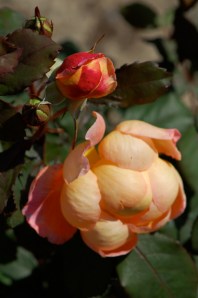
Lady Emma Hamilton

‘Wollerton Old Hall’ is another new addition, a very generous early birthday gift from my lovely colleague and fellow rose obsessor, Laura. Isn’t it just beautiful?
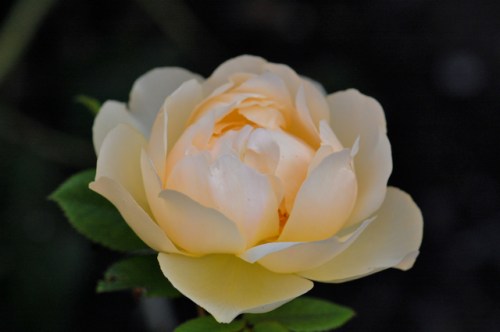
Wollerton Old Hall

And I have shown off my joyful little miniature climber ‘Warm Welcome’ before. Bred by my uncle and given to me by my Dad, its a firm favourite in my garden and is covered with small but wonderfully vibrant blooms.
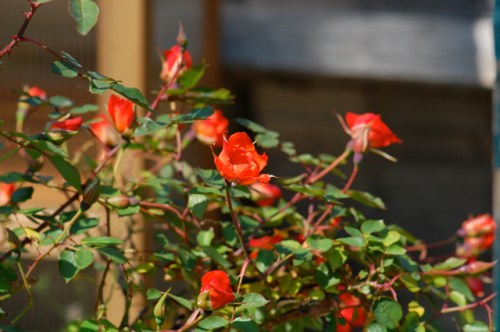
Warm Welcome

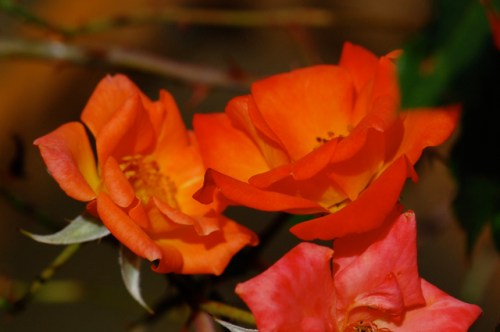
My wish list is ever expanding and includes the gorgeous dark bloomed Rosa gallica ‘Tuscany’, a rambler to cover the ugly old tank by the gate and the lovely ‘Rhapsody in Blue’ which I have much admired at The London College of Physicians gardens. We are in the process of getting rid of our car parking space in order to accommodate them all!

What are your favourite roses? For medicine making or for pure enjoyment?

Read Full Post »

My vision for our small garden is that it will not only provide food and medicine for us but also be a haven for wildlife and other creatures.

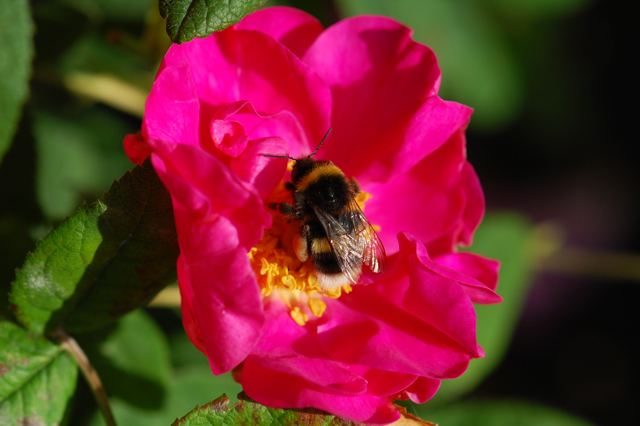
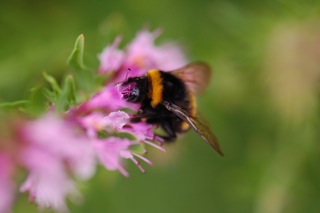
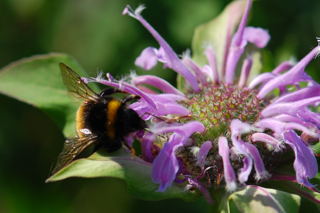
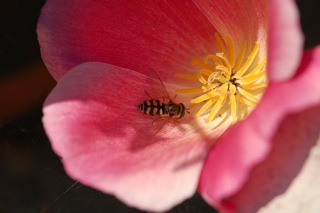
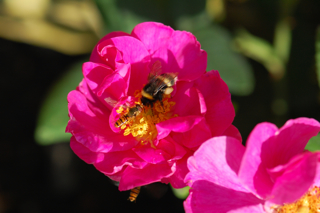
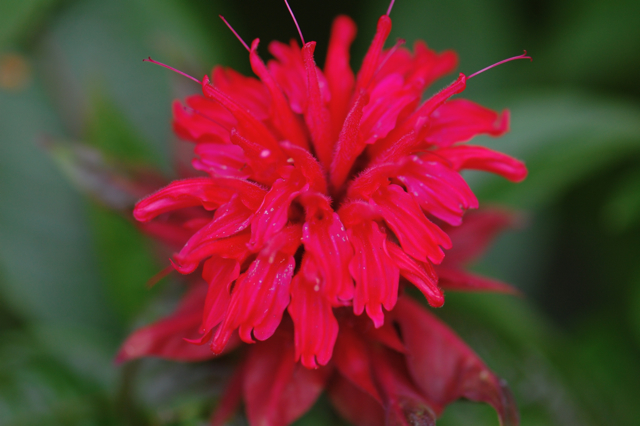
The bees have been very happy here this year and I have seen many fat bumblebees and hoverflies hanging off the hyssop and monardas.

Lavender is nearly over now but every last flower is being made use of. The Apothecaries Rose was also a favourite when it was in flower.

There’s been a whole host of caterpillars, mostly fat and green, and some interesting spiders too. So it was with all these little residents in mind that I decided to add an insect hotel to the quietest area of the garden.

Ok, compared to some grand affairs this is more of an insect caravan but its a start and will hopefully provide a bit of shelter for a few needy wayfarers. If you have space you can make a very large, 5 star affair by stacking pallets full of different materials on top of each other but, if like me, you garden is more ‘bijou’ then you can make more of a boutique bug residence with a wooden box or old drawer filled with pine cones, straw, moss, hollow bamboo canes for solitary bees, bits of wood with holes drilled into them and other such items. Tuck it away into a quiet corner and you’ll be encouraging bio-diversity even in a tiny garden.

There has also been a number of butterflies like this beautiful Comma resting on the echinacea and this poor raggedy old Red Admiral on the nettles. Up on the Downs behind our house I also saw this lovely Chalkhill Blue.

The keen observer will spot other wild beasts lurking amongst the flowers.

We have also been joined recently by four new additions in the form of some highly spirited rescued ex-battery farm chickens. They live in the back garden, well away from my prized salad crops, and have settled into life outside a cage very quickly. We got them through The British Hen Welfare Trust which is a great charity and well worth supporting. They were in a sorry state when they came to us, straight from the battery farm that morning, but already their feathers are growing and they are gaining confidence by the day. For anyone who has hens or is interested in keeping them I would recommend reading this great article by Kym Murden on The Herbarium which gives lots of tips for herbs to grow around your chooks and other natural health tips. Ours are currently enjoying garlic and nettle tincture in their water, nettle seeds in their feed, lavender in their bedroom and rose petals in their nest box. They are as friendly as can be and make it their mission to sneak into the house whenever the opportunity arises.

Here is Primrose stretching out her wing for the very first time.

Violet and Clover discover they have a taste for my once lush Mizuna.

They have earned their keep by helping with the weeding. Not a scrap of ground elder remains now.

Honeysuckle and Clover check to see whether they’ve been busted sneaking in.

Finally, whilst on the subject of birds, bugs and beasts, I would like to urge you all to take a few moments to sign one (or all) of the petitions against the proposed badger cull that the government hopes to enforce next year. As badgers are known TB carriers, the government is hoping that their mass slaughter will halt its spread amongst cattle. Most of the available scientific evidence shows that this is not the case and implies that the cull may in fact make matters worse as it did in Ireland. The problem is due to poor farming practices not badgers and the only pro- badger cull arguments I have read are financially motivated as farmers do not want to lose money from their herds. Healthy animals are much less likely to be infected so all resources should be put into better farming practices not into killing one of our most treasured wild species. The plan is for 70% of badgers to be slaughtered. It breaks my heart that this is even a possibility.

You can read more about the issue in this Q and A document from The Badger Trust.

And if you feel strongly about the issue too there are petitions available to sign on the following sites:

38 degrees here.

The League Against Cruel Sports here.

Save Me here.

And you can reply to the consultation by following the guidelines here:
http://www.brianmay.com/save-m​e/badgers/DEFRA_E-mailer.html


(N.B. The final image of the badgers is from google images, source unknown, all other photos are my own.)

Read Full Post »
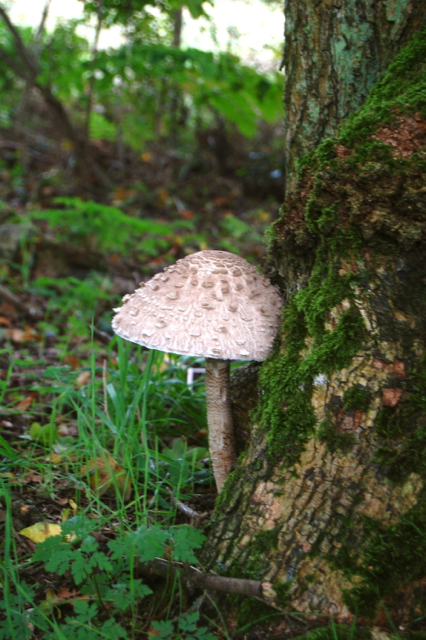
There is little to rival the sheer exuberance of the garden at this time of year. Even in my little patch things are flourishing and vital.

Blue and pink Hyssop are covered in blooms.

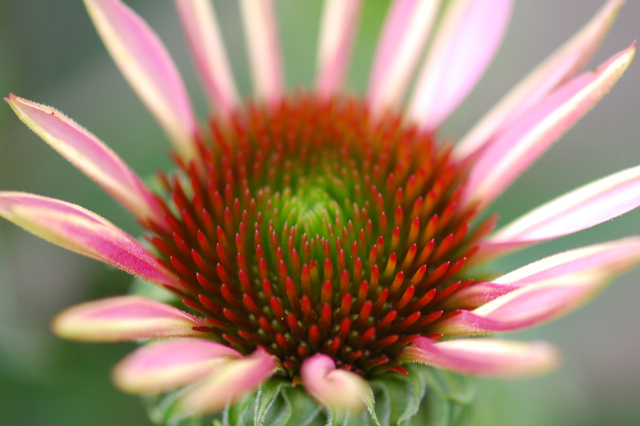
Echinacea is looking beautiful. If you look at this close up you can see that each head is actually made up of many tiny individual flowers, called florets. Amazing no?

I planted the cornflowers late so they are only just blooming now.

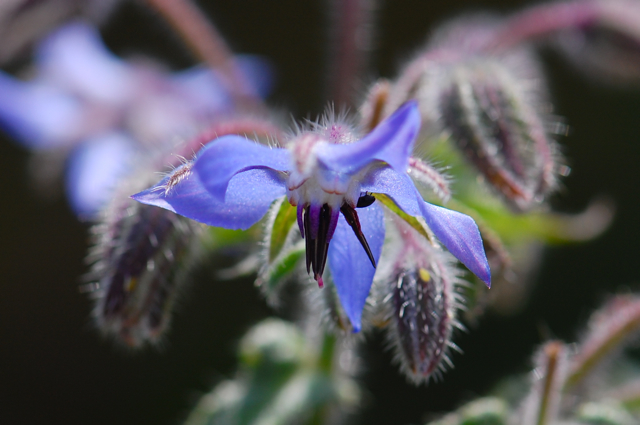
I adore borage flowers, they are so ethereal yet the plant’s medicine is so strengthening. Along with the normal blue flowers I’ve had a few rogue pink ones this year.

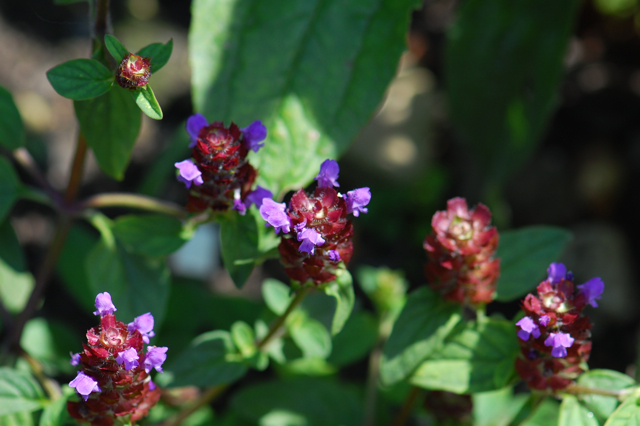
Self heal and heartsease, both favourites of mine and excellent skin healing herbs, are adorning the spaces between larger plants.

Monarda, geranium ‘rozanne’ and Calendula all add some blazes of colour.

_______________________________________________________________________________

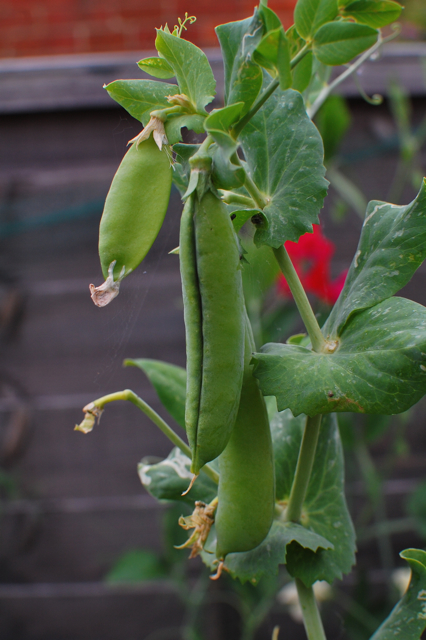
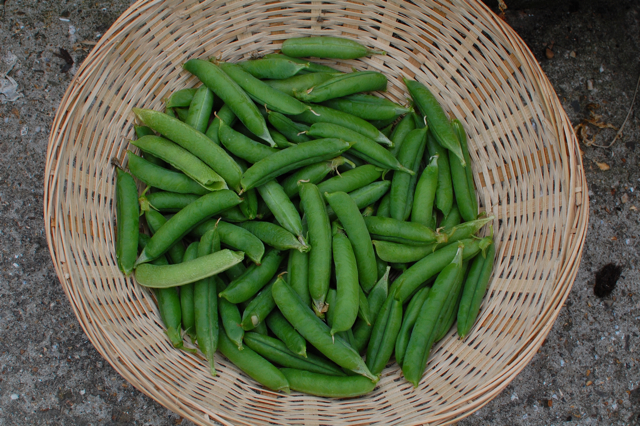
And best of all we are harvesting something delicious for our table everyday. Romanesque cauliflowers captivate me completely, their fractal forms seem almost unreal. Peas are about my favourite garden snack, along with strawberries of course, and salads fresh from the garden are a million, million miles from those bought in the shop.


The Roses and Motherwort have also been stunning but they will have posts all of their own in the next week or so. I hope you are enjoying your gardens, patios, window boxes and local parks this summer, wherever in the world you may be.

Read Full Post »

Green Gems In The City

I spent a lovely day off in London on Friday and, perhaps surprisingly, it was filled with wildness and greenery. In the morning I met my friend Martina for an urban herb walk and in the afternoon my sister and I visited Chelsea Physic Garden.

It’s great to remind myself of how many herbal gems there are to be found, even in a sprawling city like London, when you go a little off the beaten track and start exploring.

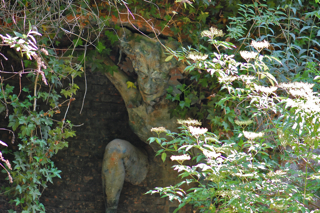
Martina took me off down a little walkway near her house to show me that Pan, God of all that is wild and green, can still be found, shrouded in Elderflowers, in the unlikeliest of places- in this case erupting out of a wall underneath an old railway bridge.

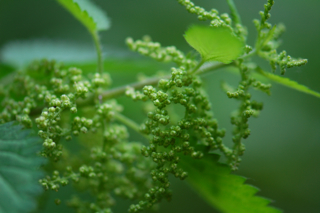
Along the walk we found nettle seed almost ripe for picking. It was a shock to remember its only the first week of June, everything is so early this year.

Ribwort plantain flowered freely by our feet as we walked past the skate ramps and on towards Finsbury Park.

Martina was just telling me about a book she is reading on old magical uses of plants when we passed this little gathering of trees, Hawthorn, Oak and Ash. Oak, Ash and Thorn were sacred trees of the Druids and where they grow together it is thought to be a particularly magical place.

Martina- by Oak, Ash and Thorn

Honeysuckle was in full flower in the hedgerows.

And the Lime blossom is out already! This made me panic slightly as I’ll need to get out harvesting sooner than I expected.

Horsetail also adorned the paths with its pre-historic beauty.

By the time my sister and I arrived at Chelsea Physic garden it was baking hot. I forget how much hotter it gets in London than here on the coast with its clear, cool breezes.

Chelsea Physic garden was founded in 1673 by none other than The Worshipful Society of Apothecaries.

According to the information leaflet, ‘The location was chosen as the proximity to the river created a warmer microclimate allowing the survival of many non-native plants – such as the largest outdoor fruiting olive tree in Britain – and more importantly, to allow plants to survive harsh British winters.’ There are certainly lots of fascinating exotic plants in the gardens alongside our more common native and introduced culinary and medicinal herbs.

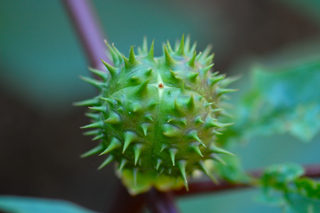
I found my eye was particularly caught by the wide variety of Solanaceae family plants in the garden. There was Thorn Apple, Datura stramonium, well known in herbal medicine, though its use is highly restricted due to potential toxicity.

As well as the beautiful Solanum quitoense, which produces a fruit eaten in Ecuador and Columbia known as naranjilla, or little orange.

Then there was the fabulous Mandrake, Mandragora officinarum. Few plants can have such a rich folklore attributed to them, featuring in everything from early books of leechcraft to Harry Potter.

Finally this splendidly savage Solanum pyracanthum, a native of Madagascar and apparently also known as porcupine tomato.

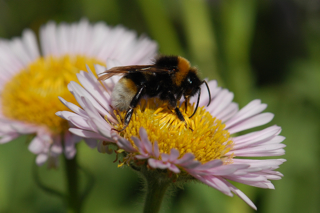
I am happy to say the wildlife was also out enjoying the wide range of plants and brilliant sunshine.

It’s so heartening to find havens for plants, people and wildlife, all in the midst of such a large and polluted city.

Read Full Post »

« Newer Posts - Older Posts »