Feeds:
Posts
Comments

Archive for the ‘Autumn’ Category

A few people commented that they would like the recipe for the soup and herbal stock that featured at the end of my last post so, somewhat belatedly, here it is!

Herbal stocks are a great way of getting extra nourishment into our diets, especially at this time of year when we can use small amounts of immune supporting herbs to sneak extra medicine into our day through the most natural of all methods, our food.

When making a herbal stock I use whatever I happen to have in the cupboard so it will vary every time. This also means you can be very fluid with it and if you don’t have all the ingredients it’s no problem, you can just use one or two. This stock below had a number of different herbs in it but you could do equally as well using just echinacea root and elderberry or any of the other ingredients listed depending on your preference. You can play about with other herbs too, I remember Danielle mentioning that she uses astragalus root in her soups.

When making stock, I tend to just use herbs that I would not blend into the soup directly such as tough roots and bay leaves etc. The ginger, rosemary, chilli, powdered cinnamon and other soft ingredients I generally put straight into the soup as normal, but as this is merely a guide, feel free to play about as you feel inspired.

Herbal Stock Ingredients (for a soup to serve 4):

1 tsp Echinacea root – for boosting the immune system
1 tsp dried Elderberry – for nourishing the immune system
1 tsp dried Hawthorn berry – for supporting heart and circulation
1 tsp Burdock root – for gentle cleansing and nourishing
2 Bay leaves – for flavour and supporting digestion
4 slices dried Reishi mushroom – for nourishing the immune system (and too many other things to go into here!)

Simmer all ingredients together in about a litre of water for 20 mins approx then strain and add into your soup.

Soup Ingredients:

1 squash or small pumpkin
2 medium onions
6 cloves garlic
chunk of ginger to taste
coconut oil for frying
Herbal stock
1 tsp turmeric powder (optional)
salt and pepper to taste

This soup is an incredibly simple one which just involves lightly frying the onions, garlic and ginger in the  coconut oil, then chopping the squash and adding to the pan with the turmeric, salt, and pepper. Stir for a few mins then add the strained herbal stock. Simmer until the squash is soft, blend and enjoy with any number of delicious, seasonal toppings…

sprinkled with nettle seeds…
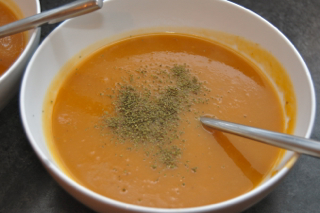
topped with steamed kale (as inspired by my friend Deborah)…

or, my personal favourite, a large helping of finely sliced mushrooms fried in a little oil and tamari.

I hope you are also enjoying lots of seasonal and nourishing goodies to keep you strong in body and mind.


Read Full Post »

More Autumnal Delights

I have never been able to decide which is my favourite season, they all have their beauty and each fills me with its own unique sense of magic. Right now though, I can’t imagine what could be better than these bright autumn days and chill evenings spent reading and drinking chai by the first fires of the cold months to come.

There are so many things to love about this time of year. The crackle of fallen leaves…


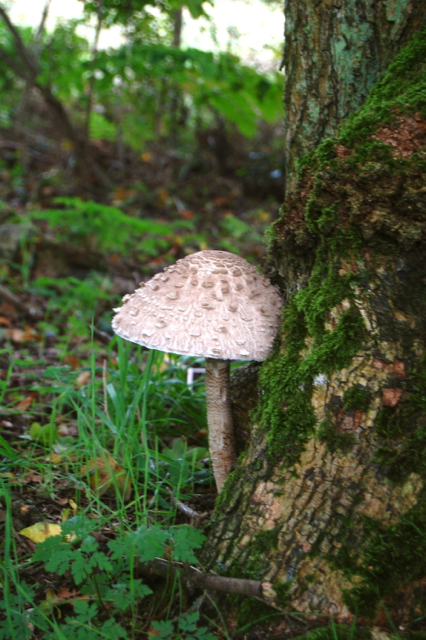
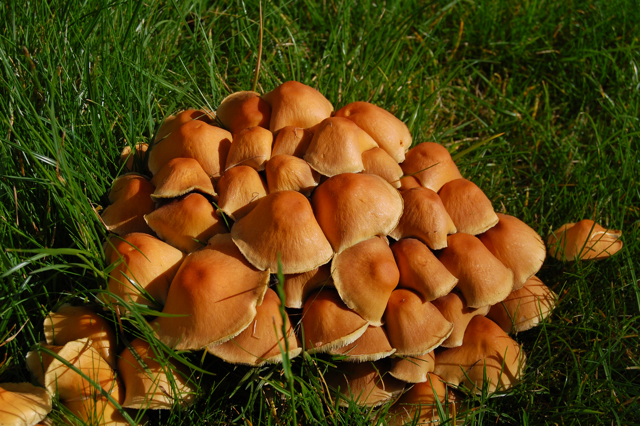
and the fantastic fungi.


This last one I believe is Ganoderma adspersum a native relative of the much celebrated Reishi mushroom. You can read Stephen Church’s account of it’s medicinal uses here.

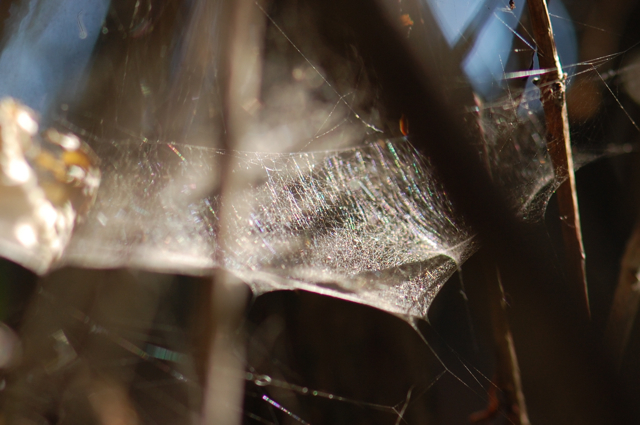
The glistening cobwebs that catch the light and leaves as if gathering mementos of the season’s fading beauty.

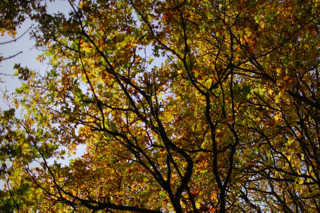
And of course the trees themselves, all burnished bronze and breathtaking in their passing.

Then there is the food too. Squashes and berries, fresh walnuts cracked open with a hammer, kale and  mushrooms. From the first ripening berries through to the last fading leaves, autumn is truly a season to delight the senses.

Now is the time for nourishing our bodies, our minds and our souls with good food, rest, time spent in nature and loving company before the arrival of the harsh winter months. This simple pumpkin soup was blended with plenty of onion, garlic and ginger and topped with tamari fried mushrooms. Easy to digest and full of goodness, it’s perfect for this time of year.

Read Full Post »

The Autumn King

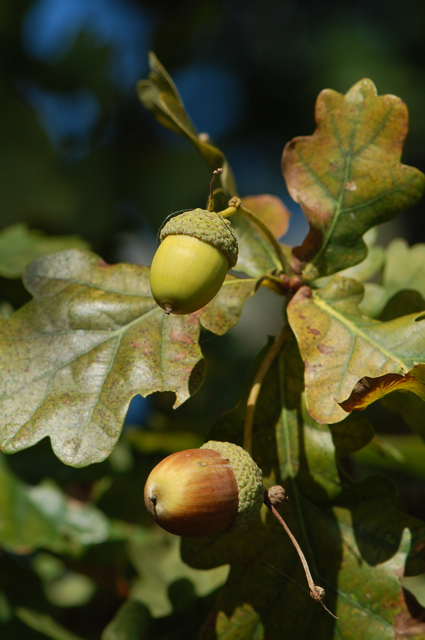
If the Oak is the King of the woods than at no time is his reign more glorious than in autumn when his leaves glow gold and many beings are nourished from his acorns.

Whenever I have lived or wandered abroad I cannot think of Britain without thinking of oak trees. Perhaps then it’s appropriate that I have ended up in a village whose name means ‘place covered with oaks’ or ‘overshadowed by oaks’. Nowadays there are not so many great oaks remaining but sometimes, my husband and I like to stand atop the Downs and dream of the time when everything before us; the farmer’s fields, the gardens, the roads would all have been covered with oak trees.

Whilst the autumn colours of the oak are not as showy as some of the more exotic trees that are visible at this time of year in parks and gardens, their subtle beauty is somehow more deeply fulfilling. I said to my husband as we walked at the weekend, ‘the maples are pleasing to my eyes, but the oaks are pleasing to my heart.’

Oaks were said to be sacred to the Druids. Some suggest the name ‘Druid’ actually comes from the old Gaelic name for oak, Duir, though others have dismissed this saying that instead, it originates from Dru – meaning ‘highest’ and vid – meaning ‘knowledge.’ Who knows the truth, but I cannot imagine any race who lived amongst the oaks would not have held them sacred. Oaks appear in the mythology of many lands and there are about 600 species in the genus across the world.

The oak has many associations with protection and strength, partly because of the numbers of creatures that it shelters in its bows. Apparently it houses the greatest biodiversity of herbivorous insects of any British plant. Even in death it is home to a great many insects. In the Bach flower remedies, oak is given to those who offer their strength to others and keep persevering until they themselves end up drained and exhausted. Taking the remedy is thought to re-establish the positive qualities of oak, those of courage, protection, strength and endurance.

The oak tree was also associated with weather gods as apparently, it is hit by lightning more often than other trees. It has featured alongside the Gods of thunder and lightning in many European cultures, from Zeus of the ancient Greeks, to the Norse Thor and the Baltic Perkunas. This weekend however, it was also resplendent in the sunshine.

Acorns were of great importance to country folk as  a primary food source for their pigs in autumn. Before this, they were  also an important food source for people themselves and were eaten by a variety of cultures from all over the world. To eat acorns they must be soaked or boiled first to remove the tannic acid. I read a recipe for acorn muffins the other day, it sounded perfect for eating round the fire with a spicy herbal chai when the dark days of winter are upon us.

And of course the oak has its place in herbal medicine as well. A very useful astringent, the bark can be used to staunch bleeding of all kinds from haemorrhoids to a mouthwash for bleeding gums.

In pagan mythology the Oak King was said to reign from mid-winter to mid-summer, after which the Holly King took his turn on the throne for the second half of the year. But for me, Autumn will always be the time of the oak.

What is your favourite autumn tree?

Read Full Post »

The Harvest Moon shone bright and beautiful in the sky at the beginning of the week and it seems there is no denying it any longer, autumn is here.

Autumn signifies many things to many people but for me, aside from its obvious beauty, it represents a time of community and friendship. I normally like to go out harvesting alone and wander in silence amongst the plants and the trees but in autumn there is something so special about gathering together with a friend and filling your baskets with the glorious bounty of the land. Now is the final celebration of the abundance and generosity of Mother Nature before we start to withdraw against the harsh onslaught of the winter months and what better way to celebrate than with each other.

I have been blessed to go out berry harvesting with two lovely friends and wonderful herbalists, Therri and Mindy this month and have spend a great afternoon with my lovely husband collecting Hawthorn berries and sloes.

Mindy amongst the Hawthorn

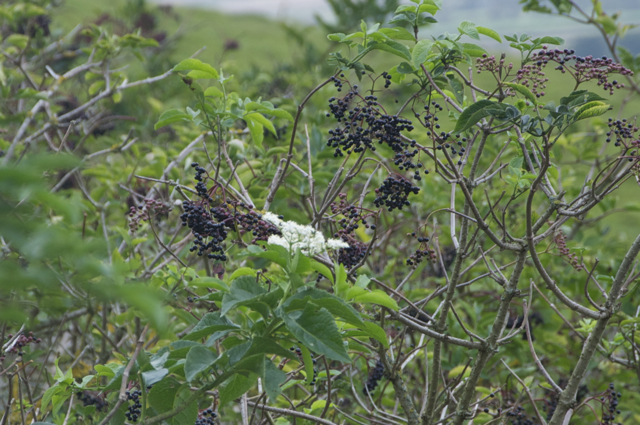
When up in my favourite elder picking spot we noticed both flower and fruit on the same tree. This is something I have never seen before, have you? Excuse the poor quality photo, the light wasn’t great that day.

Flower and berries on the wise Elder Mother.

The result of these outings was lovely fresh tinctures, dried berries and lots of delicious syrups!

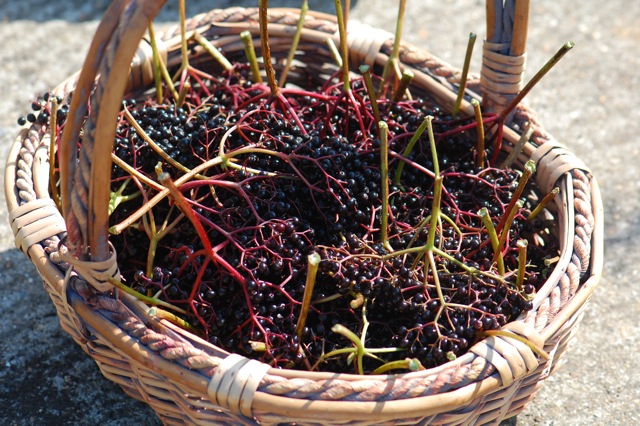
The first elderberry harvest.

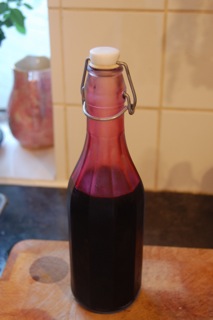
My first syrup making session was with elderberry, unbeatable for tastiness and immune supporting goodness for the colder months. I have already posted my method for elderberry syrup making here, so I won’t repeat myself but this year I added a vanilla bean to the ginger, cardamom, clove and orange peel and it turned out really well, so tasty I keep sneaking to the fridge for an extra spoonful.

Next up was the hawthorn berry syrup. The Hawthorns round here have been so fat and large this year and the trees literally dripping in them. I wonder if that means we are in for another hard winter.

I made a simple hawthorn and ginger syrup by simmering them together in a pan with enough water to cover, straining the liquid and adding an equal amount of raw honey once the liquid had cooled sufficiently. I use a fair amount of ginger because I love the resulting taste of the two combined but you can adjust according to preference.

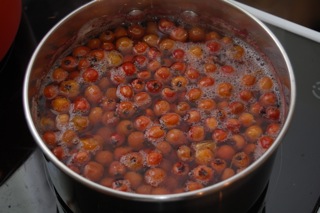
You can tell when it is almost ready because the berries start to loose their colour. I simmered mine on a low heat for about half an hour.

Berries starting to loose their colour.

At the time of straining they have gone a yellowy colour.

It’s basically the same technique as the elderberry syrup but it’s good to store your hawthorn syrup in jars rather than bottles because the berries are high in pectin which means it can set like a jelly and you’ll need to be able to spoon it out. The more of the thicker, mushy liquid you strain into the end product the more likely it will set. There is lots of goodness in this bit too however, so I say go for it. Do be warned though as I can’t imagine many things more dissapointing than being unable to get at all my delicious syrup because it had set in the bottle.

Look how firm the resulting syrup/ jelly is here on our morning porridge.

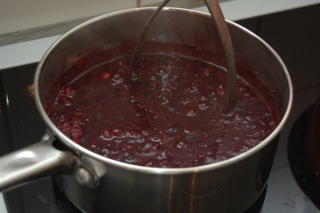
Finally, the pièce de résistance was the five berry syrup I made which included elderberries, blackberries, hawthorn berries, rose hips and sloes. I used the same technique again but this time added no spices or other flavourings and just let the natural flavour of the berries shine through. It’s so yummy I am wishing I had made litres of it!

Simmering berries.

Give them a good mash to get all the goodness out.

This syrup feels so vital and nourishing and is packed with antioxidants and other immune supportive constituents.

Another advantage is that it gives you a wonderful opportunity to polish up your Lady Macbeth impression.

“Out, damn’d spot! out, I say!—One; two: why, then
’tis time to do’t.—Hell is murky.—Fie, my lord, fie, a soldier, and
afeard? What need we fear who knows it, when none can call our
pow’r to accompt?—Yet who would have thought the old man to
have had so much blood in him?”

Watch out amateur dramatics… here I come.

I hope your autumn has also been full of harvests and community or anything else that nourishes your soul.

Read Full Post »

Autumn Colours

As Autumn begins to give way to Winter it seems as though nature is enjoying a last revelling in the intensity and vitality of this year’s fading life. The colours of Autumn help me view my surroundings with fresh eyes, even in those most world weary of moments.

The last blaze of the leaves reminds me that death and endings may also be resplendent with beauty when we invest them with the totality of our being.

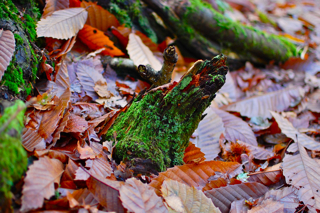
The emerald greens of moss and lichen have an almost spring like vibrancy; endings as beginnings, birth as death.

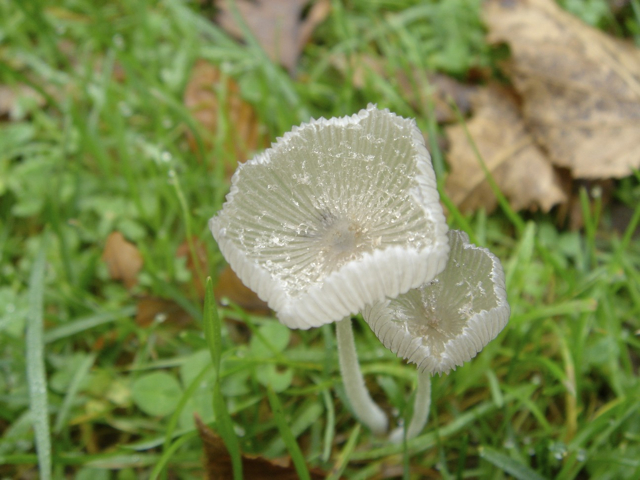
The subtle browns and mauves of fungi nestled in the forest floor keep us alert to the less showy of Autumn’s many splendours.

I love this sense of a final celebration, one last expansion before sleep, one final song before we can only hear the whispering earth in dreams of ice and of long winter shadows, through the softest of slumbers in the ancient quiet of the earth, beneath the misty darkening days.

Read Full Post »

The first frosts have chilled the landscape, turning the view outside our window to a scene of subtlety and wonder.

First Frost

After the first frost is the perfect time for picking rosehips which are now a lovely deep red and a little softer and sweeter, perfect for syrup making.

Reder, softer, perfect for picking!

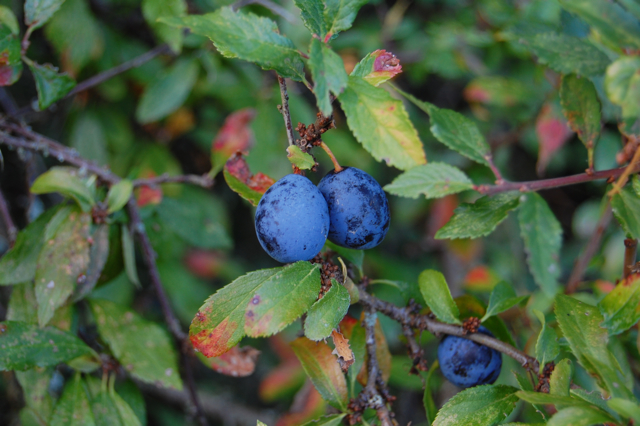
It’s also the best time for picking sloes which are so abundant here in the hedgerows right now, though they wont be around for much longer. Blackthorn, which gives us the sloe berries, is a tree surrounded by folklore and long associated with witchcraft, darkness, winter and the waning moon. The berries and the leaves make valuable astringent remedies and the flowers are said to have a mildly laxative effect, though I have never tried them so can’t offer any more information than this.

Hedgerow Sloes

The berries can be made into a syrup by simmering gently with a little water, straining and mixing with honey to taste once it has cooled. It’s a good idea not to heat honey too much as it destroys the enzymes and, according to Ayurvedic medicine, turns it to poison. You could also heat the juice again with sugar to make a traditional syrup though this would negate somewhat the immune supporting effects of the berries. Take a spoonful daily as an invigorating tonic or to aid in convalescence.

Sloes

The Blackthorn, Prunus spinosa, bears such impressive thorns they are referred to in both its English and botanical names. It’s good to take care when picking sloes as they are fairly savage and wounds from them can easily turn septic.

Beware the Blackthorn’s thorns.

This year I am attempting to make sloe gin with honey rather than sugar. This method seems to have worked well with the damson vodka I made a couple of months ago (and sneaked a little taste of last night!)  but as sloes are far more sour and astringent than damsons we’ll see if I get away with it in the gin. As sloe gin is said to be best after six months it might be a while before I can report back on this recipe! Eating sloes raw is never a pleasant experience as my dear friend Sascha, who helped me with the harvest, demonstrates below.

Eurghk!!

Read Full Post »

Fabulous Fungi


Read Full Post »

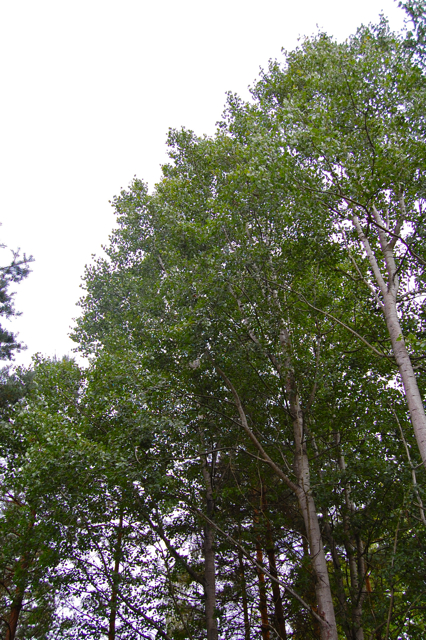
Common Aspen, Populus tremula, is a species of poplar native to Europe and parts of Asia and closely related to the North American Aspen, Populus tremuloides. Known as the trembling or quivering tree, once you know Aspen it’s impossible not to recognise. It’s forever dancing, forever whispering, forever shimmering with the breeze and glistening in the light.

Aspen

I first learnt about Aspen and it’s healing properties through the Bach Flower Remedies where it is used for treating fears and anxiety of unknown origin. It is associated with fear in the doctrine of signatures because it appears to be trembling in the wind. Indeed the aspen is hardly ever still, except when there is no wind at all, and you can hear the distinctive rustling of it’s silvery leaves which are associated with the moon and see them glistening in continuous motion whenever you draw near.
The Celts saw the Aspen as the Whispering Tree. Closely associated with the wind, it carries messages from the ancestors offering deep understandings and a gateway into the worlds beyond our own and the realms of faerie. To sit beneath an aspen and listen to its leaves is to hear a thousand thousand voices, all singing the songs of life and its mysteries.

Aspen Leaves

Though the aspen has been associated with fear, to me the shimmering motion of its leaves seems more one of joy and exultation in the present moment and the gift of life. I find sitting with Aspen an experience of blissful connection. To me it’s a tree of light, totally connected to the divine and dancing its marriage to the consciousness that underpins its existence. Its trembling seems to me to demonstrate its exquisite sensitivity, its awareness of its own mortality and the pure joy and exuberance it experiences in the act of living. Perhaps it heals us from fear because it itself knows no fear, it doesn’t look to the future or the past which is the source of all our fears. It just dances it’s joy for this moment and in doing so, teaches us to shed our habitual worries and anxieties too. Sitting beneath an aspen brings me a sense of wonder and reminds me to celebrate this present moment and to laugh with amazement that I am alive right now, in this moment, what a miracle!

Aspen Sky

Associated with Autumn, it’s good to sit with at this time of year as it helps us to shed our old fears and outworn ideas at the turning of the pagan new year at Samhain (Halloween).
Glennie Kindred writes that Aspen ‘ grows by sending up new suckers which can become new trees. Thus an aspen will create hundreds of interconnecting trees all joined together at the roots, providing us with a clear image of continuity, growth and connection to the source. Linking to the spiritual source, love, is the culmination of a spiritual journey. Everything leads to here and everything follows from here.’
The Celts believed the whispering of the ancestors could lead to visions or messages in answer to our questions. Mostly, I believe the ancestors, through the sweet musical voice of the aspen, are whispering to us to live our lives, live them fully, live them well and live them in joyful celebration of this moment right here and now.

References:
The Tree Ogham – Glennie Kindred
Tree Wisdom – Jaqueline Memory Paterson

Read Full Post »

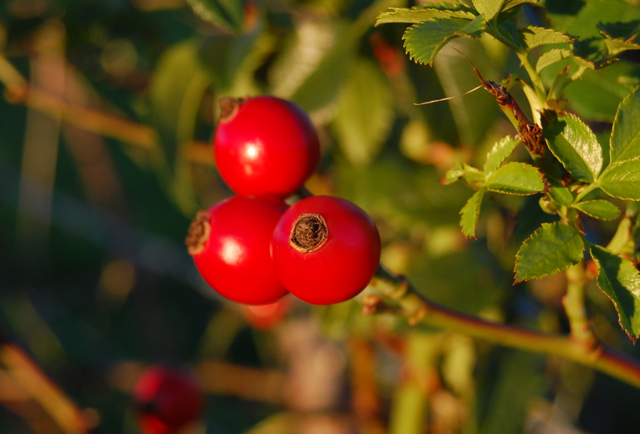
I’m not sure if the rose hips are particularly lovely this year, or if it’s just that we now live in an area so full of wild roses that I’m spoiled for choice, but I seem to find myself exclaiming over their beauty every time I leave the house.

Rose hips are sweetest after the first frost but I usually pick some as soon as they are bright red, with no orangey colour left, and continue picking in small batches until they are finished.
Beautiful Rose hips

I’ve added them to my hawthorn vinegar, made a tincture and a couple of batches of syrup so far and I love to add a few to decoctions and nettle nourishing infusions. A nourishing infusion is like a really strong tea of a particularly nourishing herb which is full of vitamins and minerals. The inimitable Susan Weed has written a lot about them and you can see how she does it over at her website here. I just add a few rose hips to the nettle at this time of year as the high vitamin C content helps with absorption of the iron content of the nettles.

I don’t often make jellies and such,  just because the high sugar levels don’t particularly agree with me, but I make my rosehip syrup with raw honey using much the same method that I used for my elderberry syrup which I described here. This basically involves simmering the roughly chopped hips in enough water to cover for about half an hour, then straining through a jelly bag to get rid of all the pesky and irritating hairs. You can return the hips to the pan with fresh water once or twice more and get a lot more juice from them so don’t throw them away after the first go. When the liquid is cool, mix in an equal quantity of raw honey, bottle and store in the fridge.

Plump and ripe

Another syrup I made this year used dates and a couple of fresh chillis from a plant on my windowsill to make a lovely warming, earthy and sweet treat that hasn’t lasted long at all in our house! I made it by simmering and straining the rose hips with the chillis as above, then making a paste from several fresh dates and a little of the rose hip juice over a low heat adding a little more juice at a time until it is all well mixed. At the end I added a little brandy to help preserve it as it wouldn’t keep long otherwise. This has definitely been my favourite rose hip recipe of the season!

Rose hips in late afternoon autumn sun

Rose hips are rich in Vitamin C and other antioxidants including flavonoids which have been shown in some studies to have anti-inflammatory properties. The flower of the rose is also known for its cooling and soothing properties when dealing with inflammatory conditions. These properties and other constituents like plant sterols also make rose hips beneficial for protecting the cardiovascular system.

All the more reason to enjoy some lovely rose hip syrup in our tea or any other way that takes your fancy.

Read Full Post »

I have many mottos but one of them is ‘Eat something from the wild everyday’. At this time of year we are spoiled for choice with the hedges dripping with all sorts of goodies, but by preserving, freezing and making lovely medicines we can make sure we have something to keep us going all through the winter too.

Eating local wild foods is not only great for our health, as they are often fresher, more vital and richer in nutrients than anything we can buy, but also connects us to a sense of place and belonging and encourages a deeper relationship with our natural environment. Even if it’s just a few berries whilst out walking or a handful of leaves added to a salad or soup, the plants around us are experiencing the same environmental conditions that we are and have adapted well and therefore are able to help us do the same.


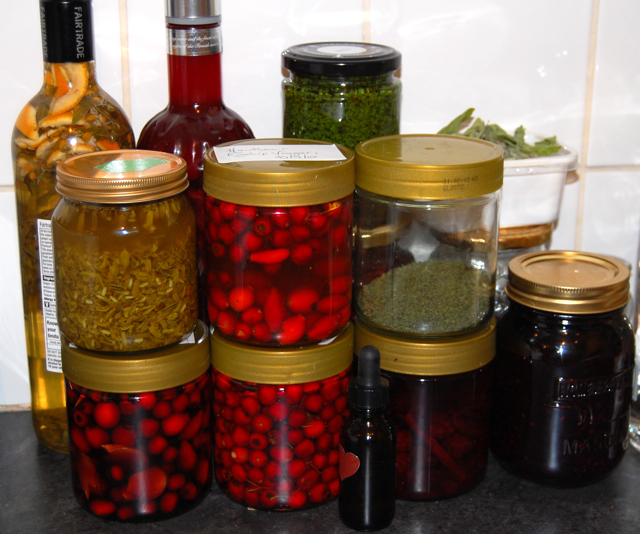
Nourishing foods and medicines from the hedgerow


At the moment I’m enjoying most of my wild foods in the form of elderberry and rosehip syrups, blackberry crumbles, nettle seeds, hawthorn teas and the young ground elder leaves that are poking up through my newly weeded vegetable beds and taste lovely in carrot and apple soup.

My mornings are starting at the moment with a lovely big glass of ‘hedgerow milk’ which consists of freshly made almond milk, a little local honey, some hawthorn berry powder, rosehip syrup and nettle seeds. Delicious and nourishing it helps me start the day feeling energised, connected to the land and full of gratitude.


Morning Hedgerow Milk


Eating local wild foods helps ensure we are getting the right nutrients for our seasonal needs. The berries that are in abundance here at this time of year are filled with anti-oxidants including flavonoids and other polyphenols as well as lots of Vitamin C to help protect our bodies and support our immune systems as the weather gets colder. Many also have an anti-inflammatory action which helps soothe the aches and pains that can accompany colds and flus.

Foraged nuts and seeds such as walnuts, cobnuts or hazels, chestnuts and nettle seeds are nourishing and contain proteins, healthy fats, vitamins such as B’s and E and are a good source of well sustained energy.

And soon it will be time for harvesting roots which help us to draw our energy in and down (just like the plants do at this time of year) and give us much sustenance and grounding ready for the more inward focus of the winter months.

When the spring comes round we can feast on young green leaves of plants and trees to cleanse our winter stagnancy and boost our dwindling levels of many key nutrients. Brigitte just wrote a post here about all the lovely tree leaves she is harvesting for her salads over in New Zealand where Spring is in full swing!

Nature does take care of us well!

Read Full Post »

« Newer Posts - Older Posts »