Feeds:
Posts
Comments

Archive for the ‘Autumn’ Category

Discovering Spindle

I recently went on a lovely day workshop with Susan Hall of Earth Wisdom entitled ‘The Magical Language of Trees’. Sue was speaking mostly about the symbolism and meanings of the Tree Ogham which includes a series of twenty trees and plants used as an alphabet and system of divination by the Celts. It was really enjoyable learning about the meanings given to each tree in the morning and then spending some time outdoors connecting with the trees themselves in the afternoon. As well as the twenty main trees of the Ogham, Sue explained that there were also an additional five, one of which is the beautiful hedgerow shrub, Spindle, Euonymus europaeus. Of all the trees we discussed spindle was the one I knew least about but, as is so often the way, since that day I’ve been spotting it everywhere I go!
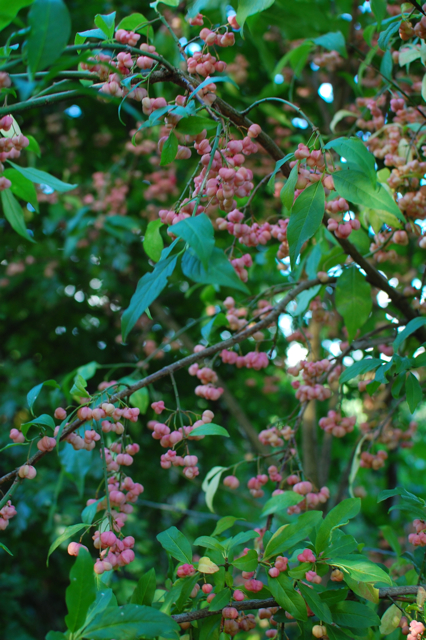
Hedgerow Spindle

A lovely small tree or shrub, it is really in the autumn that Spindle begins to shine due to the incredible hues of the leaves and the berries which are bright pink with an orange seed inside that hangs down and becomes visible later in the season. Many species of the genus Euonymus are poisonous and unfortunately the beautiful berries themselves are toxic however there are a couple of types that are used medicinally such as E. americanus, and the  E. atropurpureus, also known as burning bush. Both these grow predominantly in the U.S. however, where they are commonly known as Wahoo, so we English folk must derive our Spindle healing from her beauty alone.

Spindle leaves

As the name implies, it was used for making spindles and, possibly because of this, it has become associated with crafts and creative endeavours. For the Celts it is thought to have symbolised completing lessons in order to move forward,  as well as sweetness and delight.

Beautiful hues of the autumn Spindle

Whilst in Westonbirt Arboretum a few weeks ago we saw a beautiful winged spindle which had the most fabulous bright pink leaves.

Winged Spindle with Cyclamen

Pink leaves of the Winged Spindle

I would love to make a tree essence from this wonderful plant, especially at this time of year when she is looking so vibrant. I feel it would be useful for accessing deeper aspects of our conscious and being able to express them creatively. Any plant with such a wonderful colour palette has to inspire artistic expression! Though Spindle is so showy right now, the rest of the year she is not very noticeable at all so perhaps it might also be of use in helping people access their own inner beauty at different times of life.

The berries are often the most noticeable, varying from bright to paler pink and containing a vibrant orange seed.

The berries

Pale pink berries
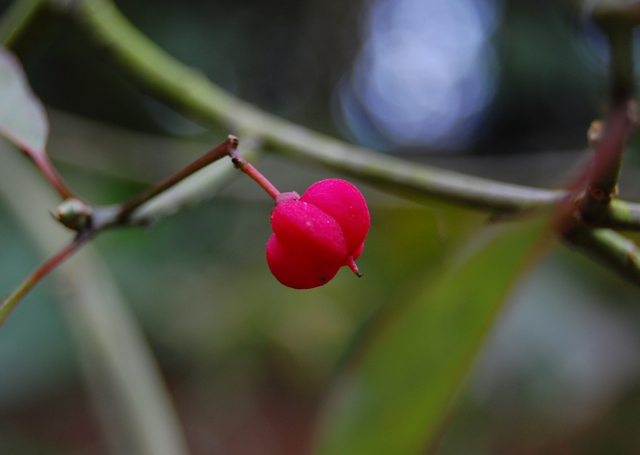
Bright pink with distinct segments
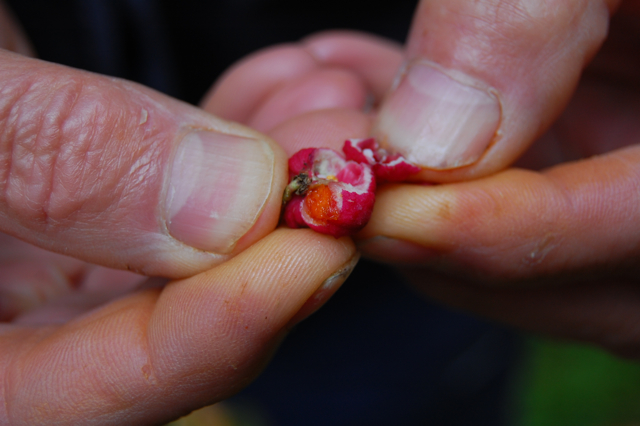
Spindle Seed

I feel lucky to have attended such a lovely workshop and been inspired to meet this new friend and begin to explore the gifts she has to offer.

Isn’t the beauty and variety of nature amazing?
Read Full Post »

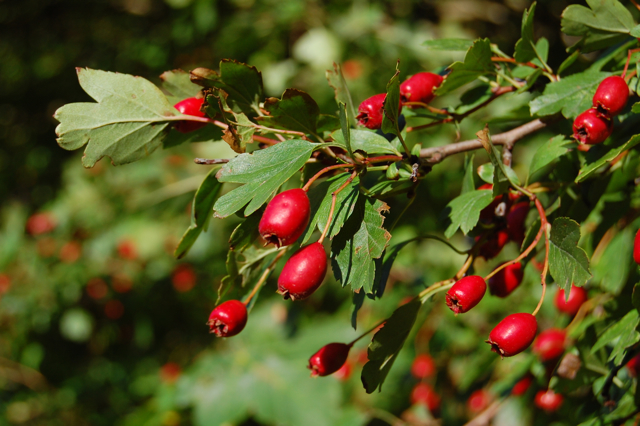
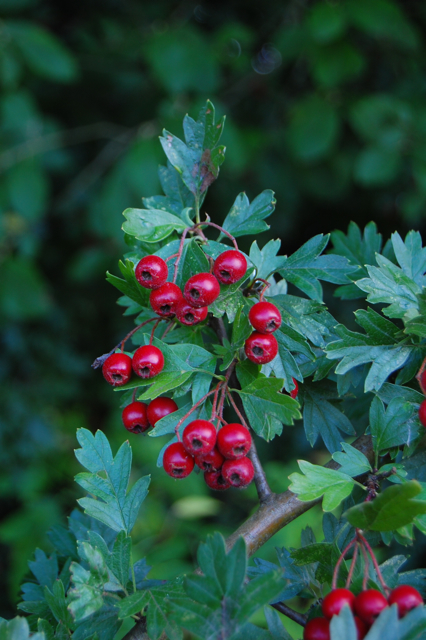
It’s been a busy week so far gathering the last of the blackberries, the first of the rosehips and lots and lots of lovely hawthorn berries. I don’t think I really have a favourite herbal plant, there are so many to love and admire, but if I had to choose one then hawthorn would certainly be a strong contender.

Beautiful Hawthorn, abundant with berries

The Hawthorn is a beautiful and elegant tree, with a rich lore of mythology and magic behind it, however it still remains very much human in scale. Growing in practically every hedgerow, it’s easily accessible and offers us medicine in the form of its flowers, leaves and berries. Whenever I see hawthorn, which is pretty much everywhere round here, I think ‘friend’.

Hawthorn Berries

Hawthorn is fascinating medicinally because it’s one of the few Western herbal adaptogens, loosely meaning it helps to bring the body into balance, irrespective of whether it is over or under functioning whilst being safe and non-toxic. Widely used as a heart tonic it can help lower high blood pressure and will benefit almost any problem that affects the heart or circulatory system, from high cholesterol to chilblains. It helps to dilate coronary arteries, improving circulation and bringing relief from angina. It also increases the heart’s ability to pump blood effectively by improving the contractility of the muscle and its high levels of antioxidants help to protect the capillaries.

A cascade of berries

What is particularly interesting though is that whilst here in the West hawthorn is used almost exclusively as a heart tonic, it has been used quite differently by other cultures and in other ages. Culpepper, writing in the 17th Century, tells us it is ‘singularly good against the stone and… for the dropsy’ implying it was mainly used as a urinary tonic, possibly because, being a member of the rose family, it has some astringency. In Traditional Chinese Medicine, where it’s known as shān zhā, it’s been used predominantly as an aid to digestion, to help the body assimilate fats and as an aid to liver function. In Ayurveda the berries are considered sour and heating, so not suitable for Pitta types in excess. In the Yoga of Herbs the authors write, ‘Hawthorn berries are a good example of the stimulatory power of sour herbs for both circulation and digestion. They have a special action on the heart, strengthening the heart muscle and promoting longevity. They are particularly good for Vata heart conditions like nervous palpitations, or the heart problems of old age (the age of Vata) like cholesterol and arteriosclerosis.’

The flowers are soothing and nervine and many herbalists combine preparations of flower and berry to get the benefits of both. You can read more about the flowers in my earlier post here.

Red and shiny and perfectly ripe

I like to prepare my berries in alcohol or vinegar as well as drying a good number for use in decoctions. To make a decoction simmer two teaspoons of dried berries in a cup of water for 15 mins and drink three times daily.

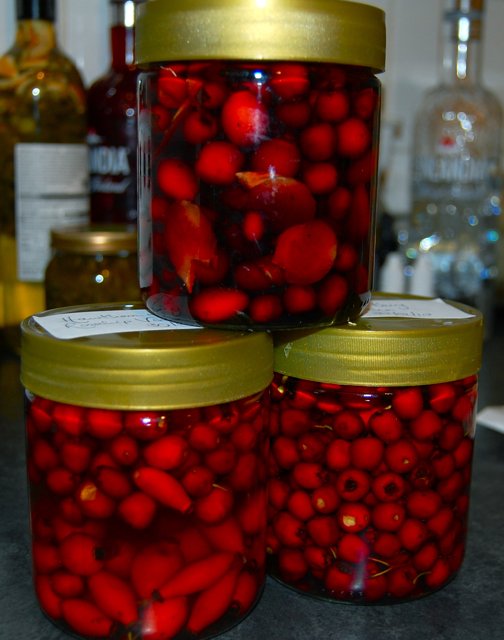
A delicious herbal vinegar can be made by filling a jar with hawthorn berries, either alone or combined with rosehips and covering in apple cider vinegar then leaving to infuse for a month or so before straining and rebottling. Remember to use a plastic lid as metal with go black and nasty.

Tincture can be made in a similar way by covering the berries in vodka or brandy. This year I made a simple hawthorn tincture in vodka and another in which I combined the berries with rosehip and ginger in a mixture of port and brandy, yum. Let infuse for 2-3 weeks before straining and rebottling.

A lovely way to use hawthorn berries is to dry and powder them. They can then be used in numerous ways by adding a little of the powder to smoothies, soups, cookies, breakfast cereal or just about anything else. They are tough though and have a stone in the middle which needs removing (due to toxicity) so it can be easier to just buy them already powdered from a good herbal supplier. If you want to make your own powder you can mash the whole berry with you hands and the tiniest bit of water then push through a sieve, removing the stone, and spread the resulting pulp out to dry on baking paper or silicon sheets. When completely dry, powder in a high power blender or grinder.

Left to right – hawthorn and rosehip vinegar; (top) hawthorn, rosehip and ginger in port and brandy; hawthorn tincture in vodka.

Hawthorn, you truly are a heroine!

Lusach has a beautiful post on making hawthorn berry decoctions here, which is well worth a read.

References:
Culpepper’s Complete Herbal – Nicholas Culpepper
Medical Herbalism – David Hoffman
The Yoga of Herbs – Dr. David Frawley and Dr. Vasant Lad

Read Full Post »

Henge Moon

We were lucky enough to have a Stonehenge access pass a couple of nights before the Autumn Equinox and enjoyed a magical evening of soaking up the atmosphere as the moon rose on one side of us, whilst on the other the setting sun cast golden light onto the stones and long shadows into the gloaming.

Stonehenge

Setting Sun

Stones framed by a pink sky

Golden light on the stones

Fire in the sky

Henge Moon

Read Full Post »

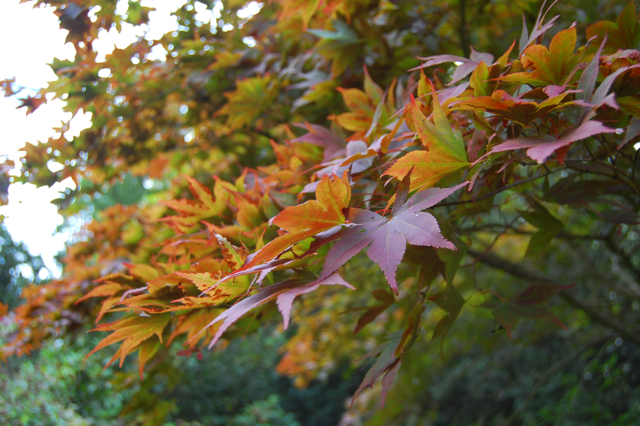
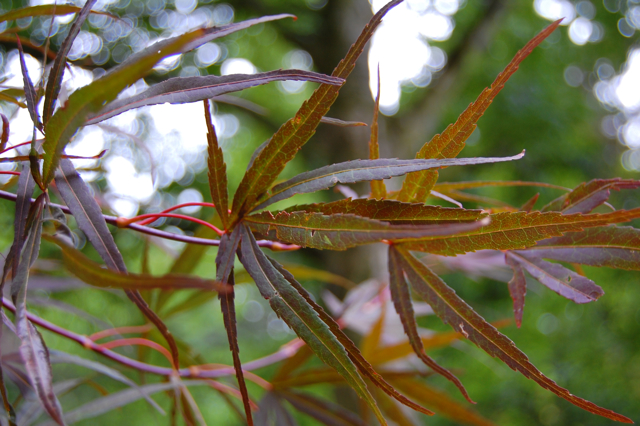
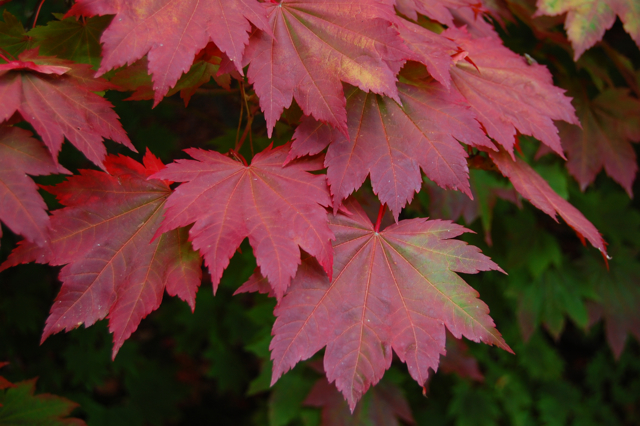
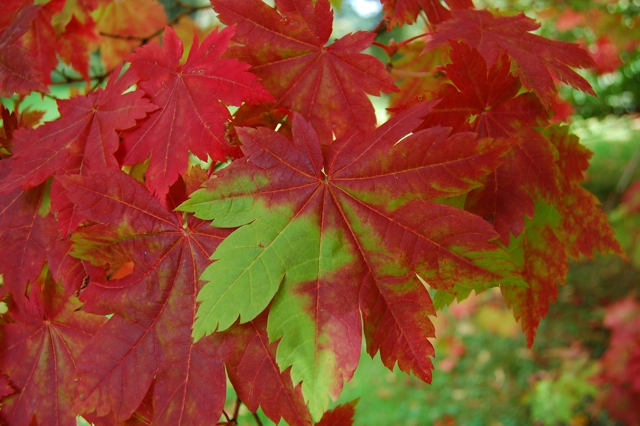
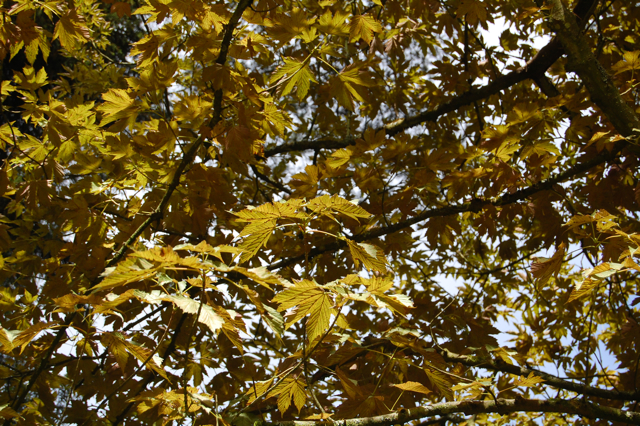
Westonbirt Arboretum is one of the most beautiful places to admire the changing season with it’s spectacular collection of Japanese Acers and other trees from all over the world. Even though we were a little early to catch the display at its peak, it was still a delight to see the trees beginning to blush from green to yellows, browns, reds and purples, all framed by the bright blue Autumn sky.

When the weather begins to turn and we feel a little glum at the thought of oncoming winter, these fiery hues cheer our hearts and remind us that each season has its beauty and its lessons.


Read Full Post »

Elderberries

I’ve managed a few elderberry harvests in the last couple of weeks and have been mixing up some different syrups and other medicinal and delectable preparations. Elderberry (Sambucus nigra) is one of our most important herbs at this time of year as both a treatment and preventative for autumn and winter colds and flus.

Harvesting Elderberries

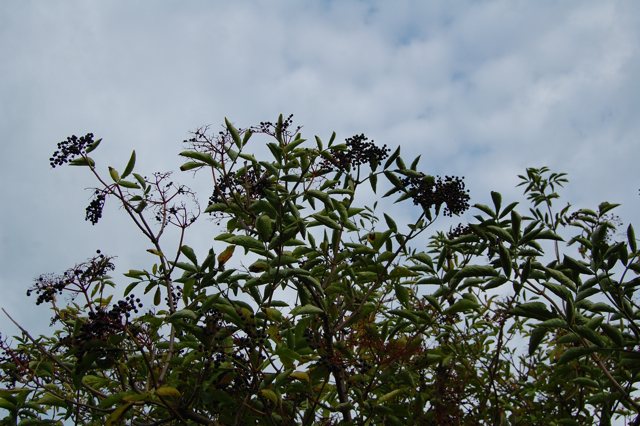
Collect  your elderberries when they are ripe and a deep purple/black, remembering of course to ask the Elder Mother’s permission first. When you get home, strip them from the stems and discard any that are still green or red as well as any that have shrived. Elderberries should be cooked before ingesting as they can be laxative and emetic when eaten raw and the seeds are usually strained out after processing because they are slightly toxic.

Ripe Black Berries

Discard the unripe berries

Elderberry Syrups

I have made a variety of different elderberry syrups this year with different healing properties emphasised in each one. The basic method for all the syrups is the same and is as follows:

  1. Place 2 cups of elderberries in a pan with 2 cups fresh water and whichever additional herbs you are using (see below for variations.) Simmer gently for about 30mins with the lid off until the water has reduced to about half it’s original amount and the berries have released all their juice. Set aside and allow to cool completely.
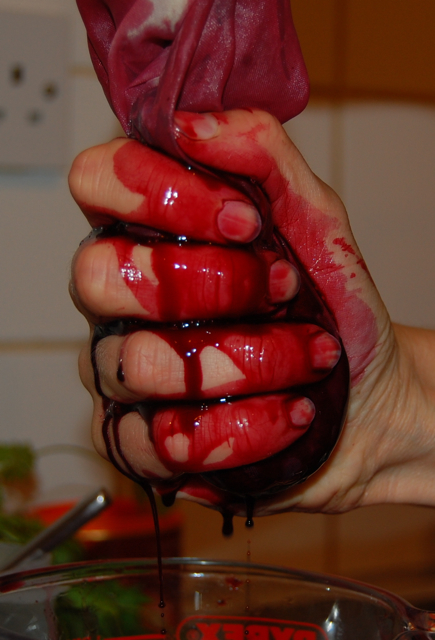
  2. When cool, strain through a jelly bag into a measuring jug.
  3. Add approximately the same quantity of raw honey to the elderberry juice and stir until dissolved. You can use less honey but the mixture will not last so long.
  4. Bottle in sterilised preserving bottles and label. Store in the fridge.

Making Different Syrups

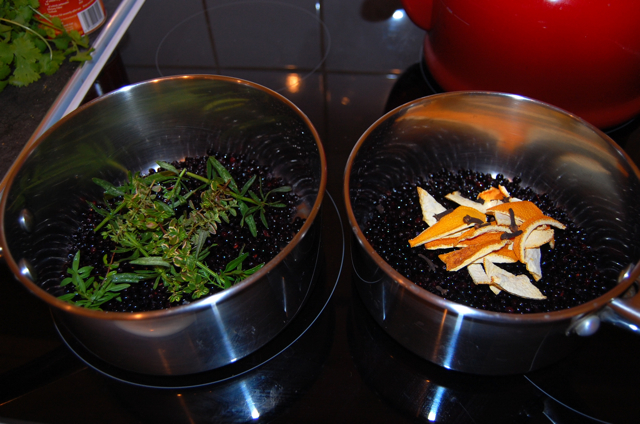
Simmering Elderberries

Deliciously gruesome!

During the first stage you can add different herbs according to your preference. I added a handful of fresh thyme and hyssop to my first batch to make a syrup that is particularly effective for winter ailments that affect the respiratory system. My next batch included orange peel and cloves to make a Vitamin C rich, anti-microbial blend that will also ease the digestion. Cardamom and ginger added to the next batch are warming and stimulating to sluggish winter circulation. Finally I simmered a batch of elderberries on their own and added 12 pink rosebuds when I turned it off the heat. I let these infuse whilst the mixture cooled and added half the quantity of linden blossom honey (I used less so as not to overpower the beautiful and delicate rose flavour) to make a divinely comforting blend for grey days which also encourages a healthy heart. As I mentioned before this syrup won’t last as long as the others but it’s so delicious I don’t think it will be hanging around for long anyway! In the fridge these syrups should last 3/4 months, slightly less for the rose one.

Syrups can be taken directly off the spoon, added to hot or cold drinks, drizzled on porridge, added to smoothies or any other way that takes your fancy.

Sugar vs. Honey? Most traditional syrup recipes use sugar instead of honey and heat the elderberry juice a second time after adding it to make a thicker syrup. The advantages of this are that it will last longer, potentially the whole year until the next harvest comes round, and that it’s much cheaper- raw honey can get a bit pricey in large quantities. The downsides of course are that sugar does not contain the medicinal benefits of raw honey which is antibacterial and rich in antioxidants and enzymes. In fact, sugar can act to deplete the immune system and many people in today’s sweet-crazed society already have imbalances caused from an excess. Still if you want to make large quantities that will last, it’s pretty much the only option and the damaging effects won’t out way the benefits of the elderberries.

Elderberry Elixir

If you want a long lasting and delicious preparation that warms your wintery cockles then this could be the one for you. I go to town a bit on my elixir, making it with a combination of port and brandy, local raw honey and warming spices. When i was at university I was introduced by a friend to the winning combination of port and brandy as the ultimate cure for colds and flus. Nowadays I tend to turn to herbs first but I still respect these warming alcohols for driving out the cold and the ache. That’s why I combine them with the elderberries and the warming spices from another of my favourite beverages, Chai. For me, this blend is the ultimate winter warming wonder recipe. Take a tablespoon in a small glass of warm water each evening as a preventative or take half a teaspoon every couple of hours at the first sign of infection.

Elixir Magic

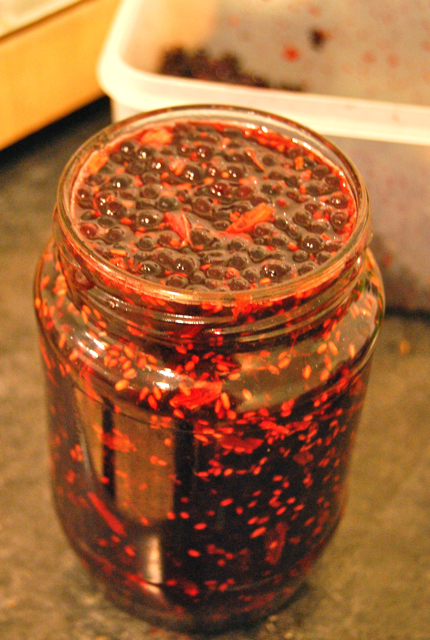
To make it mostly fill a jar with freshly picked elderberries. Give them a wash and quick dry on some kitchen towel first as the natural yeasts present on the berries can cause this to ferment and ooze out of the jar if you aren’t careful. Add one cinnamon stick, broken into pieces, 8 thin slices of fresh ginger and then 12 cloves, 12 black peppercorns and 20 cardamom pods lightly crushed in a mortar and pestle. Add brandy until 1/3 jar is filled with liquid, then add 1/3 port and top the final third up with honey. Stir everything thoroughly with a bamboo chopstick or glass stirring rod. Lid, label and store out of direct sunlight, somewhere cool and dry for a month to six weeks before straining and rebottling. I like to hold the jar between my hands every few days and add some energy healing to the mix.

Elderberry Tincture

This  can be made very simply by filling a jar with elderberries and covering with vodka, lidding, then allowing to sit for a month stirring occasionally, before straining and re-bottling. This will last at least the year and has the advantage of being easily added to blends of other herbs.

Elderberries can also be dried or frozen to make into teas or add to other preparations later in the season. I’ve had lots of fun creating delicious elderberry concoctions this autumn and I’ve enjoyed reading about other people’s adventures with elder too. Some posts from other bloggers I’ve been enjoying over the last few weeks include a lovely one over at Nettlejuice which you can read here. This one here from Moment to Moment which is full of beautiful photos. And this one here from Sensory Herbcraft which has an alternative syrup recipe using sugar.

Update: I’ve just read this post over at the delightful Teacup Chronicles which is full of great information on elderberries and some lovely reflections.

Enjoy!

Elderberry Medicine Chest

Read Full Post »

Recently I read these words from the famous and well respected nature writer Richard Mabey on the subject of the Elder (Sambucus nigra). “It is hard to understand how this mangey, short-lived, opportunistic and foul smelling shrub was once regarded as one of the most magically powerful of plants.” Now, I like Mabey and own several of his books but reading this made me seriously re-evaluate my position! She may not be a classic beauty, but look closely and you will see so many aspects of the Elder Mother to love and cherish. Her presence in the hedgerow is such a blessing. She shelters and protects not only her human children, but is also beloved of wildlife and has a key role to play in plant ecosystems as well. She is truly a mother to us all and should be treated with respect, if not veneration, by everyone whose life has been touched by her generosity.

The Elder bathed in late summer sun

Along with other white blossomed trees such as Hawthorn and Rowan, the Elder belongs to the realm of the faeries and the Goddess. I loved discovering this, as all three have been particular favourites of mine for many years.  The Elder represents the old crone aspect of the goddess, as her name suggests, that part of us which is wise, experienced, strong and connected to the world of the unconscious. Part of these associations come from Celtic mythology in which Elder governed the thirteenth and final month of the year. Her place was to guard the gates between life and death, endings and beginnings, the knowledge of the day and the mysteries of the night. Her mythology has always related to those in-between times such as Samhain (Halloween) and Midsummers Eve when you would see the Faery King ride by with his retinue, should you choose to take shelter beneath an Elder tree. Elderberries gathered at Samhain are seen as especially potent medicinally, though there are seldom any left by late October.

Elder Hedgerow

Often, when I come across Elder out walking I have a sense that I’ve strayed into the path of someone venerable and wise and feel I should offer a little curtsey or bow of respect, or at least an acknowledgement in words or in thought. She seems to cooly observe the world, somewhat detached from its folly yet uncompromising in her efforts to help. Just like any loving and aged Grandmother, or anyone connected with the realms of faery, she also has a bit of a sense of humour! There’s often a challenge involved in picking Elder, she’s usually surrounded by a guard of nettles or a hidden ditch for the unwary to stumble down.

Elder Tree

In his highly recommended book The Lost Language of Plants, Stephen Harrod Buhner describes Elder as a keystone plant, one that helps to establish a community of plants by increasing the health of an ecosystem and making it more hospitable. He says;

“Keystone species, once established, call to them not only soil bacteria and mycelia but the plants they have formed close interdependencies with over millennia. As the plants arrive, the keystone’s chemistries literally inform and shape their community structure and behaviours. The capacity of keystone species to ‘teach’ their plant communities how to act was widely recognised in indigenous and folk taxonomies. Elder trees for example are keystone species in many ecosystems. Among many indigenous and folk peoples it is said that the Elder tree ‘teaches the plants what to do and how to grow,’ and that without its presence the local plant community will become confused.”

This confirms for me one of the key aspects of my understanding of the Elder, that of protection. Not only does she protect and shelter young and newly establishing species of plants but, through the berries she produces in abundance each year, she protects our immune systems during the harshest months of winter. These berries are also rich in antioxidants which are known to protect our cardiovascular system, skin and brain among other things. In folklore, The Elder was thought to protect from witchcraft and negative energies and was traditionally planted at the back of the house, whilst Rowan was planted at the front.

The Elder Protects

For me the Elder speaks of the wisdom of change, the subtle understandings of life and death and the knowledge teamed with deep compassion that only those of great age can possess. We have much to learn from this ‘mangey’ and ‘opportunistic’ old crone. This spirit of the hedgerow who doesn’t quite belong to this world, but fulfils so many duties within it.

Who cares what Mabey thinks. We love you Elder Mother.

Elder Sky

Pop back tomorrow when I’ll be posting a variety of the elderberry recipes I’ve made over the last fortnight.

Read Full Post »

Since my last post on harvesting nettle seeds I’ve had a couple of emails asking me for more specific details about how and when to harvest. I remember that when I first started to collect herbs and make my own remedies it would always annoy me when writers skimmed the surface of the topics they were discussing, making assumptions that their readers already knew how to make this or that. So, in the spirit of making things clearer, I thought I’d post a few more photos to show those of you who’d like a bit more info exactly what nettles look like at different times of the year, how the seed should look when you pick it and how it looks when it’s dried. I hope that clears up any confusion and makes it easier to get out and enjoy your harvest.

Nettles come up in Spring at which time you can harvest them for soups, to eat raw, to add to juices, vinegars, teas or enjoy as a steamed or cooked green.

Nettles in Spring

Later, as summer starts to warm up, the nettles begin to flower at which time they are no longer good for eating. Nettles in full sun will flower before those in the shade and will also produce seeds earlier.

Nettle in Flower

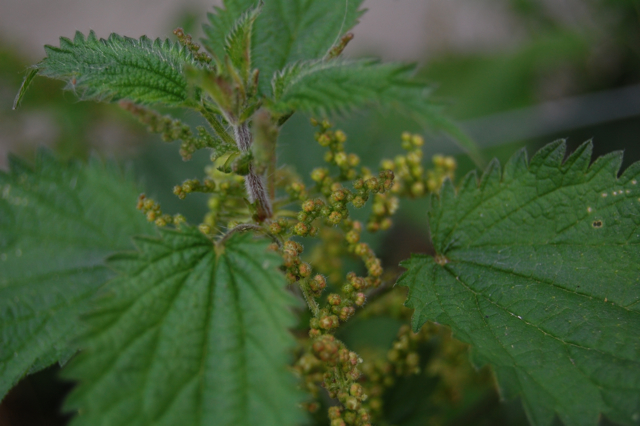
The flowers begin to turn to seeds…

Ripening into seeds

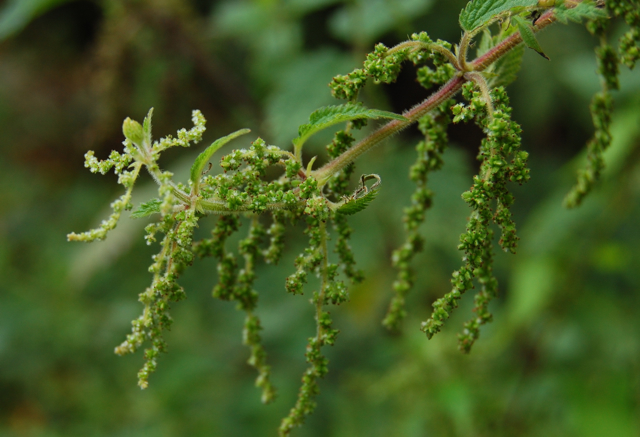
But aren’t ready to harvest until they look like this.

Perfect Timing

Collect the green seeds rather than the brown or black.

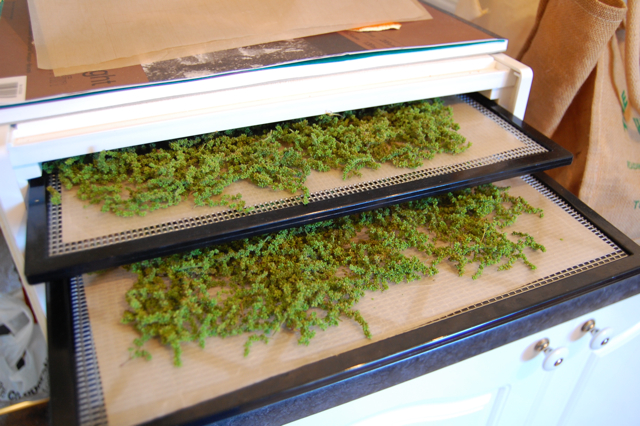
After hanging the stems to allow the insects to escape, cut off the small strands of seeds and allow to air dry or use a dehydrator like this one.

Drying nettle seed in the dehydrator

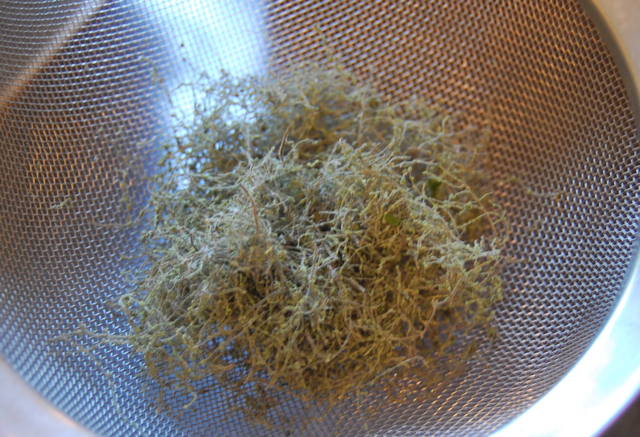
When dry, take small handfuls of the seeds and rub through a sieve.

Sieving dried seeds

The seeds will come away and you’ll be left with the small grey-green stands like these.

After sieving

Pop your dried seeds into a jar, store somewhere cool and away from bright light and enjoy sprinkled on food.

Jar of dried nettle seeds

Hope that was helpful!

Read Full Post »

Nettle Seed

I passed a lovely afternoon recently in harvesting my first nettle seeds of the year. They are so abundant right now and so helpful during these busy periods that it was a real pleasure to get out gathering them.

There are a couple of great articles on the internet describing how to harvest nettle seeds along with their uses which I highly recommend reading, notably those by Henriette here and here and Kiva Rose here and here. Though many people know how beneficial nettle leaf can be, until the recent revival of interest in nettle seeds it was a little used remedy in modern herbal medicine. Even now it seems to be much more popular amongst traditional herbalists and herbwives rather than medical herbalists, not that the distinction is always so clear.

The benefits of nettle seeds have some overlap with those of the leaf, both being strengthening, mineral rich, great for skin and hair and for supporting the kidneys and urinary system. Whereas the leaf is gentler and more nourishing however, the seed packs more of a punch.

Abundant and ready to harvest.

According to Henriette, ‘Nettle seeds are adaptogens. They help with the general stress response, they strengthen the adrenals, and they’re loaded with minerals and trace elements’. As most of the hype around adaptogens has centred on exotic plants from far away lands it’s particularly nice to have such a great example growing abundantly here in the UK. I always think that the medicines we need most are the ones which are most abundant near where we live and in these stressed-out, sped-up times, for many of us nettle seed is no exception.

Useful for chronic exhaustion, adrenal fatigue and burnout, nettle seeds have also been used to aid kidney function in both people and animals with degenerative conditions. David Winston writes here, ‘I discovered Nettle Seed could be used as a kidney trophorestorative – literally a food for the kidneys. I have used the seed tincture to treat over 30 cases of degenerative kidney disease and the results have far exceeded my expectations. A recent study published in the Journal of The American Herbalist Guild [4(2):22-25] confirms my clinical experience, showing that Nettle Seed increases kidney glomerular function and reduces serum creatinine levels. Many herbalists have seen significant benefits from using Nettle Seed tincture in patients with glomerulonephritis, chronic nephritis with degeneration, and to protect the kidneys from nephrotoxic medications.’ Impressive stuff.

As the endocrine glands work together to maintain a subtle balance in the body, often a medicine that affects one of them will have a knock on effect throughout the entire system. So nettle seeds can help harmonise the whole of the endocrine system, though their primary action is to balance the adrenals.

Last year, Sara Jane of Brighton’s Green Aprons group told me that taking just a small amount of the fresh green seeds had kept her awake the whole night. Kiva Rose has also spoken of the overstimulating effects of the fresh seed. They don’t seem to affect me in quite the same way, so perhaps it’s constitutional. From an Ayurvedic perspective I imagine Pitta types would find them quite stimulating but Kaphas could benefit from their energising effects. I’m pretty Vata and, as I say, they haven’t ever kept me awake, though they did give me  a surprising and uncharacteristic motivation to do lots of housework! Perhaps I shall make my fortune marketing them as the new ‘mother’s little helpers’. Or perhaps not.

To be on the safe side, it’s best to take the dried seeds as they have a more gently restorative action and are energising without being too stimulating.

Harvest now will the seeds are hanging in strands

The first time I harvested the seeds I ignored Henriette’s advice and, like many a young herbalist who disregards the voice of experience and wisdom, I came a-cropper. As she suggests, nettle seeds do seem to harbour a remarkable amount and variety of insect life, so it’s really best to do as she says and cut whole stems rather than just the seeds and hang them for a few days to allow the wildlife to escape. I take them down before they are completely dry and finish them in the dehydrator but that’s just because years of living in damp houses have made me cautious of air drying anything. Once dry, strip off the strands of seeds and rub them through a sieve, you’ll be left with a beautiful harvest of dried nettle seeds.

Most of the nettles growing near me are the perennial Urtica dioica but if the annual Urtica urens is more abundant near you then do remember when collecting seeds that the success of next year’s new plants depends on them. If you have only a few plants in your area, look elsewhere for your bounty. This lovely nettle patch, and a couple more like it, are just outside my house so I’m lucky not to have to worry about over harvesting!

Nettle Patch

Nettle seeds are so easy to incorporate into your daily diet and can be thought of as much as a nourishing ‘superfood’ as they are a medicine. Sprinkle them on salads, soups, in sandwiches or blend in smoothies. Take up to a teaspoon a day and see how you go, you can use more or less depending on how they affect you.

I make a delicious seasoning from nettle seeds, hemp seeds, nutritional yeast, mixed herbs and a pinch of salt and pepper.

This amount of nettles filled an average size jar with dried seeds. I’ll need to do another few harvests in order to make a tincture from the fresh seed and stock enough dried seeds to see me through the year.

Nettle Seed Harvest

For more detailed info on when to pick and how to process nettle seed see this post here.

Read Full Post »

« Newer Posts