Feeds:
Posts
Comments

Archive for the ‘Seasons’ Category

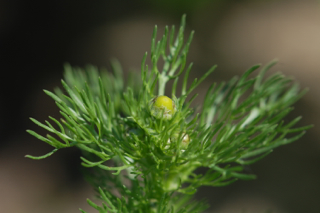
Roses, chamomile and nigella.

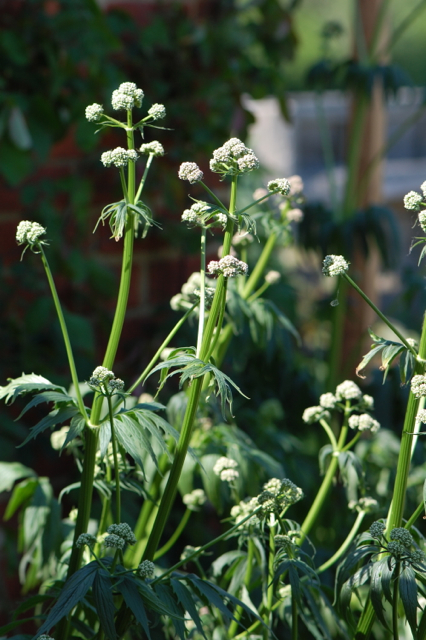
Borage, valerian and rose.

_______________________________________________________________________________
I just love this time of year when everything in the herb garden is overflowing; with colour, scent, the buzzing of insects and the joy of being, expressed in its fullest.

The intermittent sun and rain have ensured lush growth on everything. Several things have bolted like the lettuces, parsley and this 8 foot monster lovage.

Lovely lovage.

Parsley gone to seed.

However plenty of other things are just opening, the feverfew and vervain included. I adore vervain, Verbena officinalis, it is easy to see why it was considered a sacred herb by the Druids, it has such a magical quality to it.

Feverfew

Vervain

Many herbs are in full bloom and perfect for harvesting now like lavenders, thymes and white horehound.

Thyme

Lavender

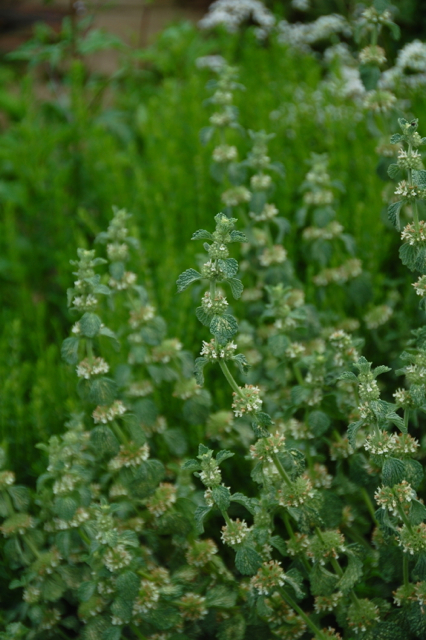
White Horehound

_______________________________________________________________________________

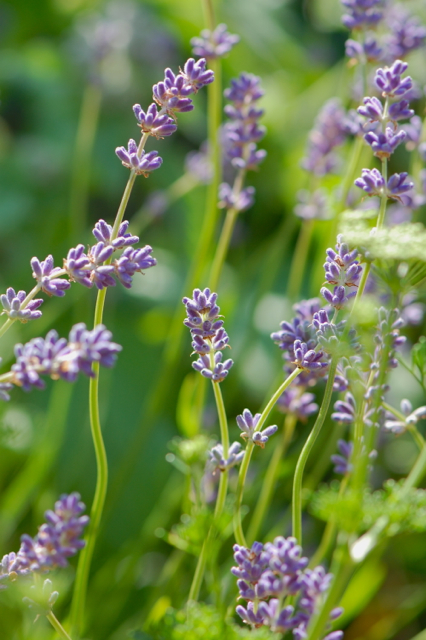
Lavender – Edelweiss

The garden is full of one of my favourite flowers, Nigella, or love-in-a-mist. This year I not only have the usual blue variety but some gorgeous pink ones, Mulberry rose, the seeds for which were sent to me so kindly by Cheryl last year.

One of the real highlights of summer is the vibrant colours, sun-filtered and glowing so that even in my tiny plot there is always something new to marvel at. Yellow loosestrife is a beautiful wildflower but one I grow in pots due to its over zealous nature!

Yellow loosestrife

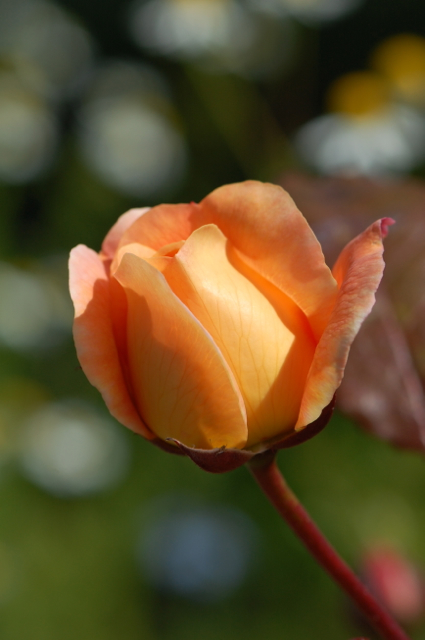
Rosa ‘Lady Emma Hamilton’

_______________________________________________________________________________

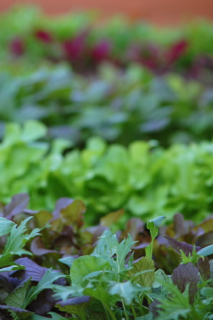
Even simple salad vegetables can be among the highlights of the garden.

Tree spinach

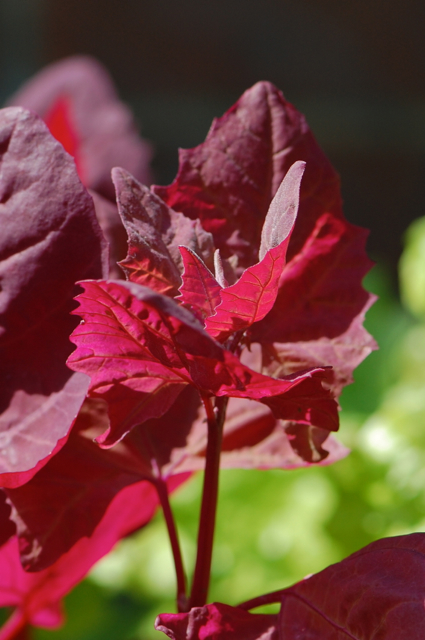
Red orach

_______________________________________________________________________________

These lovely little sea thrifts were given to me by my father who grew them from seed.

What are the highlights of your garden right now?

Read Full Post »

From floods and thick jumpers one day, to soaring temperatures and shorts the next, this year the transition from spring into summer has been a dramatic one.

Everything in the garden is on the brink of blooming and soon we will find ourselves in the dreamlike summer days of vanilla scented valerians and sweet smelling roses. I do love this time of year, so full of promise and anticipation, but before we immerse ourselves completely in those heady days of aromatic floral delights, I would like to say goodbye to Spring by paying homage to the simple, and often overlooked, leaf. For the leaf is the emblem of spring, fresh, green new growth that is both nourishing and cleansing after the winter months.

Burdocks and yellow docks are huge and healthy after all the rain and subsequent sun. The way the light plays through their leaves is so beautiful, illuminating veins and cell lines. In nature, structure and aesthetic are one seamless whole.

Is there anything more lovely than the soft-as-bunny-ears leaves of mullein? I could spent hours stroking them.

Silverweed carpets the paths and field edges with it’s feathery lightness. Such a pretty plant though generally trodden on and ignored. Cinquefoil with its characteristic five pointed leaves grows along the banks next to vetch and young horsetails.

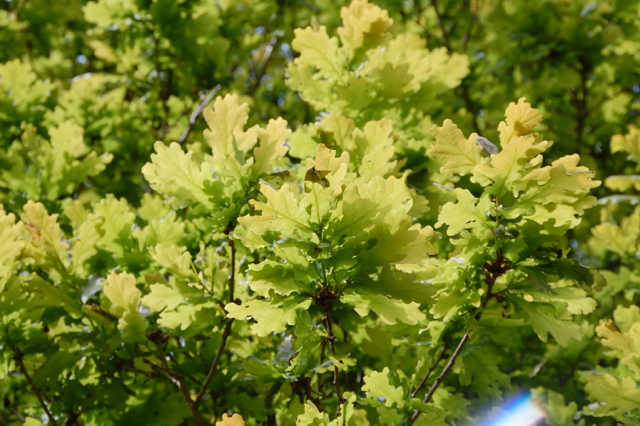
The ash trees are finally in full leaf, they were so late this year. There is an old country saying, ‘Oak before ash, we’re in for a splash. Ash before oak we are in for a soak.’ Well maybe this year was the exception that proves the rule.

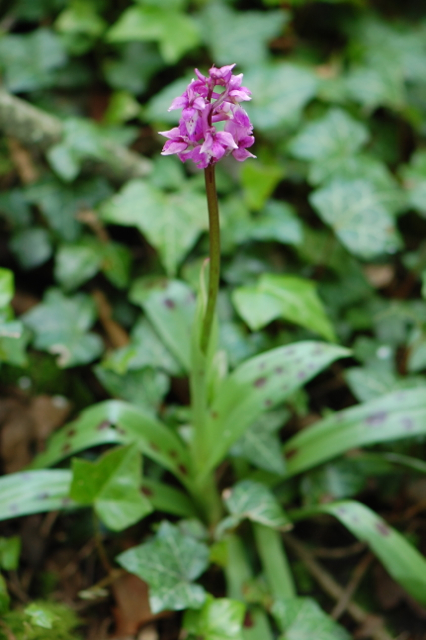
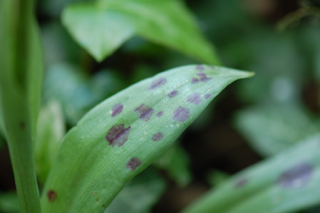
In the copse is this lovely early purple orchid with it’s distinctive spotted leaves.

And in the garden is Alchemilla, the alchemist’s plant, in all her dew dappled splendour, along with the wonderfully healthy and vigorous growth of motherwort and wormwood. Salad leaves are also growing up lush, juicy and flavourful and are gracing our plates each day.

What a joy to see the regular visitors enjoying the garden as much as I am. This female holly blue (distinguishable by the black tips to her wings) sunned herself on the ivy for several minutes before heading off to seek adventure elsewhere. Ladybirds are always welcome and what could be more joyful that the fat bottomed bumbles flitting from blossom to blossom?

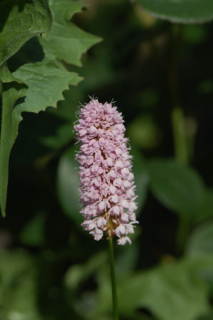
Finally I couldn’t resist sharing a few early blooms. Wild Edric is now covered in flowers, bistort is cheering the garden with her pink candy tufts and chamomile and valerian have shot up and are just on the point of opening.

Wishing you all a wonderful turning of the season.

Read Full Post »

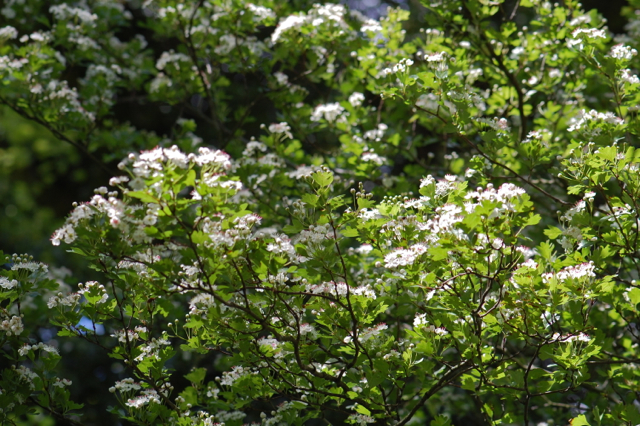
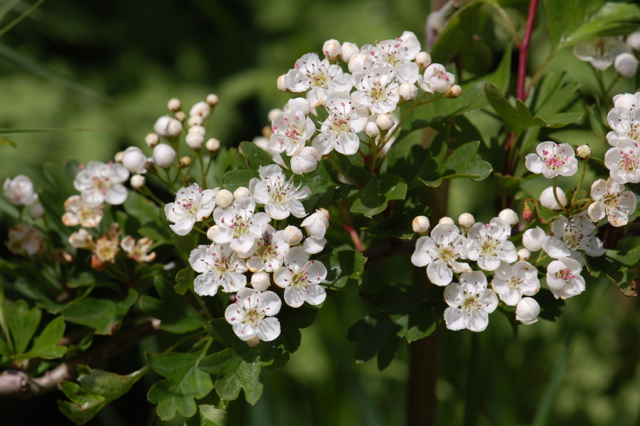
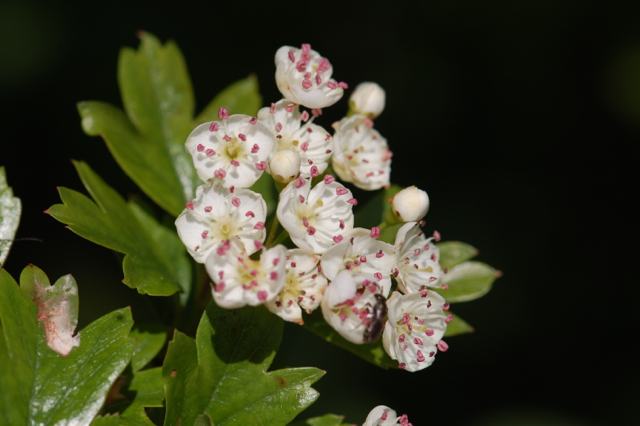
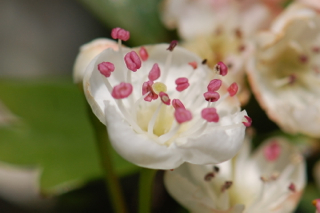
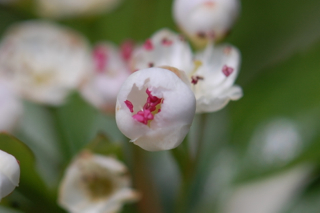
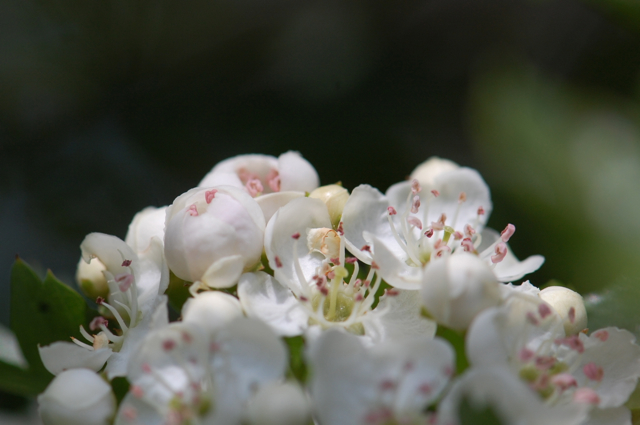
The May, Whitethorn, Quickthorn, all are country names for this most remarkable of trees that blooms so prolifically throughout much of the month. I believe I have written about hawthorn more than any other plant, yet every season and every year affords me fresh insights into her great worth.

The blossoming of the May is one of the highlights of my herbal year. Though many dislike the smell, which is deep, musky and often compared to rotting meat  (I don’t see the resemblance myself!) I find it nothing short of delightful – earthy, sensual and rich.  It ties me to a sense of time and place and fills the countryside with wonder for the few short weeks it is in flower.

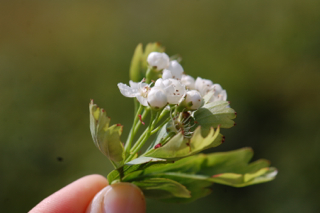
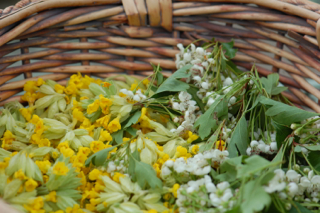
If you live in this corner of the world, the South of England, now is the time to harvest hawthorn flowering tops for teas, tinctures, elixirs and anything else you fancy. It is usual to pick a little bunch of the blossom, either just before or just after opening, with the first few leaves attached, as both blossom and leaf have important medicinal constituents. The photo below shows the amount that I usually pick for drying or tincture making.

Do remember when harvesting not to over pick from a single tree and to just take a little from each one as the blossoms will become berries in the autumn which are an important source of food for the birds and other creatures, as well as being food and medicine for us. Hawthorns are pollinated by a variety of insects including solitary bees and, due to dwindling insect populations, there are said to have been declining numbers of berries in recent years. They are still abundant in most parts and we humans, without the benefit of flight, tend to pick from lower branches whilst the birds feast on higher ones but it’s always good to bear in mind how many other creatures rely on exactly the same species that are so beneficial for us.

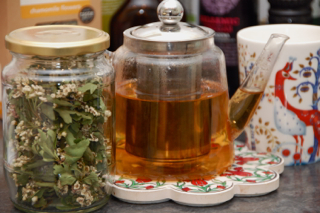
Hawthorn flowers are often acknowledged for their benefit in treating heart conditions and are typically included in preparations alongside the berries for a range of cadiovascular and circulatory disorders ranging from angina to chilblains. This is in part due to their antioxidant content found in the form of phenolic compounds which are actually even higher in the leaves and blossoms than they are in the berries. We tend to think of antioxidants occurring mainly in highly coloured foods like berries but you can see that the colour of the tea made from the flowering tops is also rich and deeply hued after being left to infuse for fifteen minutes or so.

Though truly enjoyable when drunk as a simple, hawthorn blossom also combines with a variety of other herbs to make any number of delicious teas. Here are some of my favourites:

Spicy – Combine 2-3 flowering tops with a couple of slices of ginger and an inch of cinnamon stick to wake the circulation and protect the heart.

Floral – Hawthorn blossom is both deeply calming and nurturing when combined with rose petals and linden blossom in a beautifully heart opening brew.

Seasonally Sleepy – A few cowslips flowers along with hawthorn blossom make a great bedtime tea as mentioned in my last post.

Sensual – Hawthorn tops, rose petals and half a vanilla bean thinly sliced make for a sweet, earthy and fragrant tea.

Despite being placed firmly in the category of a ‘heart herb’ in Western herbal medicine, hawthorn has a multifaceted personality, just like so many of our herbal allies. I consider the blossoms in particular to be a primary nervine tonic as they are deeply relaxing and calming to states of anxiety and over stimulation. I like to use them alongside other nervine herbs, like avena, for people who are sensitive to everything; loud noises, strong colours, smells and sensations and need to be calmed and comforted. In 19th century France an infusion of the blossoms was used to treat insomnia and herbalist Maurice Messegue writes “I myself make use of the hawthorn for nervous spasms, arteriosclerosis, angina and obesity and it is one of my favourite tranquiliser herbs.” It therefore makes an exceptional choice in problems where the circulatory and nervous systems are both affected such as nervous palpitations, restlessness and arrhythmia.

The powerful combination of antioxidants makes hawthorn blossoms and berries good food for the immune system as well and modern research suggests they have an inhibitory effect on the breakdown of collagen, therefore aiding healing and having an all round rejuvenating effect. Hawthorn is a very safe medicine that is tolerated by almost everyone though it is of course wise to consult with a herbalist before taking it alongside medications. It has been traditionally eaten as food, the young leaves in spring salads and the berries in jams and preserves later in the year so it can be incorporated in our lives in any way that suits us best.

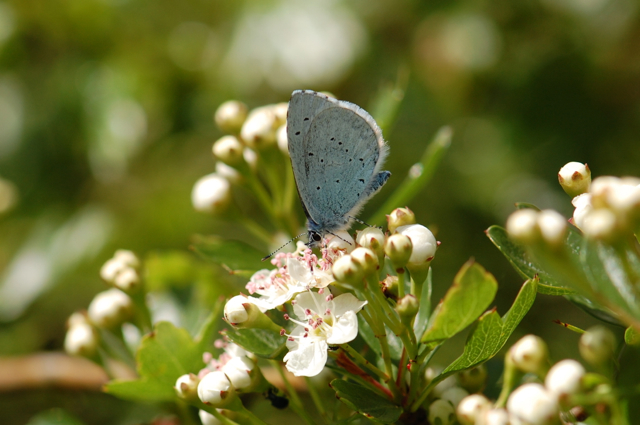
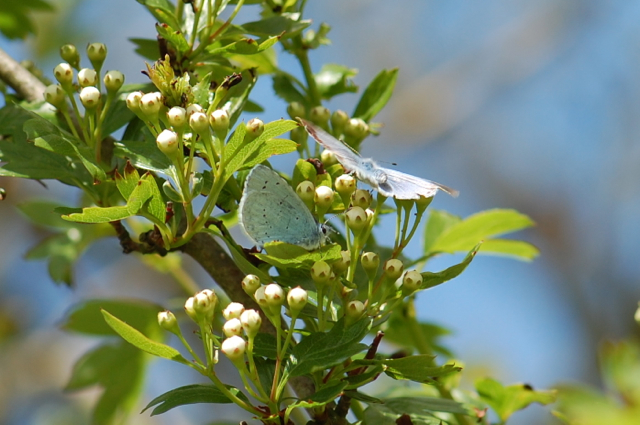
The blossoming of Hawthorn has long been associated with reawakening life; with spring, with fertility and with love and it leaves you with a kind of lightness of spirit that dusts away the very last of the wintery drear. These two holly blue butterflies flew along the hedgerow beside me for a time, flirting in and out of the branches and rejoicing in the return of the sunshine. And I rejoiced along with them, for the return of this most cherished of herbal medicines and dearest of friends.

Read Full Post »

It has been so wonderful to enjoy a few rays of sunshine this weekend after the continuous downpours of previous weeks. Whilst I deeply appreciate the rain, there is something so vital and enlivening about the sunshine at this time of year, plus our vey real need to top up our vitamin D stores after winter.

Finally, all the reasons why May is one of my favourite months were apparent; the garden, growing up so lush and vibrant and about to burst into bloom, the cowslips carpeting the Downs and, very best of all, the musky sweet scent of hawthorn blossom on the air.

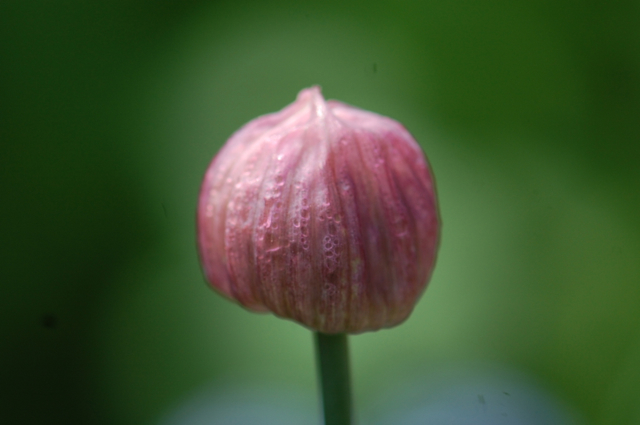
As I set off harvesting yesterday I stopped down the garden path to admire these beautiful chive buds. Look closely and you will see the little beads of moisture on the inside. Exquisite no? Like the flowers are gently breathing their way open.

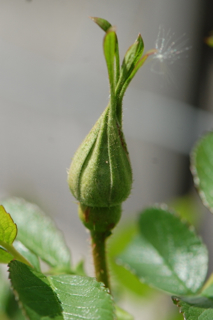
Valerian and roses are all set to flower too. I love the pattern formed by the valerian buds and the spiral of the rose sepals unfurling. This was a new rose for me last autumn, bought for half price from the garden centre. It is called Wild Edric and is supposed to be especially hardy for organic growers as well as beautifully fragrant. Well you know roses are my one weakness….


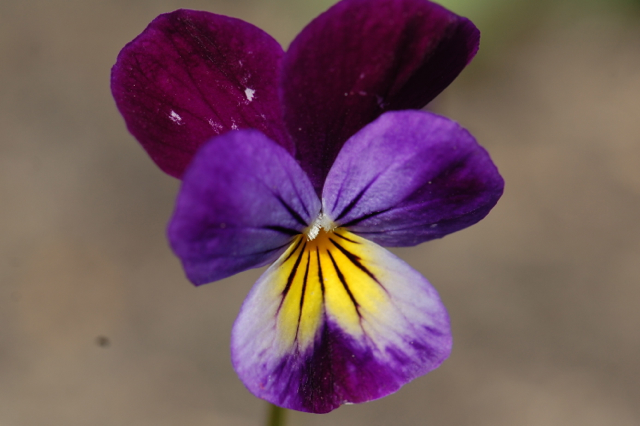
Already in flower and pretty as the day is long are the heartsease. To my mind this is one plant that certainly lives up to its name as it lifts my spirits and enlivens my heart every time I see it.

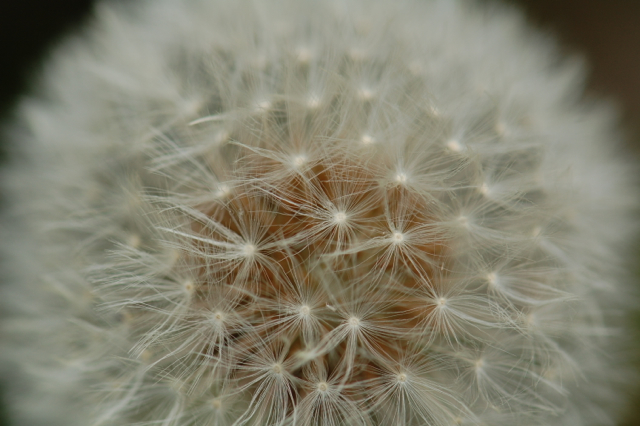
And gone to seed are the dandelion heads. Much as I love my dandys, I snip most off and just leave a few to populate the garden with their offspring. These downy globes of tiny seeded parachutes are both beautiful and very well adapted for survival.

Then out of the garden and onto the hills, where the wild things grow and the sea winds blow.

This sweet little flower is black meddick which enjoys coastal areas and lime rich soils.

Growing next to it was this chickweed, busting into tiny flower-stars and adorned with tufts of enthusiastic dandelion.

Red campion brings splashes of bright colour to the spring hued greens and yellows of the hedges.


And speedwell, one of my favourite of all wildflowers, grows rampant at the field edges.

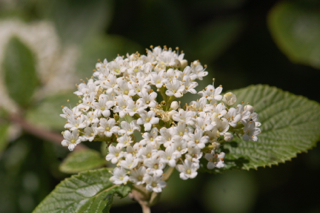
The blossoms of wayfaring tree, Viburnum lantana, bridge the time gap between the flowerings of blackthorn and hawthorn,  continuing the thread of hedgerow beauty that passes to the elder as the hawthorn blossom begins to fade.

Wayfaring Tree

Buds of Elder

Cowslips are all over the escarpment, enabling me to harvest just enough for tea and a small quantity of infused oil. Remember cowslips are endangered in many parts, though they grow freely here, so cultivate them in your garden for a sustainable harvest unless you have a very prolific source nearby.

One of the things I love best about this time of year is the ability to pick herbs so freely for fresh teas. I am enjoying again my old favourite of lemon balm and rosemary from the garden and there is nothing like a tea of cowslip and hawthorn tops for relaxing in the evening and ensuring a good night’s rest.

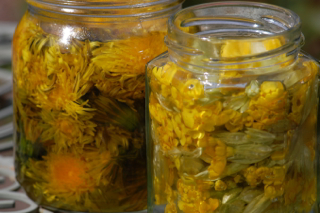
My oils are left out in the day, infusing in the full sun, then bought into the warm at night. Like this they should be ready in only about three days. This would not be sufficient time for tougher plants but these fresh flowering tops will give up their constituents quickly in the bright warm sunlight and may risk rancidity or losing their vitality if left out too long.

I have bombarded you with enough pictures for one post but I’ll be sharing thoughts and images from the first hawthorn blossom harvest sometime next week.

What are your favourite things in May?

Read Full Post »

This time of year is wonderful for enjoying an array of wild foods and medicines. In March we had the first harvests of the nettles, cleavers, chickweed and violet leaves, all of which are full of minerals and cleansing to our bodies after the stagnancy of winter. Though this year has seen an exceptionally cold, wet April following on the heels of an exceptionally warm March,  it is not uncommon for April to be a chilly and rainy month in this part of the world, associated as it is with showers and late frosts. So it is just at the right time that we have a lovely array of pungent herbs available to us for blasting away some of the damp and the chill.

A carpet of wild garlic

Sour is considered the flavour of spring in Traditional Chinese medicine even though many sour foods are fruits and berries that don’t arrive until the late summer and autumn. Many of our spring greens do have some sourness to them however, most obviously the sorrels which have a deliciously tart lemony flavour. The salty flavour is also common in springtime with many mineral rich herbs like nettle and cleavers being considered to have a salty taste.

Pungent herbs are those that taste aromatic, spicy or acrid. Many of our favourite culinary herbs are pungent like oregano, rosemary and sage and all the kitchen spices like ginger, coriander, cumin or cayenne. Pungent herbs help to stoke the digestive fires and are stimulating, warming, drying and dispersing. They produce sweating so can help to release a fever and improve the circulation. They dry and dispel mucus helping to relieve cold, damp conditions as well as relieve bloating, gas and nausea. Too much of the pungent taste however can damage sensitive mucus membranes and easily overheat people who are already of a hot constitution.

Jack-by-the-hedge (or garlic mustard)

There is an array of pungent herbs available to us in spring which will help to thin mucus and get our circulation moving as well as helping to dispel the stodginess of our winter bodies. These include ground ivy, garlic mustard and ramsons or wild garlic.

These herbs have their differences but what they all share is an affinity for warming the digestion, expelling mucus, aiding the lungs and cleansing the blood. Ground Ivy (which you can read more about in this post) is wonderful for stuck catarrh and congestion and can be used in tincture or tea for getting things moving. Garlic mustard and wild garlic make delicious and nutritious additions to salads. soups, stews and pestos and are lovely infused into apple cider vinegar then sprinkled liberally on foods.

Ground Ivy

Close up

I have been adding a little pungent and a little sour to our nettle soups with a generous portion of chopped fresh garlic mustard and a few sorrel leaves to incorporate all those lovely spring flavours.

Just the thing for spicing up these grey old days!

Read Full Post »

The thing I love most about this time of year is the tangible pulse of life running through everything. The plants are arising, unfurling, awakening, so much is happening and yet there is no effort involved, no one is managing it or controlling it, life is fulfilling its own purpose all around us.

So often I am forced to stop and acknowledge that all the lessons I need in life are there in nature, taught to me by my garden or the hedgerows, implicit in the rising sun or the waning moon. Life just is, and we are nothing but life.

Though there isn’t much in flower right now, there is still so much variety in shape, form and colour in my little garden, each bud unique, none more beautiful or better than the other.

Rosemary flowers opening

Lovage uprising

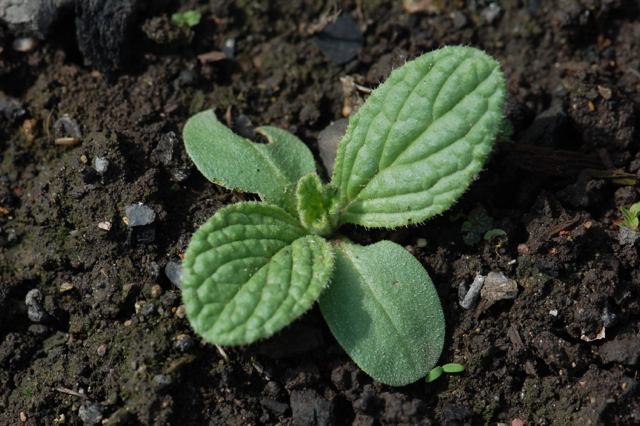
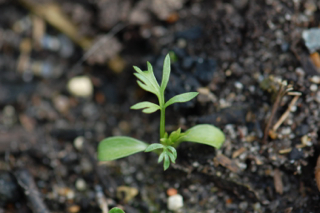
I love watching the first leaves of seedlings appearing and then seeing how they differentiate later on. The first leaves that appear are actually cotyledons, part of the embryo, so they look similar in all dicot plants. The next two leaves to appear will have characteristic features of the particular species. If you look at the borage seedling below you can see that the first two leaves are plain where as the later ones have the characteristic furry, furrowed look of a borage leaf.

Borage seedling - isn't it beautiful?

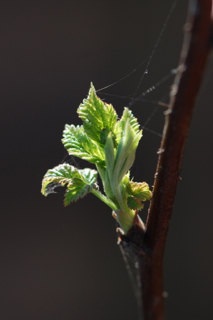
Each new leaf displays both beauty and function as the sun illuminates veins and cells. Unlike people, plants have no problems being completely themselves and displaying their vulnerability without attachments.

Raspberry leaf

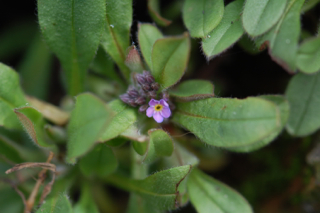
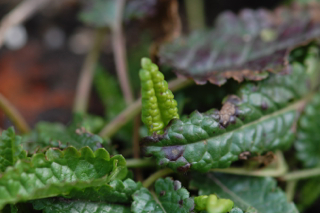
I love to watch the new buds open on the forget-me-nots and lungwort (pulmonaria officinalis) and observe the freshness of the new seasons growth on the more subtly hued plants like lavender.

Lungwort

Lavender

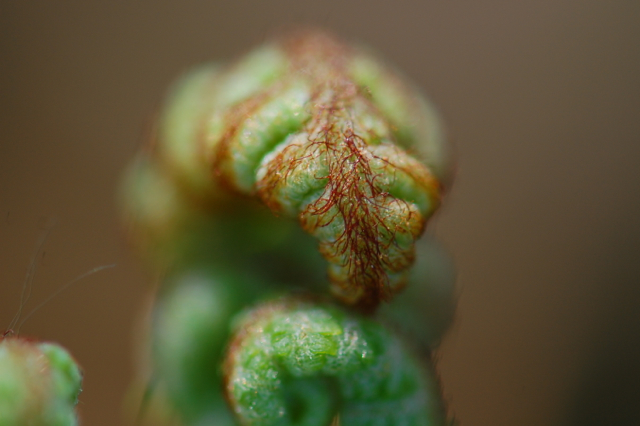
And what is more perfect in nature than unfurling ferns? Each one follows such a distinct pattern yet no two are alike. Like nature, like us who are no different to nature, they stand on the knife edge between order and chaos.

Read Full Post »

Spring is the perfect time for getting up close and personal with nature. Unlike later in the year when gardens and hedgerows are adorned with blossoms, bright flowers and expanses of green, in early spring you have to really look to spot all the small beginnings of beauty, all the tiny possibilities emerging from seemingly dried out twigs and all the unfurlings of potential and change.

First forget-me-not opening

It’s the perfect time for going exploring with a magnifying glass and gaining a more intimate view of all the wonders of spring. I have two that I recommend, the first is an average magnifier, bought from an art shop for about £1.50 and useful for getting an overview of leaves, buds and insects. The second is called a loupe and is used by jewellers for closely examining gem stones. You have to get really close when using a loupe but it’s great for examining little details of a plant like veins, hairs on stems or stamens.

Magnifying glass and loupe.

On a pleasantly warm spring day you can pass hours like this and the rewards are as innumerable as the marvels themselves. It’s a wonderful activity to involve children in and such an inspiring way of appreciating a whole new dimension of the natural world. You can start to connect with things as if a much smaller creature and your imagination is fed by this new way of looking. Each tiny hair on the gooseberry leaves becomes defined…

Gooseberry leaves unfolding

Each bud so vibrant and alive in its becoming. Someone else was also appreciating this one.

New buds on the fig

Each new leaf displays its uniqueness. Veins, ridges, hairs, colour variations all become dramatic parts of a landscape when viewed so intensely.

Bright spring growth of Wood Betony

Tiny seedlings become like little trees.

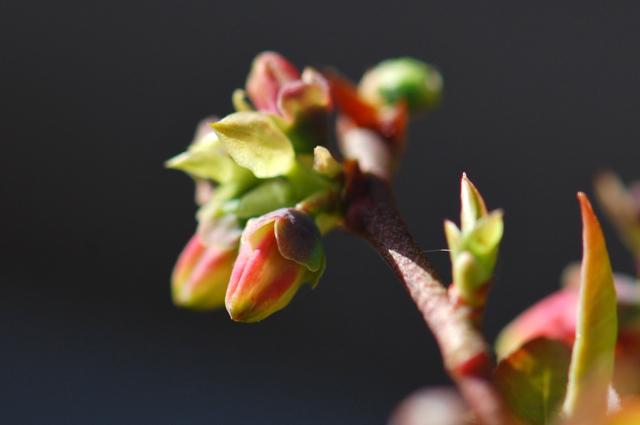
And there is enough to wonder at in a single bud to keep you busy all morning.

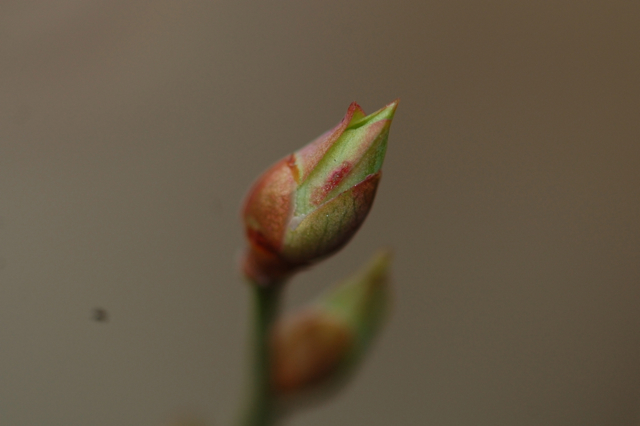
Downy buds on the blueberry

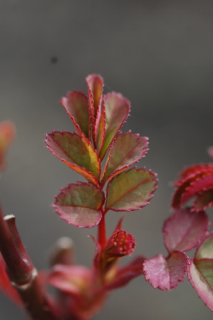
Looking closely at a leaf displays its many forms and colours. What first appears to be just red and green also has shades of yellows and purples, browns and blues.

Young rose leaf

Like the Frech soldier and writer Xavier de Maistre, who, in 1794, wrote the quirkily charming Voyage autour de ma chambre (Voyage around my bedroom) in which he explored the confines of his own room then wrote about it as if it were a great travel epic, we too can become strangers in a familiar land.

You can engage in this voyage even if you don’t have a garden of your own, as simply looking at a few houseplants or a window box can become a great adventure of discovery. Failing even that you can plot adventures through the un-explored territory of your fridge’s vegetable compartment. How marvellous is this cabbage? How worthy of wonder and gratitude.

When we start to look closer, appreciate the small and the overlooked, then we can never be bored, never uninspired and never ungrateful again.

Read Full Post »

It’s that time of year again! It seemed like one day there was hardly anything green and the next the lane was covered in fresh young nettles, assuring me that, despite some cold evenings this week, spring has well and truly sprung.

I have written a few posts on nettles in the past and do excuse me if I repeat myself a little, but this time I wanted to go into a bit more detail on why nettle is so fantastic, as both food and medicine.

This is the time of year when we are both a bit deficient and a bit stagnant as we reach the end of the long winter months. Our bodies slow down during the cold weather, fluids thicken and we are generally less active as well as tending to eat more rich or stodgy meals and less fresh foods. I wrote in my post on January detox recently that often the foods we think of as either ‘cleansing’ or ‘nourishing’ can be just the same thing- and there is no finer example of this than the lovely nettle herself.

For a start nettle is one of the most nutrient dense wild foods that we have readily available to us. High in calcium, chromium, magnesium, zinc, iron, selenium, potassium, trace minerals, protein and many vitamins including A and C, nettle is a very good all round nourishing tonic herb. Nettle has a good reputation as an iron tonic, not just because it contains relatively high levels but because it also contains amino acids and vitamin C which are both required as co-factors for iron absorption. This is the beauty of our nutritive herbs, unlike the average vitamin and mineral supplement, the constituents are presented in a balanced way which allows for greater assimilation and absorption but also prevents excessive build-up. Nettle contains tannins which will tone the mucus membranes of the digestive tract and also prevent too much iron absorption. Nature is so much cleverer than we think!

Nettle is also high in flavonoids, including quercetin and rutin, as well as chlorophyll, both of which help to improve the health of the blood and circulatory system. All this and more has led to nettles reputation as a blood tonic. In traditional Western herbal medicine nettle was considered specific for pale, tired, anaemic people and has been used by practitioners of Chinese medicine to treat what is called blood deficiency. This is not just what we think of as anaemia but a more complex picture of the health of the blood as a whole. If, like me, you are vegetarian or vegan then nettle is one of the best things you can include in your diet to ensure your blood stays healthy and vital. Nettle has long been used as a hair tonic as it feeds the follicles through increasing the health and nutrient content of the blood and I always notice how quickly and strongly my hair and nails grow when taking it regularly.

Through its nutritive action on the blood and body fluids, its cleansing action via the organs of elimination and its tonifying action on the mucus membranes, nettle will have an effect on the whole body and this is one of the reasons that, like so many of our herbs, it is hard to put into rigid categories. The effects of having well nourished blood will include more energy, better circulation, improved mental clarity and better sleep. Effects on the mucus membranes might include improved digestion, increased kidney function or relief from chronic lung symptoms such as coughing wheezing and phlegm. It can be very tempting in today’s climate to look for a more reductionist explanation of how herbs work – the ‘this chemical constituent has this action’- approach to treatment, but herbs are, by their very nature, holistic in the way the act and that is part of their wonder.

Nettle is a prime remedy for treating fatigue and blood sugar balancing. Nettle can help to regulate body metabolism and has been used for the entire endocrine system, from balancing the thyroid, strengthening adrenal function and restoring the reproductive organs. According to Chinese herbalist Peter Holmes, ” Nettle herb provides excellent support for complex metabolic disorders, especially when they involve the connective tissue and/or endocrine glands and metabolic toxicosis – insufficient breakdown of metabolic wastes.” I think it works on blood sugar levels both directly and also indirectly as, by energising us and increasing vitality, it reduces cravings for artificially stimuating foods like sugar and caffieine.

Nettle has astringent, toning and cleansing properties that enable the liver, kidneys, skin and lungs to all work more effectively, thus increasing natural detoxification. It helps to drain damp, or excessive and stagnant fluids in the body, and has been used to help oedema, resolve problems of chronic phlegm and reduce accumulations in conditions such as arthritis and gout. It is a herb we commonly turn to for atopic conditions such as eczema, asthma, allergies and hayfever. Though it is useful for most people with these conditions, in a very few others it can actually cause allergies. Because of its astringent nature it is considered a haemostatic and can help to check excessive bleeding in the body when taken internally.

The energetics of nettles have been somewhat disputed over the centuries. Because of it’s stimulating and moving qualities it was once considered hot, notably by Culpepper who considered it a herb of Mars- hot and dry. Most modern herbalists however consider it cooling and drying. At the risk of being a non-committal fence sitter, I tend to think of it as fairly neutral in temperature, mostly because of it’s nutritive and balancing properties. Being astringent, it is certainly towards the drier end of things but again, how much so will depend on numerous other factors such as environment and climate. In Ayurvedic medicine nettle is considered to increase Vata, because it is cooling and drying, and decrease pitta and kapha. However in the Western tradition it would have been considered mostly quite specific for Vata type people who are often thin, pale, emotionally scattered and dreamy, though it would have been used with more moistening herbs if the person was overly dry. I often think that these kinds of discrepancies are to do with the climate in different areas. For example in northern Europe the climate tends to be very damp so the drying aspects of nettle would not be so problematic but some parts of India may be much drier so people with dry conditions would be more easily aggravated.

There are many ways to include nettle in your diet and here are just a few ideas:

  • Raw from the hedgerow – just like this.
  • Juiced – mixed with other fruits and veggies such as apples, celery, fennel. ginger, lemon or other greens.
  • Tea – One teaspoon of dried nettle herb or two teaspoons of fresh per cup of boiling water makes a nice refreshing and nutrient rich tea.
  • Nourishing infusion- Like a very strong tea, this utilises 25g of herb to about a pint of boiling water. Allow it to steep over night in a cafetierre then strain out in the morning and drink throughout the day, providing an abundance of vitamins and minerals. Teas made in this way used to be known as ‘standard infusions’ and were considered both more nutritive and more therapeutic than normal teas. In recent years they have been popularised by Susun Weed as ‘nourishing infusions’ which I think is a lovely way to describe them. After drinking I always use the spent plant material from my nettle infusions as a mulch around my roses.
  • Infused vinegar- Loosely fill a jar with fresh nettle tops, cover in apple cider vinegar, cap with a plastic lid and leave to infuse for a month to six weeks. Strain and bottle then add to salads and other dishes. We add a few mls of nettle infused cider vinegar to our hens drinking water to increase their nutrient intake.
  • Soup- See my recipes for nettle soup here and here. You can also add powdered nettle or nettle infusions to the stocks of other soups.
  • Stir fries, bakes and curries – Slice the nettle tops finely and cook them up just like you would spinach.
  • Hair washes and baths- make a strong tea as above and use as a final hair rinse after washing or add to bath water.
Here’s a photo of the nourishing infusion, looks pretty packed with nutrients doesn’t it!

“Our doctors and pharmacists are ashamed of fetching such a common weed from behind the fences to include in their formulas, even though in both cookery and medicine it has proven its mightily impressive effects.” Hieronymus Bock, 1532.

“Nettle is one of the most widely applicable plants in the materia medica. The herb strengthens and supports the whole body.” David Hoffman, 2003.

References:
Medical Herbalism – David Hoffman
The Energetics of Western Herbs – Peter Holmes
The Book of Herbal Wisdom – Matthew Wood
The Yoga of Herbs – D.Frawley and V.Lad

Read Full Post »

A Song of Ice and Fire

Well Imbolc arrived a few days ago, heralding the beginnings of spring… and bought with it the winter.

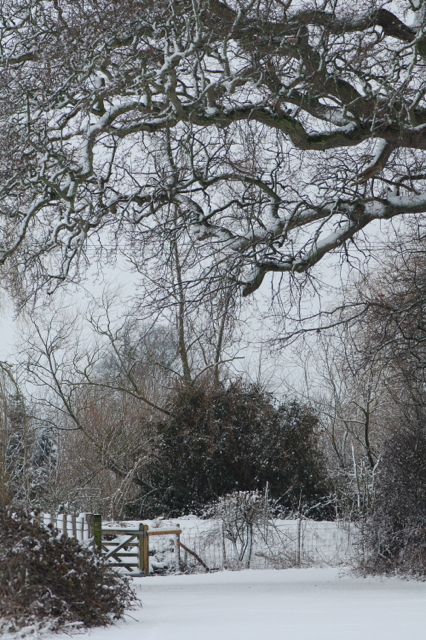
Last week we had the first really cold days of the season and today we woke up to a blanket of snow.

The perfect weather for a stroll down the lane, marvelling at how different everything looks after the snow comes.

The few colours to be seen in the starkly beautiful landscape are that much more present and vibrant in contrast with their surroundings.

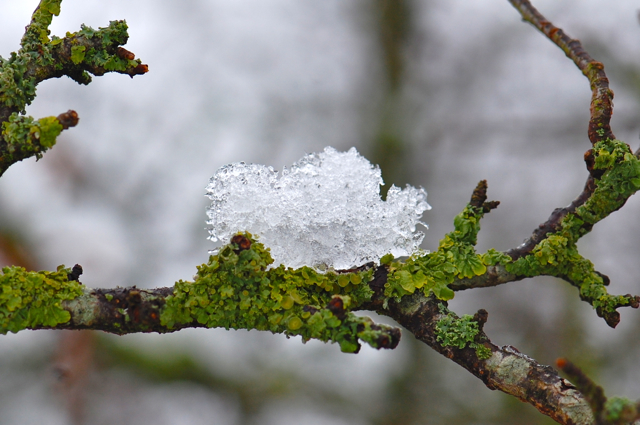
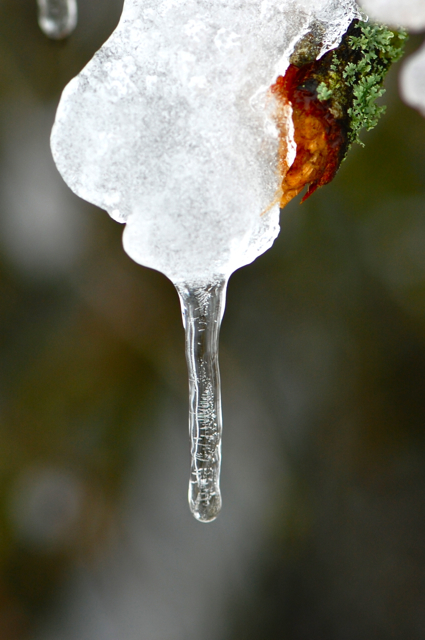
Icicles hang from the branches, frozen in time, mid-drip.

And teasels bow their heads under the weight of the snow.

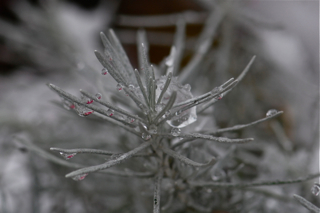
The Helichrysum, or curry plant, in the garden looked particularly beautiful, its silvery leaves caught between ice and morning light.

I love the way this weather highlights different aspects of the trees, making me see their forms in a new and inspiring way. Branches of oak and willow looked particularly lovely, their forms intensified by snowlines.

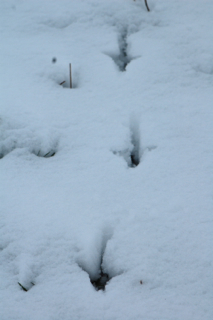
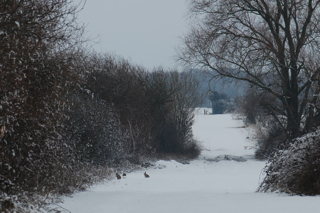
We saw tracks of rabbits, pheasants and foxes alongside our own great stomp-prints.

Can you see the little rabbits out on the lane?

 Some were understandably less enthused at venturing out of their burrows.

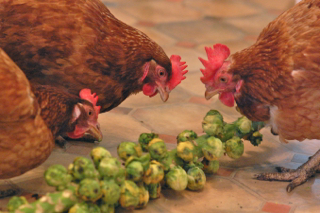
Whilst others were very happy to come inside, warm their claws and discover new treats on the kitchen floor.

Whilst we are warming up by the fire, I spare a thought for all the other creatures who will find it difficult to gather enough food today and make sure there is plenty of seed out for the birds.

Read Full Post »

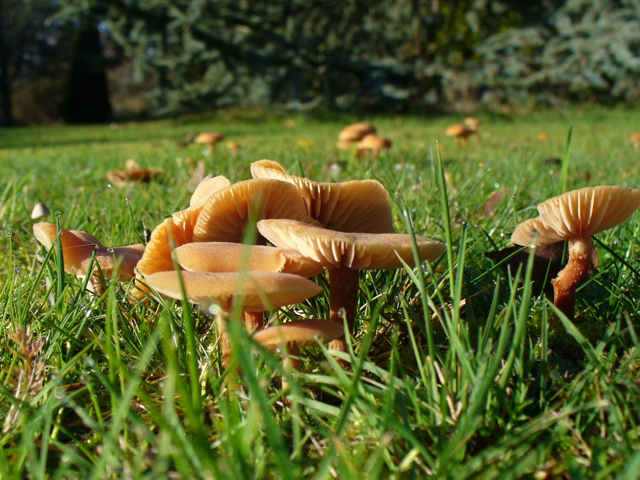
While chatting on the phone to my Dad over the autumn months, he mentioned several times how amazing the fungi around where they live have been this year, so it was exciting to look at his photos when we visited over Christmas.

There were some really fascinating species, including some that I have never seen before, so I thought I would share a selection of his pictures along with a few tidbits of information that I gleaned along the way.

I must warn you that I am far from an expert in mushroom id and I may well have wrongly identified some of these, so if anyone out there knows better please let me know. And of course don’t pick or eat anything without being 100% sure of the species.

First up we have this little beauty, Russula emetica, better known as The Sickener, it won’t take much imagination to work out why!

Also lots of common puffballs which can grow singly or in large groups and are edible when young.

These amazing fellows are Laccaria spp., I think Laccaria laccata which is the most ubiquitous, though as their common name is The Deciever and cap colours are variable, I could have got it wrong!

They start off flatish, then curl up into themselves looking like some kind of exotic sea creature and most species are edible.

There were plenty of Fly agaric, Amanita muscaria, a mushroom which never fails to bring me joy. It’s no wonder they have worked their way so firmly into folklore and the popular imagination, looking as magical as they do.

These unusual looking visitors are actually the fairly common Yellow Club but the white version below, sometimes called Fairy Fingers, is quite rare.

Here are some Common Inkcaps which, though edible, cause nausea, palpitations and other unpleasant effects when taken with alcohol. According to Roger Phillips they were once used to cure alcoholics in an ingenious form of aversion therapy!

I was very excited to see this Earthstar, Geastrum triplex, which I had read about in Christopher Hobbs’ book on Medicinal Mushrooms. Apparently it has been used in Chinese Medicine as a tonic for the lungs and throat. According to my guide books it is not considered edible but Hobbs says it is decocted into tea and drunk to reduce inflammation in the respiratory tract.

Here’s some beautiful Parasols, before and after opening.

I thought this one was a Shaggy Parasol but my Dad thought it was another common one , what do you think?

I think this is a Butter Waxcap because of the faint striations at the margin of the cap.

I’m not too sure about any of these though… ideas are most welcome!

Lots of honey fungus grows on the roots of an old cherry tree.

And last but not least and somewhat more easily identifiable, here is the man himself, in full Yule regalia. Doesn’t he look grand?

Learning more about local mushrooms and which ones can be used medicinally is high on my agenda for 2012 so hopefully by the end of the year I’ll have some more interesting information to share with you.

Read Full Post »

« Newer Posts - Older Posts »