Feeds:
Posts
Comments

Archive for the ‘Seasons’ Category

Firstly, apologies for not having posted the final cream recipe yet, I ran out of time before Christmas and have been having a little holiday from the computer so it will be with you in the New Year instead.

However as 2011 draws to a close, I would like to take a few moments to look back over the Hawthorn trees which I have been observing throughout the year as part of The Tree Year project. Inspired by the UN’s announcement that 2011 would be the International Year of Forests it encouraged people to pick a tree to observe closely for one year and record some of their findings in whatever way seemed appropriate to them.
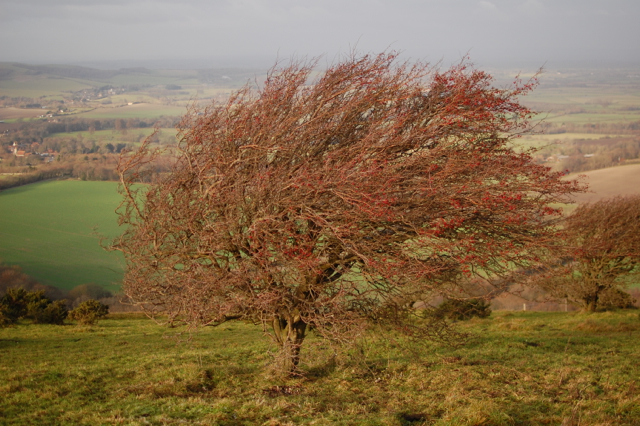
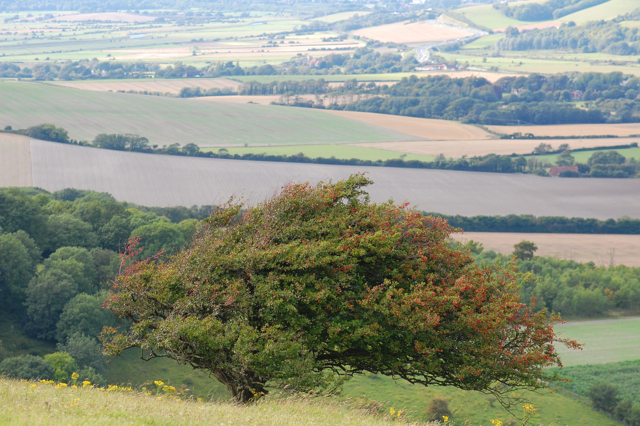
I followed these trees which sit atop the Sussex Downs from Winter to Summer and back again, observing not only their individual transformations, but the way they have been shaped by their landscape and by the myriad influences of humans and nature.

For many years I have appreciated the Hawthorn as a fantastic source of medicine and food, not just for humans but for wildlife as well. This project gave me the opportunity to learn more about some of its other facets however and the more I learnt, the more I appreciated its story as that of a true survivor. It thrives in many environments, from cities and gardens to woodland edges, hedgerows and open grassland and it flourishes where other trees could not. The Downs themselves would once have been covered in woodland in all but the most exposed sites but centuries of animal grazing have ensured the trees have not returned. Only the hardiest survive atop these windswept and rain blasted escarpments with their shallow, chalky soil. And they are mainly gorse and hawthorn.

Sheep grazing the Downs prevent the return of natural woodland in more sheltered spots.

Here in the UK, the eighteenth and nineteenth centuries saw the privatisation of huge amounts of open fields and common land and the removal of  access rights of local people through the Enclosure Acts. This saw the planting of miles of Hawthorn hedging throughout the country as hawthorn grows quickly and densely and has sharp thorns – the perfect way to keep people out. This rapid growth gave rise to one of Hawthorn’s old common names, Quickthorn. I often think that perhaps one of the only good things to come out of such a travesty was the Hawthorn hedges which are now such a distinctive and cherished part of our countryside and support such a wide variety of wildlife.
The hawthorn is home to up to 300 different insects and provides food and shelter for many birds. Blackbirds, greenfinches, yellowhammers, robins and wrens all make use of it along with migrant birds like redwings and fieldfares. They spread seed through their droppings making this a mutually beneficial arrangement. Small mammals like voles and wood mice also eat the fallen berries and seek shelter amongst the dense growth of hawthorn branches.

Whilst I love the hedges, Hawthorns are by far the most beautiful when allowed to grow into their full splendour as small trees. They will grow well in most soil types, though they need some sun, as their root system is not too extensive and doesn’t require large amounts of nutrients. They are often seen standing alone on hilltops, each one a unique individual having been shaped by natural forces. In folk mythology it was thought that these lone Hawthorns were inhabited by faeries and Hawthorn is still considered one of the faery trees to this day.

New leaf buds forming in early spring.

It is used as a rootstock for grafting pears and medlars and the wood was apparently one of those preferred by the Druids for making runes. A fascinating fact (which I am sure you will all find very useful) is that some myths claim hawthorn wood to be the best for staking vampires! I wonder if this refers to the long association with qualities of protection, part of which must come from all the many species it shelters and provides uses for.

Unfurling spring leaves – delicious in salads.

It is a tree that looks beautiful in each of its manifestations throughout the changing seasons. The small buds emerging early in the year give way to tender green leaves which are delicious in salads before they toughen up later in the year.

The blossom has equally fantastic medicinal properties as the berries and the two preparations are often used together by herbalists. You can read my accounts of some of the medicinal benefits of Hawthorn here and here.
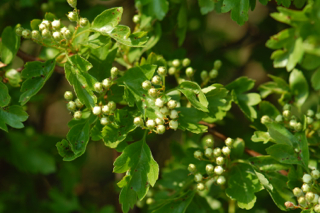
Blossom buds.

One of the most beautiful sights of spring.

The blossom can be used to make teas, tinctures, herbal honeys, elixirs, flower remedies or to sprinkle on salads. Some people find the smell offensive but others, including myself, find its sweet headiness quite pleasant.

The oldest Hawthorn in the country is in a village in Norfolk and is thought to be about 700 years old! I would very much like to take a little trip to visit it this coming year. There is said to be one more than twice as old again in France, though apparently this hasn’t been verified.

Summer green glory.

The summer hawthorn is all green fullness and abundance. I often wonder how the leaves stay on in such windy conditions!

After the blossom dies back, small green berries begin to form which ripen into the wonderful red fruits we so associate with late summer and autumn. These can be made into all sorts of delicious syrups and elixirs as well as being used for tinctures and decoctions. You can read about my Hawthorn syrup here.

Early blushing berries.

Autumn harvest for wildlife (including herbalists!)

Hawthorn has a use for every season; food, medicine and wildlife habitat, it also keeps us warm in the winter months as its hard, dense wood burns hot without being too smoky.

The latin name, Crataegus, comes from the Greek word for strong. Whilst this is thought to reflect the qualities of the wood, I suspect it may actually refer to the nature of the tree itself which is resilient, tough, hardy and above all abundant and unfailingly generous.

Like many of the plants we consider weeds and many of our wilier animal friends like crows and foxes, the hawthorn has only survived and flourished in a changing habitat due to its ability to adapt.

I look forward to many more years of knowing, appreciating and working with this remarkable plant.

Read Full Post »

Early Winter Sun

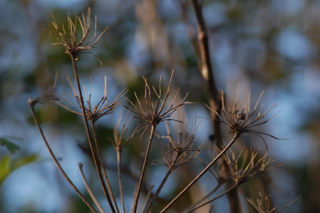
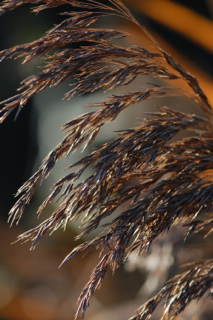
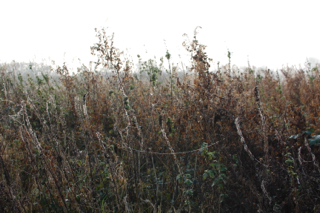
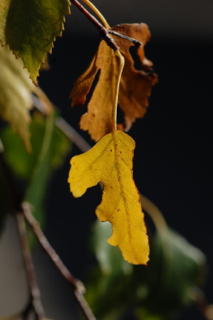
Despite the warmer weather we are merely days from December and, even if the temperature is mild, the low winter sun orientates me at the change of season. I love to go out walking on days like these when the sun gleams through the leaves and even the dead stems of roadside plants are lit up with beauty.

The juxtaposition of vibrantly green grass, golden leaves and bare grey/brown branches against a bright blue sky makes for a starkness that is at once deathly and vibrantly alive.

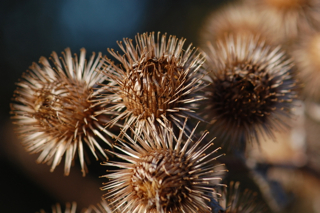
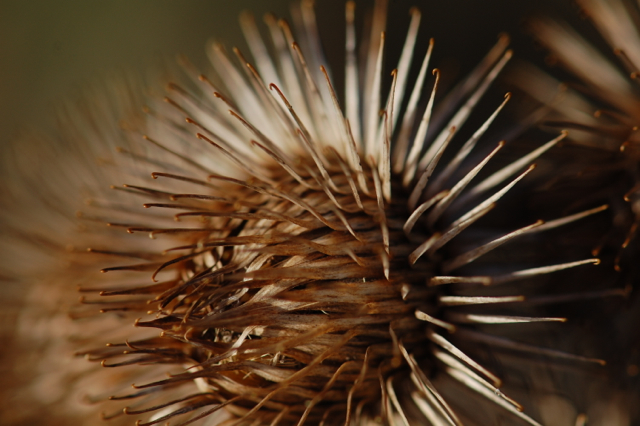
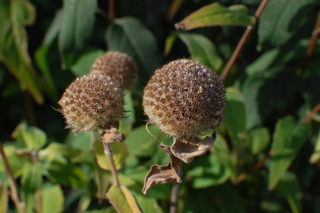
The Burdock seeds catch on my coat and ensure I slow down enough to appreciate their perfect form and subtle beauty. Can you see all the little hooks they use to ensure they are carried near and far? Look a little closer…

Rosehips still bedeck the hedgerows with little flashes of colour whilst Hawthorns are now browning and becoming dull. Their sinewy branches and great thorns look somehow prehistoric and wild as the leaves die back and expose them fully in all their savage beauty.

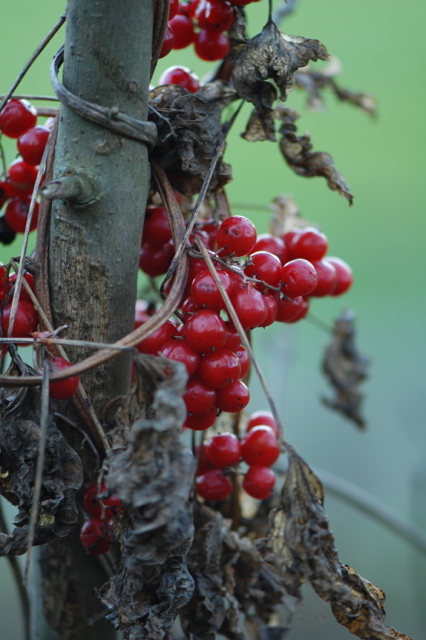
One of the plants that catches my eye most at this time of year is the wonderfully witchy Black Bryony which winds and twines amongst the branches of other plants. She dangles temptingly juicy red berries like little Christmas ornaments draped through the trees, just ready to seduce the unwary passer by into an eternal sleep. Though it was once used sparingly in herbal medicine, the whole plant is highly poisonous. Maude Grieve tells us, “Death in most painful form is the result of an overdose, while the effect of a small quantity, varying not with the age only, but according to the idiosyncrasies of the patient, leaves little room for determining the limit between safety and destruction.”

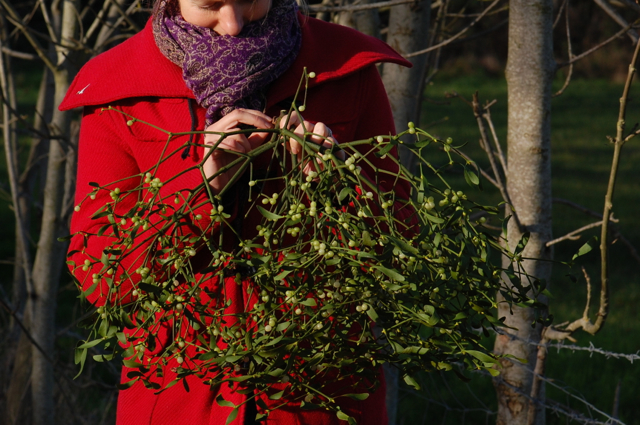
And on the subject of Christmas decorations. It’s almost time to hang some mistletoe in our house, just to ensure a maximum number of kisses throughout the month of December!

Read Full Post »

This Too Shall Pass

Many have heard the story of the great king and his search for truth but, as this evening is a cold one and I hope you are sitting at home around the fire, perhaps sipping some chai or a little sloe gin, I shall wait for you to get comfortable and then I will tell it. At least I will tell it as I think it may have happened.

Once upon a time, in a land far away to the east, there lived a wise old king. His palace was great, his court was fine and his accomplishments were many. He never wanted for anything and was constantly engaged in one entertainment or another. He was very learned and had read the great treatises and scriptures of many a land and many a faith. Though he had realised much and people far and wide thought him to be deeply wise, still he felt something was missing.

So one day he gathered together the very cleverest of his advisers and all the wise men and great sages of the land and he charged them with finding something that was always true. Something that was true when he was happy and true when he was sad, that was true in the springtime and true in the winter and that was true in his greatest victories and also in his greatest defeats. The wise men were perplexed, ‘what is that which is always true?’ they asked themselves. They each set off to the far ends of the Kingdom and then further beyond still, to many distant lands, intent on discovering this truth that the king had asked from them. They agreed to meet back at the Kingdom after one full year and tell the King what they had discovered.

All but one.  He stayed in his little cottage at the edge of the woods and tended to his garden. When the villagers and courtiers passed by they said, ‘ that is the lazy wise man, he hasn’t even gone to meet with the priest in the next town, just sits in his garden watching the birds and the clouds or gazing into the trees. The King surely won’t be pleased with him.’  And so the year went on and the wise man observed how the spring turned to summer which turned to autumn and how the plants in his garden died and returned again. He saw how the birds came and went and even the great trees would pass eventually, and when they did, they would give new life to many insects and creatures.

After the year had gone by all the wise men met up in the Court ready to astound people with all the clever things they had learnt. They told tales and riddles from lands far and near, spoke words of subtlety and cunning and made every man’s head present hurt with the thinking. But the King was still not satisfied. Finally our own wise man, from the cottage by the woods, stepped forward and said to the king, ‘Sire, I have seen that which is true. It is true in my garden and true in the forest.’ At this the people laughed, ‘silly old fool’ they thought. ‘It is true throughout your Kingdom and true even to the very ends of the Earth. And it is true in my own heart.’

‘So’ said the King, ‘what is this truth of which you speak?’

The old man bent his head and spoke softly as the last leaves of Autumn drifted through the windows and on to the Palace floor. ‘And this too shall pass’ he said, then turned away and walked back to his cottage in the forest.

At last the King was satisfied.

Read Full Post »

A few people commented that they would like the recipe for the soup and herbal stock that featured at the end of my last post so, somewhat belatedly, here it is!

Herbal stocks are a great way of getting extra nourishment into our diets, especially at this time of year when we can use small amounts of immune supporting herbs to sneak extra medicine into our day through the most natural of all methods, our food.

When making a herbal stock I use whatever I happen to have in the cupboard so it will vary every time. This also means you can be very fluid with it and if you don’t have all the ingredients it’s no problem, you can just use one or two. This stock below had a number of different herbs in it but you could do equally as well using just echinacea root and elderberry or any of the other ingredients listed depending on your preference. You can play about with other herbs too, I remember Danielle mentioning that she uses astragalus root in her soups.

When making stock, I tend to just use herbs that I would not blend into the soup directly such as tough roots and bay leaves etc. The ginger, rosemary, chilli, powdered cinnamon and other soft ingredients I generally put straight into the soup as normal, but as this is merely a guide, feel free to play about as you feel inspired.

Herbal Stock Ingredients (for a soup to serve 4):

1 tsp Echinacea root – for boosting the immune system
1 tsp dried Elderberry – for nourishing the immune system
1 tsp dried Hawthorn berry – for supporting heart and circulation
1 tsp Burdock root – for gentle cleansing and nourishing
2 Bay leaves – for flavour and supporting digestion
4 slices dried Reishi mushroom – for nourishing the immune system (and too many other things to go into here!)

Simmer all ingredients together in about a litre of water for 20 mins approx then strain and add into your soup.

Soup Ingredients:

1 squash or small pumpkin
2 medium onions
6 cloves garlic
chunk of ginger to taste
coconut oil for frying
Herbal stock
1 tsp turmeric powder (optional)
salt and pepper to taste

This soup is an incredibly simple one which just involves lightly frying the onions, garlic and ginger in the  coconut oil, then chopping the squash and adding to the pan with the turmeric, salt, and pepper. Stir for a few mins then add the strained herbal stock. Simmer until the squash is soft, blend and enjoy with any number of delicious, seasonal toppings…

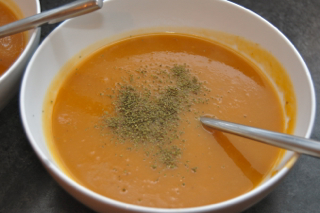
sprinkled with nettle seeds…

topped with steamed kale (as inspired by my friend Deborah)…

or, my personal favourite, a large helping of finely sliced mushrooms fried in a little oil and tamari.

I hope you are also enjoying lots of seasonal and nourishing goodies to keep you strong in body and mind.


Read Full Post »

More Autumnal Delights

I have never been able to decide which is my favourite season, they all have their beauty and each fills me with its own unique sense of magic. Right now though, I can’t imagine what could be better than these bright autumn days and chill evenings spent reading and drinking chai by the first fires of the cold months to come.

There are so many things to love about this time of year. The crackle of fallen leaves…


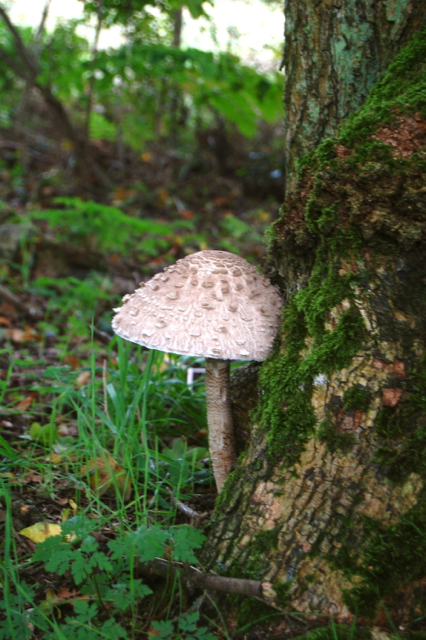
and the fantastic fungi.


This last one I believe is Ganoderma adspersum a native relative of the much celebrated Reishi mushroom. You can read Stephen Church’s account of it’s medicinal uses here.

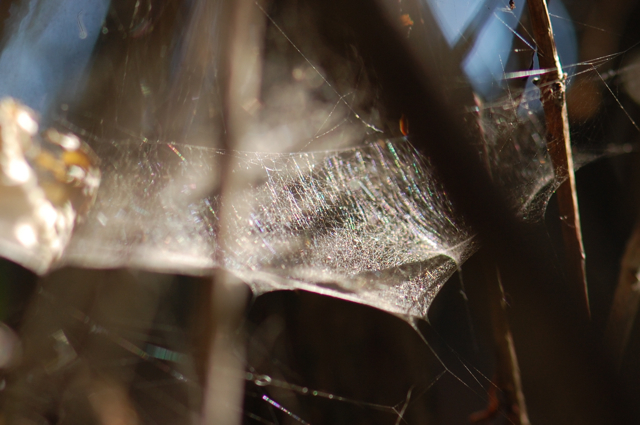
The glistening cobwebs that catch the light and leaves as if gathering mementos of the season’s fading beauty.

And of course the trees themselves, all burnished bronze and breathtaking in their passing.

Then there is the food too. Squashes and berries, fresh walnuts cracked open with a hammer, kale and  mushrooms. From the first ripening berries through to the last fading leaves, autumn is truly a season to delight the senses.

Now is the time for nourishing our bodies, our minds and our souls with good food, rest, time spent in nature and loving company before the arrival of the harsh winter months. This simple pumpkin soup was blended with plenty of onion, garlic and ginger and topped with tamari fried mushrooms. Easy to digest and full of goodness, it’s perfect for this time of year.

Read Full Post »

The Autumn King

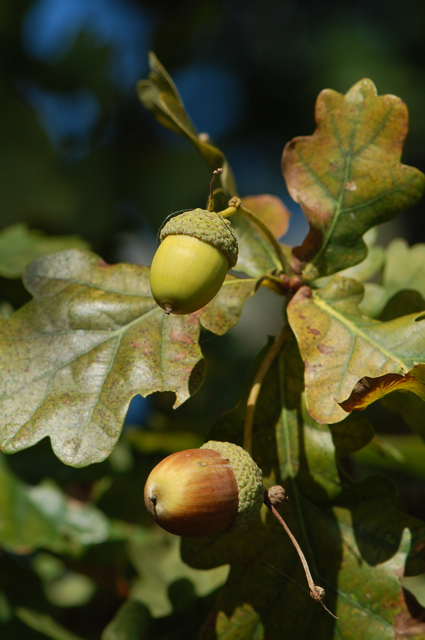
If the Oak is the King of the woods than at no time is his reign more glorious than in autumn when his leaves glow gold and many beings are nourished from his acorns.

Whenever I have lived or wandered abroad I cannot think of Britain without thinking of oak trees. Perhaps then it’s appropriate that I have ended up in a village whose name means ‘place covered with oaks’ or ‘overshadowed by oaks’. Nowadays there are not so many great oaks remaining but sometimes, my husband and I like to stand atop the Downs and dream of the time when everything before us; the farmer’s fields, the gardens, the roads would all have been covered with oak trees.

Whilst the autumn colours of the oak are not as showy as some of the more exotic trees that are visible at this time of year in parks and gardens, their subtle beauty is somehow more deeply fulfilling. I said to my husband as we walked at the weekend, ‘the maples are pleasing to my eyes, but the oaks are pleasing to my heart.’

Oaks were said to be sacred to the Druids. Some suggest the name ‘Druid’ actually comes from the old Gaelic name for oak, Duir, though others have dismissed this saying that instead, it originates from Dru – meaning ‘highest’ and vid – meaning ‘knowledge.’ Who knows the truth, but I cannot imagine any race who lived amongst the oaks would not have held them sacred. Oaks appear in the mythology of many lands and there are about 600 species in the genus across the world.

The oak has many associations with protection and strength, partly because of the numbers of creatures that it shelters in its bows. Apparently it houses the greatest biodiversity of herbivorous insects of any British plant. Even in death it is home to a great many insects. In the Bach flower remedies, oak is given to those who offer their strength to others and keep persevering until they themselves end up drained and exhausted. Taking the remedy is thought to re-establish the positive qualities of oak, those of courage, protection, strength and endurance.

The oak tree was also associated with weather gods as apparently, it is hit by lightning more often than other trees. It has featured alongside the Gods of thunder and lightning in many European cultures, from Zeus of the ancient Greeks, to the Norse Thor and the Baltic Perkunas. This weekend however, it was also resplendent in the sunshine.

Acorns were of great importance to country folk as  a primary food source for their pigs in autumn. Before this, they were  also an important food source for people themselves and were eaten by a variety of cultures from all over the world. To eat acorns they must be soaked or boiled first to remove the tannic acid. I read a recipe for acorn muffins the other day, it sounded perfect for eating round the fire with a spicy herbal chai when the dark days of winter are upon us.

And of course the oak has its place in herbal medicine as well. A very useful astringent, the bark can be used to staunch bleeding of all kinds from haemorrhoids to a mouthwash for bleeding gums.

In pagan mythology the Oak King was said to reign from mid-winter to mid-summer, after which the Holly King took his turn on the throne for the second half of the year. But for me, Autumn will always be the time of the oak.

What is your favourite autumn tree?

Read Full Post »

The Harvest Moon shone bright and beautiful in the sky at the beginning of the week and it seems there is no denying it any longer, autumn is here.

Autumn signifies many things to many people but for me, aside from its obvious beauty, it represents a time of community and friendship. I normally like to go out harvesting alone and wander in silence amongst the plants and the trees but in autumn there is something so special about gathering together with a friend and filling your baskets with the glorious bounty of the land. Now is the final celebration of the abundance and generosity of Mother Nature before we start to withdraw against the harsh onslaught of the winter months and what better way to celebrate than with each other.

I have been blessed to go out berry harvesting with two lovely friends and wonderful herbalists, Therri and Mindy this month and have spend a great afternoon with my lovely husband collecting Hawthorn berries and sloes.

Mindy amongst the Hawthorn

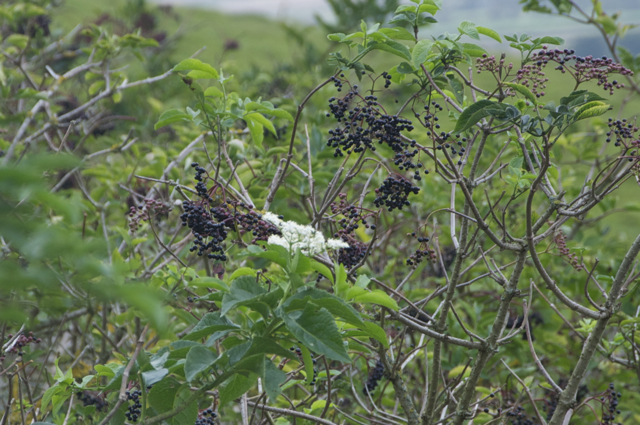
When up in my favourite elder picking spot we noticed both flower and fruit on the same tree. This is something I have never seen before, have you? Excuse the poor quality photo, the light wasn’t great that day.

Flower and berries on the wise Elder Mother.

The result of these outings was lovely fresh tinctures, dried berries and lots of delicious syrups!

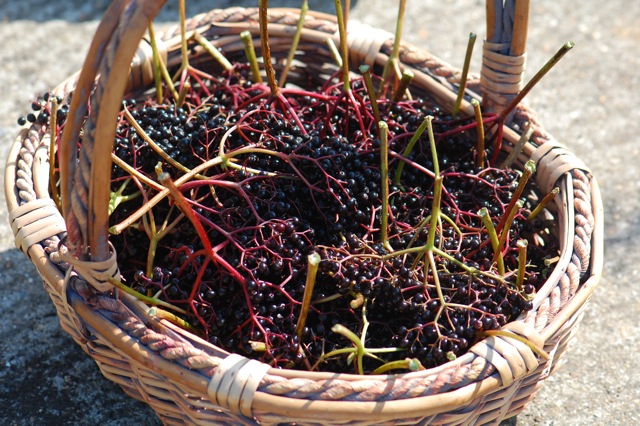
The first elderberry harvest.

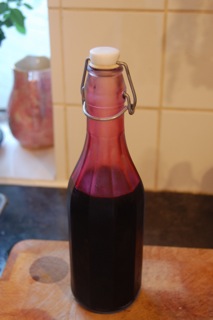
My first syrup making session was with elderberry, unbeatable for tastiness and immune supporting goodness for the colder months. I have already posted my method for elderberry syrup making here, so I won’t repeat myself but this year I added a vanilla bean to the ginger, cardamom, clove and orange peel and it turned out really well, so tasty I keep sneaking to the fridge for an extra spoonful.

Next up was the hawthorn berry syrup. The Hawthorns round here have been so fat and large this year and the trees literally dripping in them. I wonder if that means we are in for another hard winter.

I made a simple hawthorn and ginger syrup by simmering them together in a pan with enough water to cover, straining the liquid and adding an equal amount of raw honey once the liquid had cooled sufficiently. I use a fair amount of ginger because I love the resulting taste of the two combined but you can adjust according to preference.

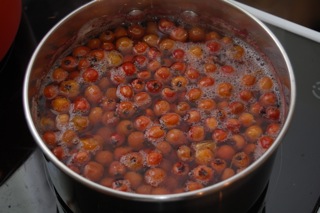
You can tell when it is almost ready because the berries start to loose their colour. I simmered mine on a low heat for about half an hour.

Berries starting to loose their colour.

At the time of straining they have gone a yellowy colour.

It’s basically the same technique as the elderberry syrup but it’s good to store your hawthorn syrup in jars rather than bottles because the berries are high in pectin which means it can set like a jelly and you’ll need to be able to spoon it out. The more of the thicker, mushy liquid you strain into the end product the more likely it will set. There is lots of goodness in this bit too however, so I say go for it. Do be warned though as I can’t imagine many things more dissapointing than being unable to get at all my delicious syrup because it had set in the bottle.

Look how firm the resulting syrup/ jelly is here on our morning porridge.

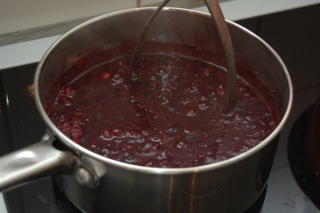
Finally, the pièce de résistance was the five berry syrup I made which included elderberries, blackberries, hawthorn berries, rose hips and sloes. I used the same technique again but this time added no spices or other flavourings and just let the natural flavour of the berries shine through. It’s so yummy I am wishing I had made litres of it!

Simmering berries.

Give them a good mash to get all the goodness out.

This syrup feels so vital and nourishing and is packed with antioxidants and other immune supportive constituents.

Another advantage is that it gives you a wonderful opportunity to polish up your Lady Macbeth impression.

“Out, damn’d spot! out, I say!—One; two: why, then
’tis time to do’t.—Hell is murky.—Fie, my lord, fie, a soldier, and
afeard? What need we fear who knows it, when none can call our
pow’r to accompt?—Yet who would have thought the old man to
have had so much blood in him?”

Watch out amateur dramatics… here I come.

I hope your autumn has also been full of harvests and community or anything else that nourishes your soul.

Read Full Post »

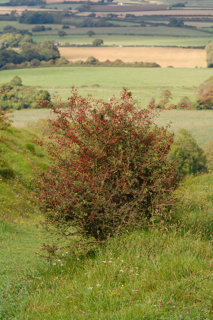
It’s been a while since I posted about the beautiful Hawthorns that I have been observing as part of the Tree of the Year project. They sit atop the Downs, relentlessly battered by wind and rain, and as a result they differ from many of the other Hawthorns in this area. With everything being early this year, most of the trees already had bright red berries at the beginning of August, not quite ready for harvest, but not far off. On these trees however, the berries were still small and green, reflecting how the harshness of their environment affects their development.

Nearly a month on they are reddening up nicely and the trees from a distance have that exquisite blush which tells you autumn is around the corner.

There is no doubt that the constant high winds we have had all summer have taken their toll. The trees look less healthy than this time last year with many of the leaves browning and some branches swept almost bare. Like people whose lives have been filled with hardship, they are weathered and worn.

It’s interesting to observe how bare of berries the side of the trees that faces the wind is compared to the relatively more sheltered branches.

I feel these trees teach me a lot about resilience, tenacity and strength and about adaptability in the face of hardship. They speak of the beauty of form and motion and of holding fast to this living edge of surrender. Perhaps most importantly they show that, in spite of difficulties, it is still possible to give generously.

Elsewhere on the Downs other Hawthorns tell their stories, each as unique as snowflakes.

I loved this one, entangled with the wild rose like lovers.

And everywhere the berries are fat and red and perfect. I’ll be out next week to get the first harvest in. Who wants pills when your medicine can look like this?

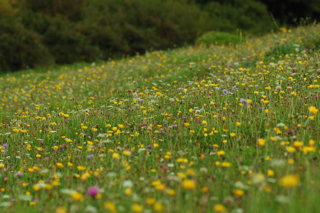
The Downs themselves are carpeted with wild flowers at present.

The yellows and whites of bedstraw, yarrow, burnet saxifrage and cat’s-ears mix with the mauves and purples of two of my favourite wild flowers;

Small Scabious

and Round-headed Rampion.

Whilst lone stalks of agrimony wave in the breeze.

Read Full Post »

This post is part of the July Blog Party hosted by Danielle over at The Teacup Chronicles. Check her blog tomorrow for links to the other entries.

The idea for this blog party was ‘cooling drinks for the dog days of summer’ so it may come as a surprise to some that I have chosen to write about herbal teas (well, I am English after all). I drink teas come rain or shine and there are many lovely cooling herbs that make fine summer teas. Now I know the UK isn’t famous for its scorching weather but folk from hotter climates also enjoy teas on even the warmest days of summer. In India I drank chai, in Morocco it was fresh mint tea and in Mexico we used to have a lovely cinnamon infusion. Some of these drinks, as well as being taken hot, also contain warming spices which we associate more with winter drinks but these can actually open up the pores enabling you to cool down more effectively. Such is the magic of herbs.

To make the perfect cup of tea it’s ideal to use filtered water as the taste will be purer. Warm the pot with a little hot water first, discard then add about a tablespoon per pint of your chosen herbal mix. Pour over hot water that has just boiled but ceased to bubble and leave to infuse for 10/15 mins to extract as much benefit from the herbs as possible. If you need a sweetener then add a little honey after pouring when the tea will have cooled enough to avoid destroying its beneficial qualities. Ayurvedic medicine warns strongly against heating honey. Sip slowly and with gratitude for the multitude of wonderful herbs available to us.

Some of my favourite summer herbs include:

Chamomile – Soothing to the digestion and the nerves, chamomile is a lovely after dinner summer tea and helps calm overheated, irritable children (and adults).

Rose – Cooling, toning, calming and full of love, rose is lovely mixed with gently moistening herbs like Lime blossom and mallow or cooling diaphorectics like elderflower for a harmonising summer treat.

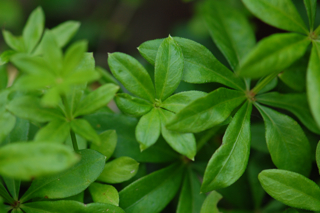
Sweet Woodruff – Cooling, mildly cleansing, good for the digestion and relaxing, this herb is a lovely addition to many summer tea blends with its mild and pleasant taste.

Sweet Woodruff

Elderflower – Cooling, diaphoretic and soothing to the upper respiratory tract, elderflower also has a light and pleasant flavour which is ideal for summer teas.

Hawthorn Blossom – Calms the nerves and opens the heart, if you like the taste, which I do, then this one is a winner.

Lemon Verbena – One of my favourite herbal teas, alone or in combination, not only for the delightful, refreshing taste but for its ability to calm digestion, fevers and nervous tension or anxiety.

Lemon Verbena

Borage – Demulcent, cooling and anti-inflammatory as well as strengthening to the adrenal glands, borage makes a nice addition to blends of summer teas as it doesn’t have much of a flavour by itself.

Lemon Balm – The perfect summer cup of tea! Delicious by itself or with other herbs like rose, other mints and lavender, it uplifts the spirit and cools the body and mind.

Mints – Spearmint, garden mint, peppermint, apple mint, ginger mint, chocolate mint… the choice of mints is endless! My favourites for tea are Moroccan mint and spearmint but I use various others too. What could be more refreshing than a cup of fresh mint tea? It’s also delicious as iced tea, chilled in the fridge with a little ice added before drinking.

Spearmint

Fennel – A great digestive tea, fennel has many uses, from boosting milk flow in nursing mothers to respiratory congestion and lifting low libido. It’s a tasty addition to tea blends and works well with other digestive herbs like chamomile.

Calamint – Sweet, aromatic and warmer in nature than some of the other mints, Calamint is also a good diaphoretic, digestive and expectorant herb.

Marshmallow – One of the best herbal demulcents, Marshmallow is lovely to include in blends for people who get dry in the summer.

Marshmallow

Lime/ Linden Blossom – Calming, cooling and moistening, this is a delicious tea for those who are stressed out and over worked or are having trouble getting off to sleep.

Calendula – Healing, anti-inflammatory and useful to the immune system, Calendula petals add a splash of colour and many benefits to any tea formula.

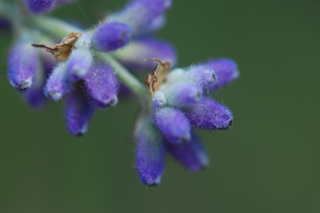
Lavender – Another great nerve soother and digestive herb, Lavender can help headaches from the heat and is lovely taken just before bed to help ensure a relaxing night’s sleep.

Lavender

Some summer tea combinations I particularly enjoy include:

* Lemon Verbena, Sweet Woodruff and Spearmint.

* Fennel, Calamint and Lemon Balm.

* Elderflower, Rose and Borage.

* Linden, Chamomile and Hawthorn Blossom.

* Apple mint, Monarda and Calendula petals.

And to finish, for those who know the old ditty…

I like a nice cup of tea in the morning,
I like a nice cup of tea with my tea,
And when it’s time for bed,
There’s a lot to be said,
For a nice cup of tea!

Read Full Post »

There is little to rival the sheer exuberance of the garden at this time of year. Even in my little patch things are flourishing and vital.

Blue and pink Hyssop are covered in blooms.

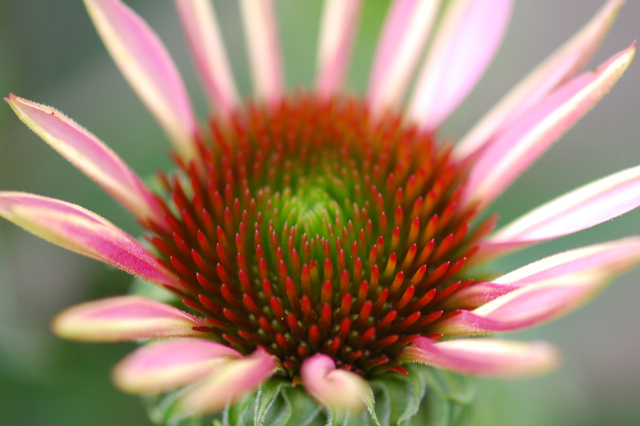
Echinacea is looking beautiful. If you look at this close up you can see that each head is actually made up of many tiny individual flowers, called florets. Amazing no?

I planted the cornflowers late so they are only just blooming now.

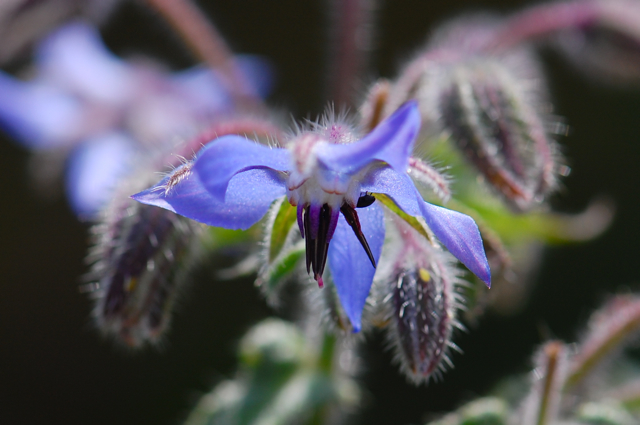
I adore borage flowers, they are so ethereal yet the plant’s medicine is so strengthening. Along with the normal blue flowers I’ve had a few rogue pink ones this year.

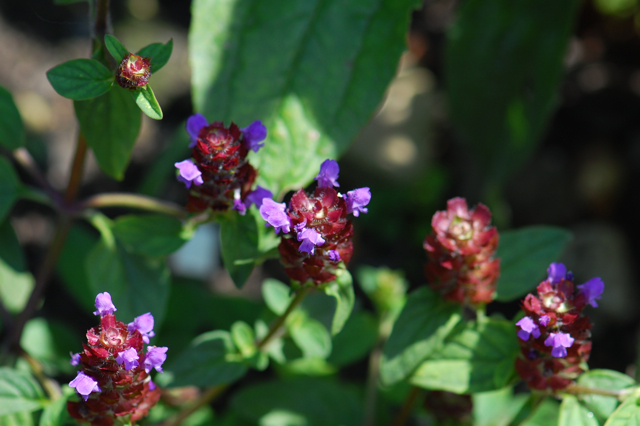
Self heal and heartsease, both favourites of mine and excellent skin healing herbs, are adorning the spaces between larger plants.

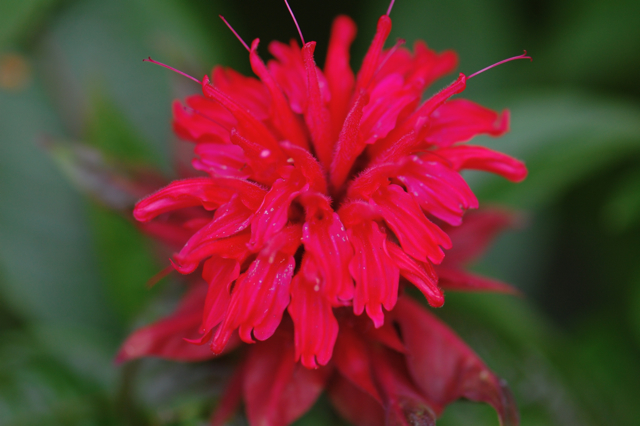
Monarda, geranium ‘rozanne’ and Calendula all add some blazes of colour.

_______________________________________________________________________________

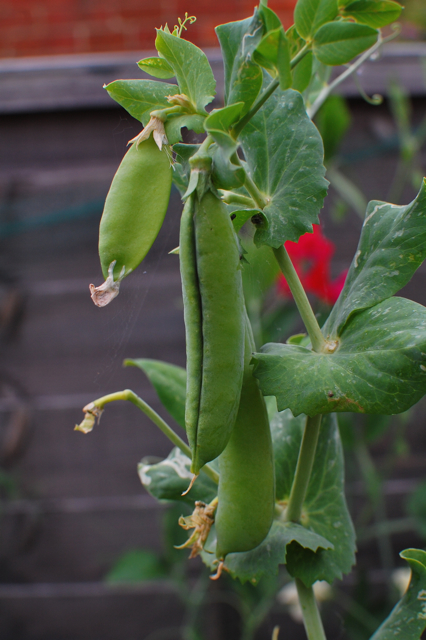
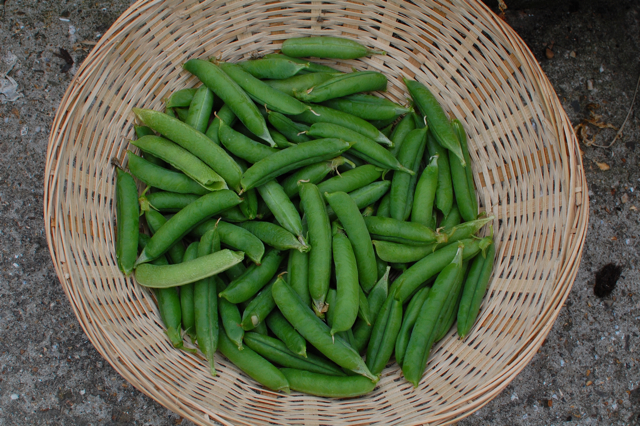
And best of all we are harvesting something delicious for our table everyday. Romanesque cauliflowers captivate me completely, their fractal forms seem almost unreal. Peas are about my favourite garden snack, along with strawberries of course, and salads fresh from the garden are a million, million miles from those bought in the shop.


The Roses and Motherwort have also been stunning but they will have posts all of their own in the next week or so. I hope you are enjoying your gardens, patios, window boxes and local parks this summer, wherever in the world you may be.

Read Full Post »

« Newer Posts - Older Posts »