Feeds:
Posts
Comments

Archive for the ‘Seasons’ Category

Nettle Seed

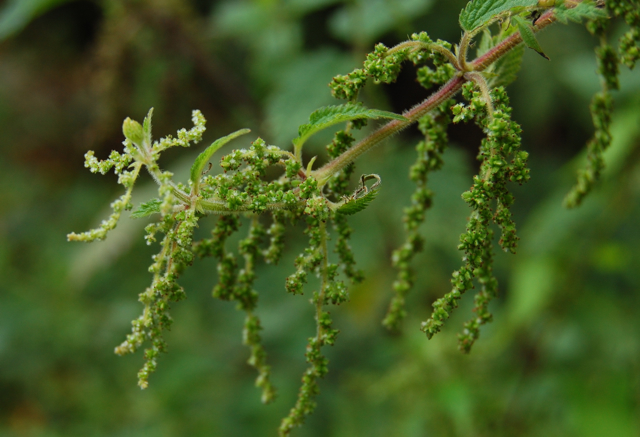
I passed a lovely afternoon recently in harvesting my first nettle seeds of the year. They are so abundant right now and so helpful during these busy periods that it was a real pleasure to get out gathering them.

There are a couple of great articles on the internet describing how to harvest nettle seeds along with their uses which I highly recommend reading, notably those by Henriette here and here and Kiva Rose here and here. Though many people know how beneficial nettle leaf can be, until the recent revival of interest in nettle seeds it was a little used remedy in modern herbal medicine. Even now it seems to be much more popular amongst traditional herbalists and herbwives rather than medical herbalists, not that the distinction is always so clear.

The benefits of nettle seeds have some overlap with those of the leaf, both being strengthening, mineral rich, great for skin and hair and for supporting the kidneys and urinary system. Whereas the leaf is gentler and more nourishing however, the seed packs more of a punch.

Abundant and ready to harvest.

According to Henriette, ‘Nettle seeds are adaptogens. They help with the general stress response, they strengthen the adrenals, and they’re loaded with minerals and trace elements’. As most of the hype around adaptogens has centred on exotic plants from far away lands it’s particularly nice to have such a great example growing abundantly here in the UK. I always think that the medicines we need most are the ones which are most abundant near where we live and in these stressed-out, sped-up times, for many of us nettle seed is no exception.

Useful for chronic exhaustion, adrenal fatigue and burnout, nettle seeds have also been used to aid kidney function in both people and animals with degenerative conditions. David Winston writes here, ‘I discovered Nettle Seed could be used as a kidney trophorestorative – literally a food for the kidneys. I have used the seed tincture to treat over 30 cases of degenerative kidney disease and the results have far exceeded my expectations. A recent study published in the Journal of The American Herbalist Guild [4(2):22-25] confirms my clinical experience, showing that Nettle Seed increases kidney glomerular function and reduces serum creatinine levels. Many herbalists have seen significant benefits from using Nettle Seed tincture in patients with glomerulonephritis, chronic nephritis with degeneration, and to protect the kidneys from nephrotoxic medications.’ Impressive stuff.

As the endocrine glands work together to maintain a subtle balance in the body, often a medicine that affects one of them will have a knock on effect throughout the entire system. So nettle seeds can help harmonise the whole of the endocrine system, though their primary action is to balance the adrenals.

Last year, Sara Jane of Brighton’s Green Aprons group told me that taking just a small amount of the fresh green seeds had kept her awake the whole night. Kiva Rose has also spoken of the overstimulating effects of the fresh seed. They don’t seem to affect me in quite the same way, so perhaps it’s constitutional. From an Ayurvedic perspective I imagine Pitta types would find them quite stimulating but Kaphas could benefit from their energising effects. I’m pretty Vata and, as I say, they haven’t ever kept me awake, though they did give me  a surprising and uncharacteristic motivation to do lots of housework! Perhaps I shall make my fortune marketing them as the new ‘mother’s little helpers’. Or perhaps not.

To be on the safe side, it’s best to take the dried seeds as they have a more gently restorative action and are energising without being too stimulating.

Harvest now will the seeds are hanging in strands

The first time I harvested the seeds I ignored Henriette’s advice and, like many a young herbalist who disregards the voice of experience and wisdom, I came a-cropper. As she suggests, nettle seeds do seem to harbour a remarkable amount and variety of insect life, so it’s really best to do as she says and cut whole stems rather than just the seeds and hang them for a few days to allow the wildlife to escape. I take them down before they are completely dry and finish them in the dehydrator but that’s just because years of living in damp houses have made me cautious of air drying anything. Once dry, strip off the strands of seeds and rub them through a sieve, you’ll be left with a beautiful harvest of dried nettle seeds.

Most of the nettles growing near me are the perennial Urtica dioica but if the annual Urtica urens is more abundant near you then do remember when collecting seeds that the success of next year’s new plants depends on them. If you have only a few plants in your area, look elsewhere for your bounty. This lovely nettle patch, and a couple more like it, are just outside my house so I’m lucky not to have to worry about over harvesting!

Nettle Patch

Nettle seeds are so easy to incorporate into your daily diet and can be thought of as much as a nourishing ‘superfood’ as they are a medicine. Sprinkle them on salads, soups, in sandwiches or blend in smoothies. Take up to a teaspoon a day and see how you go, you can use more or less depending on how they affect you.

I make a delicious seasoning from nettle seeds, hemp seeds, nutritional yeast, mixed herbs and a pinch of salt and pepper.

This amount of nettles filled an average size jar with dried seeds. I’ll need to do another few harvests in order to make a tincture from the fresh seed and stock enough dried seeds to see me through the year.

Nettle Seed Harvest

For more detailed info on when to pick and how to process nettle seed see this post here.
Read Full Post »

I love this time of year when the trees and bushes are dripping with ripening berries. It’s funny to think that only a couple of months ago they were adorning the landscape with their wonderful flowers.

Over the course of the summer months we watch and wonder as these….

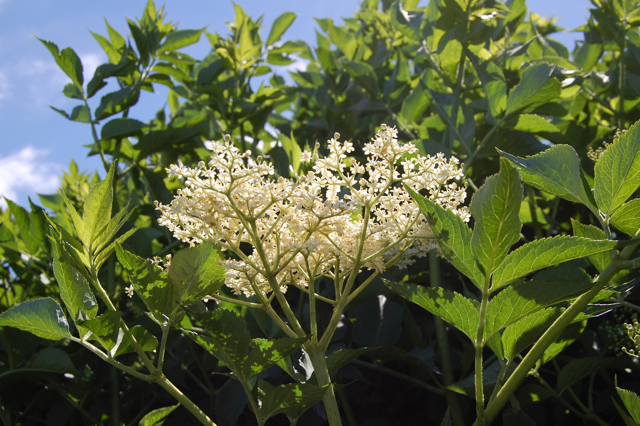
Elderflowers

Turn to these.

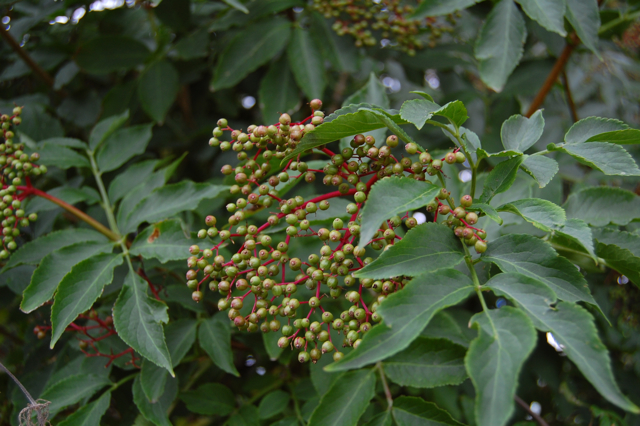
Unripe Elderberries

These…

Bramble in Flower

To these.

Blackberries

These…

Hawthorn Flowering

To these.

Ripening Haws

These…

Wild Roses

To these.

Rosehips Ripening with a Gentle Blush

And these…

Blackthorn Flowering

To these.

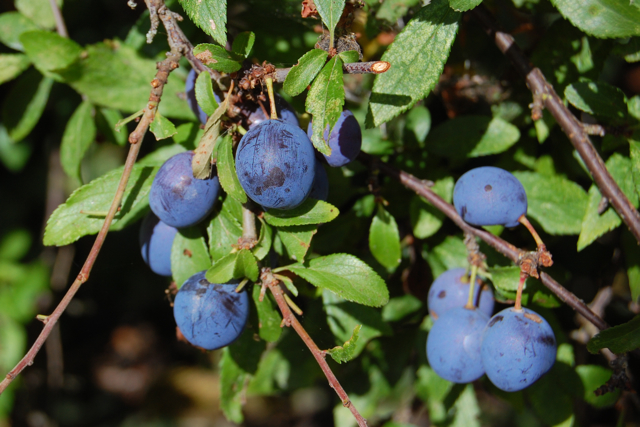
Sloes

Other than the blackberries I haven’t harvested anything yet as it’s still a little early. Having said that, I’ve seen lots of ripe elderberries elsewhere though the ones near me are still green. I’ll be sure to post recipes and tips from my harvests as they occur!

We both took the day off work today to celebrate my birthday (which is actually tomorrow) and after some exploring we indulged in picking and eating blackberries to our heart’s content.

There was just time to greet our new friends before heading home for blackberry smoothies.

Good Afternoon

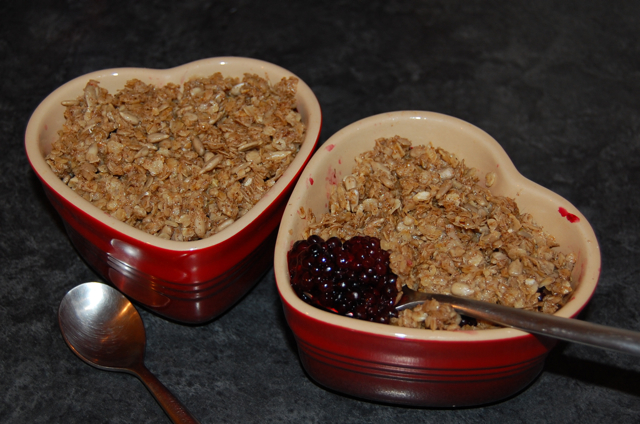
For a special treat this evening I made us little raw berry crumbles which are so yummy and nutritious and simple to do. Just fill a small pot with blackberries and raspberries and cover with a simple crumble topping of oats, sunflower seeds, macadamia nut oil, local honey and a pinch each of vanilla powder, cardamom powder and cinnamon powder. I popped it in the dehydrator for a couple of hours to warm and soften but if you don’t have one you could warm it in the oven for 20 mins on the lowest heat instead. Enjoy with a spoon of blended frozen banana ice cream.

Berry Crumble

I hope you all have time to get out and enjoy the hedgerows too. With love.

Read Full Post »

I went for a lovely walk on the Downs yesterday afternoon with Sarah, aiming to harvest some Yarrow and see what was about. It was a beautiful sunny day and there was such an abundance of wonderful healing plants everywhere we looked. Sarah is a great herbalist and teacher so I always learn lots from my time with her.

We saw lots of Lady’s Bedstraw, Gallium verum, a lovely cleansing herb which can help the kidneys, liver and lymphatic system and aid in skin disorders, much like it’s close relative Cleavers, Gallium aparine. It has a delightful odour and was used as a strewing herb and to stuff mattresses (hence its name).

Lady's Bedstraw

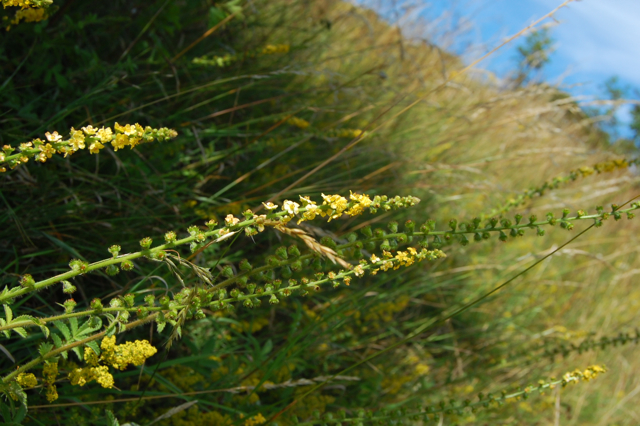
The Agrimony, though slightly passed its best, was still looking so beautiful. Seeing this herb on a walk is always a pleasure. As an astringent it’s useful for stomach upsets and sores and can help tone oily skins when used as a face wash.

Agrimony

We also saw Wild Lettuce, a useful sedative, growing next to flowering Mugwort.

Wild Lettuce

Mugwort

I was very excited to see the haws starting to form on the beloved Hawthorn.

Swelling Haws

There was lots of mallow, a traditional wound herb, and some wonderful wild marjoram which I’m going to write a fuller post on in a couple of days.

Mallow

Wonderful Wild Marjoram

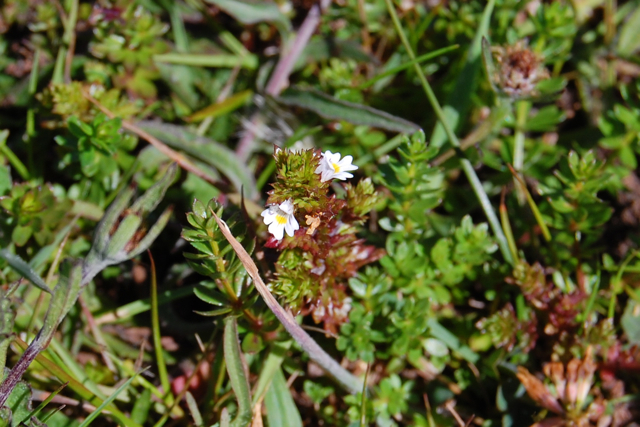
I was so happy to see some eyebright which I hadn’t encountered in the wild before.
Eyebright

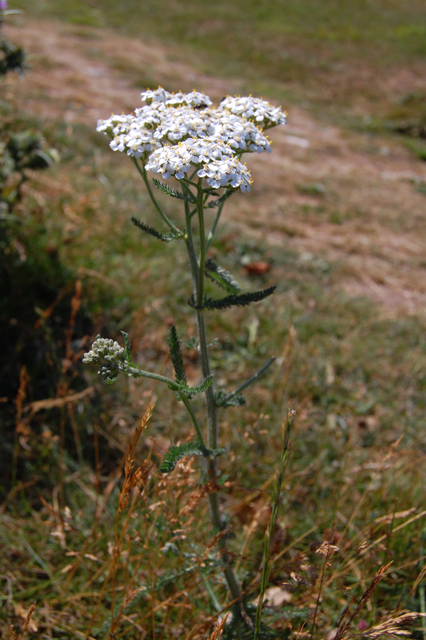
And last, but by no means least, we managed to collect the thing we came for, some lovely blooming Yarrow. What a great afternoon!

Yarrow

Read Full Post »

Wondering reverence amongst the Pines

Trees have captured our imaginations since people first walked amongst them. Possibly even before. There has never been a time when our lives did not depend on the majesty of these great beings, whether for food, shelter, fuel or medicine. As the daughter of a forester I suppose it was inevitable that my chosen path would in some way come full circle and include a special place for trees. I am so grateful for the healing provided by them, there always seems an extra special something in a blend of herbs when it contains some tree medicine!

I think trees function as nervines simply by their virtue of being. In my experience, nothing is a greater tonic to the nerves than a walk in nature, wandering through aged boughs and young saplings and feeling your gaze flooded with a thousand shades of green. The nervous system, down to the neurones themselves, bears a striking resemblance to trees, with their myriad branches and roots stretching out and connecting, sending messages and forming an incredible network, the like of which we have barely begun to understand.

A Neuron

Having said that, within herbal medicine, not many trees are considered nervines. The blossoms of Hawthorn have been described as such, Peach and Rose make great cooling remedies for the nervous system and then there’s the lovely Linden, one of my favourite trees that is also one of my favourite nervines. Linden, also known as Lime Tree (though no relation to the fruit!) is one of the herbalists greatest allies for soothing stress, tension and nervous excitation. The name comes from an Anglo Saxon root, though ‘Linden’ was originally an adjective, meaning ‘made of Lime wood’. In German, the verb ‘lindern’ means to alleviate, ease or soothe.

In various European cultures it has been associated with the divine feminine, being sacred to Freya and Frigga, Goddesses of love, fertility, domesticity and divination.

Limes are an ancient species, there is a small leaved lime in Westonbirt Arboretum that is at least 2,000 years old. Limes and elms were once the commonest trees in Britain, flourishing around 6,000 years ago, during the warm Atlantic period. These would have been our native species, Tilia cordata, or small leaved lime, and Tilia platyphyllos, the broad leaved lime. Both of these are now fairly rare, especially the broad leaved, and the lime trees common in parks and lining avenues are the common limes Tilia x europaea or Tilia x vulgaris.

A Common Lime – just before flowering.

I was hoping the Limes would be in flower by now but everything is a bit late this year. I’m waiting on them blooming any day though! I was planning to share a few more of my recipes but I’ll do an update with some ideas for using the blossoms as soon as they are ready for picking. I’ll be doing some tincture, infused oil, a flower remedy (weather permitting!) and an elixir so do check back in a week or two for some medicine making ideas. Linden is one of the last trees to flower and the blooms are only fresh for about a week so everything has to be dropped as soon as the blossoms open and the bees start buzzing. Bees are the best guides to finding a Linden in flower as they can be heard making merry with the pollen, one of their favourites, from quite some distance. There is an altogether musical quality about this tree and it’s wood was a common choice for making instruments such as guitars and recorders due to its fine acoustics.

If the elder is a venerable and wise old grandmother then the linden is a kind and gentle mother, softly singing her child to sleep. You always feel cared for with a cup of linden tea in your hand. Due to it’s gentle nature and sweet honey like taste, Linden makes a lovely children’s remedy taken as a tea, with a little honey if required. It can soothe irritability in children and adults alike and makes a lovely footbath to aid a restful night’s sleep. In Peter Conway’s interesting book “Tree Medicine’, he writes. ‘If you are stressed, tense or overworked, you need limeflowers.’ Well thats most of us then! It is also highly beneficial to constitutionally nervous types whose anxiety goes to their digestion.

It’s list of actions include antidepressant, antispasmodic, demulcent, diaphoretic, expectorant, hypotensive, nervine, sedative and stomachic and as such, it’s is good for more then just stress.

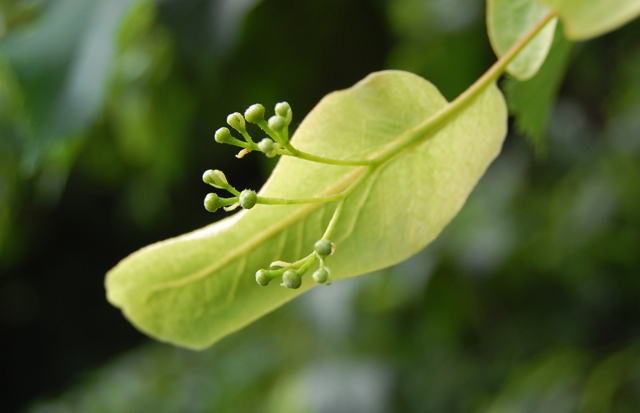
Linden branch – note the heart shaped leaves.

It’s been traditionally used as a heart tonic, helping to reduce cholesterol and high blood pressure, especially if the cause is anxiety driven. It does this in part by relaxing the circulation. If you try clenching your fists hard you’ll notice the skin in your palm going white where the blood has been unable to flow before turning red as the blood rushes back in. Now imagine being in a constant state of anxiety, it creates constriction which results in shallow breathing, reduced circulation and eventually dryness where the blood has been unable to adequately nourish the skin. Linden effectively treats all these conditions, by relaxing the nervous system and the circulation and soothing dryness and inflammation with its high mucilage content. In this way we can see its energy as being expansive in opening up the channels of the body to allow relaxation and flow.

It’s also a valuable medicine for the immune system being regularly drunk as a hot tea in France for colds, flus and fevers. As a diaphoretic it helps the body produce sweat which can lower a high temperature and rid the body of infection. Its anti-inflammatory and expectorant properties make it useful in respiratory conditions where it helps remove phlegm, soothe irritated passages and boost the immune system.

Interestingly, some describe it as energetically cooling and others as warming and we can see both of these qualities if we consider its ability to stimulate and move (qualities traditionally thought of as warming) as well as it’s use in cooling the body by encouraging sweating and calming anxiety.

The bracts and almost opening blossom, both of which are used medicinally.

There are also a variety of external uses for lime blossom, as the high mucilage content helps to soothe irritation and inflammation when used an an infusion for compresses or baths or as an infused oil. It is also a valuable herb for beauty as it is high in antioxidants, helps to regenerate the skin and and is thought to help clear acne when used in facial washes. This year I plan to make a nourishing and softening blend of linden and elderflower infused oils to make into face creams. Lovely.

Linden shines as a tea, having such a palatable taste that there are few who will dislike it. I included my ‘Hug in a Mug’ recipe in my recent post on rose which contains linden blossom, rose and avena, but often I just make a simple linden blossom tea and float a few rose buds on top which gives it a beautiful flavour as well as aesthetic appeal. To enhance the diaphoretic effect it is lovely taken with elderflower at the onset of a cold or flu and can be combined with hawthorn to emphasise it’s ability to lower blood pressure and protect the heart. In very large doses it can cause nausea and may be damaging so stick to 3 or 4 cups a day long term or take larger doses for a short period only.

Linden and Rose Bud Tea

The Linden is truly a gift of healing and wonder. It is strong and ancient yet also elegant and and it teaches us lightness, grace and a subtle kind of merriment. I’m excited for the first blooms which should appear very soon and will be reporting on the harvest and the medicine making as and when it happens.

A Lullaby of Linden:
I would like to sit with you
In a silence
Punctuated only by song,
Strange and sweet
And whispering of stars that fell an age ago.
Stillness and lullaby are my gifts to you.
My honied words, a subtle kindness
That tells you, ‘Dear one, stop,
You are held, you are loved.’
I’ve seen your life in a blink of my own
But to me you are unique in whichever form you appear today.
My song is your medicine.
Stillness and lullaby are my gifts to you.

References:
Picture of a neuron available at http://www.sullenriot.com/media/images/article-images/neuron.gif
Tree Medicine – Peter Conway
The Desktop Guide to Herbal Medicine – Brigitte Mars
Hedgerow Medicine – Julie Bruton-Seal and Matthew Seal
The Living Wisdom of Trees – Fred Hageneder
Flora Britannica – Richard Mabey

Read Full Post »

A Woodland Wander

The woods on a sunny May morning are truly a wonderful place to be.

The Woods in Bloom

Dappled Light

Hawthorn Sky

Nettles and cleavers are starting to flower. This marks the end of nettle picking season, at least until the seeds are ready to harvest in a few months. Once nettles begin to flower, they produce gritty particles in the leaves called csytoliths which may irritate the kidneys and urinary tract. There are still some without flowers however, so have that last nettle juice while you can!

Nettles Flowering

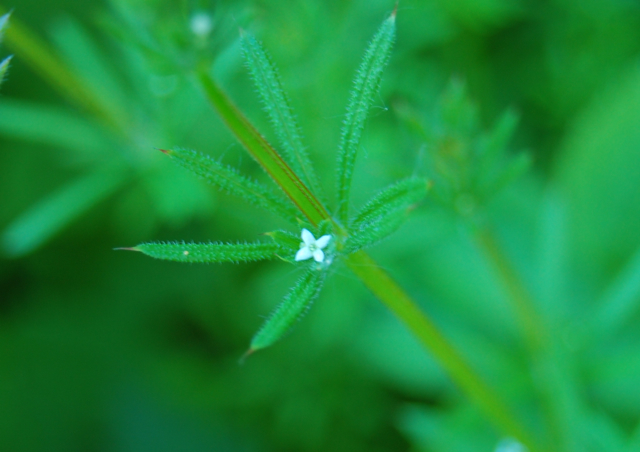
Cleavers- The tiniest, cutest flower in the woods

Also we have an abundance of Herb Robert on the edge of the woods. Herb Robert, Geranium robertianum, is a wild geranium that has a history of traditional use to staunch bleeding, both internally and externally. Though it is little used today, it helps to heal green wounds and ulcers due to its astringent and vulnerary properties, which also make it beneficial for diarrhoea. A fresh juice is applied externally and a tea or tincture taken for internal use.

There’s also still plenty of Garlic Mustard, Alliaria petiolata, also known by his more roguish name, Jack-By-The-Hedge. As the former name implies, the leaves taste both garlicky and mustardy and make a lovely addition to a spring salad. It can also be used to make a warming body rub or poultice for rheumatism or gout, to help treat sore throats and to strengthen the digestion.

Herb Robert

Jack by the Hedge in front of a bank of Herb Robert

Enjoy some woodland wandering and wondering, ’tis medicine for the soul.

Read Full Post »

The best known wild food dish is probably nettle soup. There’s actually quite a lot you can do with nettles, using them in the same way you’d use spinach (except of course for in a baby leaf salad – ouch).

However nettle soup is still probably my favourite and I have it at least once a week at this time of year. To stop if from getting dull I do a few different variations which you can adjust according to your preferences.

The Classic Nettle Soup:

The classic nettle soup is essentially nettles, onion, garlic, stock, seasoning and a potato. Lightly fry the onion in a little olive oil, add the garlic, then the potato and stock and cook till the potato is tender. Add the nettles and cook for a couple of minutes to break down the stings, blend the whole thing up and voila. The potato makes it creamy and gives it a thicker consistency if you like a more substantial soup. What’s good about this recipe is that you can vary it quite a lot, adding lemon if you want something fresher or, my favourite on an early spring day when it’s still wee bit nippy out, chilli and rosemary. Nutmeg is also nice and you can use a can of cannellini beans to make the soup creamy instead of the potato.

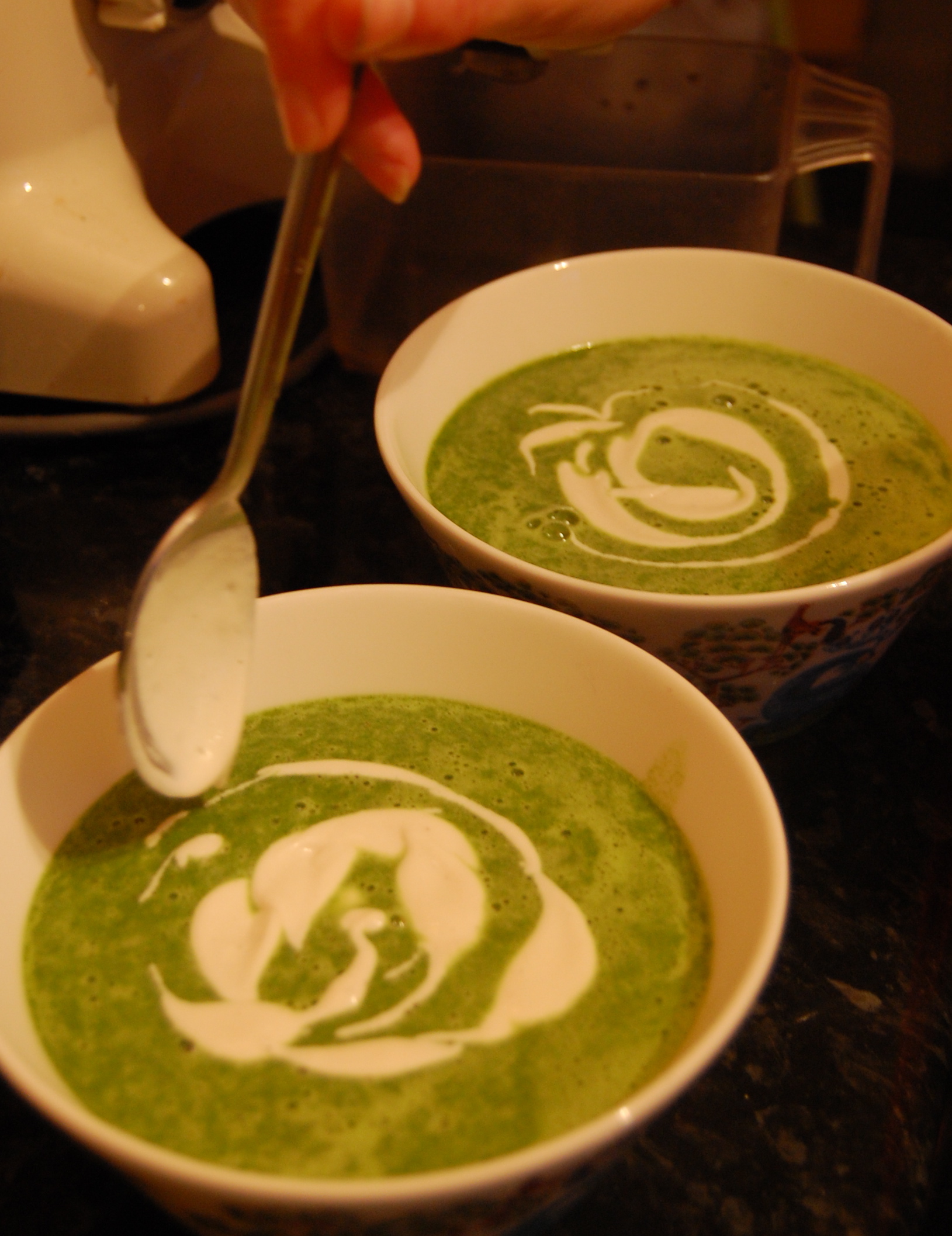
Nettle, Leek and Herb Soup with Lemon Cashew Cream:

Herby Nettle and Leek with Cashew Cream

This is a really tasty soup and very quick and simple to whip up in a hurry. You’ll need:

For the Soup:

  • 2 leeks
  • 4 cloves garlic
  • Colander full of nettles
  • Veggie stock
  • Fresh herbs- I use marjoram, sage and thyme, a few sprigs of each
  • Drizzle olive oil
  • Sea salt and pepper to taste
  • Lightly fry the leeks in the oil, add all the other ingredients, cook for just a couple of mins to break down the nettle stings, blend up and enjoy with a swirl of lemon cashew cream.

    For the Cashew Cream:

  • 1 cup cashews
  • Juice of 1 lemon
  • 1 clove garlic
  • Pinch salt and pepper
  • 1/2 cup water
  • Blend all the ingredients in a high powered blender adding the water until you reach the desired consistency, it’s better a little thicker than regular cream would be.

    Raw Nettle Soup:

    Being a big fan of my nettles straight from the hedgerow as i wrote about here, I thought I’d try out a raw nettle soup, a bit like a nettle gazpacho, in order to keep all the nutrients in the nettles in their whole and vital state. I love this version, it so vibrant and energising, but it’s not to everyone’s taste… my hubby thinks it’s gross!

    Raw Nettle Soup

    All you have to do is blend together the following ingredients, pour into a bowl and serve. The speed and pressure of the blender will break down the nettle stings but make sure it’s blended completely smooth.

  • 1 avocado
  • 1 spring onion
  • 3 wild garlic leaves
  • About a centimeter ginger
  • Half an apple
  • Sprig of fresh herbs, chives, dill or thyme are nice
  • Squeeze of lemon juice
  • 2 large handfuls of fresh nettle tops with thick central stems removed
  • 1 cup water
  • Nettle Dahl:
    When I fancy something a bit more substantial one of my favourite dinners is a nettle dahl.

    Nettle Dahl


    I just make a simple dahl with red lentils, spices, onion, garlic and ginger and add the nettles for the last couple of minutes of cooking time.
    In fact you can add nettles to many of your favourite curry dishes, it works really well and is just as delicious as spinach, chard or other greens.

    Happy foraging, I’d love to hear your favourite nettle soup recipe if you have one.

    Read Full Post »

    Cowslips and Primroses are two of the cheeriest and prettiest of our spring wild flowers. They have a rustic charm reminiscent of days gone by when they were used much more commonly in medicine than they are today.

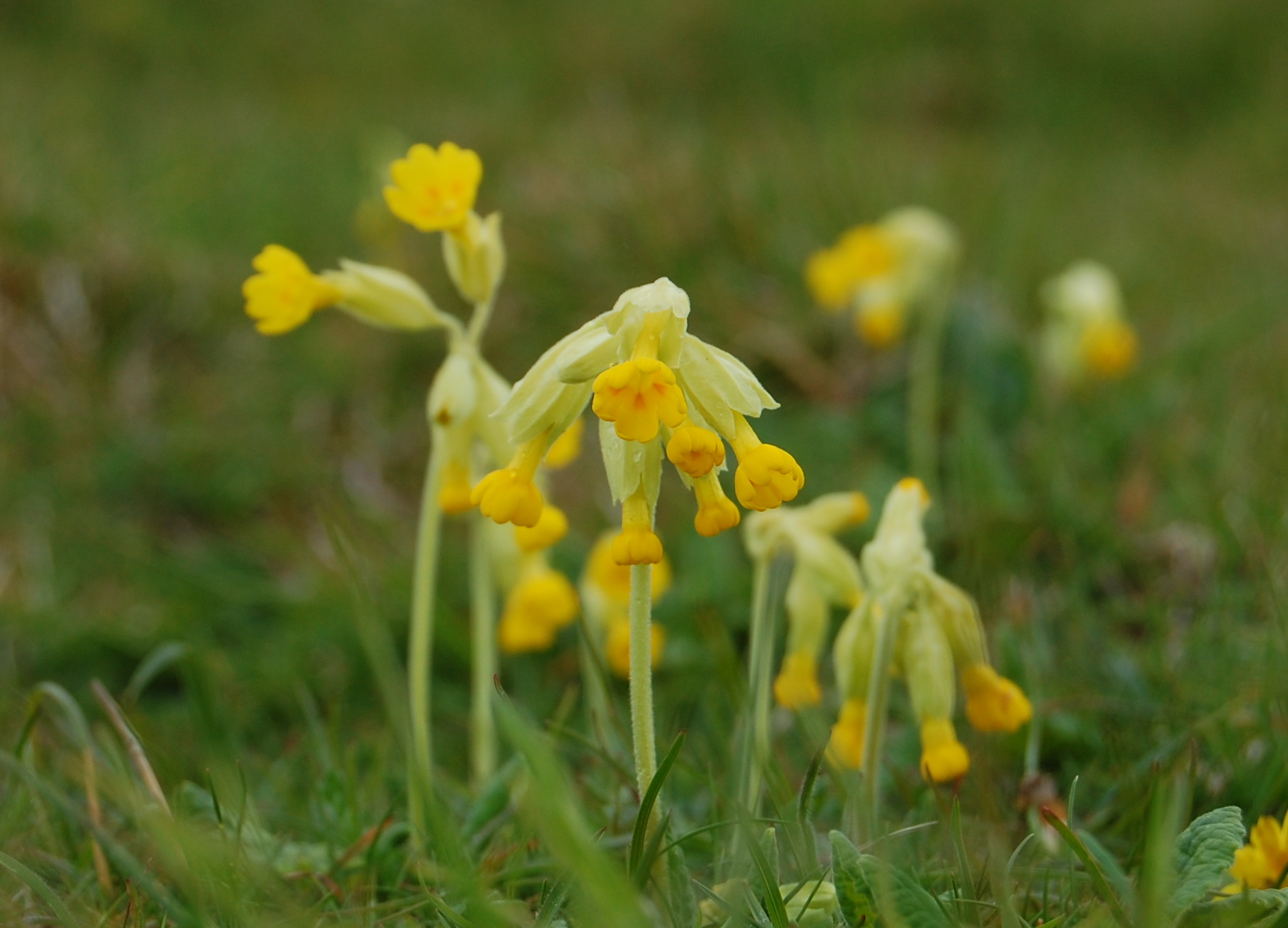
    Cowslip, Primula officinalis, and Primrose, Primula vulgaris, contain similar properties, being of use for soothing the nerves, easing insomnia and improving headaches. An infusion of Cowslip with Wood Betony is said to be of particular use in headache and migraine. They are both anti-inflammatory and anti-spasmodic, making them useful for muscular pains, rheumatism and gout and an infusion of the flowers of either plant can be used in the bath for soothing these conditions. They have also been recommended for pulmonary problems as both have expectorant properties.

    Cowslips

    Infusions of Primrose or Cowslip flowers have been used to brighten the complexion and reduce wrinkles. Culpepper recommends a Cowslip ointment saying, ‘Our city dames know well enough the ointment or distilled water of it adds to beauty or at least restores it when lost.’

    Both flowers are associated with youth in the Victorian language of flowers, Cowslip also being associated with winning grace and primrose carrying the meaning, ‘I can’t live without you.’ Both have also been associated with faeries in folk tradition and magic.

    The flowers and young leaves can be used in salads, though they are potentially allergenic so always do an allergy test first by rubbing a little of the juice from a leaf on the inside of the lips and seeing how you react.

    Primrose

    Both plants used to be very common but cowslip especially is much rarer now due to changing habitat and over harvesting as well as pesticide and agrochemical use. Therefore it’s best to grow these plants in your garden if you wish to use them for food or remedies.

    Maria Treben rates Cowslip highly as a remedy for insomnia. Here is her recipe for a sleep inducing tea:

    50g Cowslip flowers
    25g Lavender
    10g St John’s Wort
    15g Hops
    5g Valerian

    Pour 1/4 litre boiling water over a heaped teaspoon of the herbal mix, allow to infuse, add honey if desired and drink in sips before bed. She says, ‘This tea should be preferred to all chemical sleep inducing remedies. Sleeping pills destroy the nervous system whereas this tea removes nervous complaints.’ It is a fairly pokey mix though so check with a herbalist before taking (especially if on medication) or stick with a more gentle blend of herbs such as chamomile, lime flowers and cowslip.

    For a easy approach to making a tincture, loosely fill a jar with fresh cowslip flowers, pour vodka over them, cap and leave in the sunlight for fourteen days. Take 3 teaspoons a day as a soothing nervous system tonic. Cowslip was also commonly made into wine.

    Primrose flowers also make a lovely infused vinegar which can be used in cooking or salad dressings.

    Enjoy these sweet spring soothers and remember to harvest them with care and gratitude, never taking too much from one area.

    Read Full Post »

    Spring comes, even to a concrete garden.

    People are always surprised when I tell them I have more than 60 plants growing in our one bed rented flat and little patio garden. It’s not the same as being able to work and live close to the soil but it’s still a great joy to surround oneself with green friends, even in the midst of the city. All those whose blood runs green will take nature with them to the unlikeliest of places.

    Pot gardening is fairly easy, light work and a great opportunity to get to know plants when you don’t have access to a garden or allotment. I have come to see it as a metaphor for my own situation right now. My plants and I are still wild and free yet we are all constrained within limits; a pot, four walls, a sea of concrete. When we sleep we all dream together of forests, deep and dark, and the smell of the earth in the early morning after a fine rain. I have promised them, as I promise myself, that we shall all spread roots down into our sweet mother earth someday soon.

    These are a few of the beautiful things appearing now in my patio.

    Young Valerian Leaves

    Pussy Willow

    Lovely New Angelica

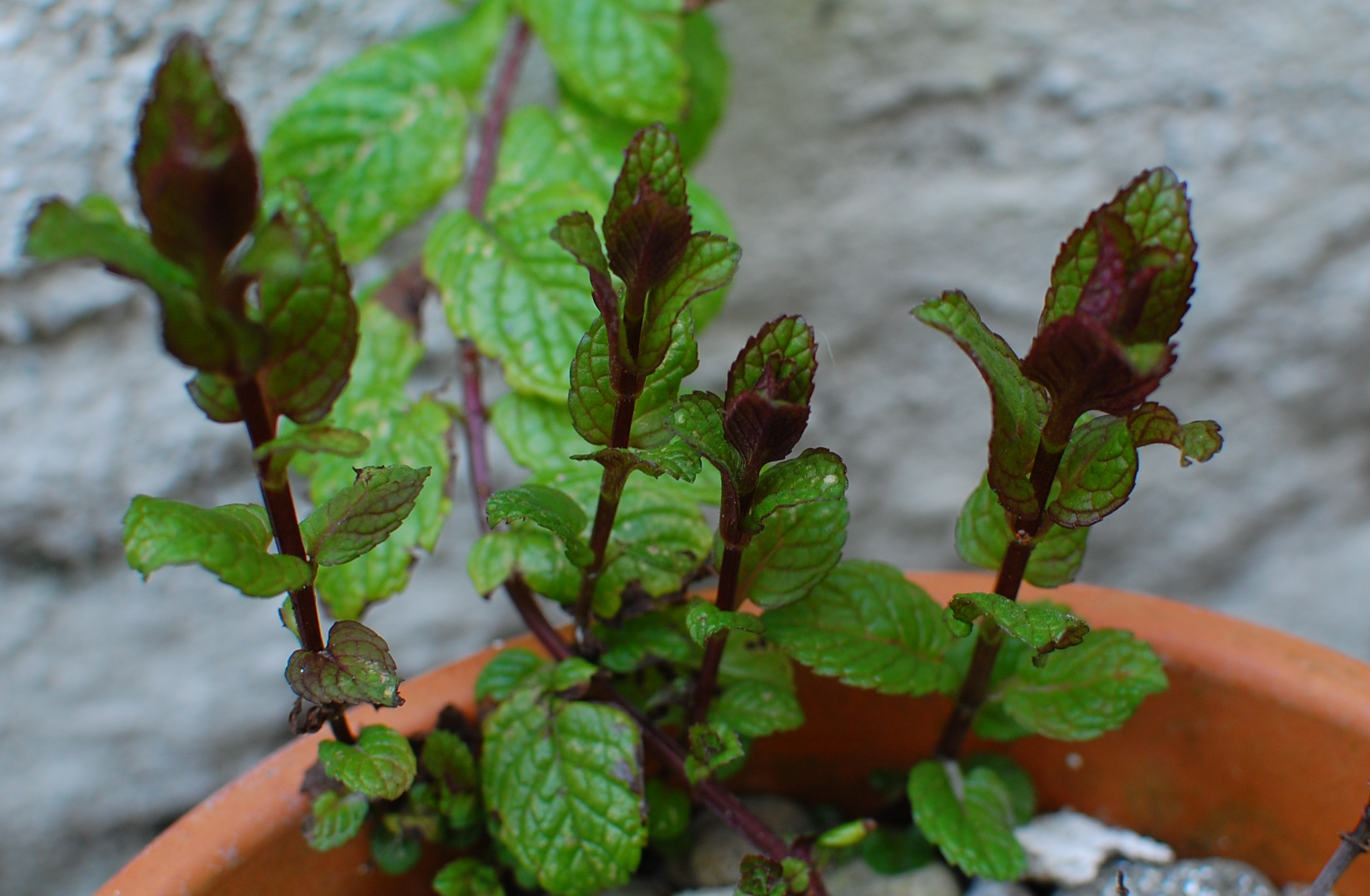
    Mint Shooting Up

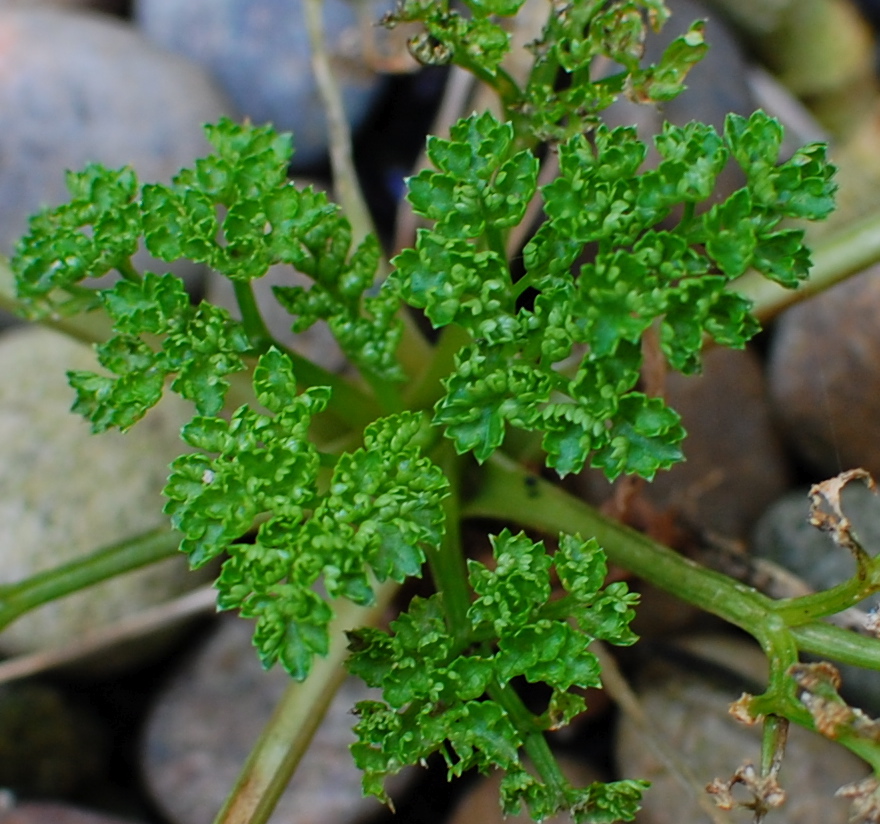
    Fresh Young Parsley

    Rosemary in Flower

    New Growth of Hyssop

    Read Full Post »

    This month’s herbal bog party, hosted by the inspiring Brigitte of My Herb Corner, is on the topic of My Herbal Treasures in March. Its so exciting to be thinking about all the new life beginning to stir at the moment as I’ve just started my first Spring harvests.

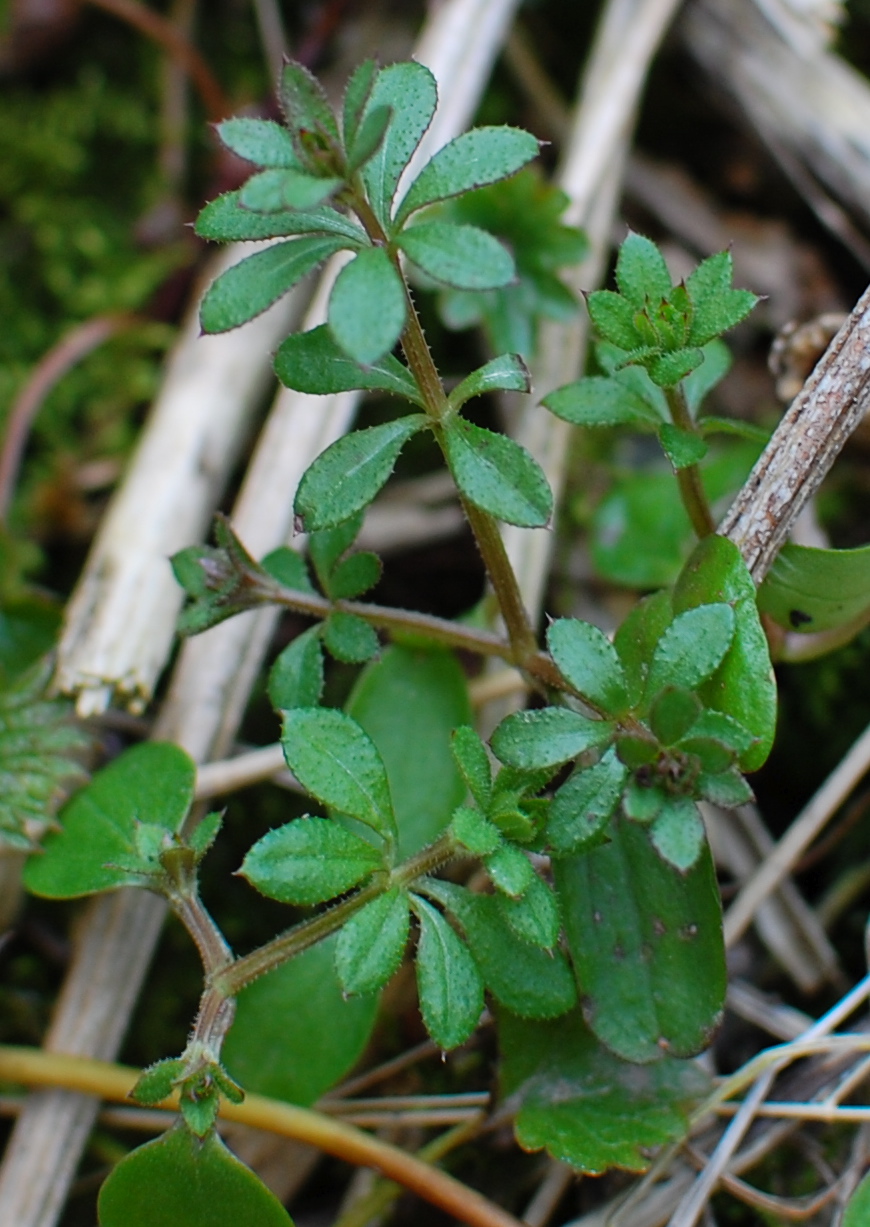
    Its kind of an obvious one, but my favourite March herb is probably the dear and wonderfully weedy Cleavers. Galium aparine

    Also known as Goosegrass or Sticky Willy, Cleavers is one of the first of our spring allies to appear, though it was perhaps a little later this year than I remember as I only managed my first harvest last weekend. It’s found mainly in woods and hedgerows and, along with its good friend stinging nettle, is one of the first wild herbs many people learn about.

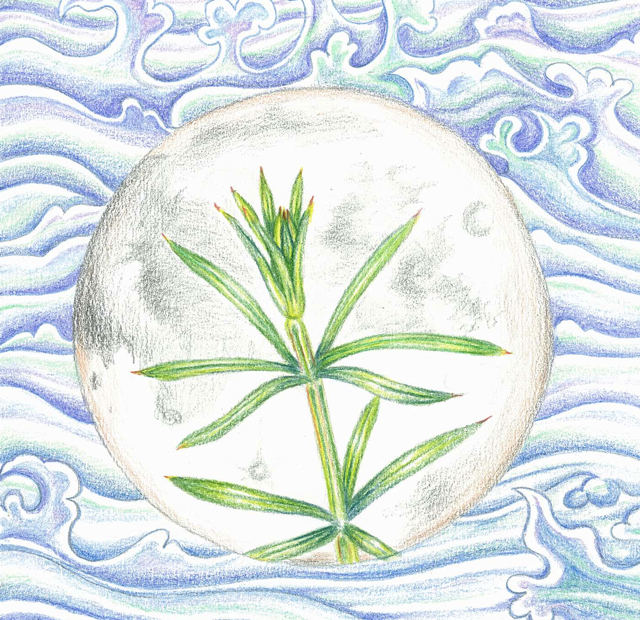
    Cleavers is a herb of the moon and is governed by the element of water and this is key to my understanding of how it works in the body. As a medicinal herb it is most commonly used to treat the lymphatic system, a network of vessels which runs alongside the blood circulation carrying waste materials in lymph fluid ready for processing in the lymph nodes and organs such as the tonsils, thymus and spleen. The lymph has no pump of its own so is reliant on the movement of blood and muscles to aid its journey, so exercise is vital for a healthy lymphatic system. It’s functions are primarily to aid cleansing of the tissues and assist the immune system by transporting white blood cells and antibodies.

    To me, the lymph relates very closely to the water element in us and, as we know, the moon affects fluids in all of nature by governing flows and tides. The nature of water is to be fluid, we can easily see how polluted stagnant water becomes, and the lymph must also be flowing in order to perform its functions within the body. In the winter we can become more stagnant and accumulations tend to build up, stressing the lymphatic system and resulting in lowered immunity, swollen glands and sluggishness.

    Cleavers is all about getting things moving and flowing again. I see it as an initiator and indeed it is meant to be auspicious to drink it before a journey. It doesn’t force change, just gently encourages the body to wake and clear itself, helping to remove excess fluids through its diuretic action. This quality means it is also a good urinary tonic, especially in inflammatory conditions of the urinary tract as it is also anti-inflammatory. Its useful for clearing the skin, partly due to its general alterative properties, and it has been used to treat cancers, both internally and externally as a poultice.

    The water element also governs the emotions and Cleavers can help us to gently let go of the past and be ready to embrace the new growth and change that Spring awakens.

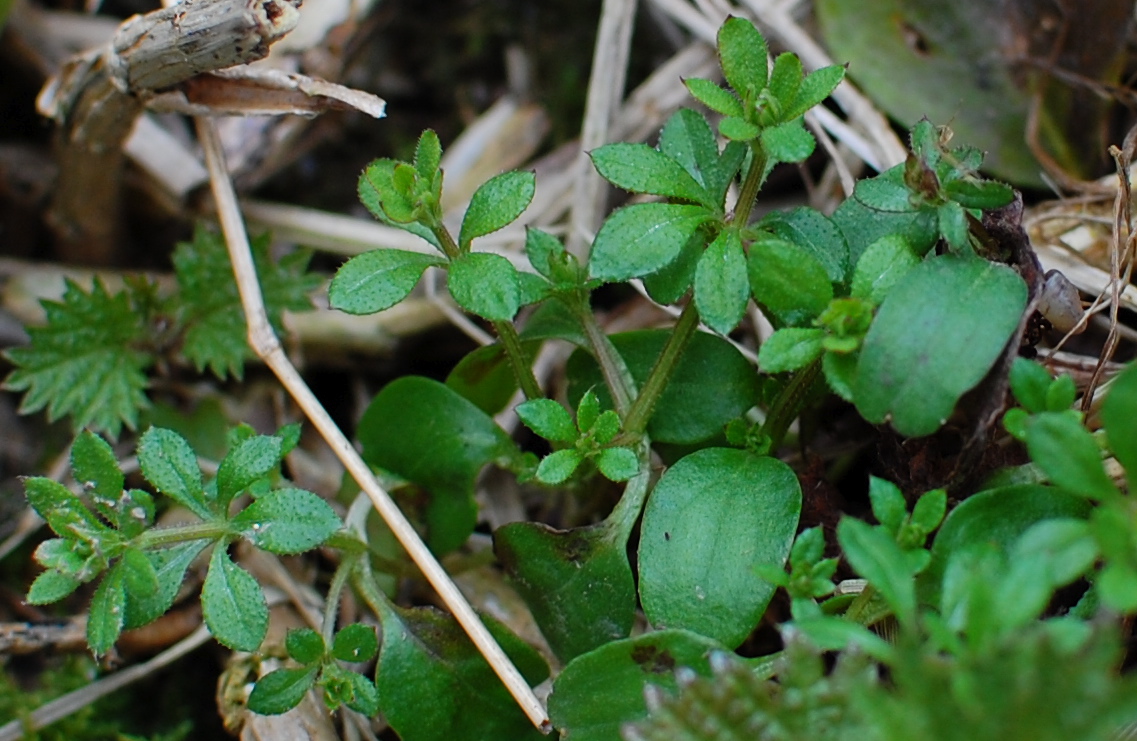
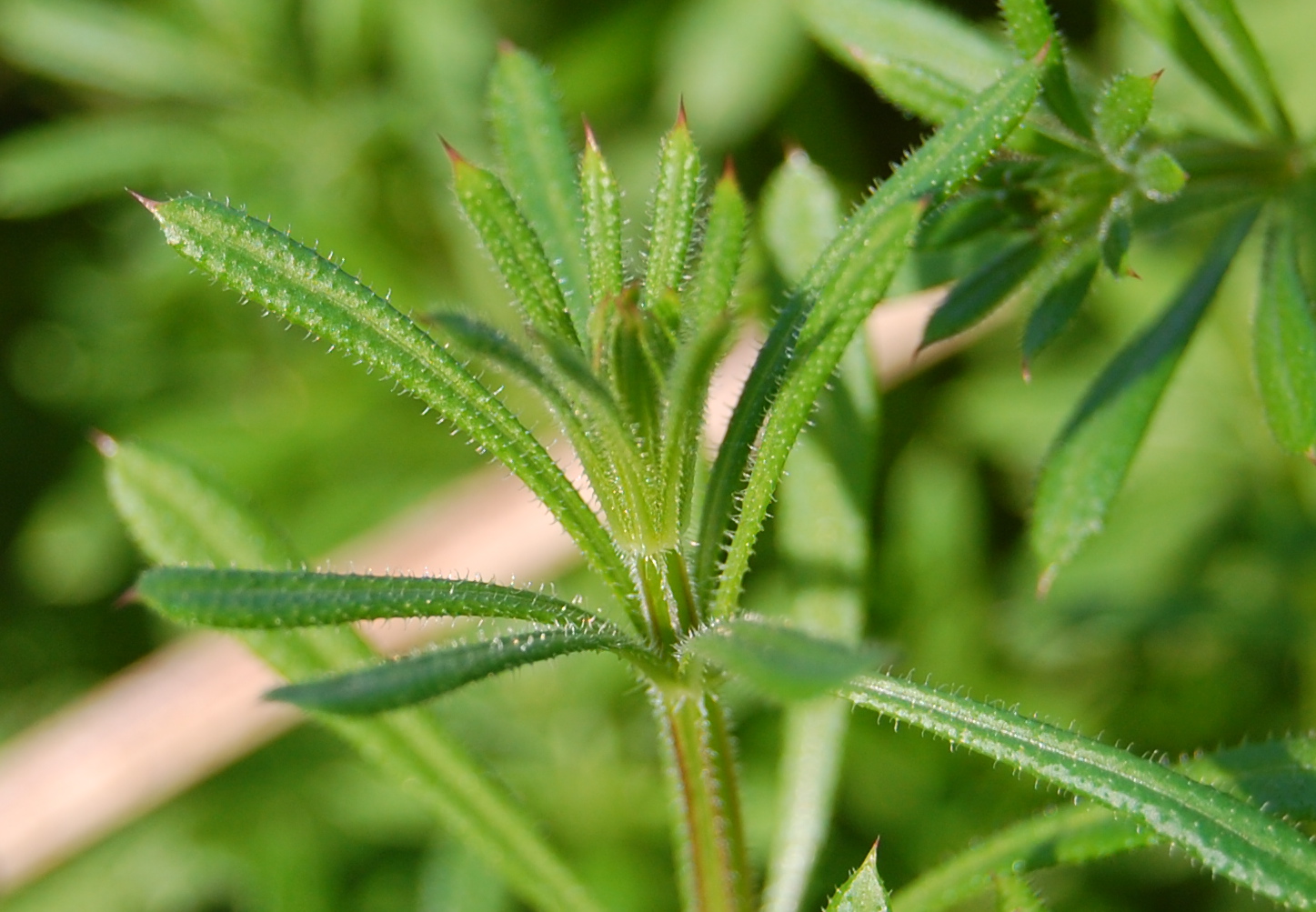
    Cleavers is covered in tiny little hooked bristles which you can see in the close up below which I took last year, later in the season when the plant was more mature.

    I see Cleavers as a plant of youth, not only because of it’s appearance early in the spring but due to it ability to entertain the child in us all when, on long walks, we can engage in the game I never grow tired of, how many cleavers can you stick on someone’s back before they notice 🙂

    I think the real reason Cleavers grab on to us as we go by is because, in a damp climate like the UK, we could all do with a bit of lymphatic support and she is generously reminding us of the great service she can offer.

    The plant itself is strong yet supple. It is flexible enough to be twisted round itself and apparently, country folk used to use it in this way to make a sieve for straining milk. It uses its little hooks to grow up other plants to get to the light, yet its strong enough to support them too when needed.

    Here are a few ways to incorporate Cleavers into your life, they are always better used fresh than dried:

    Cleavers Green Juice
    Juice is my favourite way to take them and also the most potent as we are ingesting the life blood of the plant which is an incredible gift. It does require the use of a juicer but if you don’t have one you could whizz it in the blender with some water and then strain, though I haven’t tried it this way. I juice a big handful of cleavers with some apple, fennel, lemon, ginger and celery. This makes a delicious cleansing and revitalising drink for bright Spring mornings.

    Cleavers Vinegar
    Make your Cleavers into a delicious green vinegar by lightly packing a jar with them then covering in unpasteurised apple cider vinegar. Cap with a plastic not metal lid (vinegar corrodes metal) and allow to infuse for three weeks before straining and rebottling. This makes a lovely spring salad dressing with a drizzle of olive oil.

    Cleavers Salad
    At this time of year you can finely chop the young cleavers and add to salads, though later in the Spring they become too tough and stringy. Enjoy them now while they’re tender!

    Cleavers Cold Infusion
    Many people prepare their cleavers as a cold infusion by popping a handful in a glass, covering in cold water and leaving overnight to infuse. Strain and drink in the morning for a refreshing start to the day.

    Cleavers Succus
    This one comes from Matthew and Julie Bruton-Seal’s wonderful book Hedgerow Medicine which I would recommend to anyone interested in wildcrafting herbs. Juice fresh cleavers, measure it and add an equal amount of runny honey. Bottle and label. It will last much longer this way and would be a lovely soothing and effective remedy for tonsilitis.


    In early Spring the Cleavers Moon
    Draws up from depths of wintery slumber
    Our waking tides.
    From ripple to wave she speaks of cycles
    Of change, of flow,
    Of newest growth already held in visions.
    She invites us too to grow, along with her,
    Weedy and wild,
    Supple yet unyielding as the waters she guides
    She helps to carry us all.

    Some other things to be happy about in March:
    My first dandelion.
    Young Comfrey leaves appearing.
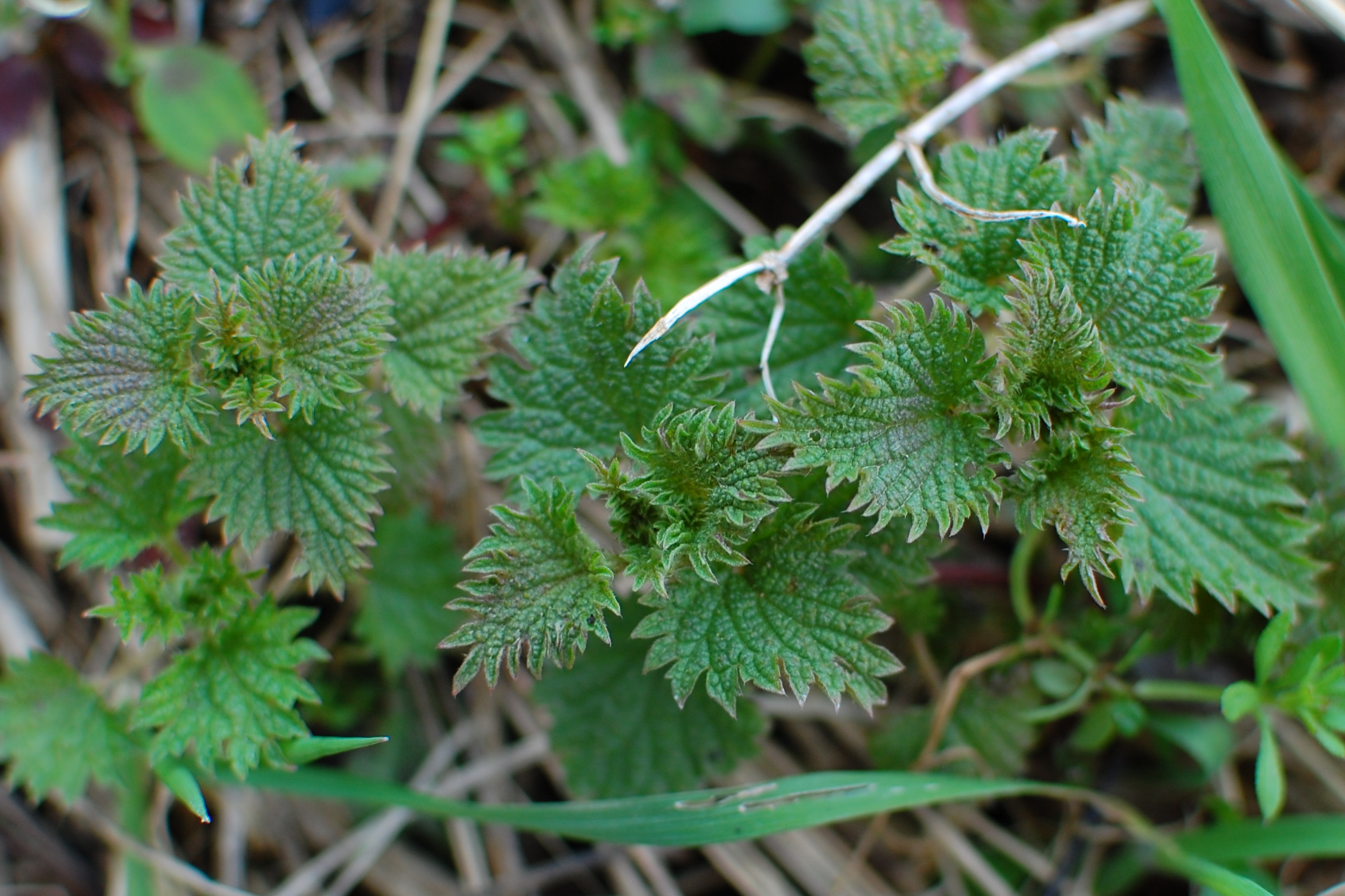
    Fresh, young nettles.

    Also Lesser Celandine (or pilewort), Viola and other lovelies are out and about.

    Spring love and loveliness to all.

    Read Full Post »

    Hooray! Nettle season is upon us once more and I managed my first harvest yesterday. This is my favourite time for nettle foraging as they are so young and fresh.


    The thing I love most about fresh nettles is their smell. Somehow it evokes the exact combination of the greenness of their leaves and the earthiness of their roots and it makes me feel more alive just to inhale it.

    I have long suspected that the green sludge in Popeye’s can that turned him from simple sailor to superhero was actually nettle, mistakenly labelled as spinach. Nettle is such a powerhouse of nutrition that it is one of my favourite foods as well as one of my favourite medicinal herbs. Including some in your daily diet is better than many a multi vitamin. They are high in iron which is easily absorbed due to the fact they also contain Vitamin C. They help the circulation as well as balancing blood sugar and energy levels. They are great at this time of year as they are both cleansing and building, so not only do they help rid us of accumulations and activate the kidneys but they also make sure we are strengthened and nourished after the hard winter months. They are, in my book, the perfect spring food and best of all, they are everywhere!

    You can use nettle instead of spinach in any cooked dishes such as bakes, lasagnes and everyone’s favourite, nettle soup. The way I really love to eat them however is raw, and straight from the hedgerow.

    There’s a special knack to picking and eating nettles without getting stung but its very easy really as long as you are careful. Just pluck the top off the plant, just the first few leaves, taking them from underneath by pinching the stem with your nails. Then roll them into a very tight ball, squidging them as you go to break down the fine hairs that contain the sting. Then pop them in your mouth and eat… yum.

    There are so many ways to enjoy nettles, I’ll be sure to post on them again before the spring is out as I make my year’s supply of tincture, vinegar and other nettle delights. Until then, happy foraging 🙂

    Read Full Post »

    « Newer Posts - Older Posts »