It’s been a busy week so far gathering the last of the blackberries, the first of the rosehips and lots and lots of lovely hawthorn berries. I don’t think I really have a favourite herbal plant, there are so many to love and admire, but if I had to choose one then hawthorn would certainly be a strong contender.
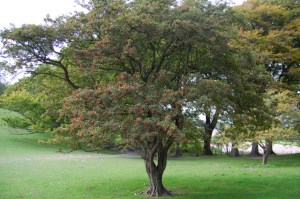
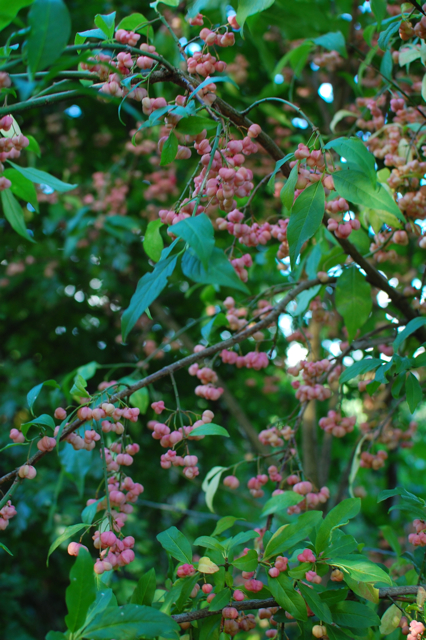
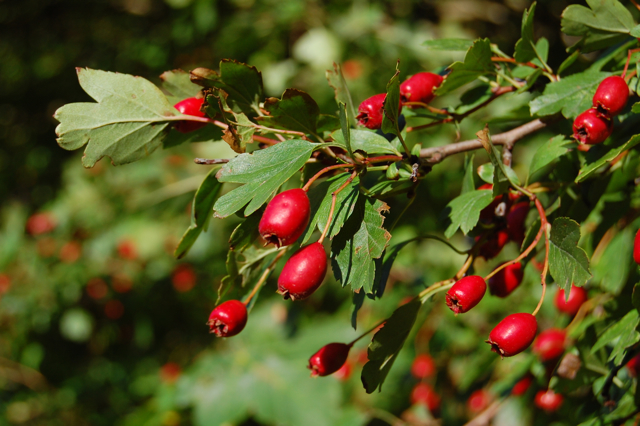
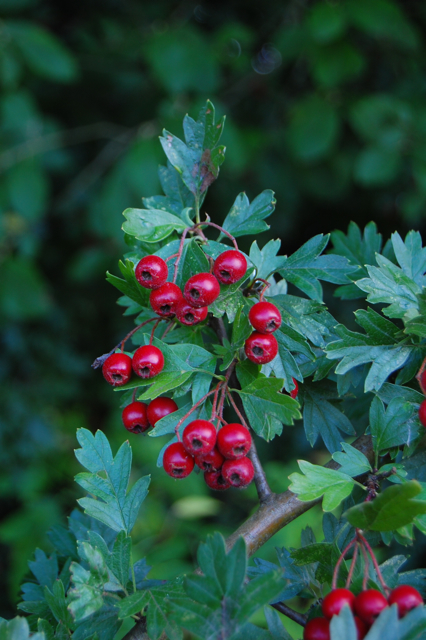
Beautiful Hawthorn, abundant with berries
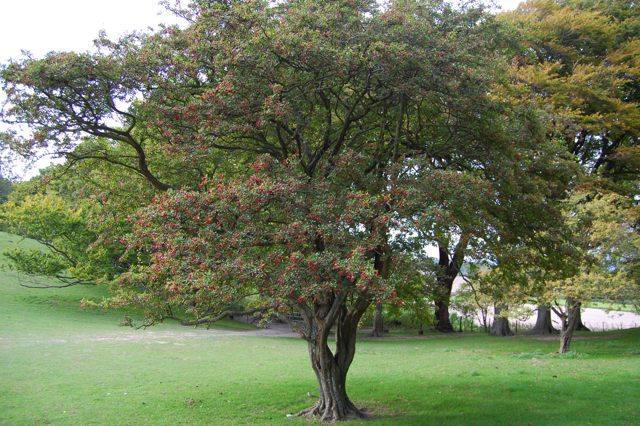
The Hawthorn is a beautiful and elegant tree, with a rich lore of mythology and magic behind it, however it still remains very much human in scale. Growing in practically every hedgerow, it’s easily accessible and offers us medicine in the form of its flowers, leaves and berries. Whenever I see hawthorn, which is pretty much everywhere round here, I think ‘friend’.

Hawthorn Berries
Hawthorn is fascinating medicinally because it’s one of the few Western herbal adaptogens, loosely meaning it helps to bring the body into balance, irrespective of whether it is over or under functioning whilst being safe and non-toxic. Widely used as a heart tonic it can help lower high blood pressure and will benefit almost any problem that affects the heart or circulatory system, from high cholesterol to chilblains. It helps to dilate coronary arteries, improving circulation and bringing relief from angina. It also increases the heart’s ability to pump blood effectively by improving the contractility of the muscle and its high levels of antioxidants help to protect the capillaries.
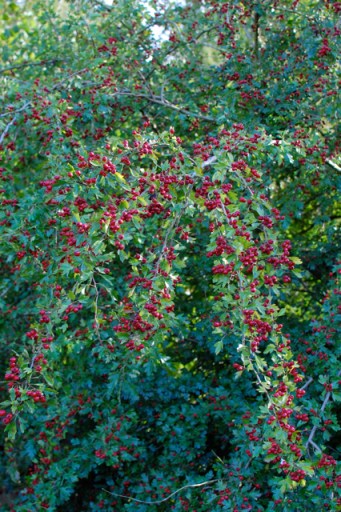
A cascade of berries
What is particularly interesting though is that whilst here in the West hawthorn is used almost exclusively as a heart tonic, it has been used quite differently by other cultures and in other ages. Culpepper, writing in the 17th Century, tells us it is ‘singularly good against the stone and… for the dropsy’ implying it was mainly used as a urinary tonic, possibly because, being a member of the rose family, it has some astringency. In Traditional Chinese Medicine, where it’s known as shān zhā, it’s been used predominantly as an aid to digestion, to help the body assimilate fats and as an aid to liver function. In Ayurveda the berries are considered sour and heating, so not suitable for Pitta types in excess. In the Yoga of Herbs the authors write, ‘Hawthorn berries are a good example of the stimulatory power of sour herbs for both circulation and digestion. They have a special action on the heart, strengthening the heart muscle and promoting longevity. They are particularly good for Vata heart conditions like nervous palpitations, or the heart problems of old age (the age of Vata) like cholesterol and arteriosclerosis.’
The flowers are soothing and nervine and many herbalists combine preparations of flower and berry to get the benefits of both. You can read more about the flowers in my earlier post here.
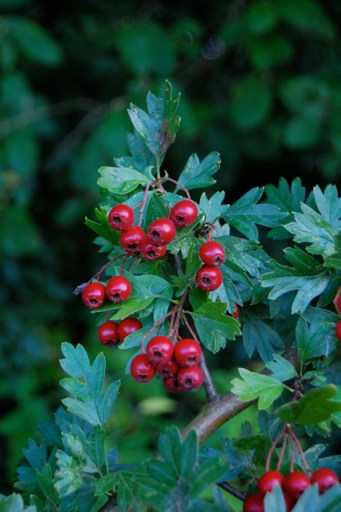
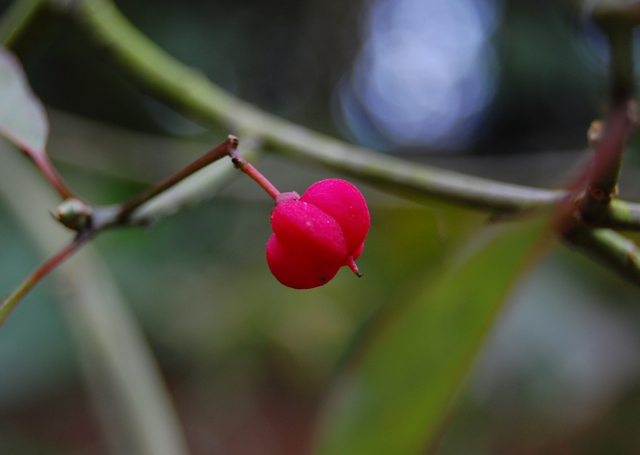
Red and shiny and perfectly ripe
I like to prepare my berries in alcohol or vinegar as well as drying a good number for use in decoctions. To make a decoction simmer two teaspoons of dried berries in a cup of water for 15 mins and drink three times daily.
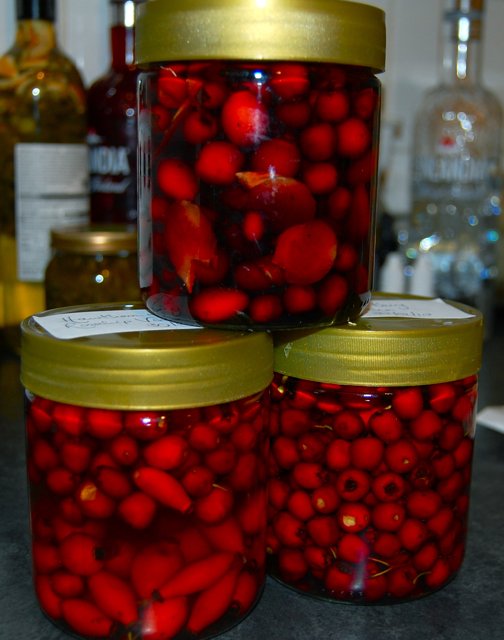
A delicious herbal vinegar can be made by filling a jar with hawthorn berries, either alone or combined with rosehips and covering in apple cider vinegar then leaving to infuse for a month or so before straining and rebottling. Remember to use a plastic lid as metal with go black and nasty.
Tincture can be made in a similar way by covering the berries in vodka or brandy. This year I made a simple hawthorn tincture in vodka and another in which I combined the berries with rosehip and ginger in a mixture of port and brandy, yum. Let infuse for 2-3 weeks before straining and rebottling.
A lovely way to use hawthorn berries is to dry and powder them. They can then be used in numerous ways by adding a little of the powder to smoothies, soups, cookies, breakfast cereal or just about anything else. They are tough though and have a stone in the middle which needs removing (due to toxicity) so it can be easier to just buy them already powdered from a good herbal supplier. If you want to make your own powder you can mash the whole berry with you hands and the tiniest bit of water then push through a sieve, removing the stone, and spread the resulting pulp out to dry on baking paper or silicon sheets. When completely dry, powder in a high power blender or grinder.
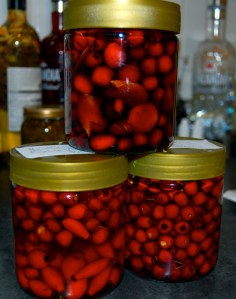
- Left to right – hawthorn and rosehip vinegar; (top) hawthorn, rosehip and ginger in port and brandy; hawthorn tincture in vodka.
Hawthorn, you truly are a heroine!
Lusach has a beautiful post on making hawthorn berry decoctions here, which is well worth a read.
References:
Culpepper’s Complete Herbal – Nicholas Culpepper
Medical Herbalism – David Hoffman
The Yoga of Herbs – Dr. David Frawley and Dr. Vasant Lad
Read Full Post »



















 Whispering Earth