Feeds:
Posts
Comments

Archive for the ‘Wildcrafting’ Category

Nettle Root Medicine

Despite using the leaf and seed of nettle on a regular basis, this year was the first time I have harvested and made tincture from the roots. I was lucky enough to be accompanied by Sascha, who I should probably mention, gathered the biggest root of all, honestly it was quite impressive!
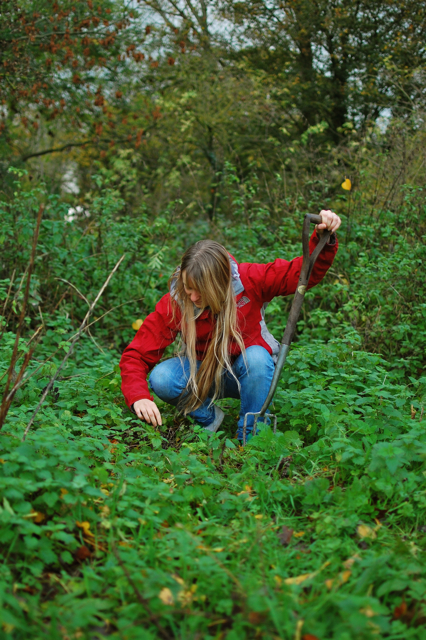
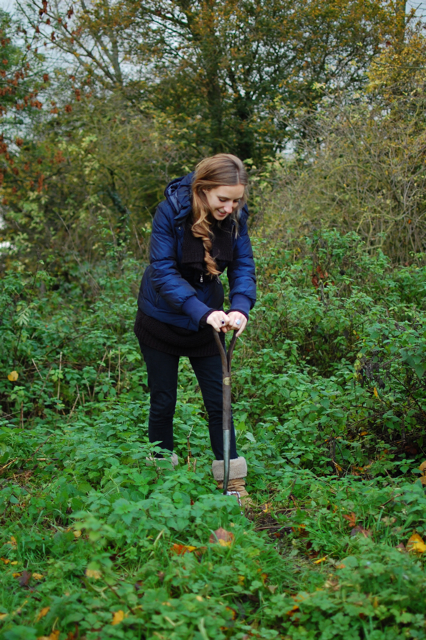
I’ve been feeling the call of nettle root strongly this autumn and it keeps popping into my mind in relation to a particularly problematic case involving hormonal dysfunction. I have little experience of using the roots of nettle clinically other than in cases of male pattern baldness and problems of the prostate, most notably Benign Prostatic Hyperplasia (BPH). However the case in question is that of a woman, though certainly a testosterone imbalance is indicated in her symptoms, and there is little information available to support my intuitive nudging that this was the right medicine to turn to.

Several studies have shown the success of nettle root in treating BPH, particularly in its early stages when it can help to slow the growth of prostate cells, improve urinary flow and alleviate the constant urge to urinate. This is especially so when combined with other herbs such as Saw palmetto or Pygeum. It does this primarily by inhibiting proteins that help to carry certain hormones into the cells and would otherwise encourage the growth of prostate cells.

In its action of reducing the numbers of sex hormones available to the tissues I imagine that the benefits of nettle root must be more wide ranging than we usually consider. Though, without doubt, certain herbs may have a greater affinity for either male or female conditions and personalities, there is always some crossover and no herb can be said to belong exclusively to one sex or another. Traditionally, nettle root has been used to help menstrual irregularities and for this reason it’s best avoided in pregnancy. Linda Crockett, a herbalist specialising in women’s hormonal health, includes nettle root in her formulas for polycystic ovarian syndrome and Susan Weed writes, ‘ Use nettle root as a hair and scalp tonic, a urinary strengthener and stimulant, an immune system/ lymphatic strengthener and a bit of first aid’ – primarily in cases of diarrhoea.

There is also some information available online, though it’s hard to know how much of it you can trust, especially when one website contained the following gem, ‘Nettle root is commonly prized for its stems and leaves, which are reported to contain numerous health benefits’. Anyone else notice the obvious flaw there?

I feel like, in getting to know nettle root, I’m accessing a whole new facet of a long time favourite herbal ally, and I’m really excited to carry on my research and experimentation into the possibilities for its different healing applications.
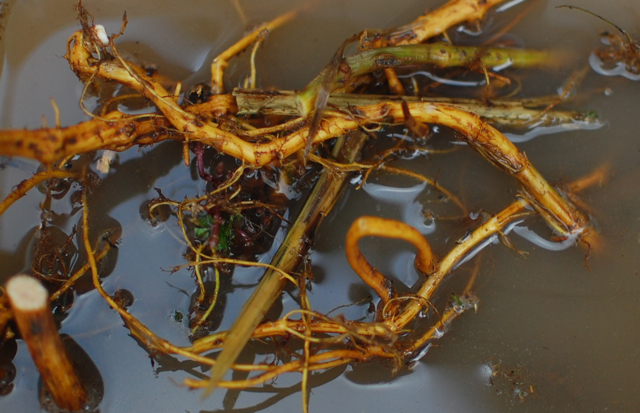
Soaking the roots.

When digging roots it’s especially important to connect with the plants an ask permission because, unlike when you gather the arial parts of perennial herbs, you are taking the life of the plant when you harvest its roots.

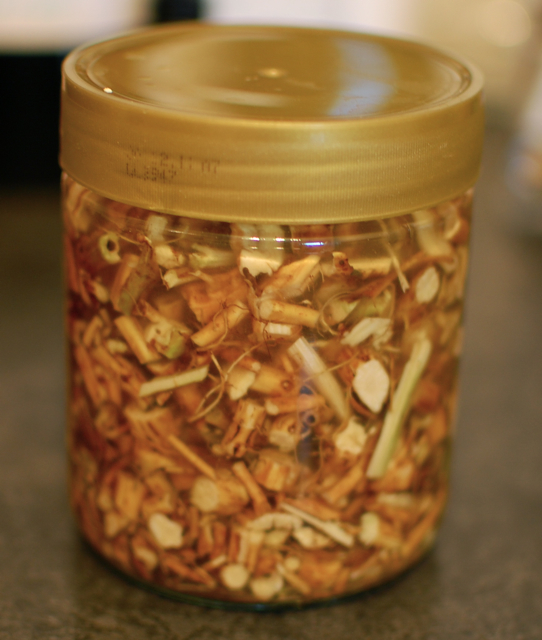
The soil is very sticky clay round here so our roots needed a good soak before scrubbing with a brush and chopping finely ready for tincturing.

I’m quite excited to try the finished result and will be experimenting on myself before giving it to my client. I hope to have some interesting findings to report back before too long.
References:

Healing Our Hormones, Healing Our Lives – Linda Crockett
Healing Wise – Susun Weed
Principles and Practice of Phytotherapy – Mills and Bone
Read Full Post »

I have many mottos but one of them is ‘Eat something from the wild everyday’. At this time of year we are spoiled for choice with the hedges dripping with all sorts of goodies, but by preserving, freezing and making lovely medicines we can make sure we have something to keep us going all through the winter too.

Eating local wild foods is not only great for our health, as they are often fresher, more vital and richer in nutrients than anything we can buy, but also connects us to a sense of place and belonging and encourages a deeper relationship with our natural environment. Even if it’s just a few berries whilst out walking or a handful of leaves added to a salad or soup, the plants around us are experiencing the same environmental conditions that we are and have adapted well and therefore are able to help us do the same.


Nourishing foods and medicines from the hedgerow


At the moment I’m enjoying most of my wild foods in the form of elderberry and rosehip syrups, blackberry crumbles, nettle seeds, hawthorn teas and the young ground elder leaves that are poking up through my newly weeded vegetable beds and taste lovely in carrot and apple soup.

My mornings are starting at the moment with a lovely big glass of ‘hedgerow milk’ which consists of freshly made almond milk, a little local honey, some hawthorn berry powder, rosehip syrup and nettle seeds. Delicious and nourishing it helps me start the day feeling energised, connected to the land and full of gratitude.


Morning Hedgerow Milk


Eating local wild foods helps ensure we are getting the right nutrients for our seasonal needs. The berries that are in abundance here at this time of year are filled with anti-oxidants including flavonoids and other polyphenols as well as lots of Vitamin C to help protect our bodies and support our immune systems as the weather gets colder. Many also have an anti-inflammatory action which helps soothe the aches and pains that can accompany colds and flus.

Foraged nuts and seeds such as walnuts, cobnuts or hazels, chestnuts and nettle seeds are nourishing and contain proteins, healthy fats, vitamins such as B’s and E and are a good source of well sustained energy.

And soon it will be time for harvesting roots which help us to draw our energy in and down (just like the plants do at this time of year) and give us much sustenance and grounding ready for the more inward focus of the winter months.

When the spring comes round we can feast on young green leaves of plants and trees to cleanse our winter stagnancy and boost our dwindling levels of many key nutrients. Brigitte just wrote a post here about all the lovely tree leaves she is harvesting for her salads over in New Zealand where Spring is in full swing!

Nature does take care of us well!

Read Full Post »

Brambles are one of those plants that display perfectly how the abundance and resilience of a particular species can make it beloved by some and loathed by others. Blackberries, the fruit of the bramble or Rubus fruticosus, must be by far the most popular and well known of wild foods, growing in practically every hedgerow and irresistible to all who pass by. Yet the bramble is also the gardener’s bane, invasive, fast growing and difficult to eradicate, this woody weed is a far from popular addition to most gardens. Here at our new house we have quite a bit of it growing through the area we hope will become our veg patch and, whilst I’m not exactly thrilled to see it there, it’s humbling to remember all the gifts of food and medicine that brambles give to us each year and seek to find ways to manage it naturally, principally by using it freely.

Bramble

As we follow brambles through the year we can find something of use at all times except darkest winter. In early spring the leaves and young shoots can be used as a pleasant tasting, cleansing and tonifying tea. The leaves can be harvested throughout the summer and are a valuable astringent due to their tannin content. Traditionally they were used to treat diarrhoea, sore throats and dysentery. The root bark is a stronger astringent, indeed it may be too strong for people with very sensitive stomachs, and is also useful in cases of diarrhoea as well as spasmodic coughs. I don’t have any experience with using the root bark myself though I have made the leaves into teas and an infused oil which is helpful for bumps, bruises and minor injuries. The oil or tincture also make a valuable addition to creams or salves for treating haemorrhoids and varicosities, due once again to their astringency. The leaves have been recommended for treating bleeding gums for this same reason, as well as for their vulnerary properties. An infusion of the leaves or root can also be used as a compress or formentation for sores, burns, varicosities and minor wounds. The inner part of the spring shoots can also be eaten as a tasty, crunchy vegetable, either raw in salads or lightly steamed or stir fried. Just peel the outer portion of the stems back to reveal the yumminess within.

Later, as the flowers begin to form in summer, a lovely flower remedy can be made which I have found useful for people who are good natured and generous at heart, but can tend to be over-dominating. The American FES remedies make a blackberry essence which they claim “helps the person who cannot make a viable connection with the will. The soul has many lofty visions and desires but is unable to translate these into concrete manifestations.” I suppose both these things relate to the ability of the blackberry to make its mark on the world, but in an appropriate way! It would be interesting to hear anyone else’s experience of blackberry flower remedy and what they have found it useful for.

Now, on to the berries themselves! Though they are probably most delicious straight from the bush and still warm from the late summer sun, there are numerous things that can be done with a blackberry. Cakes, crumbles, biscuits, smoothies and many other puddings benefit from their flavour but they are also useful in promoting health as they are full of vitamins and antioxidants. They are high in vitamins C and K, folic acid and manganese and rich in the antioxidant polyphenols which are thought to be beneficial in preventing a host of diseases.

Blackberries

One way I enjoy my blackberries later into the season is by infusing them in apple cider vinegar for use as a deliciously fruity salad dressing. This could also be taken with a little warm water and raw honey as a remedy for gout and joint stiffness. In fact, blackberry was used by the ancient Greeks as a cure for gout.

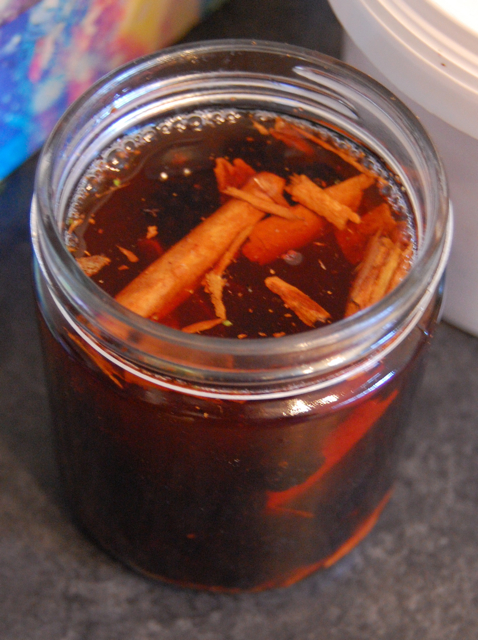
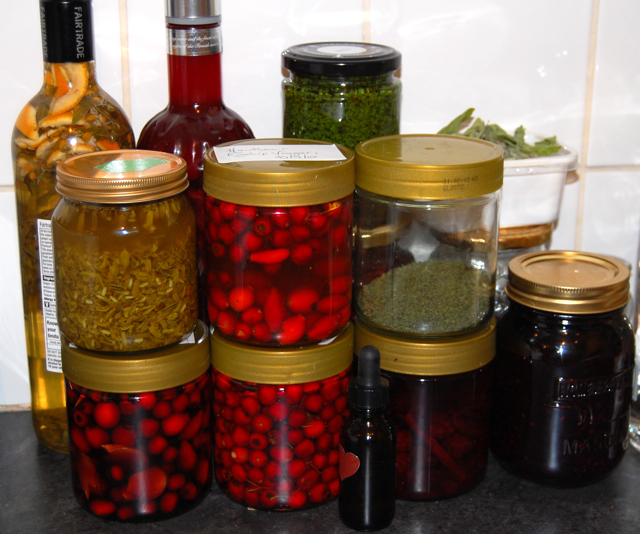
I made my blackberry vinegar with the addition of a cinnamon stick this year to make it extra warming and delicious for this time of year. Just lightly fill a jar with blackberries and one cinnamon stick broken into pieces, then cover with apple cider vinegar and leave to infuse for a month, swirling the mixture daily for the first week. Be sure to cap with a plastic lid as the vinegar will erode metal.

Blackberry and Cinnamon Vinegar

The bramble is a plant surrounded by folklore and superstition. A sacred plant of the Druids, it was said to protect the faery realm and was also connected to the Goddess. Mrs Grieves tells us that they “were in olden days supposed to give protection against all evil runes, if gathered at the right time of the moon.”  Walking or crawling under the arch of a bramble shoot was thought to cure a variety of diseases from whooping cough to warts, though I’m inclined to believe all the scratches just took your mind of any other problems you were experiencing! Even today it is thought unlucky to eat blackberries after Michaelmas, as they have been claimed by the devil. This is actually quite sensible as they are often infected with fly eggs from around this time… so let the devil keep ’em.

I’ve just realised that leaves us only six more days to gather as many as possible… so I’m off!

Read Full Post »

Since my last post on harvesting nettle seeds I’ve had a couple of emails asking me for more specific details about how and when to harvest. I remember that when I first started to collect herbs and make my own remedies it would always annoy me when writers skimmed the surface of the topics they were discussing, making assumptions that their readers already knew how to make this or that. So, in the spirit of making things clearer, I thought I’d post a few more photos to show those of you who’d like a bit more info exactly what nettles look like at different times of the year, how the seed should look when you pick it and how it looks when it’s dried. I hope that clears up any confusion and makes it easier to get out and enjoy your harvest.

Nettles come up in Spring at which time you can harvest them for soups, to eat raw, to add to juices, vinegars, teas or enjoy as a steamed or cooked green.

Nettles in Spring

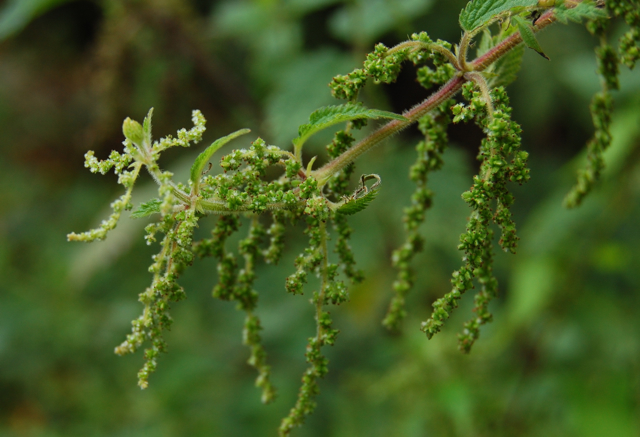
Later, as summer starts to warm up, the nettles begin to flower at which time they are no longer good for eating. Nettles in full sun will flower before those in the shade and will also produce seeds earlier.

Nettle in Flower

The flowers begin to turn to seeds…

Ripening into seeds

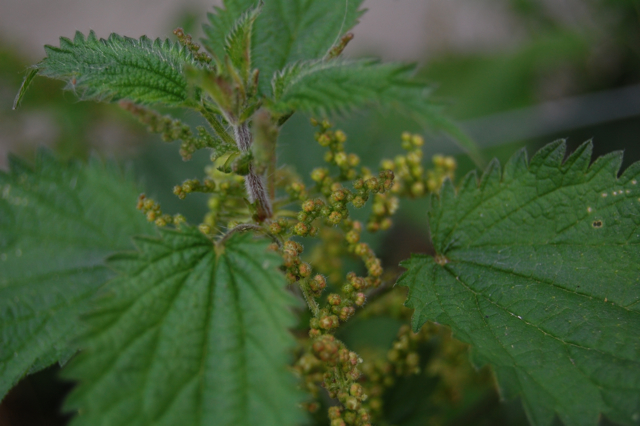
But aren’t ready to harvest until they look like this.

Perfect Timing

Collect the green seeds rather than the brown or black.

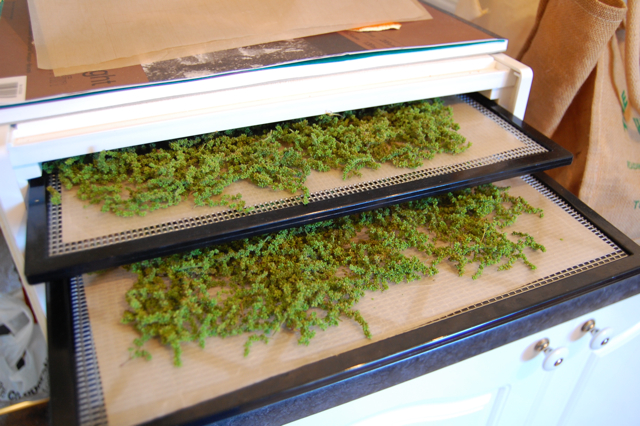
After hanging the stems to allow the insects to escape, cut off the small strands of seeds and allow to air dry or use a dehydrator like this one.

Drying nettle seed in the dehydrator

When dry, take small handfuls of the seeds and rub through a sieve.

Sieving dried seeds

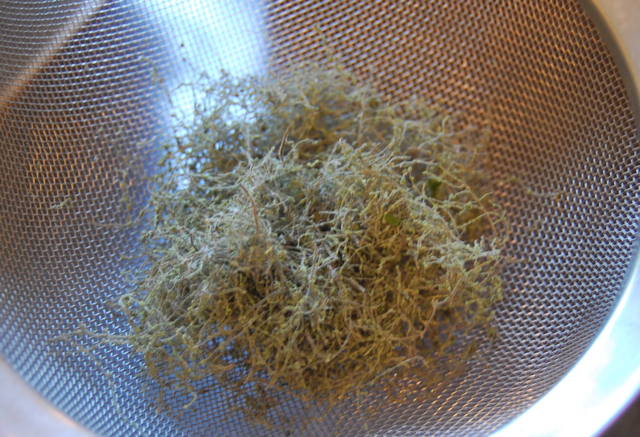
The seeds will come away and you’ll be left with the small grey-green stands like these.

After sieving

Pop your dried seeds into a jar, store somewhere cool and away from bright light and enjoy sprinkled on food.

Jar of dried nettle seeds

Hope that was helpful!

Read Full Post »

Nettle Seed

I passed a lovely afternoon recently in harvesting my first nettle seeds of the year. They are so abundant right now and so helpful during these busy periods that it was a real pleasure to get out gathering them.

There are a couple of great articles on the internet describing how to harvest nettle seeds along with their uses which I highly recommend reading, notably those by Henriette here and here and Kiva Rose here and here. Though many people know how beneficial nettle leaf can be, until the recent revival of interest in nettle seeds it was a little used remedy in modern herbal medicine. Even now it seems to be much more popular amongst traditional herbalists and herbwives rather than medical herbalists, not that the distinction is always so clear.

The benefits of nettle seeds have some overlap with those of the leaf, both being strengthening, mineral rich, great for skin and hair and for supporting the kidneys and urinary system. Whereas the leaf is gentler and more nourishing however, the seed packs more of a punch.

Abundant and ready to harvest.

According to Henriette, ‘Nettle seeds are adaptogens. They help with the general stress response, they strengthen the adrenals, and they’re loaded with minerals and trace elements’. As most of the hype around adaptogens has centred on exotic plants from far away lands it’s particularly nice to have such a great example growing abundantly here in the UK. I always think that the medicines we need most are the ones which are most abundant near where we live and in these stressed-out, sped-up times, for many of us nettle seed is no exception.

Useful for chronic exhaustion, adrenal fatigue and burnout, nettle seeds have also been used to aid kidney function in both people and animals with degenerative conditions. David Winston writes here, ‘I discovered Nettle Seed could be used as a kidney trophorestorative – literally a food for the kidneys. I have used the seed tincture to treat over 30 cases of degenerative kidney disease and the results have far exceeded my expectations. A recent study published in the Journal of The American Herbalist Guild [4(2):22-25] confirms my clinical experience, showing that Nettle Seed increases kidney glomerular function and reduces serum creatinine levels. Many herbalists have seen significant benefits from using Nettle Seed tincture in patients with glomerulonephritis, chronic nephritis with degeneration, and to protect the kidneys from nephrotoxic medications.’ Impressive stuff.

As the endocrine glands work together to maintain a subtle balance in the body, often a medicine that affects one of them will have a knock on effect throughout the entire system. So nettle seeds can help harmonise the whole of the endocrine system, though their primary action is to balance the adrenals.

Last year, Sara Jane of Brighton’s Green Aprons group told me that taking just a small amount of the fresh green seeds had kept her awake the whole night. Kiva Rose has also spoken of the overstimulating effects of the fresh seed. They don’t seem to affect me in quite the same way, so perhaps it’s constitutional. From an Ayurvedic perspective I imagine Pitta types would find them quite stimulating but Kaphas could benefit from their energising effects. I’m pretty Vata and, as I say, they haven’t ever kept me awake, though they did give me  a surprising and uncharacteristic motivation to do lots of housework! Perhaps I shall make my fortune marketing them as the new ‘mother’s little helpers’. Or perhaps not.

To be on the safe side, it’s best to take the dried seeds as they have a more gently restorative action and are energising without being too stimulating.

Harvest now will the seeds are hanging in strands

The first time I harvested the seeds I ignored Henriette’s advice and, like many a young herbalist who disregards the voice of experience and wisdom, I came a-cropper. As she suggests, nettle seeds do seem to harbour a remarkable amount and variety of insect life, so it’s really best to do as she says and cut whole stems rather than just the seeds and hang them for a few days to allow the wildlife to escape. I take them down before they are completely dry and finish them in the dehydrator but that’s just because years of living in damp houses have made me cautious of air drying anything. Once dry, strip off the strands of seeds and rub them through a sieve, you’ll be left with a beautiful harvest of dried nettle seeds.

Most of the nettles growing near me are the perennial Urtica dioica but if the annual Urtica urens is more abundant near you then do remember when collecting seeds that the success of next year’s new plants depends on them. If you have only a few plants in your area, look elsewhere for your bounty. This lovely nettle patch, and a couple more like it, are just outside my house so I’m lucky not to have to worry about over harvesting!

Nettle Patch

Nettle seeds are so easy to incorporate into your daily diet and can be thought of as much as a nourishing ‘superfood’ as they are a medicine. Sprinkle them on salads, soups, in sandwiches or blend in smoothies. Take up to a teaspoon a day and see how you go, you can use more or less depending on how they affect you.

I make a delicious seasoning from nettle seeds, hemp seeds, nutritional yeast, mixed herbs and a pinch of salt and pepper.

This amount of nettles filled an average size jar with dried seeds. I’ll need to do another few harvests in order to make a tincture from the fresh seed and stock enough dried seeds to see me through the year.

Nettle Seed Harvest

For more detailed info on when to pick and how to process nettle seed see this post here.

Read Full Post »

I went for a lovely walk on the Downs yesterday afternoon with Sarah, aiming to harvest some Yarrow and see what was about. It was a beautiful sunny day and there was such an abundance of wonderful healing plants everywhere we looked. Sarah is a great herbalist and teacher so I always learn lots from my time with her.

We saw lots of Lady’s Bedstraw, Gallium verum, a lovely cleansing herb which can help the kidneys, liver and lymphatic system and aid in skin disorders, much like it’s close relative Cleavers, Gallium aparine. It has a delightful odour and was used as a strewing herb and to stuff mattresses (hence its name).

Lady's Bedstraw

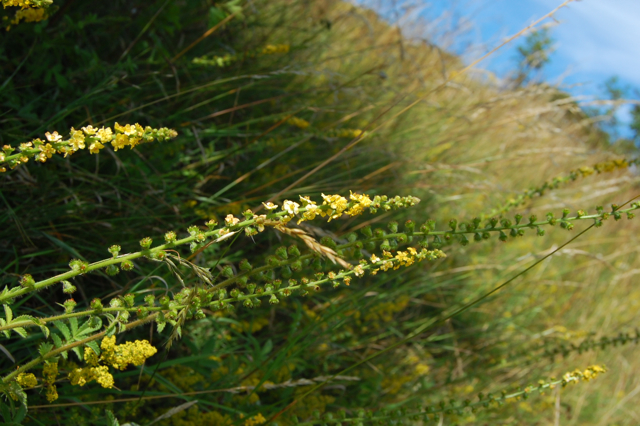
The Agrimony, though slightly passed its best, was still looking so beautiful. Seeing this herb on a walk is always a pleasure. As an astringent it’s useful for stomach upsets and sores and can help tone oily skins when used as a face wash.

Agrimony

We also saw Wild Lettuce, a useful sedative, growing next to flowering Mugwort.

Wild Lettuce

Mugwort

I was very excited to see the haws starting to form on the beloved Hawthorn.

Swelling Haws

There was lots of mallow, a traditional wound herb, and some wonderful wild marjoram which I’m going to write a fuller post on in a couple of days.

Mallow

Wonderful Wild Marjoram

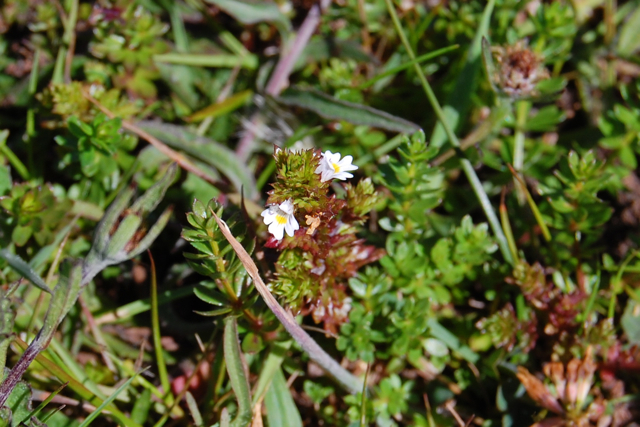
I was so happy to see some eyebright which I hadn’t encountered in the wild before.

Eyebright

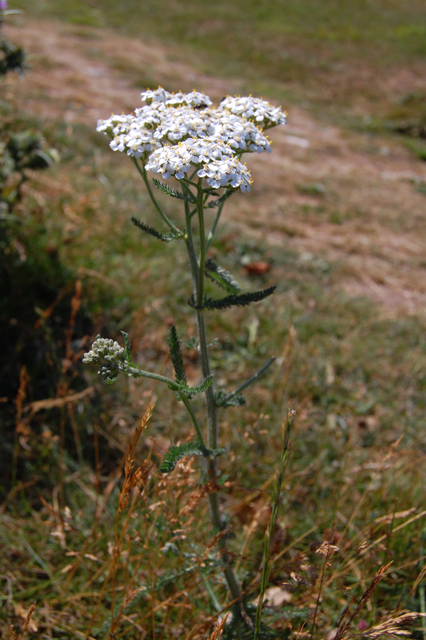
And last, but by no means least, we managed to collect the thing we came for, some lovely blooming Yarrow. What a great afternoon!

Yarrow

Read Full Post »

After a successful afternoon foraging a couple of days ago we came home to a delicious meal which included lots of wild greens.

A Sea of Wild Garlic

As soon as we got in we enjoyed a green juice with a couple of handfuls of cleavers, apple, lemon, celery, cucumber and spring greens.

Green Juice with Cleavers

Later, our evening meal consisted of a yummy nettle and leek soup with lemon cashew nut cream. I’ll post the full recipe for this tomorrow, time allowing.

Nettle Soup with Cashew Cream

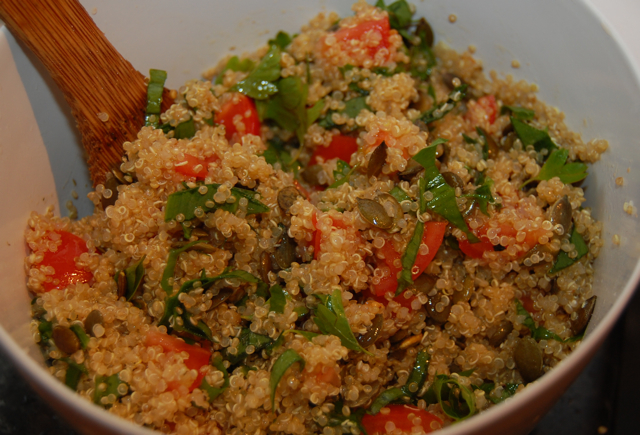
Followed by a quinoa salad with wild garlic, hawthorn leaves, tomato, pumpkin seeds, olive oil and seasoning and a green salad of young beech leaves, chickweed, dandelion greens and lettuce. Delicious!

Quinoa Salad with Hawthorn Leaves and Wild Garlic

Spring is truly a time of abundance. 🙂

Read Full Post »

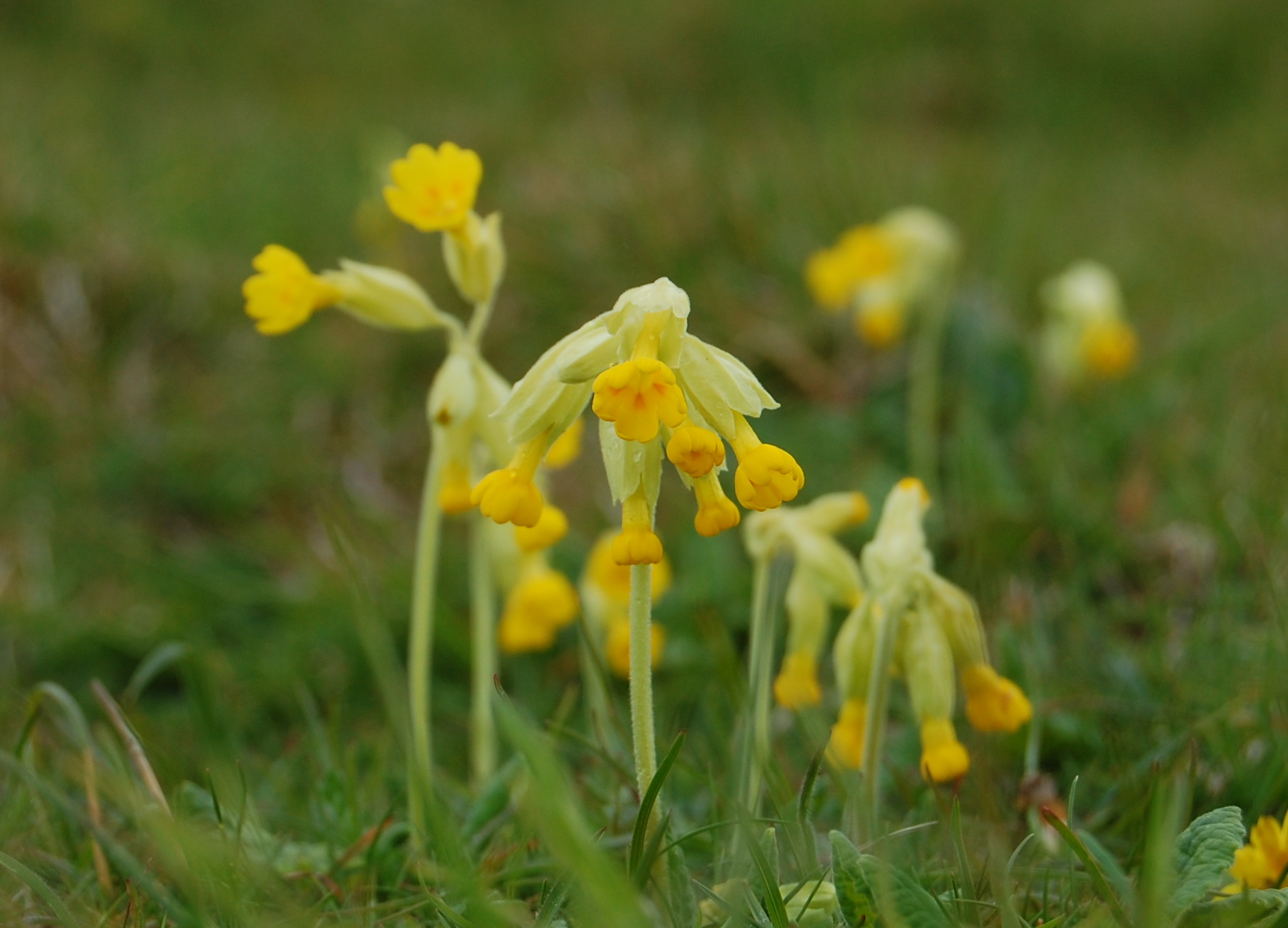
Cowslips and Primroses are two of the cheeriest and prettiest of our spring wild flowers. They have a rustic charm reminiscent of days gone by when they were used much more commonly in medicine than they are today.

Cowslip, Primula officinalis, and Primrose, Primula vulgaris, contain similar properties, being of use for soothing the nerves, easing insomnia and improving headaches. An infusion of Cowslip with Wood Betony is said to be of particular use in headache and migraine. They are both anti-inflammatory and anti-spasmodic, making them useful for muscular pains, rheumatism and gout and an infusion of the flowers of either plant can be used in the bath for soothing these conditions. They have also been recommended for pulmonary problems as both have expectorant properties.

Cowslips

Infusions of Primrose or Cowslip flowers have been used to brighten the complexion and reduce wrinkles. Culpepper recommends a Cowslip ointment saying, ‘Our city dames know well enough the ointment or distilled water of it adds to beauty or at least restores it when lost.’

Both flowers are associated with youth in the Victorian language of flowers, Cowslip also being associated with winning grace and primrose carrying the meaning, ‘I can’t live without you.’ Both have also been associated with faeries in folk tradition and magic.

The flowers and young leaves can be used in salads, though they are potentially allergenic so always do an allergy test first by rubbing a little of the juice from a leaf on the inside of the lips and seeing how you react.

Primrose

Both plants used to be very common but cowslip especially is much rarer now due to changing habitat and over harvesting as well as pesticide and agrochemical use. Therefore it’s best to grow these plants in your garden if you wish to use them for food or remedies.

Maria Treben rates Cowslip highly as a remedy for insomnia. Here is her recipe for a sleep inducing tea:

50g Cowslip flowers
25g Lavender
10g St John’s Wort
15g Hops
5g Valerian

Pour 1/4 litre boiling water over a heaped teaspoon of the herbal mix, allow to infuse, add honey if desired and drink in sips before bed. She says, ‘This tea should be preferred to all chemical sleep inducing remedies. Sleeping pills destroy the nervous system whereas this tea removes nervous complaints.’ It is a fairly pokey mix though so check with a herbalist before taking (especially if on medication) or stick with a more gentle blend of herbs such as chamomile, lime flowers and cowslip.

For a easy approach to making a tincture, loosely fill a jar with fresh cowslip flowers, pour vodka over them, cap and leave in the sunlight for fourteen days. Take 3 teaspoons a day as a soothing nervous system tonic. Cowslip was also commonly made into wine.

Primrose flowers also make a lovely infused vinegar which can be used in cooking or salad dressings.

Enjoy these sweet spring soothers and remember to harvest them with care and gratitude, never taking too much from one area.

Read Full Post »

Eat leeks in March and ramsins in May
And all the year after physicians may play.
C.N. French A Countryman’s Day Book (1929) – Quoted by Gabrielle Hatfield

Ramsons – A Woodland Treasure

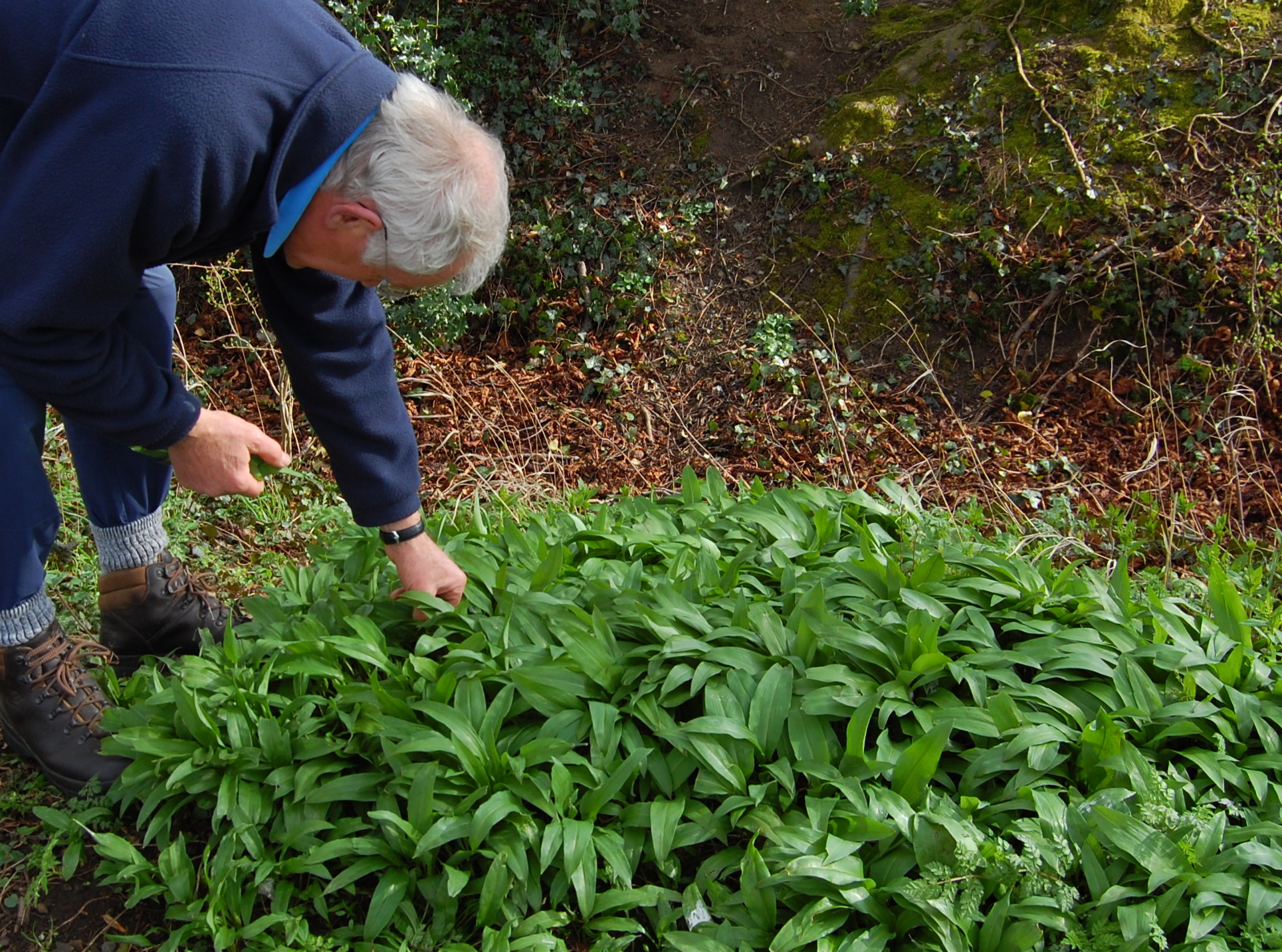
Ramsons, otherwise known as wild garlic (Allium ursinum) is one of my very favourite things to forage. Unlike a few other things which grace my plate at this time of year, I didn’t start eating them just because they were good for me, but because they are so unbelievably yummy! As luck would have it, they also happen to be an exceptional food for promoting health and wellbeing. As part of the same family as onion and garlic, they exhibit many of the same antibacterial properties, being useful to ward off infection and traditionally used to treat wounds in Scotland. As with normal garlic, Ramsons is a pungent remedy that aids the heart and circulatory system. It can help balance cholesterol and is therefore of use in preventing arteriosclerosis and boosting the memory. Maria Treben recommends it for “heart complaints and sleeplessness arising from stomach trouble and those complaints caused by arteriosclerosis or high blood pressure, as well as dizziness, pressure in the head and anxiety.” I would also recommend it for low blood pressure as its gift lies in its ability to equalise the circulation.

My father-in-law bringing in the harvest

As a blood cleanser, wild garlic is a wonderful addition to the spring diet and is of particular use in chronic skin conditions due to its alterative properties. It’s also a specific remedy for problems of the gastro-intestinal tract, and may be helpful for a range of conditions from IBS to colitis to expelling parasites. It is particularly useful for stagnant digestion, bloating and gas due to its ability to balance the gut flora and discourage ‘unfriendly’ bacteria. Being heating however it is more suited to those with a cold or damp constitution.

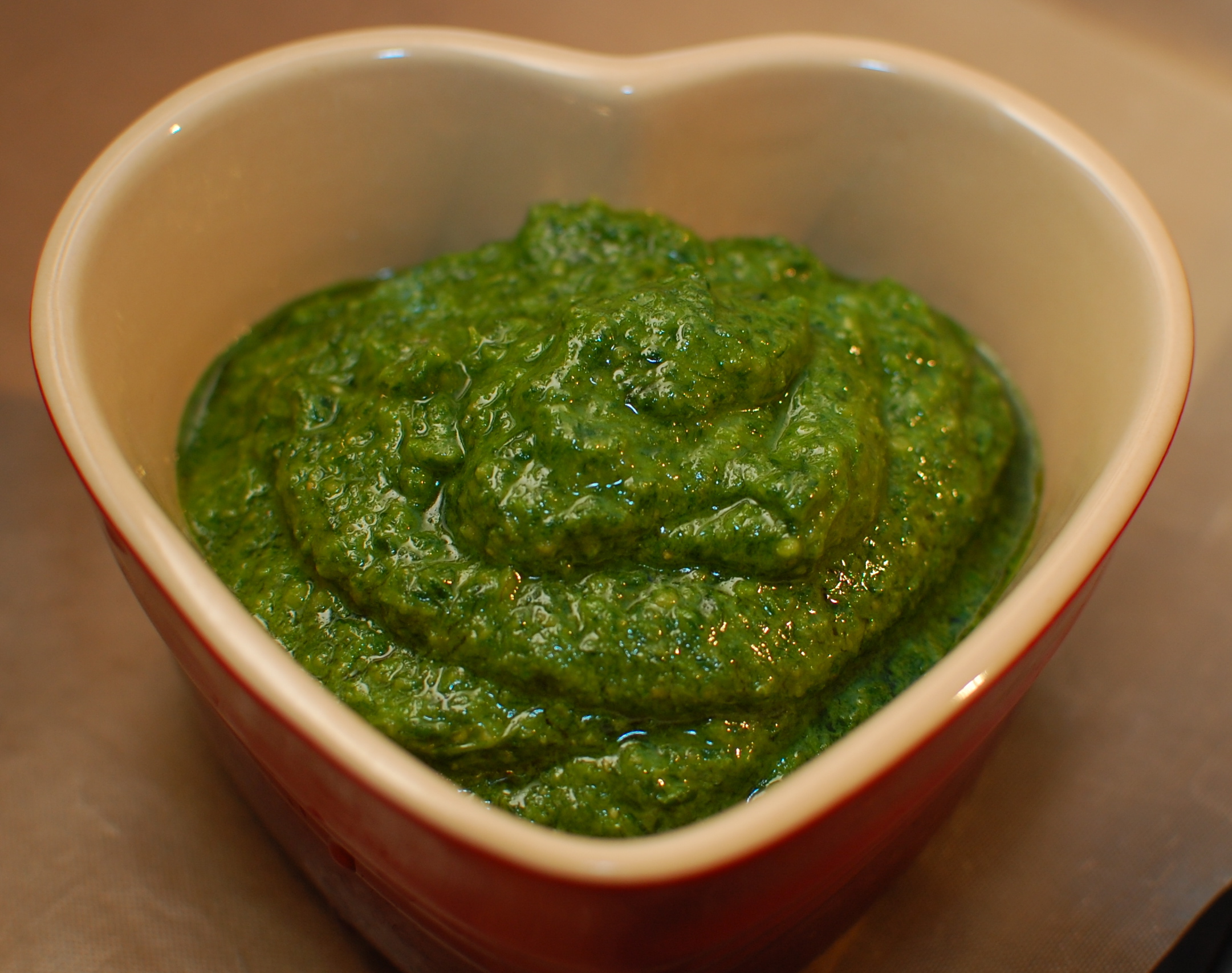
Many people recommend adding ramsons to soups, bakes, stews etc, but I find it loses its flavour very quickly when cooked so I prefer to eat it raw, sliced thinly in salads, as a garnish or as a delicious pesto. To make ramsons pesto blend a couple of large handfuls of leaves with a 1/4 cup olive oil and a small handful of pine nuts or cashews. Its pretty potent and intensely garlicy so I don’t recommend it before a first date! Mix it 50/50 with basil or parsley to tone it down a bit or with other wild foods such as chickweed. It’s so vital and green you’ll feel healthier just looking at it!

Wild Garlic Pesto

You can find it growing in damp, shady woodlands and hedgerows or by streams, throughout the spring. It produces beautiful delicate white flowers a little later in the season which can also be eaten. Be careful not to confuse its long green leaves with those of Lilly of the Valley, which is poisonous – you can easily tell the difference however because of the intense garlic aroma which belongs to Ramsons.

The Swiss herbalist Abbe Kuenzle, heaps praise upon this woodland wonder. According to Treben, he writes, “It cleanses the whole body, rids it of stubborn waste matters, produces healthy blood and destroys and removes poisonous substances. Continually sickly people, as those with herpes and eczema, pale looks, scrofula and rheumatism should venerate Ramsons like gold. No herb on this earth is as effective for cleansing the stomach, intestines and blood. Young people would burst into bloom like the roses on a trellis and sprout like fircones in the sun.”

Read Full Post »

Saying Please

April is upon us already which means the woods, meadows and hedgerows are alive with wild foods and medicines to forage for our wellbeing, our healing and our delight.

When harvesting I feel that it’s our responsibility to learn to listen deeply, get a feel for a place and decide whether it’s an appropriate site to gather plants from. Most of the wild foods we regularly pick, such as nettles, dandelions, ramsons and hawthorn leaves, grow freely and abundantly, so we don’t need to worry too much about over harvesting. However asking permission of the plants, and stating our intent to pick them, is not only a symbolic act to show our respect and gratitude but enables you to discern when picking is, or isn’t, appropriate. This doesn’t have to be an elaborate ritual, just a couple of seconds tuning into the plants and openly expressing your intent is enough. You’ll soon begin to get impressions when plants are happy to be picked or not.

The truth is, we don’t aways know what purpose a plant is serving in its particular environment. It may be an important food source for other beings besides us or it might be purifying the environment or providing a home for insects. There is always so much going on in nature and what we perceive is but a fraction. Sometimes a plant may not want to be picked and we should respect this and move on to forage elsewhere.

This is summed up so beautifully in the following poem by Hafiz, who reminds us that plants serve so many roles here on Earth and being medicine or pleasure for us is but one of them.

A leaf says,

“Sweethearts – don’t pick me,
For I am busy doing
God’s work.

I am lowering my veins and roots
Like ropes

With buckets tied to them
Into the earth’s deep
Lake.

I am drawing water
That I offer like a rose to
The sky.

I am a singing cleaning woman
Dusting all the shelves in
The air

With my elegant green
Rags.

I have a heart.
I can know happiness like
You.”

Read Full Post »

« Newer Posts - Older Posts »