Feeds:
Posts
Comments

An Abundance of Roses

For the most part I prefer plants as close to their natural state as possible and would always take a wildflower over a showy cultivar any day. Not only are they more beneficial for insects and other wildlife but are also much easier to look after, more robust and better suited to their environment.

So my obsession with big, beautiful, temperamental and highly scented roses is quite out of character. I don’t love the exquisite wild roses of our hedgerows any less because of it and from them I make a lovely cooling and astringent tincture as well as using the hips later in the year. Our wild roses are not that highly scented however so to make the delicious, sweet, aromatic rose tincture that makes even the iciest of hearts begin to thaw, I really need to use cultivated roses. That’s my excuse anyway.
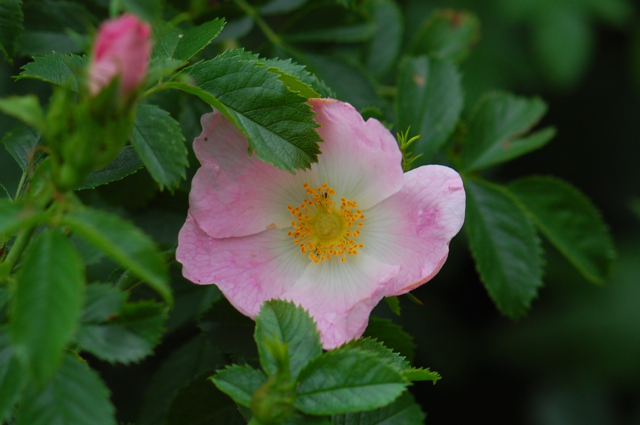
Wild Rose - Rosa canina

Most people tend to use either Rosa damascena, The Damask Rose, or Rosa gallica, The Apothecary’s Rose, to make aromatic tinctures and both produce some lovely medicines.
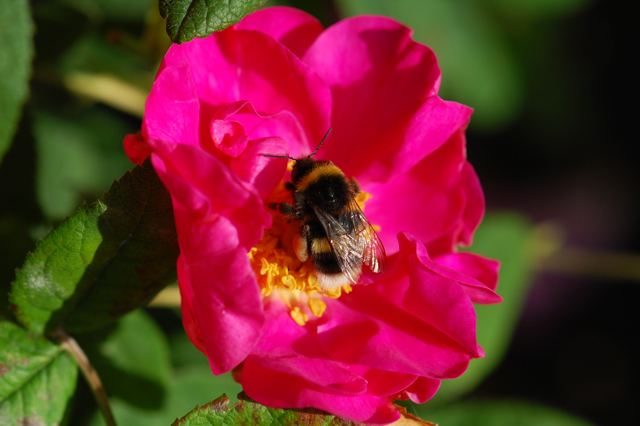
 Apothecary’s Rose

I’ve been quizzing different herbalists for a while about which roses they prefer for tincture making but it was Stephen and Carol Church, whose rose tincture is the most divine I have yet to taste, whose advice and method I have stuck with. They recommended using ‘Gertrude Jekyll’ a lovely pink English rose with a beautiful, strong scent. It apparently has the highest yield of volatile oils of all roses. I bought one last year and have been experimenting this summer with their directions.

Gertrude Jekyll

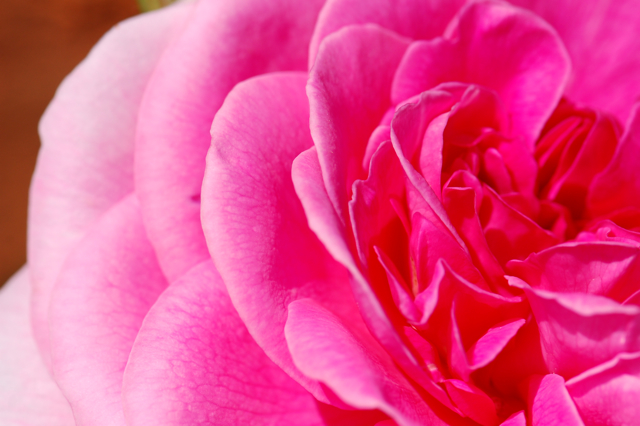
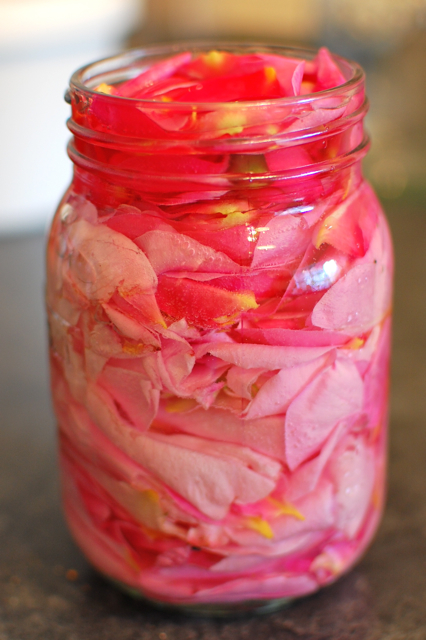
They advise macerating the petals in the alcohol for no more than 24 hours, a much shorter amount of time than usually allowed for tinctures. What this achieves is extraction of the volatile oils but without all the tannins which make rose tincture quite drying. Part of the nature of rose as a medicine is that it is cooling and drying but there are plenty of times when I want to work with the aromatic healing qualities of rose without using a medicine that is overly astringent. Besides, it tastes so much more delicious this way and that, as you know, is a big part of the magic of Rose. In her first growing year, my plant has yet to produce the abundance of flowers that Stephen and Carol’s do so I have just been experimenting with small quantities this summer. To make a specific tincture, that is one from fresh petals, try using a 4o% vodka, 1:2, which means one part rose petals by weight to two parts vodka by volume. Remember that rose petals are very light however so you need to cram a lot in! I actually didn’t have enough flowers blooming all at once to get the right proportion so I double infused it instead and it has still come out nicely.
Here ends the informative part of this post, the rest is just gratuitous rose indulgence. You have been warned!

My husband’s favourite rose in the garden and possibly mine, were I to have favourites, is the floribunda Margaret Merril. She has it all, beauty, elegance, scent and attractiveness to insects. She starts as a perfect creamy bud with a blush of pink…

Margaret Merrill

…and opens to form a perfect, white, deliciously scented bloom.

Along with the Apothecary’s Rose and Gertrude Jekyll, I have one more pink rose, ‘Scepter’d Isle’. Though not as sweetly fragranced as some of the others, she has a delicacy of presence that is healing just to look upon. This picture, taken after a heavy rain, does not really do her justice.

Sceptr'd Isle

All three pink roses in a jar.

We have two miniature roses on the kitchen windowsill. The pink one I found in the middle of the road last year without a pot. I always wonder how it could have ended up there, victim of a lovers quarrel perhaps? I was quite happy to give it a home and it is much loved and admired now.

I have also found a passion for orange, yellow and apricot roses this year. I fell in love with ‘Graham Thomas’ during our trip to Mottisfont Abbey, home of the National Collection of Old Roses, and found it impossible to leave without one.

Graham Thomas

‘Lady Emma Hamilton,’ my most recent acquisition, has the cheeriest disposition and the sweetest of scents.

Lady Emma Hamilton

‘Wollerton Old Hall’ is another new addition, a very generous early birthday gift from my lovely colleague and fellow rose obsessor, Laura. Isn’t it just beautiful?

Wollerton Old Hall

And I have shown off my joyful little miniature climber ‘Warm Welcome’ before. Bred by my uncle and given to me by my Dad, its a firm favourite in my garden and is covered with small but wonderfully vibrant blooms.

Warm Welcome
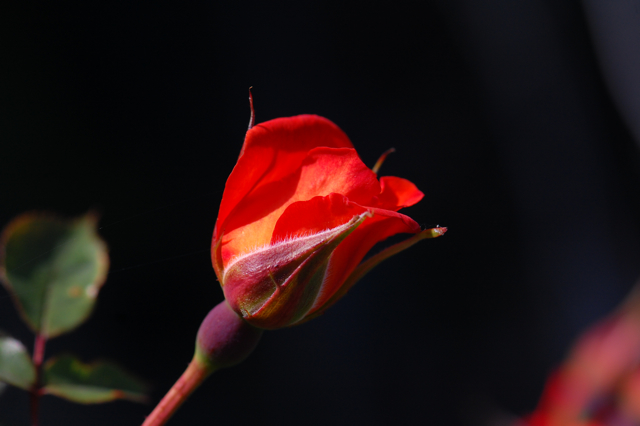
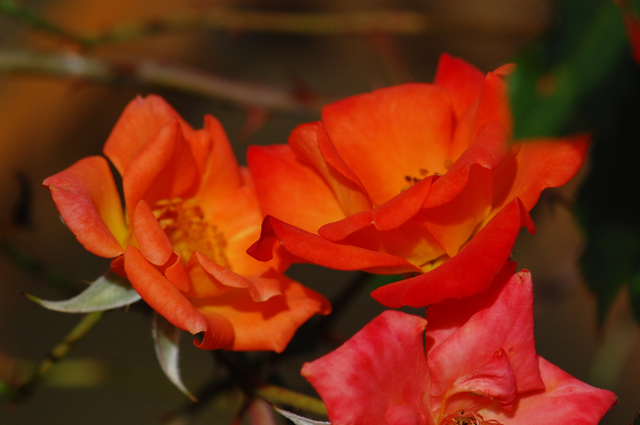
My wish list is ever expanding and includes the gorgeous dark bloomed Rosa gallica ‘Tuscany’, a rambler to cover the ugly old tank by the gate and the lovely ‘Rhapsody in Blue’ which I have much admired at The London College of Physicians gardens. We are in the process of getting rid of our car parking space in order to accommodate them all!

What are your favourite roses? For medicine making or for pure enjoyment?
My vision for our small garden is that it will not only provide food and medicine for us but also be a haven for wildlife and other creatures.

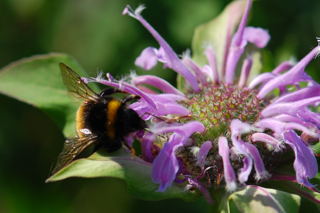
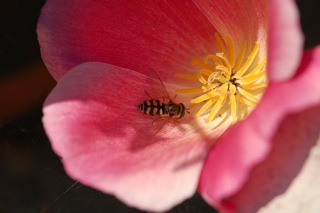
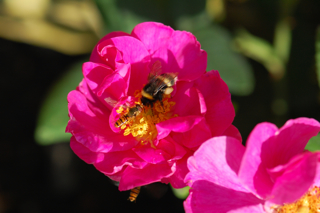
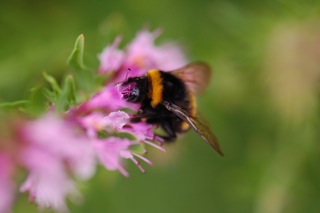
The bees have been very happy here this year and I have seen many fat bumblebees and hoverflies hanging off the hyssop and monardas.

Lavender is nearly over now but every last flower is being made use of. The Apothecaries Rose was also a favourite when it was in flower.

There’s been a whole host of caterpillars, mostly fat and green, and some interesting spiders too. So it was with all these little residents in mind that I decided to add an insect hotel to the quietest area of the garden.

Ok, compared to some grand affairs this is more of an insect caravan but its a start and will hopefully provide a bit of shelter for a few needy wayfarers. If you have space you can make a very large, 5 star affair by stacking pallets full of different materials on top of each other but, if like me, you garden is more ‘bijou’ then you can make more of a boutique bug residence with a wooden box or old drawer filled with pine cones, straw, moss, hollow bamboo canes for solitary bees, bits of wood with holes drilled into them and other such items. Tuck it away into a quiet corner and you’ll be encouraging bio-diversity even in a tiny garden.

There has also been a number of butterflies like this beautiful Comma resting on the echinacea and this poor raggedy old Red Admiral on the nettles. Up on the Downs behind our house I also saw this lovely Chalkhill Blue.

The keen observer will spot other wild beasts lurking amongst the flowers.

We have also been joined recently by four new additions in the form of some highly spirited rescued ex-battery farm chickens. They live in the back garden, well away from my prized salad crops, and have settled into life outside a cage very quickly. We got them through The British Hen Welfare Trust which is a great charity and well worth supporting. They were in a sorry state when they came to us, straight from the battery farm that morning, but already their feathers are growing and they are gaining confidence by the day. For anyone who has hens or is interested in keeping them I would recommend reading this great article by Kym Murden on The Herbarium which gives lots of tips for herbs to grow around your chooks and other natural health tips. Ours are currently enjoying garlic and nettle tincture in their water, nettle seeds in their feed, lavender in their bedroom and rose petals in their nest box. They are as friendly as can be and make it their mission to sneak into the house whenever the opportunity arises.

Here is Primrose stretching out her wing for the very first time.

Violet and Clover discover they have a taste for my once lush Mizuna.

They have earned their keep by helping with the weeding. Not a scrap of ground elder remains now.

Honeysuckle and Clover check to see whether they’ve been busted sneaking in.

Finally, whilst on the subject of birds, bugs and beasts, I would like to urge you all to take a few moments to sign one (or all) of the petitions against the proposed badger cull that the government hopes to enforce next year. As badgers are known TB carriers, the government is hoping that their mass slaughter will halt its spread amongst cattle. Most of the available scientific evidence shows that this is not the case and implies that the cull may in fact make matters worse as it did in Ireland. The problem is due to poor farming practices not badgers and the only pro- badger cull arguments I have read are financially motivated as farmers do not want to lose money from their herds. Healthy animals are much less likely to be infected so all resources should be put into better farming practices not into killing one of our most treasured wild species. The plan is for 70% of badgers to be slaughtered. It breaks my heart that this is even a possibility.

You can read more about the issue in this Q and A document from The Badger Trust.

And if you feel strongly about the issue too there are petitions available to sign on the following sites:

38 degrees here.

The League Against Cruel Sports here.

Save Me here.

And you can reply to the consultation by following the guidelines here:
http://www.brianmay.com/save-m​e/badgers/DEFRA_E-mailer.html


(N.B. The final image of the badgers is from google images, source unknown, all other photos are my own.)

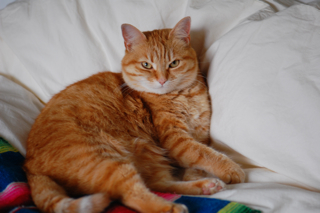
No matter how well we manage our affairs, how diligently we practice the art of divine manifestation, Zen Kitties know that life will always have its ups and downs. That is why cultivating equanimity is the best way to achieve a harmonious life.

The only thing we can be sure of in life is the inevitability of change, happy today, sad tomorrow, laughing again the next day. Only a balanced mind can let all these states be as they are without attachment or aversion.

For example, yesterday I found myself in the lap of luxury.

And today at the bottom of the heap once more.

Who knows what tomorrow may bring?
More Tea Vicar?

This post is part of the July Blog Party hosted by Danielle over at The Teacup Chronicles. Check her blog tomorrow for links to the other entries.

The idea for this blog party was ‘cooling drinks for the dog days of summer’ so it may come as a surprise to some that I have chosen to write about herbal teas (well, I am English after all). I drink teas come rain or shine and there are many lovely cooling herbs that make fine summer teas. Now I know the UK isn’t famous for its scorching weather but folk from hotter climates also enjoy teas on even the warmest days of summer. In India I drank chai, in Morocco it was fresh mint tea and in Mexico we used to have a lovely cinnamon infusion. Some of these drinks, as well as being taken hot, also contain warming spices which we associate more with winter drinks but these can actually open up the pores enabling you to cool down more effectively. Such is the magic of herbs.

To make the perfect cup of tea it’s ideal to use filtered water as the taste will be purer. Warm the pot with a little hot water first, discard then add about a tablespoon per pint of your chosen herbal mix. Pour over hot water that has just boiled but ceased to bubble and leave to infuse for 10/15 mins to extract as much benefit from the herbs as possible. If you need a sweetener then add a little honey after pouring when the tea will have cooled enough to avoid destroying its beneficial qualities. Ayurvedic medicine warns strongly against heating honey. Sip slowly and with gratitude for the multitude of wonderful herbs available to us.

Some of my favourite summer herbs include:

Chamomile – Soothing to the digestion and the nerves, chamomile is a lovely after dinner summer tea and helps calm overheated, irritable children (and adults).

Rose – Cooling, toning, calming and full of love, rose is lovely mixed with gently moistening herbs like Lime blossom and mallow or cooling diaphorectics like elderflower for a harmonising summer treat.

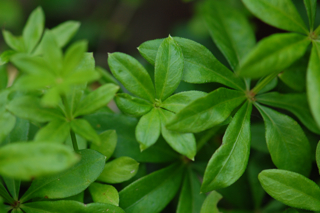
Sweet Woodruff – Cooling, mildly cleansing, good for the digestion and relaxing, this herb is a lovely addition to many summer tea blends with its mild and pleasant taste.

Sweet Woodruff

Elderflower – Cooling, diaphoretic and soothing to the upper respiratory tract, elderflower also has a light and pleasant flavour which is ideal for summer teas.

Hawthorn Blossom – Calms the nerves and opens the heart, if you like the taste, which I do, then this one is a winner.

Lemon Verbena – One of my favourite herbal teas, alone or in combination, not only for the delightful, refreshing taste but for its ability to calm digestion, fevers and nervous tension or anxiety.

Lemon Verbena

Borage – Demulcent, cooling and anti-inflammatory as well as strengthening to the adrenal glands, borage makes a nice addition to blends of summer teas as it doesn’t have much of a flavour by itself.

Lemon Balm – The perfect summer cup of tea! Delicious by itself or with other herbs like rose, other mints and lavender, it uplifts the spirit and cools the body and mind.

Mints – Spearmint, garden mint, peppermint, apple mint, ginger mint, chocolate mint… the choice of mints is endless! My favourites for tea are Moroccan mint and spearmint but I use various others too. What could be more refreshing than a cup of fresh mint tea? It’s also delicious as iced tea, chilled in the fridge with a little ice added before drinking.

Spearmint

Fennel – A great digestive tea, fennel has many uses, from boosting milk flow in nursing mothers to respiratory congestion and lifting low libido. It’s a tasty addition to tea blends and works well with other digestive herbs like chamomile.

Calamint – Sweet, aromatic and warmer in nature than some of the other mints, Calamint is also a good diaphoretic, digestive and expectorant herb.

Marshmallow – One of the best herbal demulcents, Marshmallow is lovely to include in blends for people who get dry in the summer.

Marshmallow

Lime/ Linden Blossom – Calming, cooling and moistening, this is a delicious tea for those who are stressed out and over worked or are having trouble getting off to sleep.

Calendula – Healing, anti-inflammatory and useful to the immune system, Calendula petals add a splash of colour and many benefits to any tea formula.

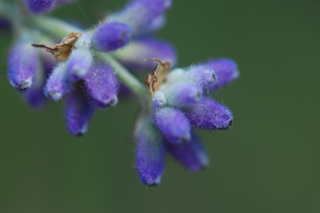
Lavender – Another great nerve soother and digestive herb, Lavender can help headaches from the heat and is lovely taken just before bed to help ensure a relaxing night’s sleep.

Lavender

Some summer tea combinations I particularly enjoy include:

* Lemon Verbena, Sweet Woodruff and Spearmint.

* Fennel, Calamint and Lemon Balm.

* Elderflower, Rose and Borage.

* Linden, Chamomile and Hawthorn Blossom.

* Apple mint, Monarda and Calendula petals.

And to finish, for those who know the old ditty…

I like a nice cup of tea in the morning,
I like a nice cup of tea with my tea,
And when it’s time for bed,
There’s a lot to be said,
For a nice cup of tea!

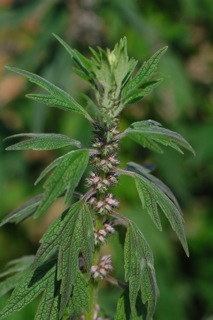
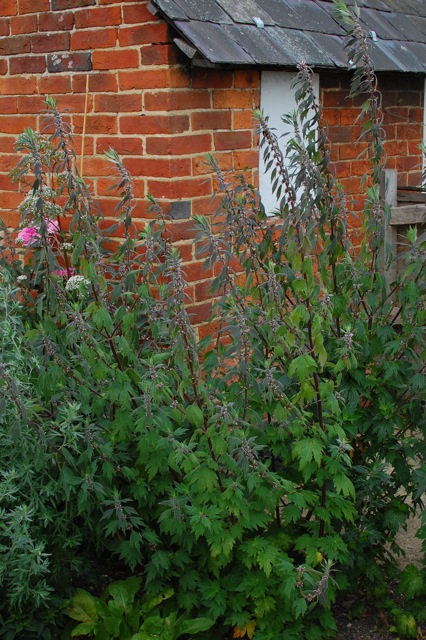
There are some herbs that I would hate to be without in my dispensary and Motherwort is most definitely one of them. Motherwort, Leonurus cardiaca, is a member of the mint family (Lamiaceae) and has their characteristic square stems and opposite leaves though, unlike most other mints, the leaves are deeply toothed and cut into three pointed segments. The pinky flowers appear in whorls around the stem and the calyxes are very prickly so beware when harvesting!

This is the second year I have grown Motherwort but the first in which it has really flourished as it was kept in pots last year and was a little cramped. I only have three plants but it grows large and tall so this is enough for a fairly good harvest – enough for about three litres of tincture and a small amount of dried herb.

Motherwort has been used in herbal medicine since antiquity and was thought to have been a popular remedy with the Celts. It used to grow quite freely in the wild here in the UK but now its much harder to find, growing it yourself is really the best option if you want to ensure a harvest. Gerard, writing in 1597 said of Motherwort, “It joys to be among rubbish, in stony and other rough places, especially about Oxford.”

With this herb, the clues to it’s most popular uses lie in its names, both common and Latin. It’s been known as Motherwort for centuries as it’s often considered a women’s herb, suitable not just for mothers but women of any age from puberty to menopause. Culpepper tells us, “it makes women joyful mothers of children, and settles their wombs as they should be, therefore we call it Motherwort.” It is helpful for painful periods whether the cause is muscular tension or congestion as it is both anti-spasmodic and dispersive. It is considered an emmenagogue as it helps promote delayed menstruation and is useful in labour. Potter’s informs us it, “is especially valuable in cases of female weakness and hysteria, acting as a tonic to the generative organs and allaying nervous irritability.” In modern lingo that means ‘good for PMS’! It is also regularly used for people who feel stressed and restless during the menopause.

The soft pink flowers with their hidden spiky calyxes remind me an archetypal Mother, seemly soft and fluffy but with a very sharp tongue when you cross her or threaten her children.

The second part of its Latin name, cardiaca, refers to its affinity with the heart. The first part, Leonurous, is said to have come about due to the plants resemblance to a lion’s tail but also because Leo was seen as the ruler of the heart. Culpepper wrote, “Venus owns this herb and it is under Leo” indicating that it was a female tonic with particular uses for the heart.

Dr Christopher believed it “vies for the honour of being the best heart tonic known. It calms and supports the heart and nerves and may be used in large doses.” It helps slow and regulate the heartbeat so is useful for tachycardia and has a mild vasodilating effect. Of course it goes without saying that any heart condition needs to be checked out by a professional and consult a herbalist first if you are already on heart medication.

It is particularly indicated for palpitations where the cause is anxiety and nervousness as Motherwort is also a useful nervine. It has been used for sleeplessness, anxiety, nervous tension and feelings of emotional instability. It has also been used to help people with cold hands and feet as its dispersive qualities help equalise peripheral circulation and heat. By relaxing constriction, Motherwort allows energy to move more freely around the body. Considered a useful herb for hyperthyroidism it treats many of the symptoms of this condition; palpitations, anxiety, restlessness, tremors etc.

Motherwort contains essential oils which contribute to its dispersive quality, tannins which help make it a useful uterine tonic along with alkaloids, iridoides and cardiac glycosides which contribute to its nervine and heart tonic properties.

Bees, who are well known for their sophisticated tastes, adore it.

At one time Motherwort was considered a useful diaphoretic, meaning it induces sweating and helps cool a fever. However as diaphoretic herbs are best taken as hot infusions, and Motherwort is not the most pleasant tasting of herbs, this is not something I have used it for myself. It might be worth the effort though if you can stomach it as an old country saying quoted in Bartram’s informs us, “Drink Motherwort tea and live to be a source of continuous astonishment and frustration to waiting heirs.”

Being aromatic and pungent it helps to disperse stuck energy, this is why it is so useful in delayed menstruation, retention of the afterbirth, fevers and poor digestion – it moves. The combination of bitter and pungent tastes make it particularly suitable for ‘kapha’ type people who can tend to be overweight and a little sluggish. The relaxing, nervine qualities can make it good for Pitta or Vata types too, depending on their individual picture.

I don’t dry a huge amount of Motherwort as I really don’t use a lot in teas but I do use it as a compress for menstrual cramps. This is only really suitable to use if you are at home but it can prove very effective in easing pain, spasm and discomfort. All you need to do is make a strong tea of dried Motherwort and soak a flannel in it. Wring the excess liquid out and lie the flannel over the abdomen or lower back, depending on where the pain is most intense, and relax with a hot water bottle on top for a short while. Refresh the flannel with more tea and repeat a few times until you feel better.

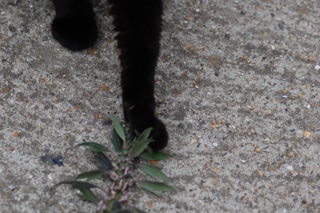
I believe that I may have discovered another use for this remarkable plant this year as it’s proved incredibly popular as a cat toy. Perhaps the temptation to chase the lion’s tail is just too great…

July Garden Glory

There is little to rival the sheer exuberance of the garden at this time of year. Even in my little patch things are flourishing and vital.

Blue and pink Hyssop are covered in blooms.

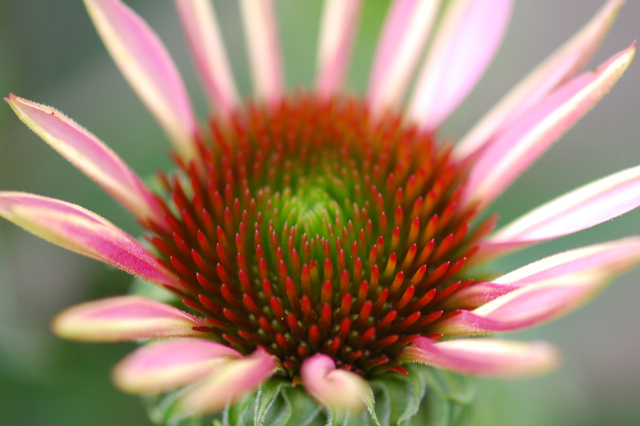
Echinacea is looking beautiful. If you look at this close up you can see that each head is actually made up of many tiny individual flowers, called florets. Amazing no?

I planted the cornflowers late so they are only just blooming now.

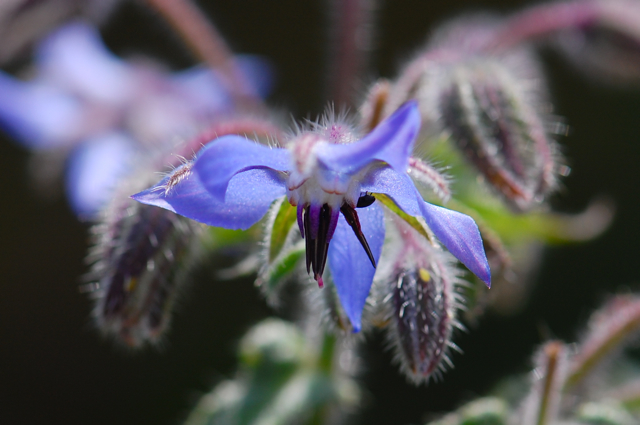
I adore borage flowers, they are so ethereal yet the plant’s medicine is so strengthening. Along with the normal blue flowers I’ve had a few rogue pink ones this year.

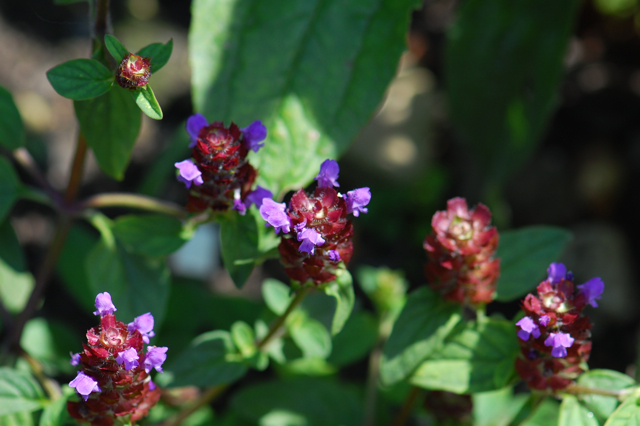
Self heal and heartsease, both favourites of mine and excellent skin healing herbs, are adorning the spaces between larger plants.

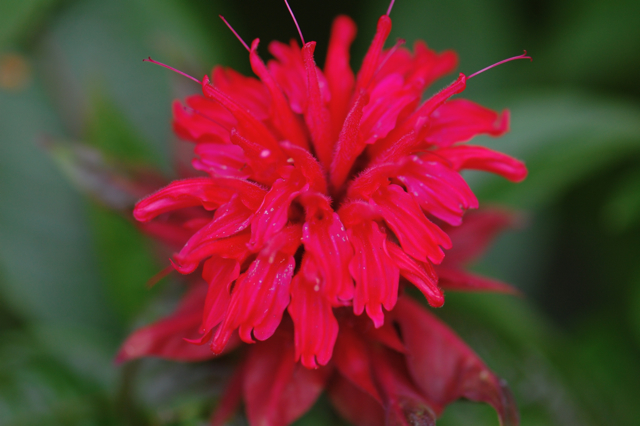
Monarda, geranium ‘rozanne’ and Calendula all add some blazes of colour.

_______________________________________________________________________________

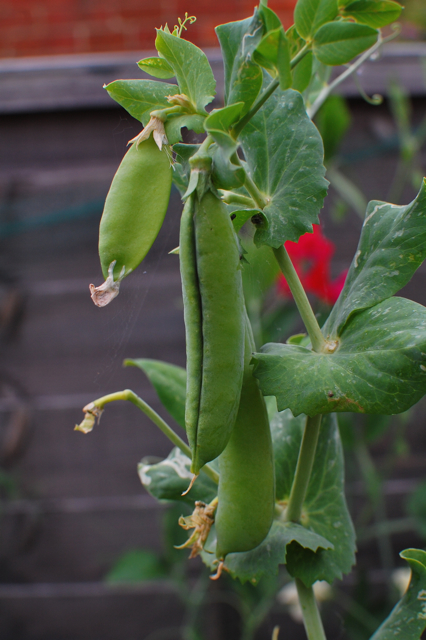
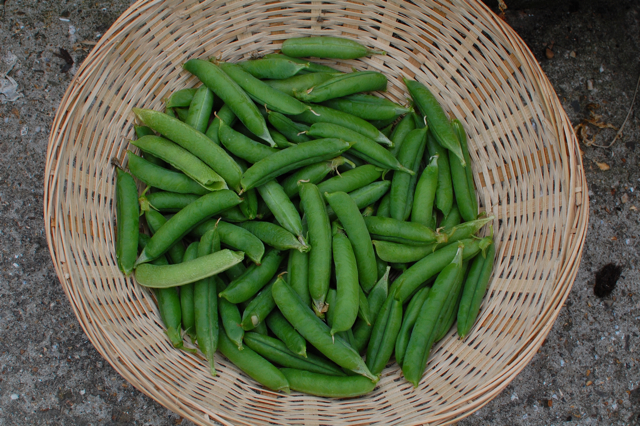
And best of all we are harvesting something delicious for our table everyday. Romanesque cauliflowers captivate me completely, their fractal forms seem almost unreal. Peas are about my favourite garden snack, along with strawberries of course, and salads fresh from the garden are a million, million miles from those bought in the shop.


The Roses and Motherwort have also been stunning but they will have posts all of their own in the next week or so. I hope you are enjoying your gardens, patios, window boxes and local parks this summer, wherever in the world you may be.

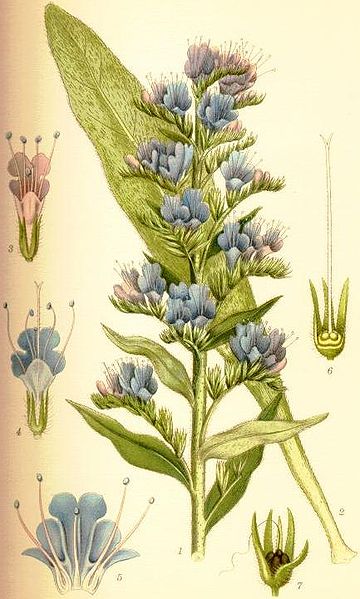
Viper’s Bugloss is without doubt one of the most visually arresting plants that grow wild on the Downs. It’s tall stems of vibrant blue blooms seem almost out of place amongst the mostly small and inconspicuous flowers of this chalk grassland habitat.

Still it is an incredible pleasure to happen upon them, growing in abundance, on a fine summers day. As this area of Downland is protected, I grow Viper’s Bugloss in my garden rather than harvesting from the wild but in some areas, where it is an introduced and somewhat invasive species, I’d have no qualms about wildcrafting it.

Viper’s Bugloss, Echium vulgare, is a biennial or short lived perennial native to Europe and parts of Asia. It has rough, hairy, lanceolate leaves and can grow up to nearly a meter in height. The flowers start off pinkish in the bud but open to reveal beautiful blue flowers with pink stamens. According to Culpepper, “After the flowers are fallen, the seeds growing to be ripe, are blackish, cornered and pointed somewhat like the head of a viper.” This is perhaps where it got its common name from.

It is beloved by all kinds of wildlife, especially bumble bees, honeybees, painted lady butterflies and these striking burnet moths. In fact, The Bumblebee Conservation Trust referred to it as the very best plant for bumblebees, making it a great addition to any wildlife friendly garden.

A member of the Boraginaceae family which also contains Borage and Comfrey, it has a long history of medicinal use though its fallen out of fashion in recent years. This is partly due to the presence of the infamous pyrrolizidine alkaloids that are found in various members of this family and have caused much controversy around the use of Comfrey. My purpose here is not to discuss the arguments for and against so I suggest you inform yourself well and decide whether or not you feel happy using this herb. Personally I feel comfortable using it internally to treat acute conditions such as those described below, especially as a few drops on the tongue is the usual dose and it is only taken short term. It may be used externally on unbroken skin without the need for caution. I’d avoid internal use if you are pregnant or have compromised liver function.

Medicinally it helps provoke a sweat and has diuretic properties too, thus helping the body expel toxins. Like comfrey it contains allantoin which makes it useful for healing injuries by promoting growth of new cells. It has also been used as a poultice for healing boils. Like borage it was said to dispel melancholy and being demulcent it was used particularly in chest complaints with dry coughs. Hilda Leyel considered it a cordial herb similar to borage and writes that it is “very useful in feverish colds and chest complaints; and cooling and cheering and decorative in wine cups and summer drinks.”

Above all however Viper’s Bugloss, as its name suggests, has been considered one of the main local remedies for snake bites. I learnt recently from Surrey based herbalist and member of the Herbarium, Stephen Church, that the tincture can be used both externally and internally for any number of insect bites as well. He has used it topically with remarkable success for treating bee stings and a friend of mine who is a beekeeper keeps it on hand to stop the reactions she has been known to have to stings. Stephen also tells a tale of his niece who was badly bitten by the dreaded sandflies whilst on Fraser Island in Australia. Cases like hers can require several rounds of anti-biotics to treat and patients are often left with scarring. Luckily he had equipped her with a bottle of Vipers Bugloss tincture before she left the UK and after using it liberally, the Doctor said he’d never seen bites heal so well.

Though I have not found much evidence beyond the anecdotal, it has been enough to convince me to keep a small bottle of Echium tincture in my first aid cabinet to dab on any insect bites I may happen to incur over the summer months. Earlier this year my parents’ dog was bitten by an adder and needed some very strong anti-venom and a stay at the vets in order to ensure his survival. Whilst I would, of course recommend he be taken to the vet as soon as possible, I’ll also be giving my parents a small bottle of tincture of Vipers Bugloss with instructions to use topically and internally, just in case he were ever to stick his eager nose in the path of a grumpy snake again!

For me Vipers Bugloss is a winner all round. It’s beautiful, a very handy first aid plant and perfect for attracting wildlife. I hope my garden will never be without it.

The Buddha was asked, “What do you and your disciples practice?” He replied, “We sit, we walk and we eat.”

The man continued, “But sir, everyone sits, walks and eats.”

The Buddha told him, “When we sit we know we are sitting. When we walk, we know we are walking. When we eat we know we are eating.”

Awareness of sitting.

For many people anxiety and stress go hand in hand with a tense stomach and disturbed digestion. Whilst stress affects digestion in everyone, some people are particularly prone to experiencing problems.  All digestive issues, from gas to inflammatory bowel conditions are affected by stress, even if there are many other contributing factors.

Our digestion is controlled by the enteric nervous system which is linked to the central nervous system by millions of nerves. When we are stressed we enter the ‘fight or flight’ response which priorities blood flow to the brain and muscles in case we have to run from or outwit a possible danger. This is, of course, useful in situations where there is a real threat but for many of us, our constant deadlines, hectic schedules and million and one expectations lead to a chronic state of stress in which the blood flow to the digestive organs is seriously impaired.  Stress causes everything to contract and constrict and can therefore affect the production of  digestive juices, cause the stomach and or intestines to spasm, create inflammation and encourage infection. When stress becomes chronic, so do digestive problems.

Chamomile

Goethe believed that the gut was the centre of all human emotions. When I used to practice as a massage therapist I would always ask people first if they wanted me to massage their stomach as many people dislike being touched in this area. I can notice this in myself too, if I am feeling anxious at all then my stomach feels far to sensitive to touch. This is because the nerves are all activated, leaving us with sensations such as ‘butterflies in our stomach’ or that awful knot of fear in our solar plexus.

There are many herbs that work on the interface between the nerves and the digestion- Chamomile, Cardamom, Rosemary, Lavender, Lemon Balm and other Mints to name just a few. All these are aromatic, therefore diffuse stuck energy and tension at the same time as stimulating digestion. A calming cup of chamomile tea, taken 2 or 3 times a day, is a great way to gently soothe your nerves and digestion. Specific conditions will need individualised treatment but for those who suffer more general digestive disturbances related to stress these herbs can be very useful.

Catmint

At the moment, everyone I am seeing has some level of stress related digestive disturbance, even if that is not the primary reason they are seeking treatment. Recently I saw someone who was so tense that their appetite had disappeared almost completely, a sure sign that the digestive organs are very constricted. I came up with this tummy rub as a way of not only relaxing the digestive system but also encouraging people to take a few moments in their hectic schedule to be fully present with themselves, take some deep breaths and become mindful of their state of being. It’s easy to gulp down a tincture or tea on your way to work but you have to take a bit of time to massage your stomach and even if you feel like it’s an extra thing to do in the morning, once you have begun you cannot help but calm down a little.

When massaging the stomach, always move in deep rhythmic movements in a clockwise direction (as if the clock were on your abdomen rather than facing you!) as this is the way the intestines move waste along. Take a moment to breathe deeply and become a little more mindful of yourself and the present moment. This need only take a few minutes but that can be enough to relax the digestion, the nervous system and the mind.

Soothing Tummy Rub:

50ml base oil (almond, sunflower, apricot etc)
10 drops Neroli essential oil
5 drops Roman Chamomile essential oil
5 drops Cardamom essential oil

This makes a blend of approximately 2%, perfect for adults and children over 12. For children between 4 and 12, halve the amount of essential oils and for babies to 4 year olds use 5 drops chamomile only to make a 0.5% blend or stick to chamomile infused oil instead. You could also make it into a salve or balm (see my previous post) if that is your preference.

Chamomile is a fabulous essential oil for calming the nerves and soothing digestion, helping to expel bloating, flatulence and gas. Cardamom is warming, carminative and antispasmodic and also has a relaxing and uplifting effect on the nerves. Neroli is one of the best essential oils for the nervous system being deeply relaxing and uplifting. It’s also good for promoting flow of digestive juices.  All three are considered children’s oils as they are safe, supportive, caring and calming.

I’ve had very positive feedback from those trialling the oil so far and I encourage those of you who also suffer from a tense stomach to give it a go too. The perfect way to soothe, nurture and let go.

For a long time I was confused about the difference between salves, ointments and balms. Some writers use all three terms interchangeably whilst others have separate definitions, many of which contradict those from other sources. In this post I wanted to tell you a little about how I make salves, ointments and balms with the intention of sharing some hopefully useful tips and practical information.

Salves, ointments, unguents, balms, call them what you will, what all these preparations have in common is they are primarily a semi-solid mix of fatty ingredients such as oils and waxes, usually with no water part at all, though they may contain a small amount of herbal tincture or similar. This differentiates them from creams and lotions which contain both fats and waters.

Generally, ointments and salves are considered much the same thing; a healing external preparation made with medicinal substances in a base of oils and waxes. According to the Miller-Keane Encyclopedia and Dictionary of Medicine, Nursing, and Allied Health an ointment is “a semisolid preparation for external application to the skin or mucous membranes. Official ointments consist of medicinal substances incorporated in suitable vehicles (bases). Called also salve and unguent.”  All in all the definitions are pretty vague which is probably why we find discrepancies.

Suitable ingredients for a salve include many vegetable oils (such as olive, sunflower, sweet almond, apricot) and beeswax or vegetable wax such as candelilla or carnuba. In older herbals lard or animal fats were often used and these are enjoying something of a comeback amongst some traditional herbalists but, as a vegetarian, they don’t feature on my radar so I won’t be talking about them here. Many herbal books include recipes made with mineral oil byproducts such as petroleum jelly or vaseline but again, as I don’t work with them, I will not be including any information here.

As making salves involves some degree of heat it’s best to use oils that are fairly heat stable, the main ones to avoid are oils like flax seed, evening primrose and borage. If you want to include these then stir them in after the other ingredients have been melted and are beginning to cool.  Coconut oil is the most heat stable vegetable oil but as you will not be heating it very high, oils like olive, sunflower and apricot kernal can be happily used.

Beeswax comes in two varieties, white and yellow but the white is bleached and processed so I never use it, it’s always better to stay as close to nature as possible. Candelilla wax is derived from the leaves of a shrub native to Mexico and is slightly harder than beeswax so you generally want to use a fraction less in a recipe. Carnuba is a similar product derived from a Brazilian Palm. The advantages of these two is that they are vegan so products can be made that are suitable for everyone. The disadvantage is that they come from a very long way away (at least if you live here in Europe!). It’s a tricky choice as some producers of bee products are far from ethical or kind to their bees. I do use beeswax but always try to get it from a local supplier that I know I can trust.

Basic Salve Recipe:

90ml herbal infused oil
10g beeswax

Basic Vegan Salve Recipe:

92 ml infused oil
8g candelilla wax

Medicinal Salve Recipe:

75 – 80ml infused oil
10g beeswax
10ml tincture
2 – 5 ml essential oil

Method:

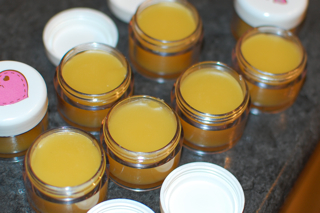
Weigh or measure out the wax (preferably grated or cut into small pieces) and the herbal infused oil and place in a double boiler or bain marie. Heat over a low heat until the wax is fully melted and then stir well. If adding tincture drizzle it in slowly now whilst whisking lightly with a fork. Remove from the heat and allow to cool slightly but not set. You can test the consistency of the salve by dipping the tip of a teaspoon into it. Such a  small amount will set quickly and will show you how the finished product will be. If you are not happy you can return it to the heat and add a fraction more oil/wax until you get it just right. Whilst the salve is still liquid, stir in the essential oils, pour into glass jars and cap immediately to stop the volatile oils from evaporating. Allow to cool and set completely before using.

You can make salves for use as chest rubs, for treating aches and pains, for protecting and healing dry and sore skin and many other uses. The recipe can be easily adapted according to your preferences or required ingredients. A very simple skin healing salve can be made with calendula infused oil and beeswax or a chest salve with olive oil, wax and 5% suitable essential oils. The possibilities are limitless!

Balms are similar to salves, some people class them as the same thing entirely whilst others make a slight differentiation.  According to James Green who wrote The Herbal Medicine Makers Handbook, “a balm is simply a salve that contains a relatively high amount of volatile oils. Upon application is delivers a notably intense cloud of aromatic vapours.”  My understanding of a balm is that it is a salve that also contains butters such as cacao or shea butter making for a creamier end product. These are just individual definitions though so you can use whichever you prefer.

Cacao is fairly hard at room temperature so makes for a slightly firmer end product where as shea is very creamy and therefore a lovely addition to lip balms or body butters. Mango butter is also delicious and has a lower melt point and a more slippery consistency.

Basic Balm Recipe:

67 ml infused oil
25 g cacao butter
5 g beeswax
2 ml vitamin E
1 ml essential oils of choice

Basic Body Butter Recipe:

57 ml infused oil
20 g shea butter
20 g cacao butter
2 ml vitamin E
1 ml essential oils

These balms can be made as above by melting the oils, butters and wax in a bain marie then adding the essential oils and vitamin E at the last moment so they will not be affected by the heat.

I hope that was helpful rather than just confusing the issue further! Happy making.