Feeds:
Posts
Comments

In spite, or perhaps because of, it’s ubiquity at this time of year, Ground Ivy is a herb that has fallen out of fashion in these modern times when the more exotic a herb is, the greater its value is esteemed to be. Many of the older herbals speak highly of it however and it certainly earned its place in folk medicine for the treatment of a variety of ailments. Glechoma hederacea, as is its official title, was also known as ale-hoof due to its uses in brewing ale, or gill-go-by-the-ground, from the French, guiller, to ferment.
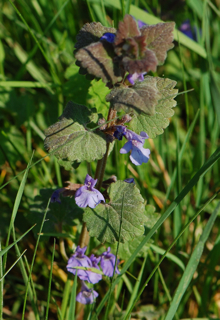
Gerard, writing in the late sixteenth century, described it thus, “Ground Ivy is a low or base herb; it creeps and spreads along the ground hither and thither, all about, with many stalks of uncertain length, slender, and like those of the Vine, something cornered and something reddish.” He classed it as hot and dry and recommended its use primarily for tinnitus, eye problems and as a cleansing agent. He gives us this lovely description of a remedy for the eyes, “Ground Ivy, Celandine and Daisies, of each a like quantity, stamped and strained, and a little sugar and Rose water put thereto, and dropped with a feather into the eyes, takes away all manner of inflammation, spots, webs, itch, smarting, or any grief whatsoever in the eyes.”

Here in the South Downs, as in much of the UK, it certainly grows ‘hither and thither’ and is looking beautiful at this time of year with its classic mint family hooded flowers adorning every roadside and path. April/ May is the best time to harvest the areal parts whilst it is in full flower and highly aromatic. The taste is very pungent, hence why it is generally considered heating and drying, though other herbalists have called it cooling, primarily due to its bitter and cleansing properties. Hilda Leyel informs us that it was once so popular and so widely on offer as a blood tonic “that it was one of the London street cries.” She also recommends it for tinnitus as well as for coughs and colds.
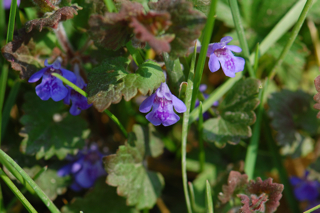
Hildegard von Bingen believed that it removed bad humours from the head which closely relates to its most common use today. Colds, catarrh, sinusitis and bronchial congestion are all conditions currently still treated with Ground Ivy. It is a mild expectorant with anti-catarrhal and anti-inflammatory qualities making it useful in some cases of hay fever. It contains many of the constituents common in other Lamiaceae, or mint family, plants such volatile oils and triterpenes which are thought to be anti-inflammatory. Its astringent and anti-inflammatory properties might also help to explain why it was found to be useful for eye problems and its anti-catarrahal nature could explain why it helped certain cases of tinnitus, probably those where congestion was a factor.

Ground Ivy also has a good reputation as a valuable tonic for the kidneys and bladder. Bartram says it is supportive to primary treatment in kidney disease and has been used with success for cancer of the bladder, though he gives no more information than this. It certainly has diuretic properties and has been used in the past to treat cystitis. Mrs Grieves writes, “As a medicine useful in pulmonary complaints, where a tonic for the kidneys is required, it would appear to possess peculiar suitability, and is well adapted to all kidney complaints.” This is particularly interesting as in both Traditional Chinese Medicine (TCM) and Iridology there can be an important link between these organs. In TCM the Lungs are said to direct Qi  from the breath down to the Kidneys which then hold the Qi.  If the Kidneys are compromised and unable to fulfil this function properly it will result in chest congestion and trouble breathing.  Ground Ivy therefore sounds like an ideal herb in such a case.

Finally, many herbalists have recommended its use as an astringent and anti-inflammatory for the G.I. tract where it tones and soothes in cases of gastritis, haemorrhoids, IBS and diarrhoea.

A tincture can easily be made via the folk method which involves filling a jar with freshly picked and chopped plants- leaves and flowers- then covering in vodka and leaving to steep for a fortnight before straining out the plant material.

References:
John Gerard – Gerard’s Herbal
Mrs C.F. Leyel – Herbal Delights
Mrs Grieve – A Modern Herbal
Thomas Bartram – Bartram’s Encyclopedia of Herbal Medicine
Gabrielle Hatfeild – Hatfield’s Herbal
Tobyn, Denham and Whitelegg – The Western Herbal Tradition

This post is my offering for the April Blog Party, hosted by Leslie at Comfrey Cottages on the topic of Spring Foraging, Wildcrafting and Gardening. Check her blog on the 20th to see the links to the other posts.

Invasive they may be, but many of the plants that take over the hedgerows and waste ground, not to mention our gardens, at this time of year are also exceptionally useful, full of health giving properties and, in some cases, also delicious.

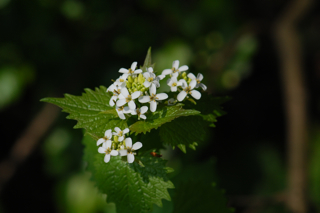
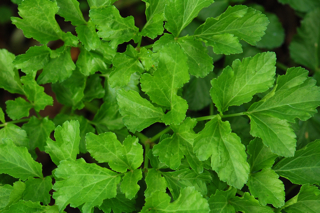
At the moment I’m particularly enjoying liberally lacing my salads with the lovely Jack-By-The-Hedge, Alliaria petiolata, also known as garlic mustard because of it’s distinctive taste of, yes you guessed it, garlic and mustard.

According to ‘wildman’ Steve Brill, “This despised invasive plant is actually one of the best and most nutritious common wild foods.”

Mrs Grieve writes “The leaves used to be taken internally as a sudorific and deobstruent, and externally were applied antiseptically in gangrenes and ulcers. The juice of the leaves taken alone or boiled into a syrup with honey is found serviceable in dropsy. Country people at one time used the plant in sauces, with bread and butter, salted meat and with lettuce in salads, hence it acquired also the name of Sauce Alone. The herb, when eaten as a salad, warms the stomach and strengthens the digestive faculties.”

Most pungent herbs have an affinity for the digestive system as they are heating, thus stoking the digestive fires and promoting flow of digestive juices. They also help to thin mucus which is important in many spring ailments such as hay fever and sinus congestion.

The photos above were taken a week ago but now all the plants except those in deepest shade have begun to bloom. The flowers are also edible and look lovely sprinkled on salads, soups or other dishes.

Apart from sliced finely in salads and grain dishes like quinoa or millet, I have used garlic mustard to make an infused vinegar and as part of my Spring tonic formula, see below. Steve Brill also uses the root which he says has a horseradish flavour, though this is something I have yet to try.

Garlic Mustard infused vinegar and Spring tonic.

The idea for this Spring tonic came from my friend Therri who is full of inventive herbal inspirations. She makes hers from nettles, ramsons and ground ivy, all found growing together and then tinctured together to make a base formulas for people suffering from spring allergies and the like.

Just by my house is a little copse where cleavers, nettles, ground ivy and garlic mustard all grow up together so I decided these four would make the base for my own Spring tonic blend. I don’t usually tincture things together, preferring to do them separately then blend where appropriate. In this case however part of the magic is in the togetherness, using a community of spring plants that grow close by where you live or practice will be particuarly beneficial for people of that area.

A community of Spring tonics; nettles, cleavers, ground ivy and garlic mustard.

Another plant that I have been eating this spring is ground elder, though possibly with something more akin to grim determination than actual enjoyment. I must confess I don’t find it as delicious as some of the other wild greens around at this time of year but, in small quantities, it can be quite palatable, especially blended in soups. It’s also good as a cooked green and theres a nice recipe on Eat Weeds for stir fried ground elder and tempeh which you can read here. I also came across a ground elder and vanilla muffin recipe here, will wonders never cease?!

The reason I am persevering with this particular wild edible is simple, my garden is riddled with it.

When my Dad, a gardener by trade, came to visit soon after we moved in last year, he took one look at it and proclaimed, “you’re going to have to use Round-up on that.” “No!” I cried, “surely I can manage it organically.” He laughed.

So you see, at stake here is not only the organic status of my garden but also my pride.

Ground elder was originally introduced to the UK by the Romans, and much like its benefactors, it proceeded to take over and has proved even harder to be rid of. They used it as a salad crop and it was said to help gout and arthritis too. Though I have been assured that its not really strong enough to be of much use medicinally, I can imagine that regular eating of the plant would work as a preventative, only because it’s pungent taste is not dissimilar to a strong parsley or celery seed, both of which have been used to treat similar conditions. Perhaps I will try a little bit of tincture just to experiment and I am sure it would make a nice infused vinegar.

It seems to me that there are very few invasive weeds that do not have some use or other, many in fact being the most useful plants we have. And you know what they say… if you can beat ’em, eat ’em.

Hedgerows In Bloom

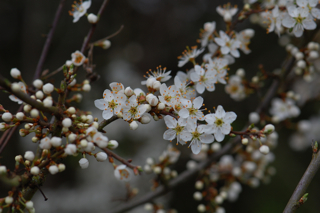
My train journeys this week have been an absolute pleasure due to the beauty of the hedgerows at this time of year. Everywhere Blackthorn has blazed into great clouds of white blossom making the landscape sing with the rising energies of Spring.

Here the fresh verdancy of the young Hawthorn leaves mingles with Blackthorn blossom and the golden puffs of Pussy Willow.

A small deciduous tree, Blackthorn often grows with Hawthorn but is easily distinguished from it by the fact that that it’s blossom arrives before the leaf where as the leaf of the Hawthorn comes out before the blossom. When it does come into leaf they are small, oval and darker than Hawthorn’s deeply lobed leaves.

Blackthorn, known as Straif in the Celtic Ogham or tree alphabet, has been typically associated with the dark half of the year and with the mysteries of the unconscious mind. Long regarded as a powerful magical ally it was much maligned by the superstitions spread by the Church during the witch burning times.

Despite it’s association with all things dark and mysterious, Blackthorn is one of the first plants to bring us the glimmer of Spring and shows us well how dark turns to light, and back again, with the turning of the year. In her brighter aspect she earned a place alongside Hawthorn in the May Day festivals where she was known as ‘the Queen of the Woods’. Blackthorn can help us attune to the rhythms of nature and is also a powerful ally to help us transform negative emotions into sources of strength and compassion.

Pussy Willow is also bedecking the hedgerows with colour and vitality. To me they so well express the vitality of Spring with their vigorous upward growth and explosive yellow flowers.

How beautiful it looks against the backdrop of blossoming Blackthorn.

In other news, this month Leslie over at the lovely Comfrey Cottages blog will be hosting the April blog party on the 20th. She says:

“I have chosen for a theme Spring Wild foraging/Wild crafting and Spring Herbal Gardening I am hoping that everyone who wants to be able to participate has a spot they can forage in, but if not, I think by including the herbal gardening in the theme all should definitely be able to participate who want to :)”

Click here to find out more.

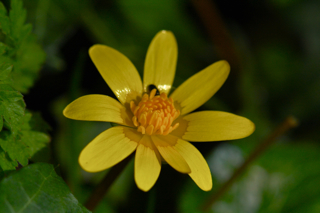
Lesser Celandine or pilewort, as it more commonly known, grows freely in woodlands and other moist, shaded places and brightens the way whenever you pass it by. It’s Latin name, Ranunculus ficaria, refers to the resemblance of its tubers to figs and an old common name for it was figwort (not to be confused with the plant more commonly  known as Figwort, Scrophularia nodosa). Piles, or haemorrhoids, for which the plants got its modern common name, also used to be known as figs, so this usage for our pretty spring friend is nothing new.

In Mrs Grieve’s classic, A Modern Herbal, she tells us, “Wordsworth, whose favourite flower this was (in recognition of which the blossoms are carved on his tomb), fancifully suggests that the painter who first tried to picture the rising sun, must have taken the idea of the spreading pointed rays from the Celandine’s ‘glittering countenance.’ ”

It is true that this little flower arrives early in the spring, appearing almost like a symbol of hope for the warmer days to come.

Used mainly to treat non-bleeding haemorrhoids and a sore or itchy anal area, it is oft quoted that  the main indication for this plant came about from the doctrine of signatures as its bulbous tubers are not dissimilar to the appearance of piles. Many years of use however, as well as a modern understanding of its constituents, back up this traditional insight. Pilewort contains tannins and saponins and is both astringent and demulcent, so toning and soothing to inflamed or irritated membranes.
In the past an infusion of pilewort was commonly taken internally as well the the ointment applied topically but these days it is mostly the ointment that is favoured.

Bartram recommends making an ointment by macerating one part whole fresh plant whilst in bloom to three parts of benzoinated lard. I stuck to making an infused vegetable oil via the heat method.

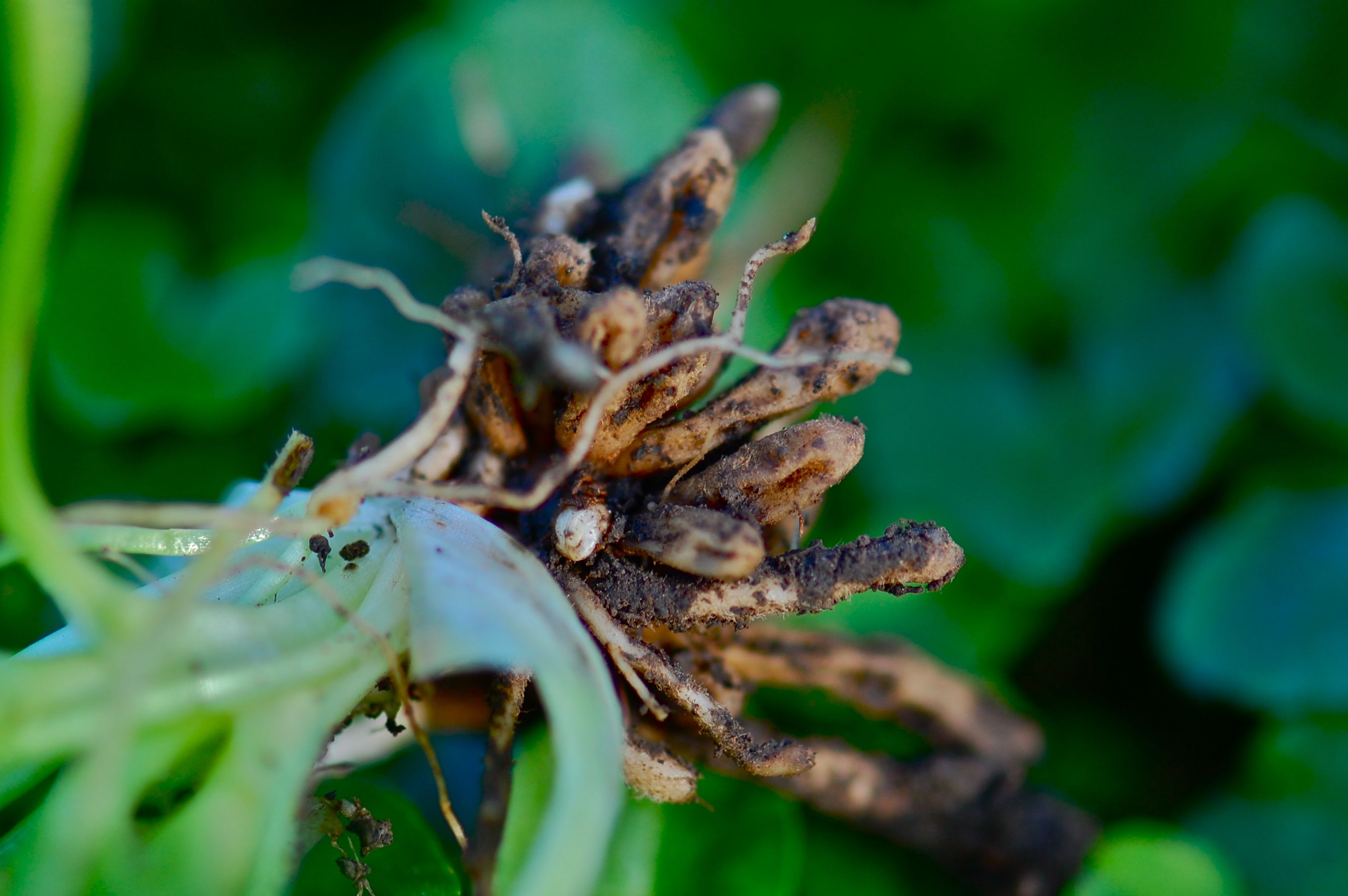
After harvesting the whole plant – roots, leaves and flowers – I washed them thoroughly to get rid of the tenacious clay soil that stuck between each nodule and then spread them out to dry off in the dehydrator for a couple of hours. If you don’t have a dehydrator then just blot them dry as best you can and leave to wilt slightly overnight. This reduces the water content of your herb and helps prevent rancidity. I then infused the herbs in sunflower oil in a bain marie for several hours on a low heat. You can read my detailed instructions on how to make an infused oil here.
Many people combine the infused oil with horse chestnut oil or tincture to make a nice astringent ointment but, as I have none at present, I came up with this alternative.

Fig Ointment:

40ml pilewort infused oil
20ml plantain infused oil (just use extra pilewort if you have no plantain oil).
20 ml calendula infused oil
10g beeswax
5ml self heal tincture
5ml witch hazel
10 drops lavender essential oil
10 drops geranium essential oil

Melt the beeswax in a bain marie and add the infused oils, stirring until fully mixed. Add in the tinctures and witch hazel and whisk or blend with a hand blender until fully incorporated. Stir in essential oils and leave to set.

Apply liberally several times a day to affected area.

What a pleasure it has been to watch the emerging of the Hawthorn leaves this month. The trees I am observing for the Tree of the Year project were a little behind their more sheltered relatives but now they too have begun to burst into life.

Over the past couple of weeks they have been slowly opening out of their protective buds and are now adorning the escarpment and hedgerows with the fresh green vibrancy of spring.

At this time they are just perfect for adding to spring salads as they are still very tender and delicious, as spring wears on the leaves become too tough to be enjoyable. In olden days they were referred to as ‘bread and cheese’ because they were such a staple of country diets and were often added to a cheese sandwich!

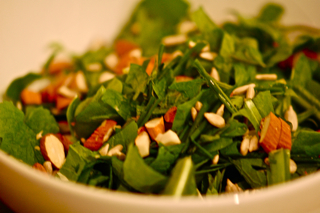
In this salad I combined them with finely sliced wild garlic-mustard, sorrel leaves, dandelion leaves and handful of chickweed. Adding chopped almonds and seeds with a dressing of cleavers infused vinegar and a drizzle of olive oil made this a lovely side dish.


Whilst we Zen kitties spend most of our time dwelling in the bliss of simple beingness, humans tend to forget all about the present moment as they rush from one thing to another, never really appreciating the depth of true experience.

It is the responsibility of Zen kitties everywhere to be vigilant to their humans’ lack of focus and ensure we snap them back into the present moment whenever we sense they are beginning to drift. Sometimes a simple claw in the knee will suffice but, to really do our role justice, we must be in all places at once and forever poised to surprise the un-expecting day dreamer.

Remove your notebook with mindfulness young apprentice.

Waiting for an unsuspecting hand.

Boo!

Simple Spring Soup

Spring is getting into full swing here in the South East and the time for indulging in copious bowls of nettle soup is upon us once more. Each year I end up with a new favourite variation on this time honoured classic of wild food cuisine and this year I’ve managed the impossible. I’ve come up with a recipe that my husband not only tolerates, but actually enjoys too.

Creamy Nettle and Broccoli Soup with Wild Garlic Oil:

Ingredients-
1 colander full of freshly picked and washed nettle tops
1 head broccoli
1 tin of cannellini beans
1 large onion or 3 shallots
3 cloves of garlic
Tablespoon olive oil
squeeze of lemon juice
stock and seasoning to taste
Wild garlic oil (and leaves if available) to garnish

This is such a quick and simple soup but the texture and flavours make it feel both nourishing and fulfilling. Begin by lightly frying the onion and garlic in the olive oil until softened but not brown. Add the stock, cannellini beans (pre-cooked) and broccoli to the pan and cook until broccoli is tender. Add the nettle tops and a squeeze of lemon and cook for a few minutes until the nettles are wilted and soft. Add seasoning to taste and blend to a thick and creamy consistency. Garnish with a drizzle of wild garlic oil and, if available, some freshly chopped wild garlic leaves and violet flowers.

To make the wild garlic oil you simply lightly pack your blender with freshly picked wild garlic leaves and add somewhere in the region of 250ml virgin olive oil. Blend until you have an almost smooth vibrant green oil. This will last a couple of weeks in the fridge and can be added to soups, salad dressings or smeared on crackers. I always add it at the end though as wild garlic looses much of its flavour when cooked.

You can read my last year’s nettle soup recipes here and my recipe for wild garlic pesto here.

I hope  those of you in the Northern hemisphere are enjoying your spring bounties too.

How wonderfully creative my fellow bloggers are! This month we have a delightful selection of posts around the theme of herbal creativity.

From Danielle over at The Teacup Chronicles we have a very exciting announcement for her new herbal tea company! She talks about the creative ideas that formed her tea blends, the colour palettes and design for her labels and gives us an enticing snapshot of her lovely new products. Read her inspiring post here.

Debs from Herbaholics Herbarium gives us a wonderful treat of her favourite floral photographs taken here in the UK and in France. She paints an evocative picture of the warm summer months and shares with us what photography means to her. Read her uplifting and beautiful post here.

Sarah at Tales of a Kitchen Herbwife has delighted our hearts with some of her beautiful poetry. Did you know she has published a book of poetry? She also tells us about some herbal songs, with an interesting bit of history, and  some of her lovely embroidery projects. Read her magical post here.

My own post looks at the ever changing and uniquely creative force that is Mother Nature and considers the work of Geothe in developing a more holistic approach to science whilst following the developing buds of Elder. Read it below or click here.

Now I am happily imagining myself reading Sarah’s book of poetry whilst sipping one of Danielle’s lovely teas with a calendar of Debs’ photos hanging on my wall.

Happy Spring Equinox, I hope you too feel those creative juices flowing with the lengthening days and warmer weather!

Your art is to be the praise of something that you love. It may only be the praise of a shell or a stone.
John Ruskin.

This is my little offering for the March Blog Party, the topic of which is herbal creativity. I must apologise if this post is a little rambling and incoherent, it started of in quite a different place to the one in which it ended and I fear the part of it that made sense may have got lost somewhere en route!

It occurred to me as I turned my mind to the topic of herbal creativity that nothing has quite the same creative potential as nature herself. One man who understood this well was Johann Wolfgang von Goethe, whose work is testament to the depth of understanding that can be achieved when we enter into a communion with nature rather than imposing rigid theory upon her. He sought to understand the unity inherent in nature through a technique of contemplative observation which harnessed the cognitive perception of the mind rather than denying its existence. Where as empirical science sought to understand nature through objective observation of phenomena, then impose theory upon it, Goethe understood that pure sensory experience is not possible and that understanding only arises through a meeting of sense perception and mental faculties. What we perceive therefore, arises at the meeting point of mind and matter, “the complete phenomenon is visible only when there is a coalescence of sensory outsight with intuitive insight.”

For Goethe, science “involves not only a rigorous training of our faculties of observation and thinking, but also of other human faculties which can attune us to the spiritual dimension that underlies and interpenetrates the physical: faculties such as feeling, imagination and intuition.”

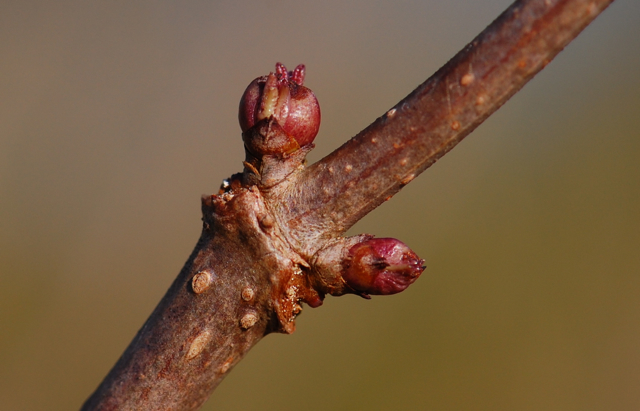
I wrote a post last year on working with Goethean observation in deepening my relationship with Comfrey which you can read here. This year I found myself captivated by the emerging buds of my favourite Elder and I decided to attempt the process once more.

When working with this technique it is wonderful if you can observe your chosen plant at least once a day as this allows for a deep observation of the subtle changes which are occurring. This wasn’t a possibility for me at this time so I had to content myself with twice weekly visits, all of which still afforded me a magical view into the dynamic processes involved in the life of this beautiful tree.

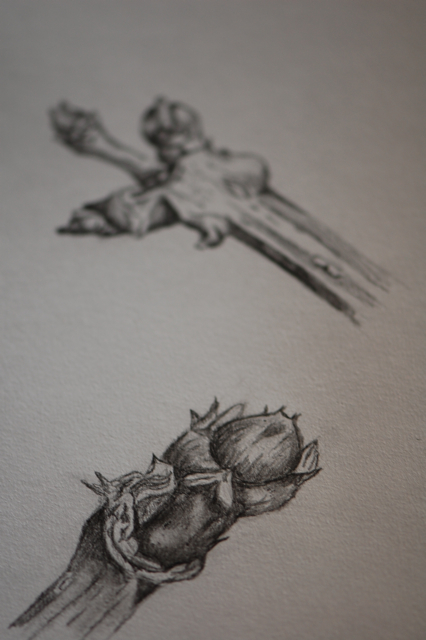
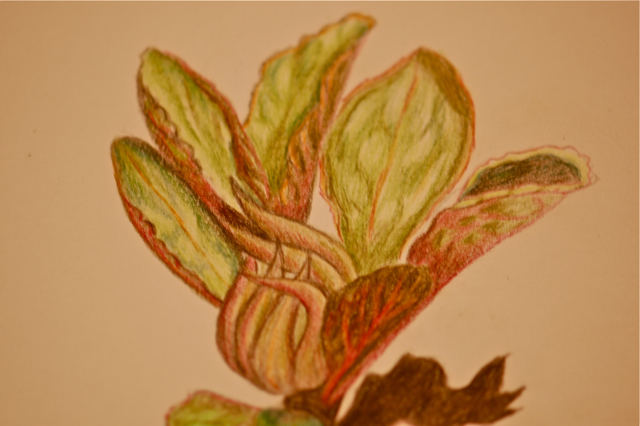
When I had a little more time I opted to draw the buds as this requires a much more profound engagement and necessitates a far deeper level of observation. Mostly I made do with photographing the changes I observed though and scrawling a few key lines in my notebook. The object here is not to produce a piece of fine art but to engage with what we see in a way that allows for a relaxing of our normal consciousness that sees the plant as ‘out there’ and ourselves as ‘in here’ and enables a kind of flow to arise which recognises both the seer and the seen as being at one.

“I would rather teach drawing that my pupils may learn to love nature, than teach the looking at nature that they may learn to draw.”

John Ruskin

Goethe realised that scientific, or indeed any truth is active and not passive, just as the observer themself is dynamic and ever changing. By entering into the flow of the plant he was able to see that each part is a metamorphosis of another. In botany we are accustomed to looking at and identifying different plant parts, such as leaves, sepals, petals and stems. When we pick a plant, press it and make a herbarium specimen -the traditional way of recording plants in botany- we only get a snap shot in time rather than facilitating an understanding of the continual metamorphosis of the plant, how each part belongs to a developing whole which is never static but forever adapting to the environment around it. He explained, “The variation of plant forms, whose unique course I had long been following, now awakened in me more and more the idea that the plant forms around us are not predetermined, but are happily mobile and flexible, enabling them to adapt to the many conditions throughout the world, which influence them, and to be formed and re-formed with them.”  In fact Goethe’s ideas were to become key in the developing theories of evolution.

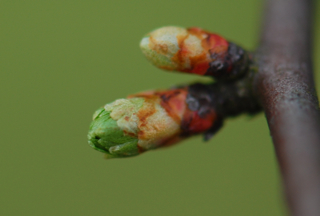
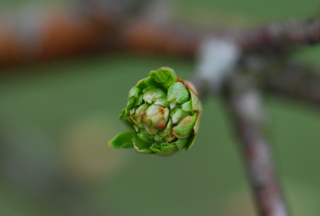
What a wonderful thing it is to see new life emerging. By practising Goethe’s technique of gentle observation I was able to witness how each part of the Elder gradually transforms into another. How the stem lengthens into buds along its nodes. How from the buds emerge six little leaves parting slowly to reveal the sepals, like hands clasped in prayer, protecting and holding their treasure within.

Slowly, as these hands begin to open we see another transformation has taken place. Somewhere, hidden from sight, the tiny beginnings of the elderflowers have formed. These in turn will open out and become the large, flat, white flower heads that mark the beginning of summer in June. As the year continues to turn they will become the ripe black elderberries that will help keep us healthy all winter long.

At what point in time can we say the elderberry is born? When the first buds appear? When we see those first little clusters that will become the flowers? Or not till later, when they become recognisable as such? We tend to see bud, flower and fruit as separate instances in time and neglect the thread that runs through all, from life to death and back again.

Taking any point in time as static can tend to inhibit understanding rather than promote it, and that is why practising Goethean observation can be so transformative. We stop looking for a phenomena that is inherently existing, as we Buddhists say, “from its own side’, and start to understand that life and its myriad expressions are part of a continuum that is constantly creative, never still, always metamorphosing.

“How difficult it is not to put the sign in place of the thing; how difficult to keep the being always livingly before one and not to slay it with the word.”  Goethe.

Through our own creative process we can start to become one with the miraculous creative process of  all nature.

Please pop back tomorrow when I’ll be posting the links to everyone else’s creatively inspired ideas.

References:

Henri Bortoft – The Wholeness of Nature – Goethe’s Way of Science
Peter Tompkins and Christopher Bird – The Secret Life of Plants

Violet Dreams

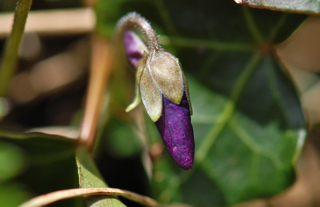
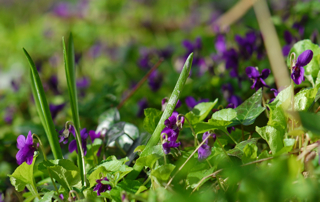
There is a small area of woodland near my house which is filled with violets at this time of year. If you stumble on them unawares they will quite take your breath away. Sometimes the smell is barely detectable but when the sun is shining and the breezes blow, it is utterly divine. I have harvested twice from this patch over the last couple of weeks in order to make an infused honey, an infused oil and a flower remedy. Coming home with a harvest of violet flowers is like carrying a bag of precious jewels, truly a privilege. Unless they continue to bloom so prolifically, I will seek another patch to harvest for a tincture as it’s so important to remember not to over harvest one area.

The sweet violet flowers we know and love are what is known in botany as chasmogamous flowers, those that display their stamens and style for  insect pollination, but many species of viola also produce tiny self pollinating flowers later in the year which are known as cleistogamous. This means that we can be a bit freer with our harvest than we might otherwise be but we should still remember that insects need the flowers for an early source of nectar and therefore not take too many. Also, a beautiful patch of wild violets is enjoyed by many passers by and its not fair to strip it bare.

As a herbal remedy Violet is used most often for it’s soothing, demulcent properties found in the leaf and flower. Being cool and moist they are particularly good for conditions where there is heat such as inflammation and irritated coughs. Culpepper wrote, “A drachm weight of the dried leaves or flowers of Violets, but the leaves more strongly, doth purge the body of choleric humours and assuageth the heat if taken in a draught of wine or other drink.”

Three species are used medicinally, Viola odorata, V. tricolour (the wild pansy) and V. yezoensis (the chinese violet).  The wild dog violet is one of the most common violets found in the UK but it lacks scent, unlike the odorata, though it is still mucilaginous.

Violets are also gently cleansing and decongestant and can be used safely for helping clear the chest and sinuses. Combined with their anti-inflammatory effects and their antioxidant content, this makes them particularly helpful for allergies. You can read Danielle’s fantastic post about treating seasonal allergies here.

They are also specific for a sluggish lymphatic system and make a very valuable spring tonic herb for getting everything moving again after a stagnant winter. This makes them helpful for breast swellings and mastitis and many sources recommend them for cancer treatment. Used as a poultice and taken internally as tea or tincture they were a traditional remedy for breast cancer. I think they resonate with this area of the body particularly as they are, to me, a remedy of the heart. It is with a slight sense of shame that I realise I left them out of my herbal hugs post back in January as they are certainly deeply comforting and loving in their energy. In fact Violets were used by the ancient Greeks in potions for love and fertility.

I also like to use violet as a skin remedy. Both the odorata and the tricolor, better known as heartsease, which flowers a little later, are very valuable in oils or washes for a variety of skin ailments. Their cooling, soothing and protective properties can be used on both dry and weeping eczema as well as acne and irritated, itchy skins. The leaves and flowers contain volatile oils and saponins both of which are extracted well in an infused oil which can then be made in to a lovely cream. I like mine combined with chickweed, speedwell or lavender infused oils depending on the person it is for. For acne treatment I would use it as a wash rather than an oil based preparation.

The flowers and leaves are a very gentle laxative and are often given to children in syrup form to ease their bowels. The root however is a strong laxative and purgative and in high doses will cause vomiting, so be wary.

Also be sure not to use the house plant, African violet, which is poisonous!

The flower remedy is a particularly special preparation which holds many great lessons for us. It is for those who have a very pure vision of the way they feel the world should be. It is a remedy of the imagination, for promoting and holding a clear and positive vision and returning us to a sense of child-like joy and wonder that can heal despondency and the fatigue caused by living in a challenging world.  The sweet violet helps us stay centred in the place where love and imagination have the power to manifest physically and create a better world as a result.

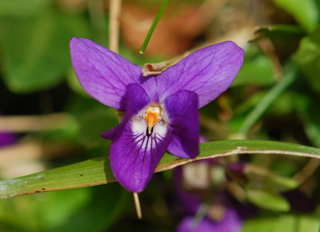
The upper petals are open to give and receive but the perfect gold centre is protected, so the visions held cannot be compromised by the challenges of this world. The fine veins running through the petals are like nerves, indicating the extreme sensitivity of the violet personality. Their heads seem to hang heavy indicating how weighed down these folk can feel by the suffering they see around them. They grow close to the ground indicating how the remedy can help in grounding our dreaming into the here and now and stabilising us when times are tough. The large heart shaped leaves unfurl from the centre enabling us to open our hearts to all life’s experiences whilst remaining equanimous, grounded and free.

A perfect remedy for our troubled times, the violet is one of my favourite flowers.

It was truly a blessing to have such a bright sunny morning for making my flower essence. I’ve spoken to flower remedy makers who do theirs whatever the weather but I find there’s nothing like sunshine to result in a wonderfully energised remedy. You can read my post on how to make your own flower remedies here.

Violet infused honey is such a treat and you can leave the flowers in to add a decorative and delicious touch to your food. It has many of the same properties as the syrup but is simpler and better for those who seek the medicinal benefits of honey rather than using sugar. An added advantage is that you don’t have to heat the flowers or honey at all so none of the antioxidants or vital enzymes will be destroyed. I had thought I wouldn’t bother at all with a syrup this year but Sarah Head posted such an enticing recipe here which involves a magical colour change, so I might have to do a small batch after all!

To make the honey just fill a jar with violet flowers, cover with a reasonably runny raw honey and stir with a chop stick. let infuse for a fortnight or so and then enjoy. The flowers tend to float to the top so just turn the jar or give it a stir now and again to ensure everything is well mixed.

The violets have also been gracing my food regularly over the past couple of weeks and I find nothing more cheering than their beautiful colour mixed here with the leafy greens of my lunch which consisted of quinoa, walnuts. sunflower seeds, cleavers, tender new hawthorn leaves, viola flowers and lemon juice.  It was a delight for all my senses.