Feeds:
Posts
Comments

Celebrating Hildegard

Tuesday was International Women’s Day so I thought I’d mark the occasion by paying homage to a woman who I have always found to be a great inspiration, medieval polymath Hidegard Von Bingen.

Hildegard von Bingen was born in 1098, the tenth child of a noble family. She was sickly from birth and was offered to the church as a tithe when she was eight years old. She experienced visions from a young age and remains one of the most notable figures of the Medieval period for her work as a healer, herbalist, philosopher, author, counselor, visionary, linguist, naturalist, poet and composer. She wrote numerous works including two on health and healing and even invented her own alphabet. She became an abbess and founded two nunneries and, despite her continued ill health, lived to be 81 years old.
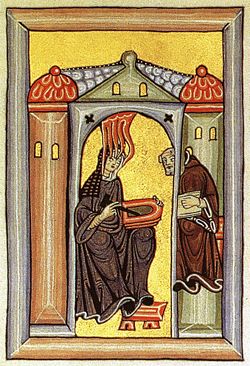
Hidegard receiving a vision and dictating it to her secretary.

She never formally studied the healing arts so it is likely that much of her knowledge came from the traditional folk wisdom of the monastery and the local people as well as from her divine visions. She possessed an acute sense of observation that enabled her to study and understand the natural world which she wrote about in detail in her book Physica, an exploration of the healing properties of different plants, elements, minerals, animals and birds as well as in Causae et Curae, causes and cures, which looks more closely at different illnesses and treatments, mainly involving plant remedies. Much of her advice is practical and down to earth, counseling people to lead a better life, eat a balanced diet and get sufficient rest and many of her plant remedies have been validated by years of use and the rigors of modern medicine. She does include some more exotic remedies including precious stones or animals such as whales, lions and vultures which I can’t imagine would have been accessible to the average German citizen!

Her system was based on the humoral medicine of Ancient Greece and she spoke of the four qualities, heat, dryness, moistness and cold and their corresponding elements fire, air, water and earth. These gave rise to the four humours and their corresponding personality types. The aim of healing was to balance the four elements which had become disturbed through inherited factors or lifestyle.

In Causes and Cures she wrote of the elements, “They consist of two kinds, upper and lower. The upper are celestial and the lower terrestrial. The things that live in the upper ones are impalpable and are made of fire and air; those that are more in the lower are palpable, formed bodies and consist of water and mud. For spirits are fiery and airy but man is watery and muddy. When God created man, the mud from which he was formed was stuck together with water and God put a fiery and airy breath of life into that form.” The herbs themselves also have elemental correspondences and will benefit certain personalities accordingly. Herbs that, ‘grow from air’ are considered easy to digest and full of happiness, provoking cheerful states of mind in all who eat them.

Some of her recommended plant remedies are very familiar to us today as she speaks of the soothing and healing properties of calendula, chamomile and aloe vera. Others however are quite different, she recommends St John’s Wort as being useful only for animal fodder and uses primrose, rue and fennel as anti-depressants. This may be because the forms of depression suffered in medieval times were quite different from those of today. She also discouraged the use of Arnica believing it caused a person to ‘burn lustily with love’ for the next person touched by the herb. In Physica Hildegard writes of the importance of balancing the body with the use of hot and cold herbs. “If all herbs were hot and none cold they would cause difficulty to the user. If all were cold and none hot they would provide an imbalance in people since hot things oppose cold and cold things resist hot. Certain herbs have within them either the power of the strongest aromas or the harshest of the most bitter aromas. Whence they suppress and hold in contempt many ills which evil spirits make.”

She encourages the use of herbs in one’s daily diet as well as medicinally to strengthen the system and gives advice on how to achieve a balanced diet. She encourages the use of oats, which are hot in nature, for those who are already well, stating that they bring a ‘cheerful mind and a pure, clear intellect.’ She also recommends hemp believing it to be easy to digest and able to diminish bad humours. However she goes on to warn that “if one who is weak in the head, and has a vacant brain eats hemp it easily affects his head. It does no harm in one who has a healthy head and full brain.” Her favourite grain is spelt but interestingly she cautions against the refining of wheat saying, “Whosoever cooks wheat without the entire grain, or wheat not ground in the mill, it is as if he eats another food, for this wheat furnishes neither correct blood nor healthy flesh but more mucus, it is scarcely digested.” I wonder then, what she would make of baking practices in today’s world!

I’d love to hear who are your most inspiring women are too.

References:

Ed: Bowie, Fiona and Davies, Oliver – Hildegard of Bingen: An Anthology – SPCK 1995

Maddocks, Fiona – Hildegard of Bingen: The Woman of Her Age – Review 2002

Hildegard von Bingen, and Throop, Priscilla – Physica – Inner Traditions Bear and Co 1998

Picture courtesy of Wikipedia
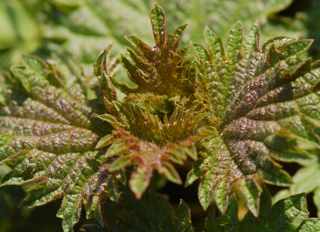
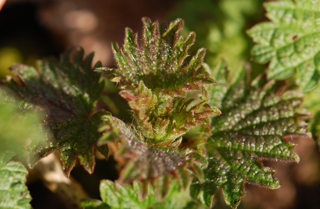
They’re back and they’re bad – as my fingers, still stinging two days later, can attest. So far this year I’ve only picked a few nettles, to add to teas or green juices, so it was a pleasure to get out in the bright sun this weekend and gather some fresh young tops for making a spring tonic tincture.

Sarah Furey told me that Stephen Church of The Herbarium told her (who says the oral tradition is dead) that the young nettles appearing at this time of year which have a reddish tinge to their leaves are particularly high in minerals and make for an exceptionally nourishing spring tonic tincture. It makes sense doesn’t it, when you think that the reddy colour can often signify the presence of iron.

This is one of those wonderful examples of how using our senses to observe the subtle changes in plants throughout the year can give us so many clues as to their healing virtues.

Later, when the nettles grow tall and vibrantly green, their diuretic and kidney tonic properties are more prominent.

In the true spirit of enquiry, I decided to make two nettle tinctures this year to compare and contrast the differences in taste and action.

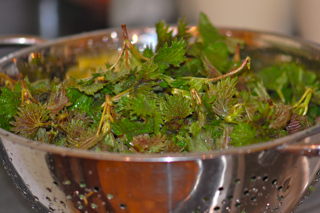
I gathered enough young nettle tops for a couple of litres of tincture, washed them thoroughly and allowed to drain. I made a 1:2 tincture but, as the nettles were fresh, it will probably end up more in the region of a 1:3. If you’d like specific advice on tincture making, the best place to visit is the afore mentioned Herbarium which has brilliant instructions for making tinctures from various different plant parts. You can read the first part of the series here.

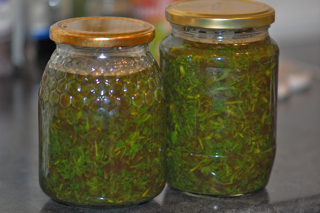
I packed my blender with the nettles and alcohol (vodka is fine for this tincture) and pulsed it until the nettles were nicely broken down but not pureed. Then it went into the jars where it will macerate for two weeks in a cool dark place being shaken and blessed daily.

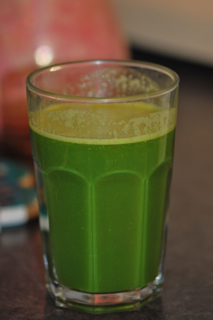
And there were just enough left over to add to a green juice with some cleavers, fennel, celery, cucumber, apple and ginger.

Delicious and radiant, the nettle is so abundant and full of virtues we should count ourselves very lucky to be surrounded by it.

We’re almost, almost into spring, the sap is rising and there is that special zing in the air which signifies the wheel of the seasons turning once more. Everyone is starting to emerge from their wintery hibernation and fresh ideas abound so I thought it would be a good time to celebrate our Herbal Creativity.

This is a very broad topic covering anything that inspires us or encourages our creative side. You might want to share some herbal crafts that you particularly enjoy, a short story or poem inspired by herbs, a herbal drawing or photographs or a recipe that you are particularly proud of, be it culinary, cosmetic or medicinal. This blog party is about ideas you have enjoyed playing with and also about sharing with each other some of the ways in which herbs inspire us in all the many facets of our lives.

If you have your own blog then add your post before March 20th and email me the link at whisperingearth@gmail.com  -I’ll post the links to all the entries here that evening. If you don’t have a blog but would like to join us anyway you can email your piece as a word document to Debs at the UK Herbarium on debs at herbal-haven dot co dot uk and she will add it to the UK Herbarium blog as a guest post.

I also remembered earlier that I am a little late in announcing the winner of my anniversary giveaway. It was Rachel, who wrote the first comment on the post which was nice. I hope you enjoy your oil!

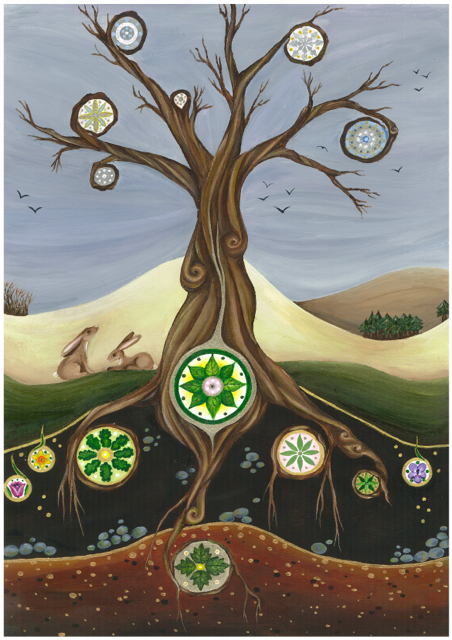
Whilst on the topics of herbal creativity and lateness, here is a painting I did in honour of Imbolc, the Celtic festival which marks the beginning of spring. Imbolc was a month ago now and I hoped to portray the wintery feel that was still all around us at that time but with the promise of spring and potentiality waiting in the earth. It is oft said that the tree already lives in the seed and I like to imagine all the flowers and leaves, already perfectly formed and waiting in the realms of the possible to come forth when the right conditions allow.


We Zen Kitties spend many hours, eyes half closed, in front of the fire or lounging in a sunbeam whilst in deepest contemplation of the mysteries of the universe. Sometimes we use Koans, which are questions or stories that help us understand the true nature of reality by bypassing the rational mind. Today I have barely moved from the sofa at all whilst meditating on the following conundrum.

What is the sound of one paw clapping?

Indeed it is a challenging life.

February Hawthorns

One of my favourite Buddhist meditation teachers, Venerable Antonio, used to remind us during the long days of sitting practice in retreat that, whilst it may feel like nothing is happening, in fact everything is happening, we are just not so good at paying close attention.

At this time of year everyone is getting impatient for spring and the last days of cold, grey weather seem to drag on interminably. It seems like nothing is happening but, when we look closely, we can see that actually everything is happening!

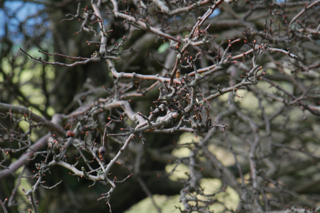
This is how I felt whilst observing my Tree of the Year this month. Nothing much was changing at first glance and the escarpment Hawthorns looked as wintery and asleep as last month.

Looking a little closer I could see that perhaps changes were appearing after all…

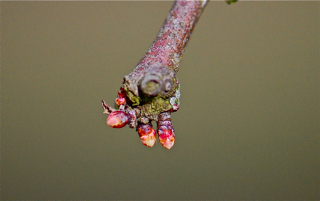
Do you see the tiny buds? Look closer still…

And even closer …

Lean in…

And marvel at the beauty and potential held in the smallest of things.

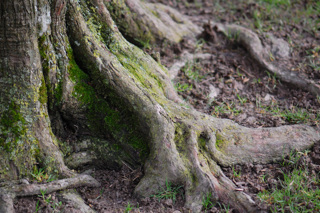
Now is also a fine time to admire the twisted roots of Hawthorn, before we get distracted by leaf and blossom. Like miniature landscapes they rise and fold, their contours are at once hard and soft and I’m quite convinced the faeries live amongst them.

On the way back down I took a detour to visit another of my favourite Hawthorns. Sheltered beneath the Downs she can grow straight and tall compared to the trees at the top who are forever bent to accommodate the unrelenting winds. I’m convinced the quality of the medicine from the two trees will reflect the differences in their circumstances and, this year, I will make flower remedies and tinctures from both to compare.

Hawthorn blossom allows us to expand and flourish and I imagine that a remedy from the escarpment Hawthorn would lend us strength to do this in even the most adverse conditions where as one from the second tree would allow us to create a sheltered, loving and safe space in which to grow.

Cinnamon is one of my favourite kitchen cupboard herbs. With a multitude of uses and a rich, sweet and pungent flavour, it’s no wonder it’s so popular in culinary and medicinal recipes.

The cinnamon we commonly find in the supermarket is Cinnamomum zeylanicum, or Ceylon cinnamon, which is native to Sri Lanka as the name implies. There are several varieties of cinnamon used in cookery but the other type most widely used medicinally is Cinnamomum cassia. This is a stronger and more pungent variety native to China and is usually what will be referred to as cinnamon in any Traditional Chinese Medicine texts. The inner bark is most often used but the twigs also have a place in TCM with slightly different indications. C. zeylanicum is the only variety I have worked with medicinally and, though it is sweeter and milder than cassia, I have found it to be a great ally in healing a wide variety of ailments.

The use of cinnamon stretches back further than history. It was imported to Egypt around 2000 BCE and is mentioned several times in the Bible. Offered to kings and Gods it was once worth more than silver and colonial powers expended many lives and resources attempting to gain a monopoly on it. How fortunate we are now to have such easy access to cinnamon that we can all be Goddesses and Kings in our own kitchens!

Stimulating, warming, pungent, aromatic and sweet it is an ideal remedy for this time of year to help get us through the last of the cold weather, boost the circulation and raise the spirits. It’s commonly added to hot drinks for the treatment of colds and flus, not just for its warming and diaphoretic qualities but for its potent antibacterial and antiviral activity as well.

It also has some anti- fungal properties and some herbalists recommend its use in the treatment of gut dysbiosis, or an imbalance of gut flora, symptoms of which may include bloating, gas and colic. This makes sense to me because these afflictions often occur where there is a lack of ‘digestive fire’ which cinnamon most certainly helps to boost. In layman’s terms this means that the digestion is weak and food is not properly broken down encouraging opportunistic bacteria and fungi to flourish in the gut and compromise the balance of healthy bacteria. Cinnamon not only enhances digestion and absorption but stimulates the appetite and calms nausea. Being astringent due to its high tannin content, it has been traditionally used as a gentle remedy for diarrhoea in children and the elderly.
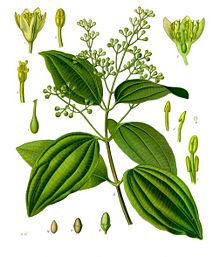
Cinnamomum zeylanicum. Image courtesy of Wikipedia.

Aside from its benefits for digestive health cinnamon is a prime remedy for the respiratory system. When I take cinnamon tincture it is in the lungs that I first and most strongly feel its effects as it immediately opens the chest and deepens breathing. This is in part due to the high volatile oil content which lends cinnamon its aromatic qualities. It is most useful for moist, phlegmy coughs where it has an expectorant action and helps dry mucus. I have also found it useful where there is shortness of breath due to tension and stress as it gently relaxes and expands the lungs allowing for deeper breathing to occur. An essential oil is made from cinnamon which I particularly enjoy in the oil burner (it’s lovely mixed with orange or tangerine) though it’s really too potent for use on the skin.

Useful for women’s health it can ease symptoms of PMT, menstrual cramps and heavy bleeding as well as being antiseptic for urinary infections. In Chinese medicine it is considered specific for the kidneys and, according to Leslie Tierra, it treats many symptoms of deficient kidney yang such as “cold limbs, weak back, frequent urination and fear of cold.”
Cinnamon has gained fame recently for its ability to help maintain stable blood sugar levels making it useful in insulin resistance and type II diabetes. Studies have shown it can significantly help to lower glucose levels in the blood due to its insulin potentiating effects. It is no coincidence then that cinnamon has traditionally been used in sweet desserts as it not only tastes delicious but also helps balance our blood sugars after such indulgences!
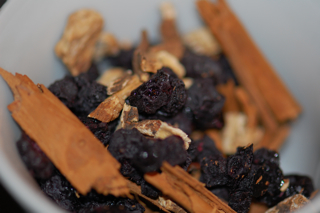
One of my favourite ways to enjoy the balancing effects of cinnamon is in this lovely tea which I like to drink during that mid afternoon slump when many of us suffer from a lull in our blood sugar levels. It contains a heaped teaspoon of bilberries, a heaped teaspoon of burdock root and one stick of cinnamon broken into pieces. The herbs are decocted or simmered gently in enough water for two mugs worth and then strained and drunk. All three have been used to balance blood sugar and the tea is surprisingly sweet and delicious in itself.

Blood sugar balance tea.

I also like to capitalise on the digestive properties of cinnamon by making an infused vinegar of cinnamon, cardamon and bay leaves. This can be easily done by adding equal quantities of each herb to a jar with a plastic lid (vinegar erodes metal) then covering in apple cider vinegar and leaving to infuse for a month. These three herbs are used together in many Ayurvedic formulas for improving the digestion and are collectively known as the ‘Three Aromatics’. Infusing them in vinegar seemed to me a good way of incorporating them into my diet on a daily basis as it can be used freely on salads and veggies or taken in warm water with a little honey. As the great Hippocrates said, ‘let food be thy medicine’.

I also like to make a cinnamon tincture for use in individual formulas. This one was made in 45% alcohol, 1 part herb to 4 parts liquid but it would be very simple to make via the folk method which simply involves filling  a jar with broken cinnamon quills, covering it in vodka and leaving to infuse for 2 weeks if you want more of the aromatic qualities or 4 weeks if you want a more astringent tincture for use in diarrhoea or heavy menstrual flow.

Of course you can also use powdered cinnamon freely in food and drinks. It’s delicious on porridge, in smoothies or mixed into a paste with a little raw honey to make a healthier version of cinnamon toast. Hey, if its good enough for royalty then it’s good enough for me!

Danielle over at The Teacup Chronicles is our hostess for February’s blog party with the delightful topic of Gems from the Herbal Library. She’ll be posting the links for all the entries tomorrow so do wander on over there to see what books others have been inspired by this month.

Sometimes, reading reams of research material and the like can begin to sap the joy from our herbal learning and it’s easy to forget the simple pleasures of gazing on a wild plant or a herb in our gardens. It’s not always possible to get outside and sit amongst our green friends however, especially at this time of year, which is why I decided to share with you some of my favourite illustrated herbals. I’ve always been a visual person and I can never get a real sense of a new or exotic herb until I have seen it with my own eyes, no matter how much knowledge I may have gleaned on it’s usage.

So without further ado here are some of my favourite herbal picture books, I hope you also get some pleasure from gazing on their beauty.

The Illustrated Book of Herbs, edited by Sarah Bunney, is full of delightful drawings alongside small entries on the botanical descriptions and traditional uses of each plant.

The Illustrated Herbal by Philippa Beck is a similar, though smaller, volume covering fewer plants but including some interesting recipes for medicinal and cosmetic use. I particularly love this illustration of plantain.

A wild flower guide rather than  a herb book, The Illustrated Flora of Britain and Northern Europe, by Marjorie Blamey and Christopher Grey-Wilson is still most definitely a gem of my herbal library, one of those things that you find in a second hand book shop and treasure ever more. Each page is filled with illustrations and I’ve found it a useful reference guide as well as a thing of great beauty.

A Country Herbal by Leslie Gordon, contains some great images like these Medieval depictions of mandrake and marjoram and some interesting tidbits on traditional plant uses, though it’s fairly light on useful medicinal information.

Slightly more modern, these three also make delightful additions to my picture-book collection.

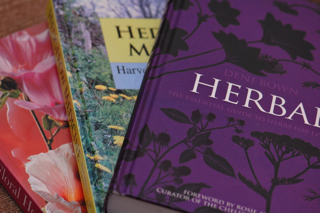
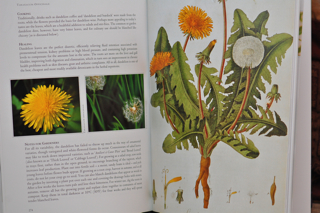
Herbal by Deni Brown, was a Christmas present this year and I love the mix of beautiful photos and botanical illustrations in this lovely purple cloth bound book. There’s not much in it that would be new for the experienced herbalist but it’s still a delight to own, just look at this wonderful illustration of dandelion.

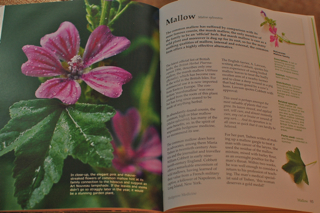
I love all the bright and vibrant photos in Hedgerow Medicine by Matthew and Julie Bruton Seal and I’ve picked up some great tips from it’s simple and easy to read style and lovely recipes. This is a perfect book for beginners interested in picking and making their own remedies from the wild but it’s still enjoyable for more experienced herbalists too.

Last but not least is The Complete Floral Healer by Anne McIntyre which is full of the botany, folklore and medicinal properties of a whole host of well known flowers. It’s also bright and beautiful with photos or illustrations for each entry. Check out this lovely skullcap drawing.

I hope you enjoyed looking at this little selection of my favourite illustrated herbals and do let me know if you can recommend any others!

A Year of Whispering Earth

It’s been exactly a year since I started writing this blog, a year in which I’ve learnt lots and made some lovely blogging friends, at home and abroad. I thought I’d mark the occasion with a small giveaway and a little retrospective of some of my herbal highlights from the year past.

I mentioned in our last blog party how I like to make up blends of oils in little rollette bottles that can be easily carried around and applied in a moment of need. This month I’ll be giving away one of my favourites, a blend of rose petal and tilia infused oils with 5% organic essential oils of rose otto, geranium and tangerine. You can apply it to your pulse point or rub a little under your collarbone to experience the heart opening and uplifting effects. As it’s a strong blend of essential oils you wouldn’t use it on your face but more as a natural perfume and instant aromatherapy. Also, the rose petals are infused in sweet almond oil so best to avoid this if you’re allergic to nuts.

I wanted to make something small enough to send easily so this is open to everyone, wherever in the world they live. To enter the giveaway just leave a note in the comments with your name. I’ll pull the names out of a hat in 10 days time, that’s Wednesday the 23rd.

Now I shall cast my eye back over the last year of nature gazing and medicine making, just click on the links to read any of the posts that interest you.

Last February I enjoyed getting to know the Yews in our local area.

In March I was picking cleavers and having fun in the kitchen with oranges.

By April my garden was waking and there was an abundance of Ramsons in the woods.

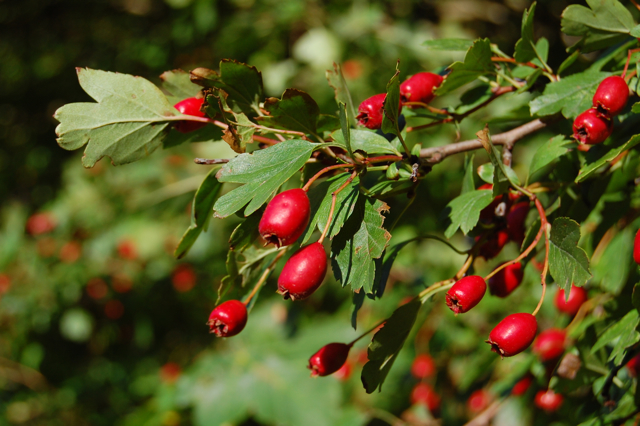
In May I had fun musing on Comfrey, getting to know Speedwell and delighting in Hawthorn.

June rolled around and I was to be found in the company of Horsetail and Linden.

July had me blissed out in fields of Chamomile and discovering Wild Marjoram.

Then in August we finally moved out to the countryside and I had fun harvesting nettle seeds along the track leading to our house.

In September I got carried away writing posts on Elder

Whilst in October I was back spending time with the Hawthorns and warming up with Cardamom.

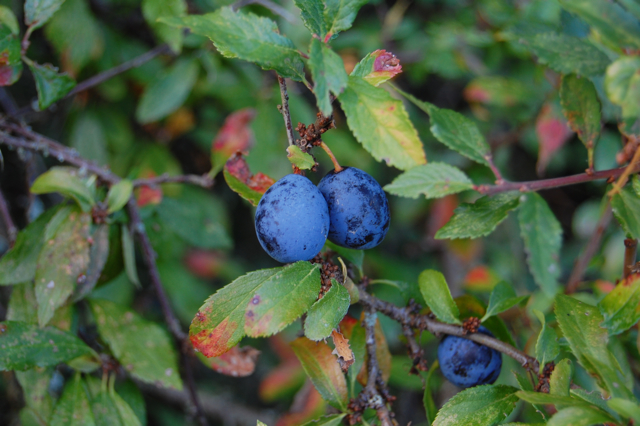
November brought the first frost and with it the sweeter rose hips and sloes. It also saw me digging Nettle roots and enjoying Rosemary medicine.

The year ended with a thick fall of snow and I stayed warm with Ginger and calm with inspiration from our ‘no time for stress‘ blog party.

Then in January I mused on detox, enjoyed back pepper and listed some of my favourite herbal hugs.


I hope you’ve enjoyed reading this blog and continue to do so as we see what 2011 will bring.

A couple of days ago we woke up to a beautiful frosty, mist shrouded morning which faded from ice to fire when the morning sun blazed its way across the Downs.

This is the time of year when you can feel Spring in the air, tantalisingly close, and I start to feel impatient for some warmer weather so I can get outside and start planting.

I have big plans for our little garden and am probably going to have to downscale a bit in order to fit everything in. The good thing about my experience of inner city container gardening is that I can use space effectively to cram as much green in as possible and I’ll certainly also be growing lots in pots. Most of my plants have survived the winter despite being hiked from a nicely sheltered patio garden to a blustery, exposed little plot which gets hit directly by the icy blasts that rush in from the Low Weald.

I’ve just had a couple of seed deliveries and will be setting up the seed trays before too long. It’s all very exciting!

Finally, incase you haven’t spotted the announcements elsewhere, Danielle will be hosting the February Blog Party on a topic which is close to all our hearts, ‘Gems from the Herbal Library’. All of us herby bloggers share a love of words as well as a love of nature so this promises to be a great topic and I’m sure we’ll all discover a new treasure to add to our collections. Read all about it in her post here.

As you can see, I’m not the only one who appreciates herb books in our household.

With Valentine’s Day around the corner I thought it was about time I posted a suitably romantic recipe for these quick and easy, yet delightfully decadent massage bars. Whatever your feelings about this particular festival, a massage bar makes a lovely gift for anyone and can be used to pamper yourself too as it makes a delicious body moisturiser after the shower or bath

Ingredients:
50g Cocoa Butter
15g Shea Butter
15g Coconut Oil
10g Mango butter (or just use 25g Coconut and omit the mango)
10 ml Base oil
2ml Vitamin E Oil
20 drops essential oils of choice

Add the solid oils to the base oil of your choice (any relatively thin oil like apricot, hazelnut, jojoba or sunflower would do nicely) and melt over a low heat in a bain marie. Remove from the heat and stir in the vitamin E and essential oils of choice. Pour into massage bar moulds (I actually just used large chocolate moulds) and set in the fridge or freezer. That’s it.

If you live in a warm climate you’ll want to increase the amount of solid oil you use or possibly add a little beeswax or candelilla wax to make it more heat stable as these are designed to melt easily on contact with the skin. Alternatively you can keep them in the fridge. Also beware of using nut oils like almond for people with allergies.

Some ideas for essential oils you could use include the following:
Romantic and floral blend – Rose 5 drops, Ylang Ylang 8 drops, Sweet Orange 7 drops.
Relaxing and uplifting blend – Lavender 7 drops, Neroli 8 drops and Green Mandarin 5 drops.
Earthy and sexy blend- Sandalwood 10 drops, Jasmine 5 drops, Black Pepper 5 drops.
Beautifully balancing blend – Geranium 10 drops, Bergamot 5 drops, Lavender 5 drops.

I used the earthy and sexy blend and it turned out deliciously though you have to take into account your personal taste in oils and the effect you wish to achieve. I recommend consulting a good aromatherapy text to get a clearer idea of which oils will suit your purpose.

And incase you’re still not in the mood for love, here is a selection of my favourite love poems to win your heart.

The Innocence of any Flesh Sleeping – Brian Patten

Sleeping beside you I dreamt
I woke beside you;
Waking beside you
I thought I was dreaming.

Have you ever slept beside an ocean?
Well yes,
It is like this.

The whole motion of landscapes, of oceans
Is within her.
She is
The innocence of any flesh sleeping,
So vulnerable
No protection is needed.

In such times
The heart opens,
Contains all there is,
There being no more than her.

In what country she is
I cannot tell.
But knowing – because there is love
And it blots out all demons –
She is safe,
I can turn,
Sleep well beside her.

Waking beside her I am dreaming.
Dreaming of such wakings
I am to all love’s senses woken.

Untitled – Rumi

Love swells and surges the ocean
and on your robe of storm cloud
sews rain designs.

Love is lightning,
and also the ahhh
we respond with.

Untitled – Simon Armitage

Let me put it this way:
if you came to lay

your sleeping head
against my arm or sleeve,

and if my arm went dead,
or if I had to take my leave

at midnight, I should rather
cleave it from the joint or seam

than make a scene
or bring you round.

There,
how does that sound?

Love – Pablo Neruda

So many days, oh so many days
seeing you so tangible and so close
how do I pay, with what do I pay?

The bloodthirsty spring
has awakened in the woods.
The foxes start from their earths,
the serpents drink the dew,
and I go with you in the leaves
between the pines and the silence,
asking myself how and when
I will have to pay for my luck.

Of everything I have seen,
it’s you I want to go on seeing:
of everything I’ve touched,
it’s your flesh I want to go on touching.
I love your orange laughter.
I am moved by the sight of you sleeping.

What am I to do, love, loved one?
I don’t know how others love
or how people loved in the past.
I live, watching you, loving you.
Being in love is my nature.

You please me more each afternoon.

Where is she? I keep on asking
if your eyes disappear.
How long she’s taking! I think, and I’m hurt.
I feel poor, foolish and sad,
and you arrive and you are lightning
glancing off the peach trees.

That’s why I love you and yet not why.
There are so many reasons, and yet so few,
for love has to be so,
involving and general,
particular and terrifying,
joyful and grieving,
flowering like the stars,
and measureless as a kiss.