Feeds:
Posts
Comments

The festivities are over for another year and lots of us will have overindulged in rich foods, alcohol and sweets as the season dictates. Many will have made the New Year’s resolution to cut back and an ever increasing number of companies, never missing the chance to make a quick buck during their dry spell, have capitalised on this to produce a wide range of detox products.

However in traditional medicine, which is bound to the cycles of the Earth, Spring was seen as the time to embark on any cleansing routine and certainly this is when we find an abundance of fresh green herbs which will help our bodies to slough off the sluggishness of winter. January is still cold and dark and our bodies need deep nourishing to support them through the second part of the winter rather than being stressed by excessive cleansing and detox routines.

Having said that, I do believe that it’s beneficial to give our bodies some support in clearing out the indulgences of Christmas and the New Year but, as with all things, it’s about having a balanced and sensible approach to what is healthy and seeking always to support the body rather than force it to cleanse which can result in over-burdening the organs of elimination and creating stress.

People have different understandings of the term ‘detox’ and because of this, like all overused words, it can actually be a hindrance rather than a help when describing what I think of as a period of clearing and renewal. Perhaps instead of a January ‘detox’ which can imply actively forcing the body to release toxins in a potentially unbalanced way, what I propose is a January ‘no-tox’. By this I mean removing toxins from our diet and focusing instead on natural, whole and unprocessed foods. Whilst January is not an ideal time for juice fasting, restrictive diets or active cleansing programmes, it’s a perfect time to nourish ourselves with better nutrition and whole foods.

A January no-tox might also involve analysing and recognising what a toxin is and how it gradually poisons us. A toxin can be a T.V. program that leaves us agitated, unhappy or with violent mental images. It can be reading incessant negative comments about the lives of others in popular magazines. It can be a food, a thought pattern, a conversation – absolutely anything. Everything we come into contact with affects us and, as a result, becomes part of who we are. We can’t avoid all the possible toxins in our world but we can make intelligent choices about what we fill our bodies and minds with and as a result, make much more lasting changes than taking strong eliminative herbs for a month then going back to our old ways.

Like the Earth, our bodies can purify themselves… but only when we stop filling them with poisons. We view illness in this society as the body ‘going wrong’ but apply so little thought to why this might be. Cause and effect is a natural law, nothing happens without it.

There is a lovely Buddhist teaching story which underlines the importance of balance beautifully. Before his enlightenment the Buddha sought realisations through excessive fasting as was common practice in Indian spiritual traditions of the day. Finally, weak and emaciated, he was approached by a young milk maid by the name of Sujata who offered him a bowl of sweetened milk and rice.

Accepting the offering gratefully he found the strength to continue his practice and reach enlightenment. Though his companions rejected him as weak for breaking his fast and beginning to eat normally again, they eventually returned to benefit from his teachings and became his first disciples. Later Buddha is said to have remarked that we must be like the strings of a lute, neither to tight or too loose, else we will be unable to fulfil our true potential, just as the lute will be unable to make beautiful music.

There are two traditional sayings that I like to share with people when discussing cleansing and I think each person’s road to health lies somewhere in the balance between both sentiments. The first, Mosquitos are only attracted to a swamp, refers to terrain theory, the idea that disease can only flourish in an impure environment. The second, No fish can live in pure water, is a saying from Traditional Chinese Medicine and is teaching us that seeking to cleanse the body in an obsessive way can actually be detrimental to sustaining life itself.

So, in the spirit of balance, I like to try and support my body after the Christmas excesses with some of the following techniques.

* Body Brushing – My skin spends the whole of winter swaddled in numerous layers of clothing so taking time to do 5 minutes of body brushing before a bath or shower is a lovely way to encourage elimination from the skin by sloughing off dead skin cells, boosting the circulation and lymph flow and encouraging vital processes and renewal.

* Juniper Body Rub  – After my bath I like to use a body oil which again helps boost the lymph and aids gentle cleansing of my whole body. To 100ml of jojoba oil I add 20 drops organic juniper essential oil, 20 drops organic grapefruit, 5 drops organic cypress  and 5 drops organic black pepper.

* Gentle Exercise – Getting out for a walk in nature is really one of the most lovely cleansing, revitalising and renewing activities as it not only boosts circulation to all the body organs but also stimulates peristalsis in the bowel and encourages deep breathing which expels toxins or build up in the lungs.

* Seaweeds and Green Foods – Seaweeds and all fresh green foods are naturally cleansing and nourishing and I love adding them to my meals. I also use spirulina or blue green algae in powder form as they are so dense in vital nutrients.

* Hot Lemon Water –  Drinking a cup of hot water with a squeeze of lemon first thing in the morning is a good way of waking up the liver and stimulating gentle detoxification. I also have been enjoying this simple lemony smoothie which is great for the immune system as well as being cleansing and clearing. The garlic may seem like a strange addition but it actually tastes fairly pleasant!


1 Apple
1 Kiwi
Juice of one lemon
1 Garlic clove
Chunk of ginger to taste
Filtered water to cover

And on the topic of good intentions, do have a look at Danielle’s lovely post on sticking to New Year’s resolutions!

Photo of The Buddha and Sujata courtesy of Root Institute.

‘Happiness cannot be found through great effort and will power but is already present in open relaxation and letting go.’  Venerable Lama Gendun Rinpoche

Zen Kitty wishes you a most relaxed and happy New Year.

A Magical Winter Solstice

Solstice night this year was apparently the longest, darkest night in 500 years, due to the lunar eclipse.

When all is dark and appears to be sleeping I love to imagine everything that’s going on under the earth, which is also a winter wonderland in its own way.

When we were snowed in recently, this is what I dreamt of.


Wishing you all a magical Solstice, an enchanted Christmas and an auspicious New Year filled with many blessings xxx

‘Tis the season to be jolly, though it can be a challenge to bear this in mind when trailing round the shops, delirious from the sensory overload and fluorescent lighting and sore from having your feet run over by stressed out mums with hi-tech, double-decker buggies balancing 10 shopping bags off each handle. Sometimes it’s hard to remember quite what you’re supposed to be doing, or even your own name. I have mostly managed to avoid this particular stressor by making all my presents or buying them on line but still this time of year is inevitably hectic. So it was a wise choice by Brigitte to give this month’s blog party the title of “No Time For Stress.’ Everyone’s submissions will be posted on her blog on the 20th so do make sure you take a few moments to make yourself a cup of relaxing herbal tea and peruse the pearls of wisdom that my fellow herby bloggers will undoubtedly share.

Stress can be defined as the body’s response to the demands life places on us. It can be both positive or negative as any heightened emotional state from euphoria to despair can cause stress to the body and mind. This time of year can include a lot of potential stressors, from the excitement of social gatherings and seeing relatives, to many people’s increased intake of alcohol and sugary or rich foods, to the pressure of buying presents and creating the perfect atmosphere or the increased stress placed on the immune system by cold weather and germs.

I wanted to share a few of the ways that I find plant medicine helpful in calming stress and anxiety, at any time of year, and bringing balance to the over-adrenalised jittery feeling that results when my to-do list begins to extend too far down the page.

Calming Tea Blends:

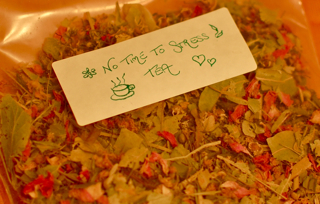
Danielle has written a list of some lovely relaxing herbs for teas in her post for the blog party which you can read here and, like her, making a nice cuppa is my default response to anything even remotely stressful. I thought I’d share some of my favourite tea blends with you here, some of which I have also made up as little extra presents for people.

Many herbs that help to relax us are considered cooling in nature. This doesn’t necessarily mean they make you feel cold but that they calm and cool body processes rather than exciting them. Still it can be useful to add some more warmth to our teas at this time of year so each of these blend contains at least one warming herb or spice to balance the cooler ones.

Lavender, Vanilla and Oatstraw – This my evening time tea of choice at the moment. It’s calming, comforting, restorative and helps to pacify the restless mind. I add a tablespoon of oatstraw and a teaspoon of lavender to the pot along with half a vanilla bean, finely chopped.

Chamomile, Rose and Vanilla – This makes a lovely soothing after dinner tea and is delightfully fragrant and aromatic helping to disperse tension and anxiety.

Lime blossom, Oatsraw, Rose and Cinnamon – A little more spicy, this tea is great at work or during a busy afternoon as the calming herbs are somewhat balanced by the warmth and revitalising action of the cinnamon.

Orange peel, Cardamom and Rose – Another lovely balancing brew, I adore this combination of flavours which is like a big loving hug.

Lemon Balm and Rosemary –  A perfect balance of heart lifting herbs, I have written about this tea before… more than once!

Chamomile, Lime blossom and Oatsraw –  A very gentle tea to aid a peaceful nights sleep. More powerful herbs can be useful if insomnia is a problem but generally these would need to be selected with the individual’s constitution in mind.

Footbaths and Massage:

I’ve been meaning to write about the magic that are footbaths since I first started this blog last winter but I thought they’d be worth a mention here for their wonderful ability to calm and ground the nervous system and promote better circulation and a good night’s sleep. Most of us are far too ‘in our heads’ at this time of year and there’s nothing like payng attention to your feet to bring you back down to earth. I particularly like a strong infusion of Tilia, lavender and chamomile in a footbath. Great for children and adults alike, you absorb the healing qualities of the herbs through the soles of the feet and also get to breathe in the wonderful, calming aromas of these volatile oil rich plants. Followed up with a foot massage of lavender or chamomile infused oil you are almost guaranteed to have forgotten your cares and enjoy a deep and restorative night’s sleep.

Herbal Tinctures:

Tinctures are really best formulated on an individual basis as different herbs will have an affinity with different people. However I do like to make a very general Autumn/Winter Tonic with seasonal plants from my local area. This year it includes elderberry, hawthorn berry, rose hips and nettle seeds, all collected within a few meters of my garden gate. This medicine helps guard against winter stresses by nourishing my immune system, adrenals and cardiovascular system, all of which come under pressure at this time of year. The formula is also packed with antioxidants from the berries which help to protect every cell of the body. It also connects me to the land in which I live, bringing with it the subtle medicine of inter-dependence and belonging.

Flower Remedies;

Flower remedies can be wonderful allies in helping us to regain our sense of centre. Again they are best chosen with an individual in mind  but the following remedies from the Bach system are particularly useful in times of stress.
White Chestnut – When there is excessive mental chatter or preoccupation with certain worries that get in the way of relaxation.
Aspen – For vague, non-specific fears of unknown origin or anxiety with a sense of apprehension or foreboding.
Cherry Plum – For when you’ve reached the end of your tether and fear mental collapse or loss of control.
Elm – For normally capable people who are overwhelmed with responsibility.
Impatiens – For impatience and stress with irritability.
Mimulus – For fear of ‘known things’ such as flying, spiders (or Christmas!).
Olive – For complete exhaustion and when everything becomes an effort.
Red Chestnut – For excessive concern with the well being of others.
Rock Rose – For states of extreme fear and panic attacks.
If in doubt Rescue Remedy, a blend of 5 remedies which is now widely available, is helpful in a huge range of stress related problems.

Essential Oils:

Lovely in baths or massage oils, there is a wide range of relaxing essential oils which can help with stress such as lavender, chamomile, rose, sandalwood, frankincense, bergamot, neroli, patchouli, benzoin, geranium and mandarin. I particularly like making up a 2% blend of my favourite relaxing oils in a carrier such as sweet almond oil and adding to a 10ml rollette bottle that I carry in my bag and roll onto my temples, collar bone, neck and wrists whenever I start feeling stressed. I make a different one each time but a blend of lavender, chamomile and frankincense is a particular favourite.

Hydrolats and Floral Waters:

I love adding a good swig of lavender, neroli, rose or lemon balm hydrolat to my water and sipping throughout the day to calm and centre my nervous system. Neroli is my absolute favourite though nothing feels as decadent as rose. I have been known to have them in a shot glass when the going gets really tough.

Nourishing Infusions:

Susun Weed style nourishing infusions are great at this time of year for adding extra vitamins and minerals to our diets and supporting our nervous systems. We use up many more nutrients in times of stress so it’s important that we replenish them regularly. I love oatstraw best for its affinity with the nerves. Look here for Susun’s instructions on how to make them.

Staying centred in yourself when the pressure is on can be a challenge. Sometimes the hardest thing can be actually taking the time out to have a relaxing foot bath, mix some calming teas or choose a flower remedy. But, as one of my teachers once said, ‘herbal medicine works, you just have to take it.’ Just as stress begets more stress, in ourselves and others, a moment’s relaxation creates the space for a deeper relaxation to occur.

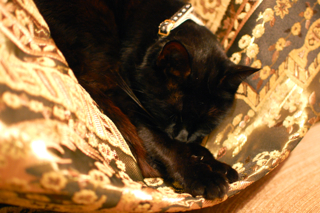
Luckily for me I have a shining example in my three cats, who have made relaxation and comfort into an art form. Take a leaf out of their book and make sure you take time out this Christmas to chill!

December Tree Gazing

For me there is something special about trees in winter. You get to appreciate the beautiful subtlety of twisted trunks and broken branches, the soft hues and the sinewy masses that are normally overshadowed by leaves. I wrote about my appreciation of tree barks here some months ago and this too is part of the fascination of winter tree gazing. But there’s more than that; it seems to me that trees, especially deciduous ones, somehow embody the spirit of winter. Once their leaves drop they cast a spell of sleep and withdrawal across the land- and us, if we are alert enough to perceive it. They look aged, wise and full of secrets, but ones that have no intention of being told until Spring begins to wipe the sleep from our eyes and comb last year’s leaves from our hair.

It’s fun to learn how to spot different trees without being able to rely on their leaves to identify them.

Ash are one of the most distinctive due to their black buds and the ash keys still clinging to their branches at this time of year.

Ash Keys

Oak too can be easy to spot due to it’s lovely ridged bark and twisted branches. It helps too that there are still some leaves, despite the high winds, snow and torrential rain of the past few weeks.

Oak Branches

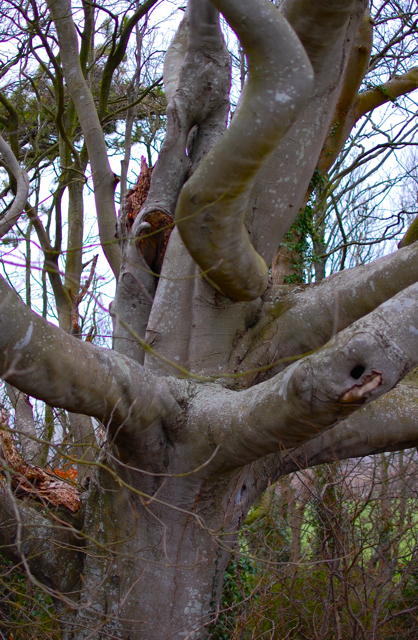
Beech trees are always a pleasure to spot with their smooth, silvery bark and great sinewy limbs.

Beech trunk

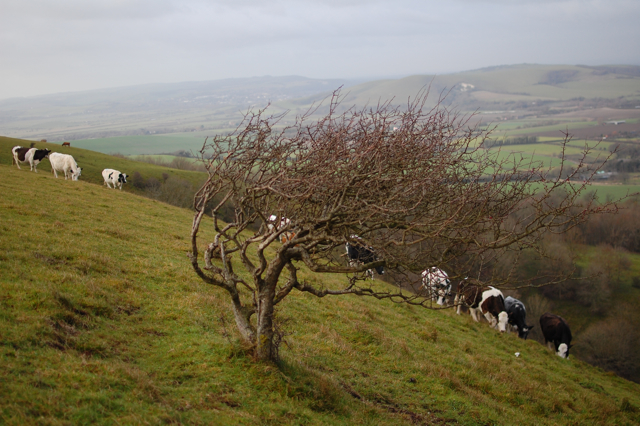
It will come as no surprise to those who have been reading this blog a while that one of my favourite trees to admire at this time is the Hawthorn. These three wind blasted beauties on top of the Downs are some of my favourite trees in the local area.

I love gazing at how the elements and the landscape have moulded them, shaping their stories into form.  Though Hawthorns are abundant in this area, each one is completely unique, just like humans they reflect their own natures and that of their environment.

Winter is generally the least popular of the seasons for it’s cold, dark days and biting winds but if you are open to finding the beauty in nature, you’ll find it year round, even if sometimes you have to look a little harder than others.

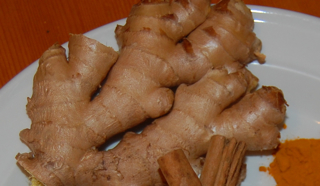
I feel like it’s been a pretty chilly Winter already and we still have a long way to go before Spring. I actually quite enjoy the Winter months but, as one who tends to feel the cold, I always go out of my way to keep warm by wrapping up well and consuming plenty of warming spices in my food and drinks. Apart from Cardamom, which I have already waxed lyrical on, the spice I enjoy most is probably ginger. It’s so warming, revitalising and restoring and is packed with medicinal benefits, as well as being delicious.

I always start my day at the moment with a few thin slices of fresh ginger in hot water as soon as I rise. It helps move the circulation, stimulate digestion and wake me up when I’d frankly much rather still be in bed! Ginger, Zingiber officinale, has been used in Traditional Chinese Medicine for hundreds of years and is thought to protect against damp and cold, two of the dreaded ‘six evils’. Many people are affected by these in the UK where our climate at this time of year can undermine the immune system, even in those with a warmer constitution.

Ginger is a great ally against cold and flus as it is warming and drying to the whole body but also has a special affinity to the respiratory system where it helps to resolve excess phlegm and mucus. Due to it’s anti-spasmodic and expectorant actions it is great in catarrhal coughs, chest infections or any condition with mucus and spasm. Do be a little wary in dry coughs however or any situation where there is heat coupled with dryness as ginger may exacerbate it. As a general immune tonic tea I love some fresh ginger gently simmered for 15 mins with elderberries and orange peel.

In his lovely guide to Traditional Chinese food energetics, Helping Ourselves, Daverick Leggett describes ginger as being helpful to combat ‘wind cold’, the term given to an invasion of the body by a pathogen such as the common cold which manifests with cold symptoms. He says ‘Wind invasion is treated through the use of the pungent flavour which assists the body to expel pathogens by directing Qi outwards.’

Dry ginger, usually taken as a powder, is considered both hotter and dryer than fresh ginger which is always a gentler option. Even though it’s still considered drying, I often find the fresh ginger to have a very slightly moistening quality too which prevents it being too aggravating to dry conditions.

Botanical Illustration of Ginger courtesy of Wikipedia

In Ayurvedic medicine ginger was referred to as ‘vishwabhesaj’ or ‘the universal medicine’. In The Yoga of Herbs, a lovely recipe is given for making ginger pills by mixing the juice of fresh ginger to powdered dry ginger and rolling into balls about the size of a pea, to be taken three times a day. I really fancy giving this a go, perhaps with a wee bit of honey, so I’ll report back when I do so.

Ginger is also great for other winter ailments such as reduced circulation, Raynauds syndrome and chilblains as it stimulates the heart and circulatory system and helps reduce blood clotting. Some evidence also suggests that it can help in lowering cholesterol. In these actions we can see again its ability to move the vital force outwards to the extremities.

Ginger is probably best known as a digestive remedy however, used by many to relieve nausea, especially during travel. It stokes the digestive fires, stimulating the appetite and improving digestion thus reducing bloating and gas. I like it taken as a tea after meals with peppermint or chamomile. Do be aware however that Ginger is best avoided in cases of gastric ulcers.

It is also a great anti-inflammatory and has a long history of topical use for relieving joint pains and arthritis which can often be worse in colder weather.

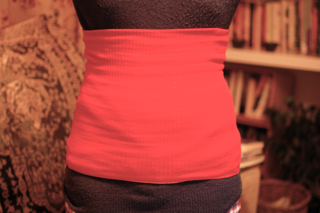
Apart from Ginger, my other top tip for staying warm this winter is to buy or make yourself a haramaki. A haramaki is a Japanese belly band that you wear around your middle to keep your internal organs toasty warm. In Asia I always saw people wearing blankets tied round their middles in cold weather rather than big bulky coats and certainly in Chinese medicine, keeping the kidneys and internal organs warm is seen as key to good health by protecting the ‘batteries of life’ which reside in the kidneys.

I bought myself a haramaki this autumn and it hardly feels like an exaggeration to say that it has completely changed my life! It’s incredible the difference wearing one makes to your body temperature. I usually wear mine under my clothes but here I am modelling it over them for you to see.

I got mine from this company here but you can also buy them from these people here. I have recommended them to so many people this winter I am considering ringing up and asking for commission! For those of you with a sewing machine and a bit of free time they are not difficult to make and instructions can be found online here.

Wishing you all a wonderful and warm weekend. 🙂

References:
The Yoga of Herbs – Dr. David Frawley and Dr. Vasant Lad
Helping Ourselves – Daverick Leggett
The Complete Herbal Tutor – Anne McIntyre

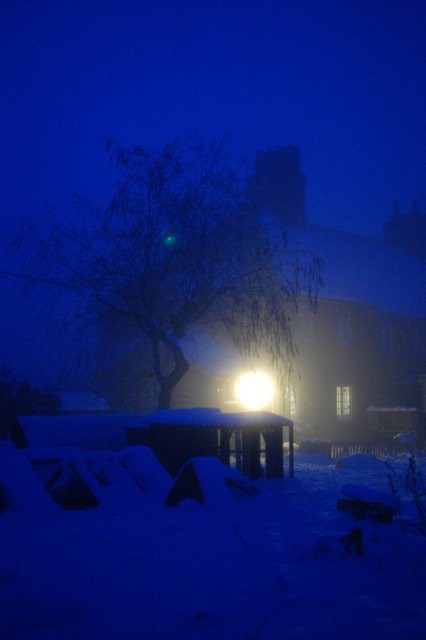
The world outside truly is a wonderland at present.

These photos were taken this evening just as the light was starting to fade which gives them their blue tinge.

Do excuse my lack of herbal posts this week, I’m so excited by this wintery beauty that I had to share some more pictures!

I’ll aim to write something more informative in the next few days. 🙂

It started snowing here on Sunday. Just a few flakes that melted away in the afternoon sun but it warned us of what was to follow later in the week.

First snow flakes.

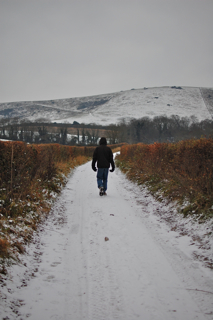
Yesterday, the ground was lightly covered, not much, but enough to disrupt the trains and ensure a day off work for my hubby and I. We went for a walk around our village and admired the many beautiful sights of December 1st, the first day of Winter.

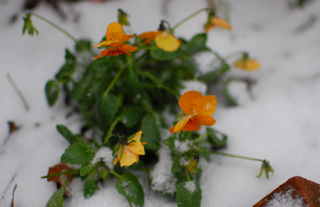
Winter Violas in the snow.

Three seasons in one picture: young cleavers, autumn leaves and snow.

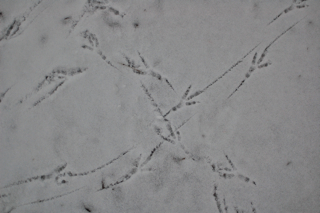
The tracks of birds and animals give us a window into a world we rarely get to see and tell us stories of the lives of our fellow beings.

These, I think, belong to the local pheasants.

We walked into a world where the only colour was ourselves and the last of the autumn leaves, blazing a trail alongside us. I felt like we were in an animation in which only certain parts of the artwork had been coloured in.

We greeted some friends who were also out in the snow.

When we reached the top of the escarpment, the light was just starting to fade and looking out to sea, it was nearly impossible to differentiate between water, land and sky.

When we woke this morning, it was to a white and perfect world. The snow as powdery as icing sugar and as high as the top of my wellies.

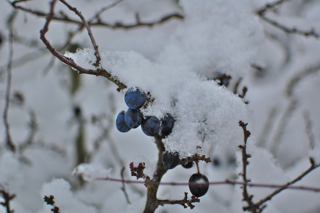
There is an old country saying that goes, ‘many sloans, many groans,’ meaning that when the blackthorns are abundant with sloes, we’re in for a harsh winter.

Well I don’t think I’ve ever seen as many sloes on the trees as I have this year. Even now, after being attacked by birds and sloe gin makers for many weeks, they are still dripping off the branches.

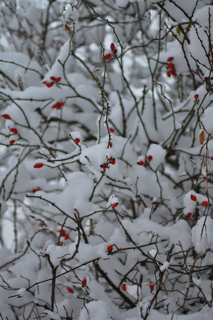
The last of the hawthorn berries and rose hips look so beautiful and Christmassy against the sparkling white snow. It brings a smile to my lips just to see them.

Now I’m off to build a snowman and shower my poor husband in snow balls!

Wishing wintery love and snow angels to you all.

Brigitte is our kind host once more for the December Blog Party, the topic of  which is-

No Time For Stress’.

Considering it’s the time of peace on Earth and goodwill to men, Christmas can be a hectic and stressful time for many of us in this society. But as I always say, when the going gets tough, the tough gets herbs.

Here’s the low down from Brigitte:

“I know many people  are dealing with additional pressure around holidays so I thought you may like to share your favorite herb or secret recipe to cope with stress. Please write a post on your blog until the 20th December and send the link to

brigitte at myherbcorner.com

I will collect all our posts and publish the links here on the 20th. If you have no blog but would like to participate you can email me your text and I will publish it here with your name as a guest post. Alternatively you can email them to debs at herbal-haven.co.uk and she will add your blog post to the UK Herbarium Community Blog.

Please join us and share your recipe of anti-stress tea, massage oil or favorite tea blend  so we all can learn from each other.”

This should come just in time to stop me tearing my hair out over that one last person who I havent bought or made anything for yet!


Equanimity in the face of adversity... even Christmas.


There are so many lessons to teach these silly humans that sometimes we Zen Kitties truly have our work cut out for us. Most humans like to think that things belong to them and are constantly referring to ‘my shirt’, ‘my book’, ‘my bag’ etc. I like to show them, as best I can, how erroneous these suppositions are, as like all things, the notion of ownership is subject to change at any moment.

Your jacket

Is now my jacket

How foolish you are to be so attached.

My Jacket

Sorry, whose?


If there is no self, how can these shoes belong to 'you'.

Finder's keepers.