Feeds:
Posts
Comments

Calendula and Chamomile were born to be friends. As cheerful and vibrant as each other, they are two of the kindest herbs I know, always on hand to heal, soothe and balance myriad ailments.
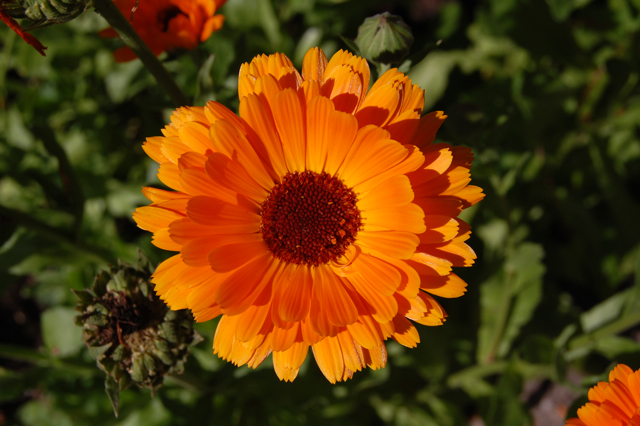
Calendula
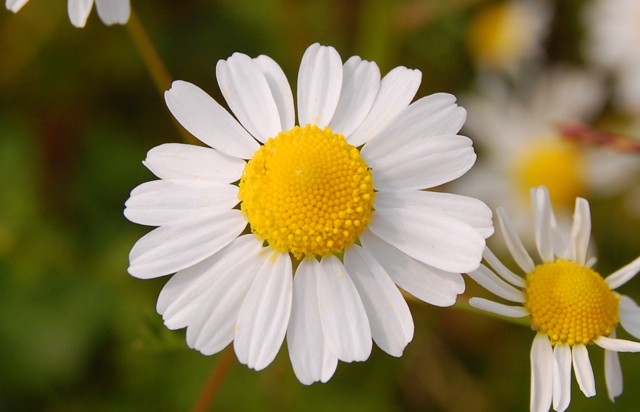
Alongside their individual personalities they have much in common, as good friends often do. They both have a deservedly high reputation as skin herbs and are particularly beneficial for soothing sore, dry and irritated skins due to their calming, anti-inflammatory properties. They have both also been used for soothing the nervous system and relaxing spasms in the digestive system. Despite being powerful healers they are gentle enough for young children. They are both anti-septic and can be helpful for a range of external and internal infections.

One of my favourite ways to combine them is in this deliciously rich and soothing cream that I use on areas of dry or irritated skin, sunburn, insect bites, allergies, scars or just as a lovely moisturiser that is great for sensitive skins. It also makes a perfect cream for mother and baby and can be used to help a range of problems such as nappy rash, cradle cap and sore nipples to name but a few. I call it my ‘little pot of kindness’ as that just what these herbs are.

Little Pots of Kindness

Chamomile and Calendula Calming Cream- A Little Pot of Kindness:

These quantities make enough cream for two 60ml and one 30ml pot. It’s good to make it in small batches unless you plan to add a synthetic preservative as it only has a shelf life of about a month out of the fridge (it will be less in a hot climate) or 2 months in. Essential oils can also act as preservatives but are not present in high enough quantities in this recipe.

50ml calendula and chamomile infusion (steep a tablespoon of each herb in a cup of freshly boiled water, strain and measure out required amount).
25ml aloe vera gel (also calming and healing)
1/2 teaspoon vegetable glycerine
10g beeswax
20g coconut oil (considered cooling and calming in ayurvedic medicine)
25ml calendula infused oil (see here for how to infuse your own oils).
25ml chamomile infused oil
2ml Vitamin E
5 drops Vitamin A
10 drops Lavender essential oil
4 drops Roman Chamomile essential oil

Melt the wax and coconut oil in a bain marie or double boiler on a low heat, adding the calendula and chamomile infused oils when liquid and stirring a little if the waxes start to solidify. In a separate container mix the herbal infusion with the aloe vera and glycerine. Take the oils off the heat and allow to cool slightly before adding the vitamins A and E. For more detailed instructions on cream making along with photos of when the oils are ready to blend, see this post here. I use a small hand blender to mix them as I’m not making a large enough quantity to use my big blender. You could also use an electric or hand whisk. Begin to blend/ whisk the water mixture and slowly add in the oils, a drizzle at a time. Continue to blend until you have a nice smooth, even, creamy consistency. Spoon into a jar or jars and stir in the essential oils. Pop in the fridge for a short while to cool.

This is the same method I used to make my infused elderflower moisturiser. I find it works well for me but creams are notoriously difficult when you make them without using an emulsifier. If your cream seems to be separating don’t despair, just keep scraping the mixture down the sides, mixing it up with a spoon and blending or whisking again. It’s fine to use an emulsifier if you prefer, I just like to make things as simply and naturally as possible when I can.

Oh and don’t forget to thank the chamomile and calendula for all their goodness and care. 🙂

Tree Skies

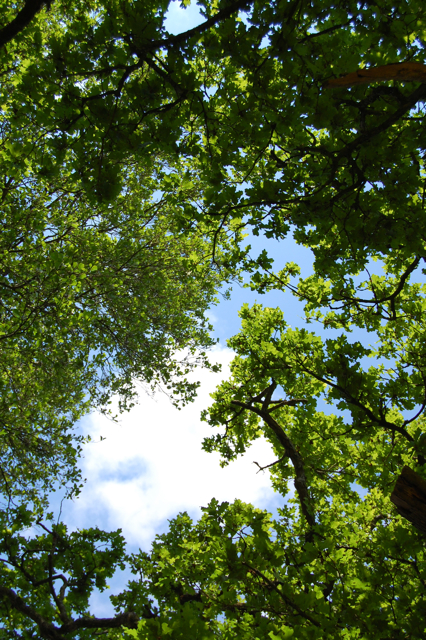
There’s nothing more enjoyable on bright days than to sit or lie beneath a tree and look up at the sky. As the seasons change and the skies flow through them, the views are never the same, though they are always beautiful.

This is one of my favourite ways to view the world.

Oak Sky

Oak and Birch Sky

Yew Sky

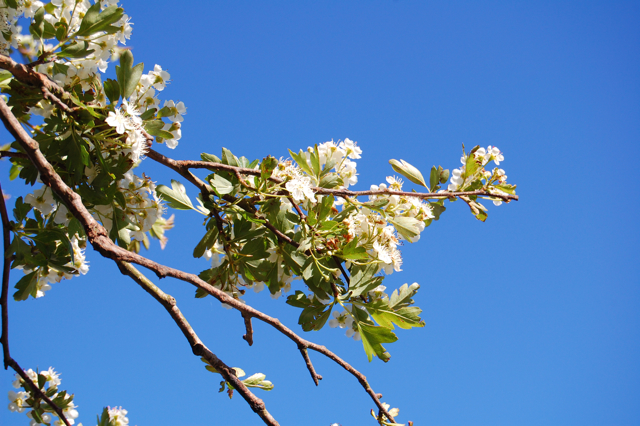
Spring Hawthorn Sky

Summer Hawthorn Sky

Ash Sky

Red Chestnut Sky

Linden Sky

Elder Sky

Zen Kitties believe moderation is best in all things if one wishes to maintain the balance of mind.

For example, too much catnip is liable to leave you feeling very funny indeed!

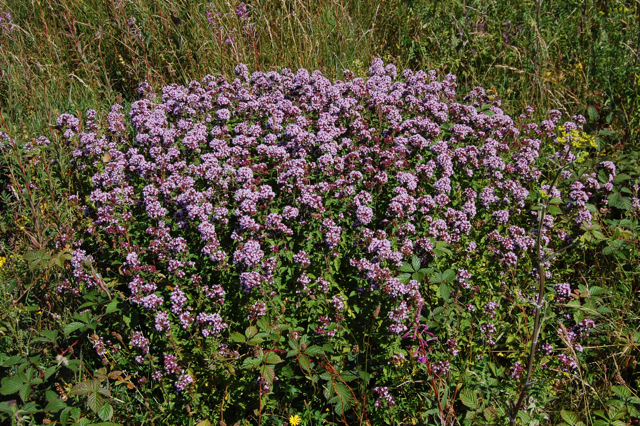
Wild Marjoram in Bloom

Wild marjoram is a beautiful herb which grows throughout Europe, though it is native to the Mediterranean and parts of Asia. Just to confuse you, wild marjoram, Origanum vulgare, is actually oregano and is different, though closely related to pot or sweet marjoram, Origanum majorana. Part of the mint family, or Lamiaceae, it has oppposite leaves and lovely purple flowers which grow in terminal clusters throughout July and August.

Wild Marjoram on the Downs

Oregano is generally considered a culinary herb but, in fact, it has a long history of medicinal use as well. In A Modern Herbal, Mrs Grieves tells us, “Marjoram has a very ancient medical reputation. The Greeks used it extensively, both internally and externally for fomentations. It was a remedy for narcotic poisons, convulsions and dropsy. Among the Greeks, if Marjoram grew on a grave, it augured the happiness of the departed, and among both the Greeks and Romans, it was the custom to crown young couples with Marjoram.”

High in flavonoids, oregano is prized as an antioxidant and is therefore useful to include in the diet on a regular basis. It is also highly antimicrobial and it was used primarily as an antiseptic by Hippocrates who employed it in the treatment of sore throats, respiratory ailments and digestive upsets. In more recent years it has been found to be active against MRSA, having more impressive results than many of the commonly used drugs. The essential oil is particularly useful and nurses and doctors could benefit from adding it to handwashes instead of the antibacterial soaps commonly used which actually cause the creation of further resistant strains of bacteria. A strong infusion can be used to help disinfect wounds or as a mouthwash, helping to heal ulcers and keep gums healthy.

Its beautiful flowers are loved by butterflies and bees

It is high in thymol, also found in thyme, which has expectorant properties making an infusion of oregano a useful remedy for respiratory problems such as unproductive coughs or congestion when used as a tea or steam inhalation. It is also a useful digestive remedy – being highly aromatic it helps to dispel gas and soothe intestinal spasm.

Like sweet marjoram, it’s also useful for aches and pains. The leaves can be mashed with a little hot water to make a poultice which is then laid on the problem area and secured with bandages, or alternatively, use a compress made from a cloth soaked in the infusion. The infusion can also be added to the bath to ease rheumatic pains and muscular stiffness. I harvested enough of this lovely wild marjoram to make an infused oil which I did using the heat method. It smelt so yummy I kept half for use in salad dressings and the other half will be used in infused oil muscle rubs and salves for achy joints.
Wild marjoram is a joy to see growing. It is vibrant, healthful and vital and it helps us to be so too.

The beauty of wild flowers

An Afternoon Herb Walk

I went for a lovely walk on the Downs yesterday afternoon with Sarah, aiming to harvest some Yarrow and see what was about. It was a beautiful sunny day and there was such an abundance of wonderful healing plants everywhere we looked. Sarah is a great herbalist and teacher so I always learn lots from my time with her.

We saw lots of Lady’s Bedstraw, Gallium verum, a lovely cleansing herb which can help the kidneys, liver and lymphatic system and aid in skin disorders, much like it’s close relative Cleavers, Gallium aparine. It has a delightful odour and was used as a strewing herb and to stuff mattresses (hence its name).

Lady's Bedstraw

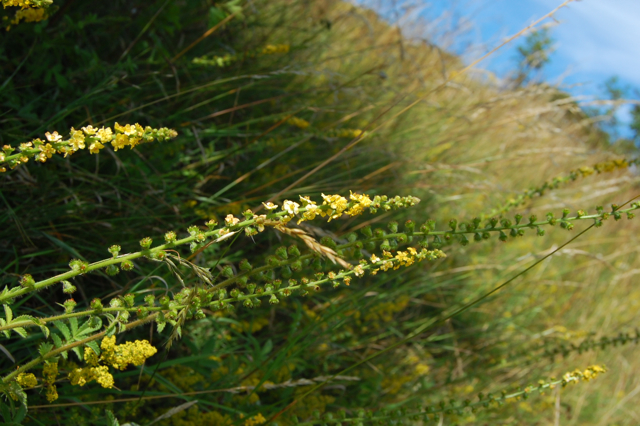
The Agrimony, though slightly passed its best, was still looking so beautiful. Seeing this herb on a walk is always a pleasure. As an astringent it’s useful for stomach upsets and sores and can help tone oily skins when used as a face wash.

Agrimony

We also saw Wild Lettuce, a useful sedative, growing next to flowering Mugwort.

Wild Lettuce

Mugwort

I was very excited to see the haws starting to form on the beloved Hawthorn.

Swelling Haws

There was lots of mallow, a traditional wound herb, and some wonderful wild marjoram which I’m going to write a fuller post on in a couple of days.

Mallow

Wonderful Wild Marjoram

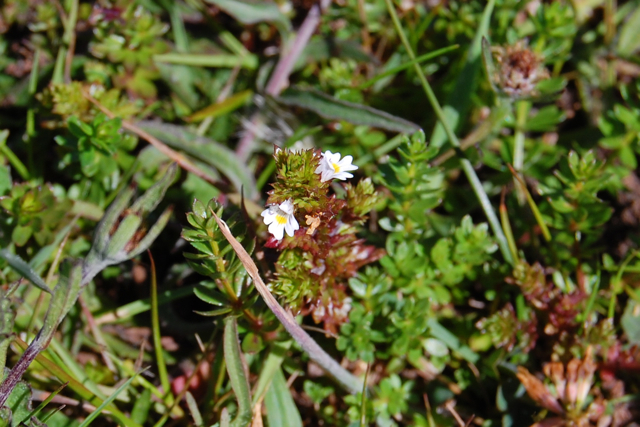
I was so happy to see some eyebright which I hadn’t encountered in the wild before.

Eyebright

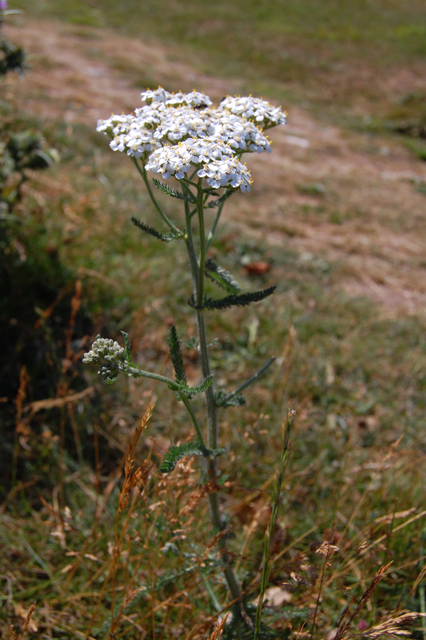
And last, but by no means least, we managed to collect the thing we came for, some lovely blooming Yarrow. What a great afternoon!

Yarrow

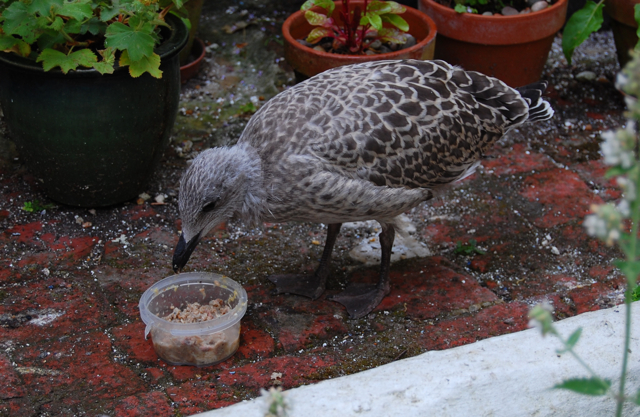
So at last our baby gull has flown the nest. Off she went running down the road and after a few attempts, she took off, soaring above the roof tops into a bright blue world of sky and sea.

Farewell Suki, we wish you a long and happy life.

Getting ready...

And lift off...

Glide...

Up and away!

The Cry of the Gull

The cry of the gull rouses me from my slumber each morning.

It’s not as romantic as it sounds. It’s more of a high pitched squealing really, beginning at an ungodly hour and continuing until I haul myself out of bed and head into the kitchen to prepare breakfast.

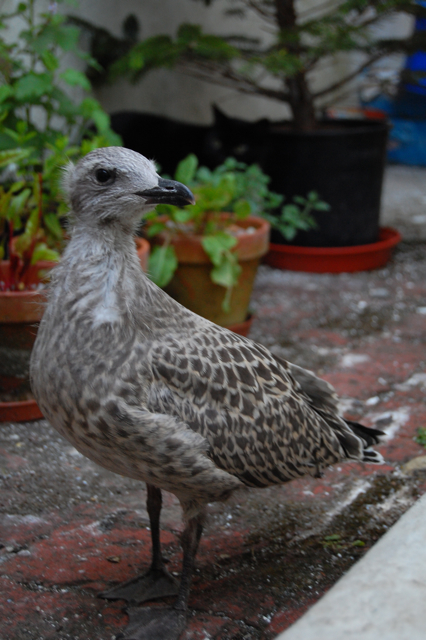
The gull in question is a baby herring gull who fell off our roof a couple of weeks ago and was attacked by a neighbouring cat. We picked her up and put in our our back yard where she (or possibly he) has been in residence ever since. We called her Suki, though she goes by other names too; destructo-baby, squawk-a-lot, poo machine etc.

I am DESTRUCTO-BABY!

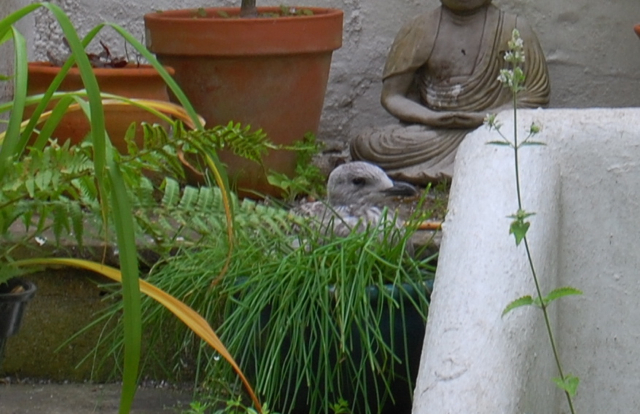
She made herself at home almost immediately, deciding to flatten my once vibrant and upright chives to make herself a nest. She seems to take particular joy in picking up my seedlings and smaller pots in her beak and throwing them across the yard, causing irreparable damage to more than a couple of them.

A comfy bed for a baby bird

She eats more than all three cats together and bangs her dish on the ground if I’m not speedy enough delivering her line-caught tuna or seasonal sea food platter. It’s quite endearing really.

Yum yum

She’s also particularly active at the other end. I don’t know if you’ve seen photos of the Indian spring festival Holi, the festival of colours, which is celebrated by throwing coloured paint and water over everything and everyone in sight, but if you have, it’s fairly comparable to how our garden looks now. Except rather than a festival of colour, ours is more a festival of faeces, a parade of poo, a carnival of crap.

Splattered Buddha

Having said all that, we’re very fond of her and are watching with anticipation as she gets bigger and stronger everyday. She’s stretching her wings and managing some little glides now so we don’t think it will be long before she flies off to find her own way in the world. Whilst we’ll miss her and wish her well, I’m looking forward to catching up on a bit of sleep!

This month, I decided to join in the Herbwifery forum’s monthly blog party, hosted by Shamana Flora, the topic of which is ‘Adventures in Herbalism: or What wouldn’t we do for herbs.’

The idea is to write about any interesting, entertaining or downright outrageous stories from our work with the herbs and wild plants of our craft. We were invited to “share… a story of an adventure you’ve had collecting/wildcrafting herbs…i.e. collecting hops naked in the rain? hanging off a mountainside for elderberry collecting? eluding curious bystanders? etc etc.”

I thought this sounded like a great idea for a blog party but, when I came to consider it, I couldn’t really think of anything that adventurous I’ve done while collecting my plants. Of course there’s the inevitable trespassing, sneaking round under cover of darkness, wading through nettles in shorts, hanging over rivers and crawling around the undergrowth that is part of any wild herbalist’s work, but nothing that would really make a particularly enthralling story.

As I mulled it over however, it occurred to me that my whole interaction with plants and nature is an adventure, one that has transformed my world, my thinking, my feeling and my understanding. I’ve come to think that the true adventures in herbalism are inner adventures, the ones that alter our perceptions so radically that we come out of them utterly changed. Altered and awed.

I can remember very clearly the lightbulb moment when I realised that struggling and straining to learn how to communicate subtly with my plant companions was ridiculous. We are so conditioned into believing that we need to learn new skills through a process of practice and great effort that it never occurred to me that these kinds of interactions are part of our very being, easy as laughing, easy as breathing. Generally, when we think about breathing it becomes a complicated process, but in openness and letting go, the body’s own wisdom knows exactly what to do. The same is true with learning to share experiential understandings with plants. Just as animals interact so easily with their environments, we too are designed to fit into and be a part of a natural world which, in our culture, we are so used to separating ourselves from.

What do you think this one's saying?!

When we spend time in nature, observing with an open mind and heart, subtle shifts begin to creep up on us, everything seems brighter, more shining, more special. We can no longer pass by unaware and unseeing as we start to delight in every little thing around us. Even in the city I find myself stopping, enthralled by a tiny plant growing out of a wall, gazing at the trees in wonder and in gratitude. Something sleepy and wild begins to stir in the blood and we realise that we’ll never be quite ‘normal’ again.

So my greatest adventure in herbalism is the quiet, simple, day to day adventure of appreciation for all the gifts that plants give us, from shelter, food and medicine, to subtle understandings, realisations and the ability to extend our love beyond the the limited boundaries of friends and family, to begin to embrace the whole world, in all its myriad expressions.

We always assume it is pain and suffering that will break us, if we let them. So we avoid pain and with it we avoid much of our true experience, as shutting down will inevitably close us to all our sensations and potential for feeling. If we are lucky and some blessing or miracle happens upon us, then we come to see that it’s not pain that will be our undoing but wonder, and what an undoing it is. Imagine it, imagine a breaking that doesn’t reduce you but rather offers you the whole universe, yielding and divine. That is what the natural world offers us, the possibility of wonder, of surrender, of bewilderment and bliss.

In some ways the plants have already asked a lot of of me, but they have given so much more in return. So in answer to the alternative title for this blog party “what wouldn’t we do for herbs?” I must reply, ‘there’s nothing I wouldn’t do for them.’ My teachers, my guardians, my friends.

Linden Update

When I wrote my last post on Linden, the blossoms were yet to open. I finally managed to collect my harvest about 10 days ago, when I accompanied the lovely Sarah and Therri on their rounds of the local Tilia trees.

I only collected one bagful but that was plenty for me to make a small quantity of tincture, some infused oil and a lovely linden Elixir. Linden, also known as Lime or Tilia, has a beautiful sweet honey/ floral smell which can make a gentle, subtle infused oil that will help with nervous tension and calm anxiety when massaged into the skin. It’s also antioxidant so lovely in face creams which I’ll be making a batch of soon. I used Jojoba oil to make mine, partly because Jojoba is one of the plant oils that is best absorbed by the skin and partly because it’s the only oil I had sufficient quantity of left! You could use any light, unscented oil however such as sweet almond, apricot kernel or a light sunflower. See here for my post on how to make an infused oil.

Infused Oil and Elixir

I’m particularly excited by the elixir as it’s the first time I’ve made it. I was inspired by the wonderful taste of lime blossom honey (said to be one of the best in the world) and wanted to incorporate it into a medicine which would capture the different properties of Tilia in something delicious and sweet tasting. To make it I filled a jar with Tilia blossom, the flowers and bracts, and covered it to the top with one third Lime blossom honey and two thirds brandy. I then added 7 drops of Linden flower remedy to increase the subtle healing properties of the elixir. I love Tilia as a flower essence, my experience being that it lightens my mood, opens the heart, increases perception and brings a sense of sweetness and calm to my day.
I’ll leave it to infuse for six weeks, giving it a little shake once a day, and then strain out the plant material and take it liberally, either in a little warm water or straight off the spoon! Yum.

With three assignments due in and motivation at an all time low, there was a certain inevitability to the fact that I would end up in the kitchen making something yummy to see me through the tedium.

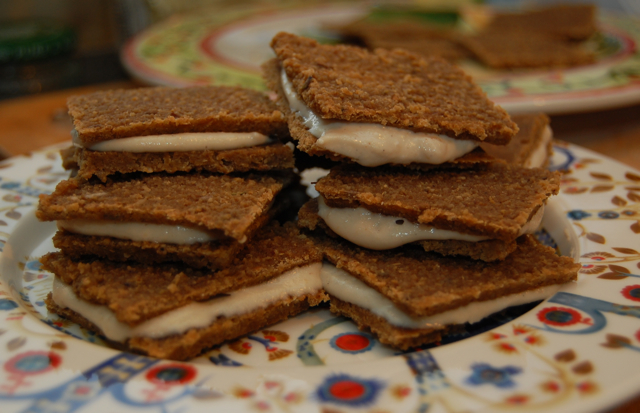
I’ve been wanting to make a healthier take on lavender biscuits for some time, as it’s a flavour I particularly enjoy, and this is the recipe I came up with using sprouted oat groats, brazil nuts and raw honey. It’s so quick and easy – though you need to be a bit prepared as the oats need about three days sprouting time before hand.

I wanted to make a gooey oreo style cookie with a cream filling and here is what I did.

For the Biscuit Base:
300g sprouted raw oat groats
150g brazil nuts (soaked overnight)
2 bananas
1 tablespoon raw honey
1 tablespoon dried lavender flowers
1 teaspoon ashwagandha powder (optional)
1/2 teaspoon vanilla powder (or a teaspoon of vanilla essence)
Small pinch himalayan crystal salt

To sprout the oats, soak over night, rinse thoroughly then leave to sprout in a specialised tray or a jar with muslin cloth over the top so the air can circulate. Rinse morning and evening with fresh water and strain. Make sure the groats you buy are not heat treated or they wont work.

The Basic Biscuits

Put the oat sprouts and soaked brazils in a food processor and blend until well broken down. Add the bananas, honey, salt and the ashwagandha powder, if you are using it, and process again, stopping and scraping down the sides a few times to ensure it is all evenly mixed. You can easily leave out the ashwagandha, I just added it to give me a little extra stability whilst studying as it’s a lovely calming adaptogenic herb. Transfer to a bowl and mix in the lavender flowers by hand. You should now have a gooey, sticky raw cookie dough that tastes delicious just as it is.

I made these in the dehydrator but if you don’t have one you could bake them in the oven on a low heat for a short time instead. If you do have a dehydrator, spread the mixture thinly on a teflex sheet and dehydrate for 12 hours. Flip the sheets, peel away the teflex and score the mixture into small squares before dehydrating for another 6 hours. Break them into the individual squares when finished.

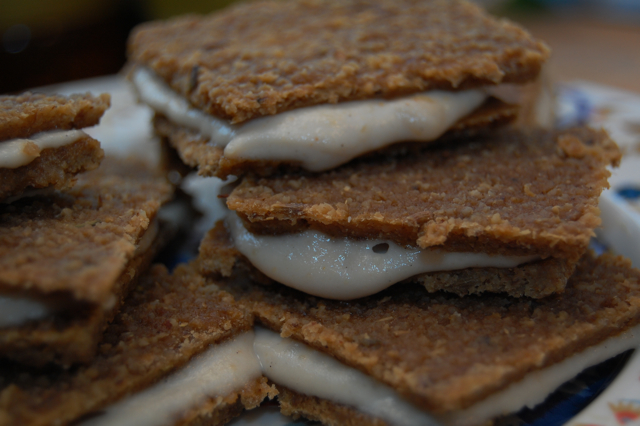
They are very tasty like this but I wanted something a little more decadent so I decided to add the lavender macadamia cream as an indulgent filling.

Bliss Biscuits

For the Filling:
100g macadamia nuts
1/2 cup strong lavender tea
Tablespoon raw honey
1/2 tsp vanilla powder

Blend all the ingredients together until they form a thick cream. Add the liquid a little at a time, adding a bit more if it’s too thick to blend. You do want it to be pretty thick though so it doesn’t ooze out of the sides of the biscuits.

Layer the cream between two of the biscuit squares and enjoy! If you are planning to keep them longer than a couple of days it’s best to refrigerate the biscuits and the cream separately and assemble as you go along, they’ll last longer this way.

Yummy Macadamia and Lavender Cream Filling

With the cookies made (and eaten!) I have run out of excuses so I best get back to the grind stone!