Feeds:
Posts
Comments

Mark the fair blooming of the Hawthorn Tree,
Who, finely clothed in a robe of white,
Fills the wanton eye with May’s delight.
Chaucer.

Pink and white blossoms of Hawthorn

I couldn’t let May disappear without paying homage to the Hawthorn, sacred tree of this month. It has been known by many names, including May Flower, May Tree, White May and simply The May, all referencing the beauty, symbolism and medicine of its blossom at this time of year. In fact the Hawthorn provides medicine most of the year round, not just in its blossom, but its leaves and berries too.

Hawthorns on the Sussex Downs, just before flowering.

Hawthorn has been common in Britain for millennia, pollen counts showing its presence here before 6,000 BC, and of all our native trees, it is perhaps the most enshrined in myth and legend. From Celtic ceremony, to Arthurian myth, to Christian legend, the Hawthorn has its place in all the stories that shape our land and our hearts.

In pagan spirituality, the Hawthorn was a symbol of fertility, youth and sexuality and was considered sacred to the Goddess. It is believed that in Celtic times, most marriages took place at this time of year, usually at Beltaine, the cross quarter festival marking the mid-point between the spring equinox and the summer solstice. Hawthorn would have been in full bloom, bringing abundant blessings to the newly weds. Today, its historical symbolism and its affinity with the heart have resulted in it being considered the tree of love. Despite marrying in August, we used branches of Hawthorn, among other trees, in our wedding ceremony last year.

Reacting against its saucy pagan associations, the Catholic Church made the pure white blossoms a symbol of the Virgin Mary and of chastity. It was also said to be the wood from which the crown of thorns worn by Jesus was made. The Glastonbury Thorn, which flowers once in May and again at Christmas was said to have grown from the staff of Joseph of Arimathea, which took root when he brought Christianity to the British Isles.

There are thought to be up to 1,000 species of Hawthorn worldwide, the two most common in the UK are Crataegus monogyna and Crataegus laevigata. Usually white, the blossoms may also be a light or deep pink.
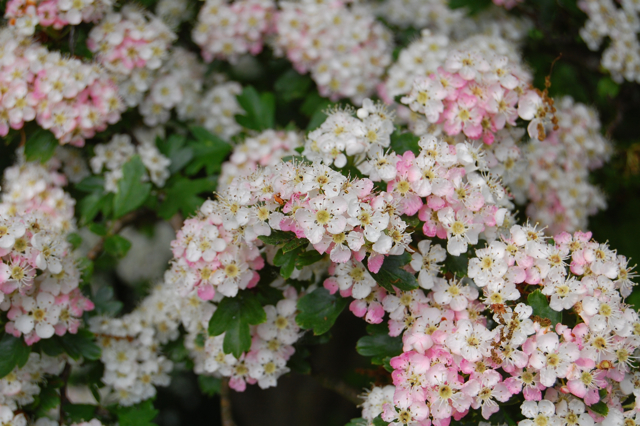
Pink Hawthorn

In medicine Hawthorn is most commonly associated with the heart and circulatory system. Both the blossoms and berries are useful and many herbalists combine preparations of the two. The berries and leaves are considered warming and drying whilst the flowers are slightly cooler in nature. Seen as a restorative of the heart, it is non-toxic and can be used safely by most people, though some care must be taken with those already on heart medication, it’s best to check with a qualified herbalist in such cases. In fact Hawthorn is regarded as one of the few Western adaptogenic herbs, having the ability to balance blood pressure, aid in convalescence and regulate sleep. As a herb of Mars it was seen as dynamic and stimulating, however it was also considered an antispasmodic and sedative to the nervous system. Like so many of our multi-faceted herbal allies, it’s impossible to squeeze into any one simple definition.

Both flowers and berries are healing to the heart muscle and arteries, being rich in flavonoids and other chemical constituents, I’ll be considering the berries in more depth when they are in season.

My own experience is that the berries are slightly more stimulating, partly due to their warming quality, where as the flowers make me feel relaxed, comforted and slightly blissed out. The tea has a lovely subtle honey flavour which eases tension and opens the emotional heart. Along with Rose, which I recently posted about, I see Hawthorn blossom as the most important remedy for helping open the heart. See how the beautiful blossoms open to reveal their pink stamens, reaching out.

Hawthorn blossom -opening the heart

One thing that intrigues me is how both the Hawthorn and the Rose have this incredible affinity with easing our emotional barriers and opening us up to feel and embrace our experiences deeply, yet they both have these very protective and somewhat savage thorns. They seem to symbolise how vulnerability and protection are not mutually exclusive, how being open doesn’t mean being weak. After meditating on this a while I came across this great article by American herbalist Jim Mcdonald who speaks of his experience with thorn medicine.

Hawthorn’s Thorns

I love the Hawthorn unashamedly and use it mostly as a tea, tincture and flower remedy. A tea made from the fresh leaves and blossoms is my favourite but I usually dry some for use later in the year too. Some people hate the distinctive, musky aroma given off by the pollen during May which is supposed to contain triethylamine, one of the first chemicals produced from dead tissue. To me however, it smells rich and heady and I can always imagine the bees drunkenly loading up on this wonderful springtime treasure!

Drying Hawthorn
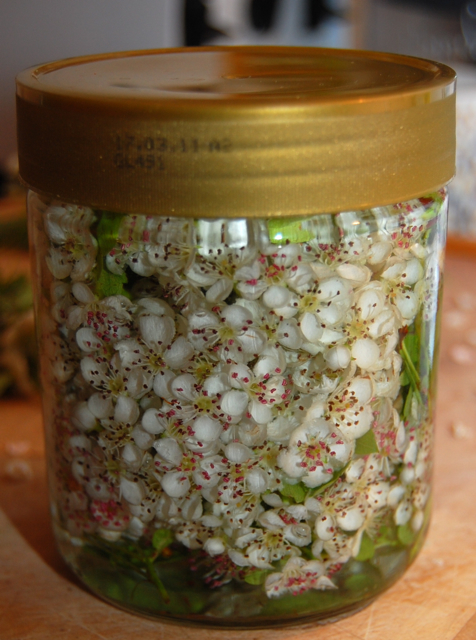
Hawthorn Tincture

A Woodland Wander

The woods on a sunny May morning are truly a wonderful place to be.

The Woods in Bloom

Dappled Light

Hawthorn Sky

Nettles and cleavers are starting to flower. This marks the end of nettle picking season, at least until the seeds are ready to harvest in a few months. Once nettles begin to flower, they produce gritty particles in the leaves called csytoliths which may irritate the kidneys and urinary tract. There are still some without flowers however, so have that last nettle juice while you can!

Nettles Flowering

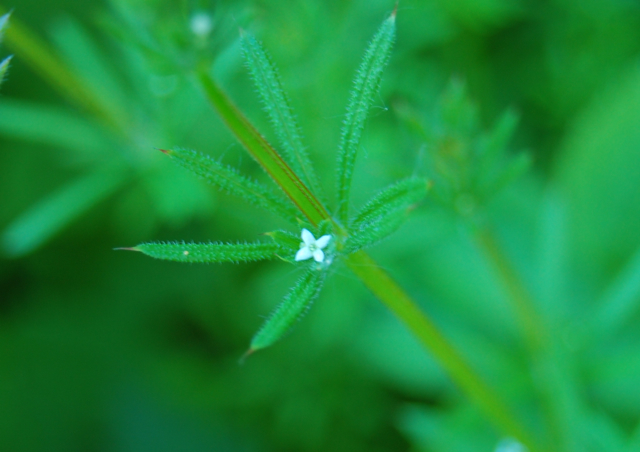
Cleavers- The tiniest, cutest flower in the woods

Also we have an abundance of Herb Robert on the edge of the woods. Herb Robert, Geranium robertianum, is a wild geranium that has a history of traditional use to staunch bleeding, both internally and externally. Though it is little used today, it helps to heal green wounds and ulcers due to its astringent and vulnerary properties, which also make it beneficial for diarrhoea. A fresh juice is applied externally and a tea or tincture taken for internal use.

There’s also still plenty of Garlic Mustard, Alliaria petiolata, also known by his more roguish name, Jack-By-The-Hedge. As the former name implies, the leaves taste both garlicky and mustardy and make a lovely addition to a spring salad. It can also be used to make a warming body rub or poultice for rheumatism or gout, to help treat sore throats and to strengthen the digestion.

Herb Robert

Jack by the Hedge in front of a bank of Herb Robert

Enjoy some woodland wandering and wondering, ’tis medicine for the soul.

How did the rose ever open its heart
And give to the world all of its beauty?
It felt the encouragement of light against its being,
Otherwise we all remain too frightened.
Hafiz

Rose Bathed in Light

The subtleties of Rose as a medicine are one of the divine mysteries of herbalism. I’ve been noticing for a while that nary a patient escapes one of our clinics without a glug of Rose tincture added to their formula. My aromatherapy friends also seem to be in a Rose induced reverie at present and it appears to be a common acknowledgement for just about everyone that, ‘they need some Rose.’ When a herbalist told me recently that she’d ripped up her herb garden (oh the horror!) and now grows only roses, I knew there must be something in the air.

Most modern herbalists think of Rose in terms of a cooling astringent and use it appropriately, to dry congestion, tone tissues and calm inflammation. However it has many other properties, being anti-viral, aromatic, cardiotonic and hepatic, which make it a valuable medicine. It promotes bile flow and is a decongestant and protective of the liver and is great for calming allergies. Matthew Wood writes, “The rosaceae are primary remedies for reducing autoimmune heat and irritation.” It is also of particular benefit in regulating the menstrual cycle. The Rose hip also has many uses but I’ll save those for another post when they are in season.

Most of us agree on the fact that the medicine of Rose is a subtle one, about more than its actions and physiological effects. Though it is an antidepressant and mild sedative, it’s effects on the emotions are more whole, more multi-faceted, than either of these terms imply. In The Yoga of Herbs it states, ‘Rose is a well known flower of love and devotion… The lotus of the heart is a rose.’ The Rose has been exhalted throughout human history in many cultures for it’s beauty, exquisite perfume and the symbolism of it’s petals and thorns which refelect the tenderness and pain of earthly experience. It’s as though something of this tradition has leaked into our collective unconscious and continues to grow there, imbuing the Rose with even more grace and power.

I decided to ask some of my clinic supervisors their thoughts on the benefits of Rose and I got some interesting responses. Ed Berger put it nicely when he said, ‘The use of rose in a herbal mixture imparts a quality of the heart that cannot be explained by its constituents alone, the effect is aromatic, subtle and energetic, requiring minimal dosage for great effect.’

Sarah Furey makes a beautiful Rose flower remedy as well as using the tincture. She says, ‘ Rose is known to work on the heart and the heart chakra. I see its healing properties as giving peace at a time of grieving – with love and strength throughout the whole body. It will help heal a broken heart and allow one to explore these emotions of sadness with strength. It is also a valuable nerve relaxant and will reduce anxiety and lift the spirits.’

Another of my teachers said that, ‘every woman needs a little Rose.’ Whilst I think this is beautiful, I have to say that I believe men can benefit from taking Rose just as much as women, and the fact that we think they don’t, is part of the problem. Perhaps they need a different facet of it’s healing energies, but who among us would not benefit from nurturing, from care, from softening our world weary hearts?

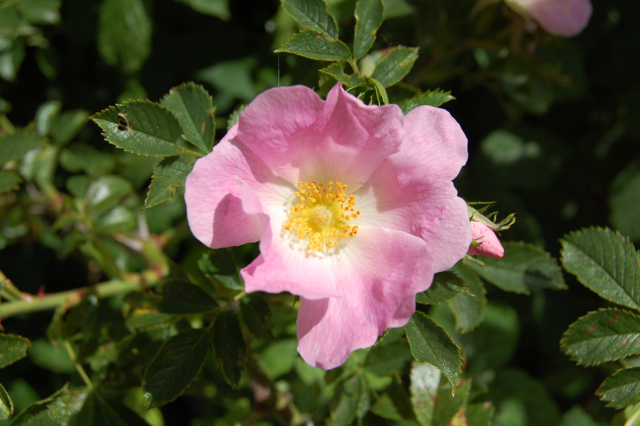
                    Rosa Canina – The Wild Dog Rose. Helping to open the heart to the Divine in all things.

Kiva Rose’s wonderful insights into the properties and healing actions of her namesake have helped me to appreciate whole new dimensions to this subtle yet powerful medicine. She writes, ‘The underlying property of Rose is one of fluids/energy/blood movement and regulation, which explains many of seemingly disparate effects on the different organs and tissues of the body. It has an innate intelligence that gives it the ability to adjust the flow of the body’s varying energies and substances. It can calm heart palpitations, eliminate liver pains, reduce nervous tension or lessen menstrual cramps all depending on what the body needs. Traditional Western Herbalism and Ayurveda generally see the Rose as cooling while TCM usually describes it as warming, and I think this has much to do with what properties the varying traditions ascribe to hot or cold. The reduction in inflammation is certainly part of the reason is is thought of as cooling, and the moving properties have to do with the warming aspect.’

The energetics of rose may seem confusing at first because, as Kiva explains above, it been considered both cooling and warming in different traditions. She, and many other other herbalists, consider it to be drying but in my own experience I have found it to have the potential to be both drying and moistening. The difference will depend on what type of roses are used and how long they are macerated in alcohol for. A tincture macerated for the usual two to four weeks will be quite astringent and drying as the tannins have all been extracted from the petals. However a tincture made from highly aromatic roses and left to macerate in the alcohol for only a day, will capture the delicious taste of the volatile oils but not the tannins and will therefore be much more moistening.

Regular use of the tincture of Rose is highly recommended for those who are grieving, distraught or recovering from abuse. I am now using it for people who have experienced deep trauma sometime in the past which hasn’t properly healed yet.

One of my favourite ways to take Rose is in teas and I’ve written before about my adoration of Rose and cardamom tea. Some other lovely combinations are:

Hug in a Mug: For when you need a bit of nurturing. Equal parts Rose, Avena and Linden blossom with half a teaspoon of honey.
Aphrodisiac Blend: For when you need a bit of spice. 1 part Rose to 1/2 part each Cardamom and Cinnamon.
Tea for a Broken Heart: Equal parts Rose, Hawthorn Blossom and Heartsease (Viola tricolour).
Turkish Delight Tea: Yummy and heart warming. 1 part Rose to 2 parts Orange peel.
Cup o’ love: 1 part Rose to 1/2 part each Cardamon and Cacao powder, sweetened with honey.

Time for Tea

Rose is also wonderful as an infused honey, especially made with fresh petals as you don’t have to strain them out and can just eat the whole thing as it is. This also makes a lovely soothing remedy for sore throats. Kiva Rose recommends a diluted Rose infused vinegar for treating sunburn as it’s cooling, soothing and astringent. I also love rose infused vinegar in a simple salad dressing as it transforms a few veggies into something decadent and delicious. Debs did a lovely post on making rose infused vinegar which you can read here.

I think Rose is of particular benefit to us in the West at this time because so many people feel alienated, lonely, rushed and lacking in direction. In our society, where acquisition is seen as the bench mark for a successful life, the benefits of learning to stop, open our hearts and see the divine in all things are immeasurable.

In opening the heart, Rose allows for greater compassion and love for others but, in doing so, helps us be gentler with ourselves too. Learning to love cannot exclude ourself and must, in fact, begin with ourself every time. That doesn’t mean it is self-indulgence, it cannot exclude others either, but until we love ourselves, the love we give and receive will always be conditional, it will always need something from the other to fill the void that we have refused to fill ourselves. We think we need to be worthy, to pass some kind of test to deserve love but that is a fundamental misunderstanding of what love is.

Somewhere beyond the the interplay of the experience of pleasure and pain lies true freedom, and the deepest experience of love. A love that cannot be given or received, but one that resides within us throughout the inevitably shifting conditions of our lives. In allowing the heart to open to all its experiences we can become servants to love and living testimonies to its power in our lives.

As only Rumi can say it;
Love is an ocean without shores, you have to learn to bear it.

References:
The Yoga of Herbs – Drs David Frawley and Vasant Lad
The Practice of Traditional Western Herbalism – Matthew Wood
Bartram’s Encyclopedia of Herbal Medicine – Thomas Bartram
The Desktop Guide to Herbal Medicine – Brigitte Mars
Articles by Kiva Rose available on herbmentor.com

Grant yourself a moment of peace and you will understand how foolishly you have scurried around.
Tscen Tshiju

I’m sure I can manage more than just a moment…..

I can’t believe a month has gone by since we wrote about aches and pains in our April blog party, but the time is upon us once more and this month our kind hostess is Debs over at Herbaholic’s Herbarium. She will provide links to everyone’s posts on the 20th.

The topic she has chosen is ‘Local Wild Herbs, New Herbal Treasures’ and she has challenged us to cast our eyes a little further than our favourite, well used and loved, wild herbs and discover something we haven’t worked with before. She says, ‘The only rules are the herb has to come from the wild and has to be something you’re not familiar with using herbally.”

Though very common around these parts, a new and exciting medicinal discovery for me this spring is Speedwell. I have long loved her pretty mauve flowers but, until recently, I didn’t know that this herb could be used medicinally or that there were many different types.

At first I had some difficulty differentiating between the various species as my wild flower books seemed to carry slightly conflicting information. After a bit of cross referencing I’m fairly convinced that the species I see growing abundantly are Common Field Speedwell (Veronica persica), Germander Speedwell (Veronica chamaedrys) and Slender Speedwell (Veronica filiformis). There’s also an Ivy-Leaved Speedwell (Veronica Hederifolia), Brooklime (Veronica beccabunga) and Heath Speedwell (Veronica Officinalis), the later being the variety most commonly used in medicine, among many others.

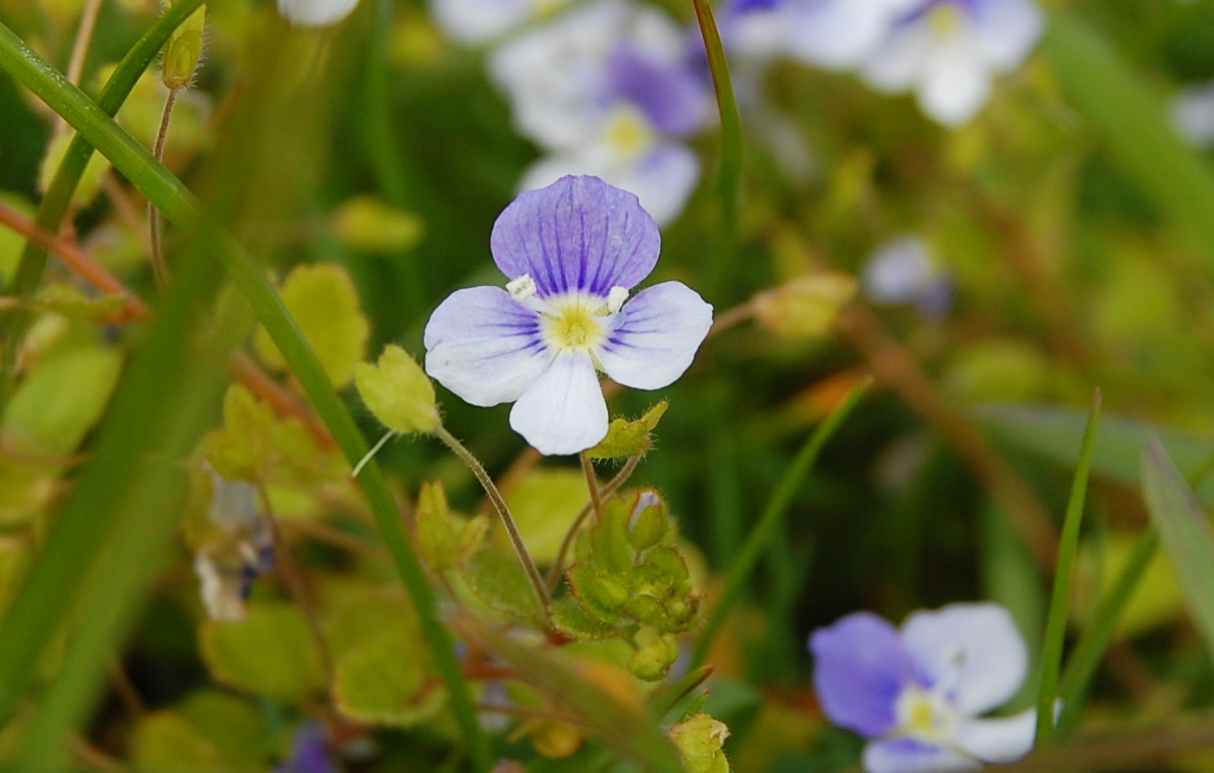
Germander Speedwell

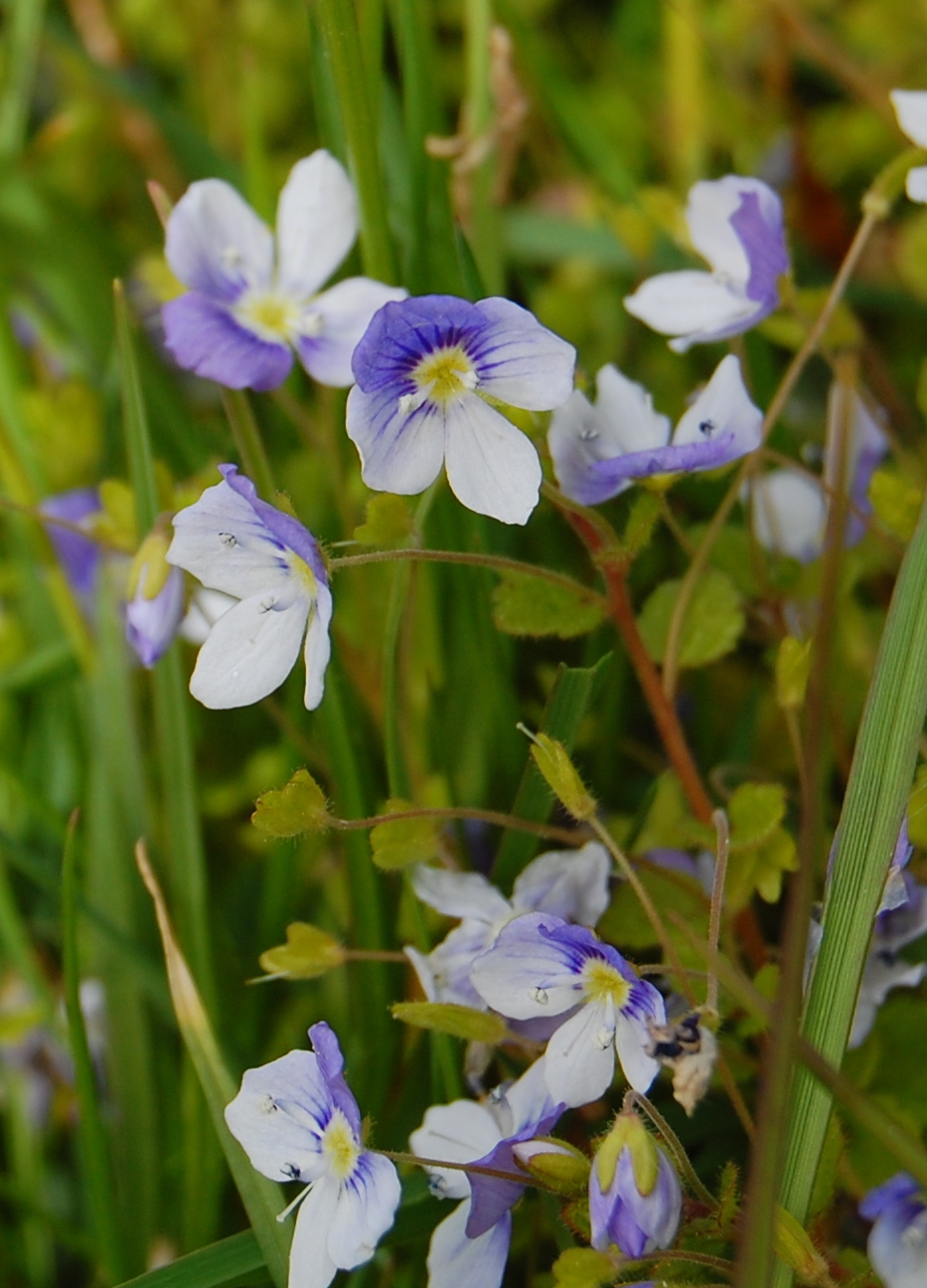
Slender Speedwell

My next challenge was to discover some information on the medicinal properties, which unfortunately is a little thin on the ground, as Speedwell has fallen out of fashion in current herbal practice. The only references I found were in Maria Treben’s Health Through God’s Pharmacy, Gabrielle Hatfield’s Hatfield’s Herbal and Mrs Grieve’s A Modern Herbal. Most of the information online seems to be about how to eradicate Speedwell from one’s perfectly manicured lawn (grr) but there are some great articles and photos on Heath Speedwell over at Henriette’s Herbal. Treben tells us that it was once a highly esteemed herb and that the Romans would compliment each other by saying a person has as many good qualities as the Speedwell. The name too seems to indicate a speedy return to good health.

The only two species that are discussed in the above books are Heath and Germander, the former being the favourite of official medicine and the latter of folk healers, being the most abundant species in the UK. According to Mrs Grieve, both have been used primarily for coughs and skin complaints, reminding me of that other pretty, mauve spring flower, Viola. Both varieties also thought to be useful diuretics, as well as vulnerary and alterative, but Heath Speedwell is also diaphoretic, tonic and expectorant. Treben also recommends it for nervousness caused by mental exhaustion. There don’t seem to be any modern studies available but Hatfield claims it contains the glycoside, scutellarin, named after our calming friend, Skullcap.

According to references cited in Mrs Grieve, the constituents are well extracted in water so my first experiment was a nice cup of Speedwell tea. I followed this up by making an infused oil, to see if the skin healing properties could work in this medium as well as as a simple wash. I haven’t strained the oil yet so can’t report back until I do, but its certainly looking promising and has taken on a lovely light green shade.

Speedwell Infused in Sweet Almond

I very much enjoyed my tea, finding the smell soothing, earthy and fresh. The first sip had an immediate mental clearing effect and I felt soothed but not sedated, the effect being both relaxing and clarifying. I became very aware of the area around my head and I felt my meditative abilities heighten and my third eye and crown chakras open. My breathing deepened and I felt both more grounded and more connected. The taste is green, fresh and ever so slightly bitter without being unpleasant. To me it has an almost celery like quality too. The key things that came through for me were mental clarity and sense of peacefulness. It felt like a subtle medicine, working on the mind and emotions as well as the physical body, which prompted me to make a flower remedy using the Slender Speedwell which grows abundantly in one of my favourite walking spots.

I waited for a suitably sunny morning, then dashed out this weekend to grab the opportunity when it finally arose. Even so I only managed two hours of sun infusion before the clouds came a’rolling in but such is life for a flower essence maker in this variable UK climate!

Speedwell Flower Essence

One thing that strikes me about this little flower is her wonderful contradictions, she’s pale, delicate, frail looking, innocent and flimsy but, like all weeds, she’s also tenacious, clever, wilful and a true survivalist. She reminds me to never judge a book by it’s cover! I think it’s probably these contradictions which give the tea and essence this wonderful sense of being grounding yet also spiritually and emotionally uplifting. Compared to the other flowers around, mainly dandelions and daisies, that have these strong upright stems, that of Speedwell is fine and flexible, sometimes standing up, sometimes laying almost flat and creeping.

Both the colour of the flower and the signature of the central white and gold eye, seem to confirm my original feeling that this was a remedy which resonates with the third eye and crown chakras. I’ve only been taking the remedy a few days now but my initial feelings are that this is a flower to help us in seeing deeply, being conscious and aware and deepening our meditation.

Completed Essence and Sketch

I plan to try incorporating Speedwell into some of my tea blends, perhaps taking it with Plantain and Thyme for chest complaints or with Oatstraw and Rose for bringing out it’s peaceful properties. Treben recommends combining it with Nettle for treating eczema. When the oil is done, I’ll keep half to experiment with as a simple and add the other half into my favourite skin soothing Viola and Chickweed cream. As soon as I locate some Heath Speedwell I’ll be making a tincture too. It’s said to grow well in coastal areas so I should find some around if I continue looking.

I’d love to hear if anyone has any experience, or knows of any good references for using Speedwell so please share your weedy wisdom in the comments.

I’ll leave you with this lovely little verse written by James Rigg in 1810. It nice to see that not everyone sees this beautiful plant as something to be poisoned or purged from their lawns!

To The Common Speedwell

Where’er I meet thee, up doth Fancy fly
In thoughts celestial Image of the sky!
About thee shining, starry Daisies sing,
And from their hosts the joyous Lark doth spring;
While Dandelion suns around thee blaze,
And Lady’s-smock, dipped in Aurora’s rays,
Wafts o’er thy petals blue, an odour, sweet
As dawn of love let me thy beauty greet
With my faint song, dear, tender, fragile flow’r
That from the azure vault once drew thy dow’r!
When mine do gaze upon thy laughing eyes,
I have one wish to pluck thee as a prize;
But that I know thine eyes were never made
To mock the sky, save from the dewy glade:
Even as a modest maiden, reared amid
The pieties of Nature, that lie hid
In forms like thine, blooms fairest where she grows,
And of deceitful Art but little knows!
Thou art a jewel on the brow of May,
That, robed in scented garments, wings her way!
Emblem of Friendship rarest gem of blue
From me thou ever hast affection true!

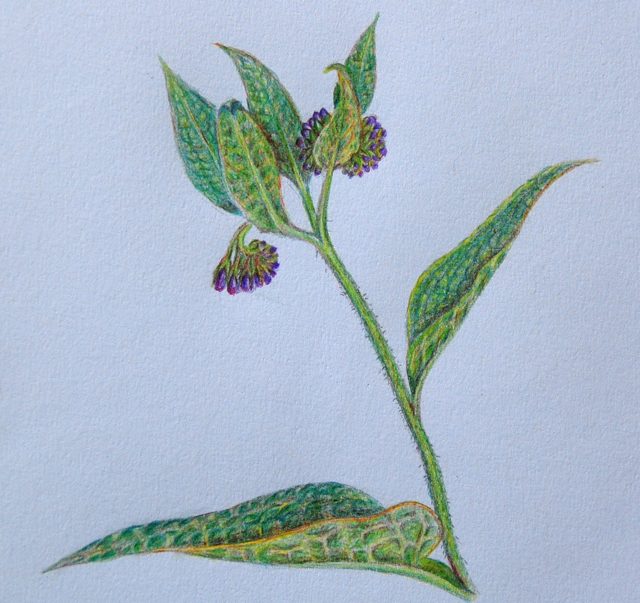
Comfrey


This year I decided to choose a plant to work with closely through the changing seasons in order to get to know it deeply and help me to incorporate some of the concepts of Geothean observation into my work with plants. When finding a new plant ally the idea is to be chosen rather than to choose, to see which plants grab your attention and won’t let go and then honour that choosing, whether you get what you expected or not.

Well I certainly didn’t expect Comfrey, partly because it’s a plant I don’t often work with and partly because I had several other plants around me that I consider close allies and was expecting to be ‘chosen by’.  I’ve been interested in the idea of Goethean observation for some time as it seemed to me a wonderful way of honing our senses, learning about plants and moving beyond ourselves and our limited perceptions to connect to the wider world around us.

Goethe is best known for his literary contributions but, in fact, he was involved in the sciences too for much of his life. His work with plants was so unconventional at the time because he choose to study the species around him in their living environment, rather than dead herbarium specimens, so he could understand how they adapt and change throughout time. This idea of the ‘time-life’ of a phenomenon is a key principle of the Goethean study of plant life, helping us to understand them as changing, adaptive beings rather than something static or objectified. In this way we can be participants, rather than merely observers in their dance of becoming. The idea is to observe the plant as clearly as possible, using all our faculties, blending what Goethe called exact sense perception, or collecting all the available facts, with exact sensorial fantasy, or understanding the growth, metamorphosis and flow of a plant through a more fluid and imaginative process.

As we progress with these practices we move to a space where we can be completely open, allowing the plant to reveal something of its true nature to us through idea and inspiration. The final part of the process is described as being one with the object of perception, allowing a kind of divine meeting that Steiner referred to as “the true communion of mankind.” Drawing is seen as a useful tool in the process because it encourages us to consider all the details before us, exactly as they are experienced, rather than writing on our own perceptions.

My original plan, to draw my comfrey every day throughout the year, has proven a little too time intensive in my ever busy schedule, so I’ve settled for sitting with her every day and drawing when things are a bit less busy. Only a couple of months into the process, it has already been a remarkable one.

A page from my Comfrey notebook.

One of my first, and strongest, inspirations was what I perceived to be a beautiful example of the doctrine of signatures in the leaf of the Comfrey. Comfrey is best known as a cell proliferant, due to its allantoin content, which resulted in its traditional use as a healer for broken bones, strains and skin conditions, among other things. As many of you will know, its folk name was ‘knitbone’ reflecting this ability. However Comfrey is no longer recommended for internal use (though it’s still fine externally on unbroken skin) due to other constituents known as pyrrolizidine alkaloids, some of which may lead to hepatic veno-occlusive liver disease.  In Paul Bergner’s interesting piece on the subject, which you can view here, he explains that, “In HVOD, the cells lining the veins in the liver proliferate and choke off the veins.”

Now it may seem a little simplistic to apply the doctrine of signatures here, but to me, something in the leaves of the comfrey shows us very clearly both how it heals and how it harms, though cell proliferation, despite the fact that these actions are due to completely different chemical constituents in either case. Observe how the markings look just like cells under magnification, stacked one on top of another, growing strong and vital.

Steiner  writes “The human being cannot demand any other kind of knowledge than the one he brings forth himself.” I find this quote so empowering. It can be a challenge to trust our own inspirations and observations when working with plants and it’s so important to learn about their traditional and modern uses to get as wide a background as possible. That done however, we can start to enter into a new and less linear process, one that allows a state of inter-being to arise between ourselves and our green allies and allows whole new levels of understanding to permeate and transform our work and ourselves.

Debs has just announced the theme for the next UK Herbarium blog party- Local Wild Herbs, New Herbal Treasures. I think it’s going to be a good one as we’ve all been challenged to write about a wild herb we haven’t used medicinally before. You can read the details on her blog here.
The closing date for submissions is May 19th and all entries will be posted on her blog on the 20th. Do join us if you can!

The best known wild food dish is probably nettle soup. There’s actually quite a lot you can do with nettles, using them in the same way you’d use spinach (except of course for in a baby leaf salad – ouch).

However nettle soup is still probably my favourite and I have it at least once a week at this time of year. To stop if from getting dull I do a few different variations which you can adjust according to your preferences.

The Classic Nettle Soup:

The classic nettle soup is essentially nettles, onion, garlic, stock, seasoning and a potato. Lightly fry the onion in a little olive oil, add the garlic, then the potato and stock and cook till the potato is tender. Add the nettles and cook for a couple of minutes to break down the stings, blend the whole thing up and voila. The potato makes it creamy and gives it a thicker consistency if you like a more substantial soup. What’s good about this recipe is that you can vary it quite a lot, adding lemon if you want something fresher or, my favourite on an early spring day when it’s still wee bit nippy out, chilli and rosemary. Nutmeg is also nice and you can use a can of cannellini beans to make the soup creamy instead of the potato.

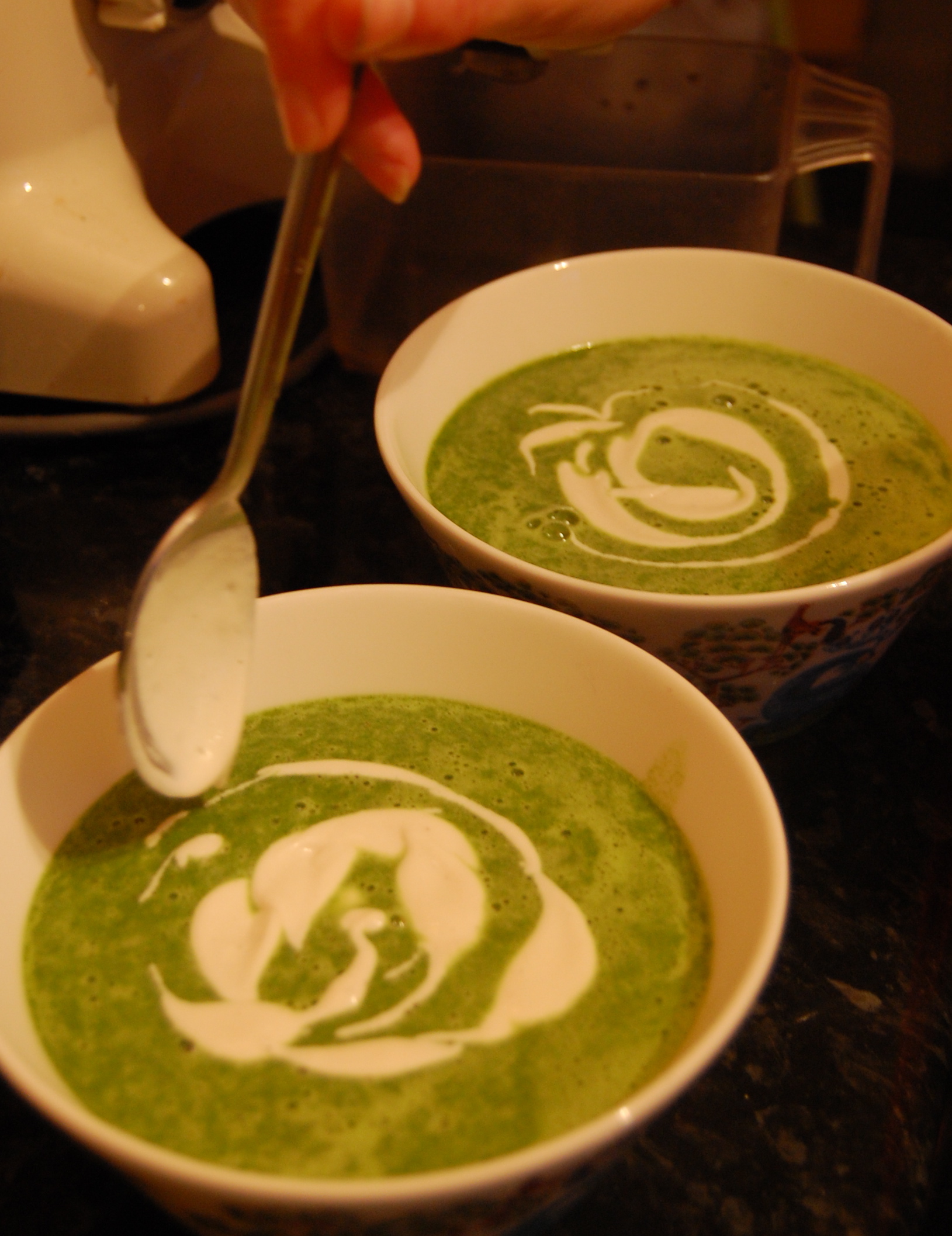
Nettle, Leek and Herb Soup with Lemon Cashew Cream:

Herby Nettle and Leek with Cashew Cream

This is a really tasty soup and very quick and simple to whip up in a hurry. You’ll need:

For the Soup:

  • 2 leeks
  • 4 cloves garlic
  • Colander full of nettles
  • Veggie stock
  • Fresh herbs- I use marjoram, sage and thyme, a few sprigs of each
  • Drizzle olive oil
  • Sea salt and pepper to taste
  • Lightly fry the leeks in the oil, add all the other ingredients, cook for just a couple of mins to break down the nettle stings, blend up and enjoy with a swirl of lemon cashew cream.

    For the Cashew Cream:

  • 1 cup cashews
  • Juice of 1 lemon
  • 1 clove garlic
  • Pinch salt and pepper
  • 1/2 cup water
  • Blend all the ingredients in a high powered blender adding the water until you reach the desired consistency, it’s better a little thicker than regular cream would be.

    Raw Nettle Soup:

    Being a big fan of my nettles straight from the hedgerow as i wrote about here, I thought I’d try out a raw nettle soup, a bit like a nettle gazpacho, in order to keep all the nutrients in the nettles in their whole and vital state. I love this version, it so vibrant and energising, but it’s not to everyone’s taste… my hubby thinks it’s gross!

    Raw Nettle Soup

    All you have to do is blend together the following ingredients, pour into a bowl and serve. The speed and pressure of the blender will break down the nettle stings but make sure it’s blended completely smooth.

  • 1 avocado
  • 1 spring onion
  • 3 wild garlic leaves
  • About a centimeter ginger
  • Half an apple
  • Sprig of fresh herbs, chives, dill or thyme are nice
  • Squeeze of lemon juice
  • 2 large handfuls of fresh nettle tops with thick central stems removed
  • 1 cup water
  • Nettle Dahl:
    When I fancy something a bit more substantial one of my favourite dinners is a nettle dahl.

    Nettle Dahl


    I just make a simple dahl with red lentils, spices, onion, garlic and ginger and add the nettles for the last couple of minutes of cooking time.
    In fact you can add nettles to many of your favourite curry dishes, it works really well and is just as delicious as spinach, chard or other greens.

    Happy foraging, I’d love to hear your favourite nettle soup recipe if you have one.

    After a successful afternoon foraging a couple of days ago we came home to a delicious meal which included lots of wild greens.

    A Sea of Wild Garlic

    As soon as we got in we enjoyed a green juice with a couple of handfuls of cleavers, apple, lemon, celery, cucumber and spring greens.

    Green Juice with Cleavers

    Later, our evening meal consisted of a yummy nettle and leek soup with lemon cashew nut cream. I’ll post the full recipe for this tomorrow, time allowing.

    Nettle Soup with Cashew Cream

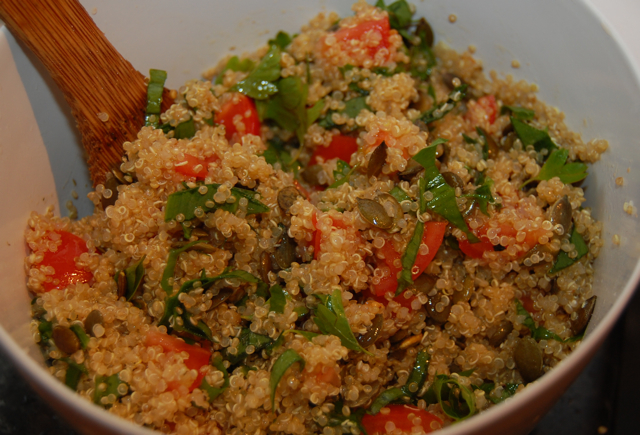
    Followed by a quinoa salad with wild garlic, hawthorn leaves, tomato, pumpkin seeds, olive oil and seasoning and a green salad of young beech leaves, chickweed, dandelion greens and lettuce. Delicious!

    Quinoa Salad with Hawthorn Leaves and Wild Garlic

    Spring is truly a time of abundance. 🙂

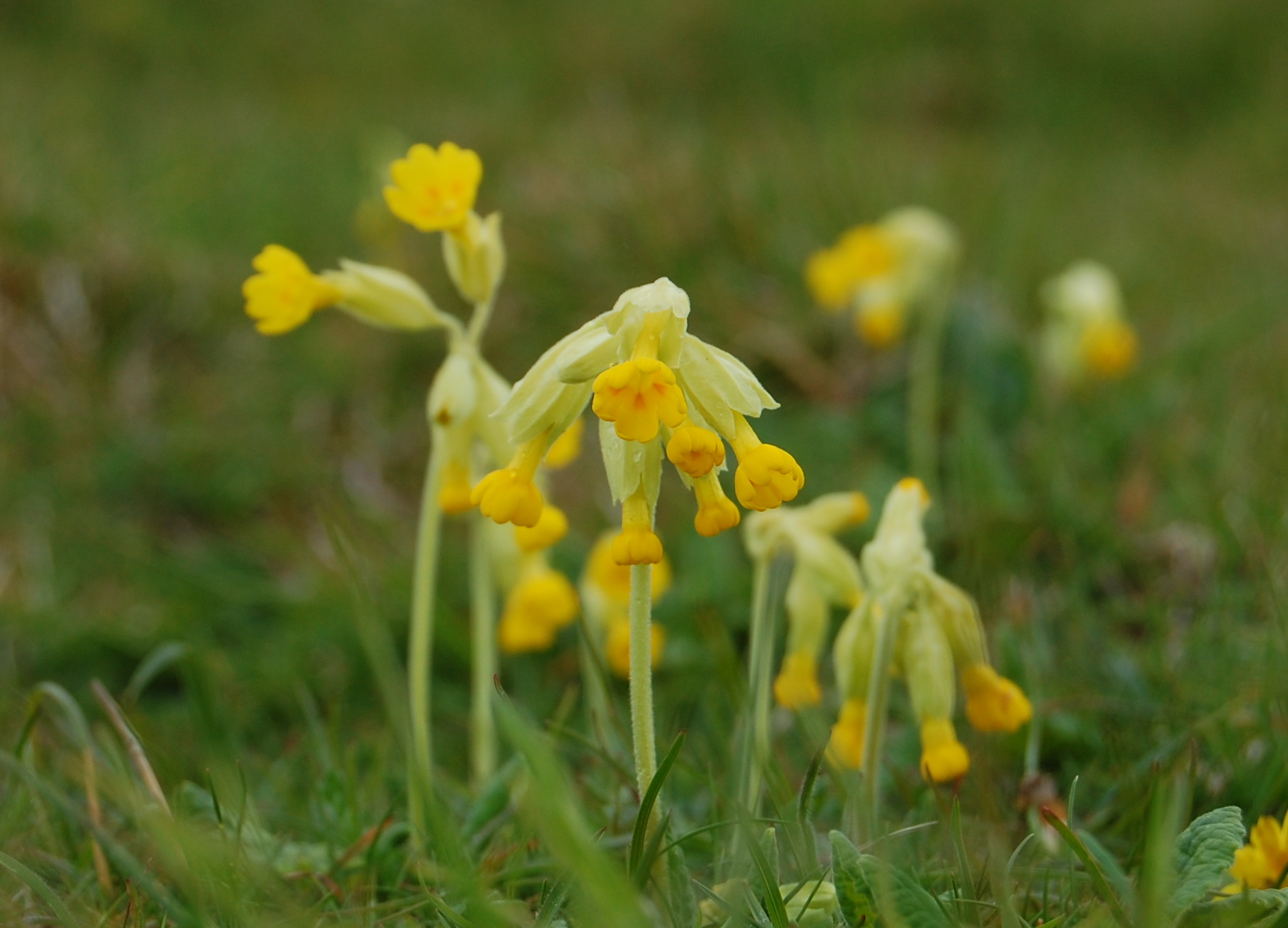
    Cowslips and Primroses are two of the cheeriest and prettiest of our spring wild flowers. They have a rustic charm reminiscent of days gone by when they were used much more commonly in medicine than they are today.

    Cowslip, Primula officinalis, and Primrose, Primula vulgaris, contain similar properties, being of use for soothing the nerves, easing insomnia and improving headaches. An infusion of Cowslip with Wood Betony is said to be of particular use in headache and migraine. They are both anti-inflammatory and anti-spasmodic, making them useful for muscular pains, rheumatism and gout and an infusion of the flowers of either plant can be used in the bath for soothing these conditions. They have also been recommended for pulmonary problems as both have expectorant properties.

    Cowslips

    Infusions of Primrose or Cowslip flowers have been used to brighten the complexion and reduce wrinkles. Culpepper recommends a Cowslip ointment saying, ‘Our city dames know well enough the ointment or distilled water of it adds to beauty or at least restores it when lost.’

    Both flowers are associated with youth in the Victorian language of flowers, Cowslip also being associated with winning grace and primrose carrying the meaning, ‘I can’t live without you.’ Both have also been associated with faeries in folk tradition and magic.

    The flowers and young leaves can be used in salads, though they are potentially allergenic so always do an allergy test first by rubbing a little of the juice from a leaf on the inside of the lips and seeing how you react.

    Primrose

    Both plants used to be very common but cowslip especially is much rarer now due to changing habitat and over harvesting as well as pesticide and agrochemical use. Therefore it’s best to grow these plants in your garden if you wish to use them for food or remedies.

    Maria Treben rates Cowslip highly as a remedy for insomnia. Here is her recipe for a sleep inducing tea:

    50g Cowslip flowers
    25g Lavender
    10g St John’s Wort
    15g Hops
    5g Valerian

    Pour 1/4 litre boiling water over a heaped teaspoon of the herbal mix, allow to infuse, add honey if desired and drink in sips before bed. She says, ‘This tea should be preferred to all chemical sleep inducing remedies. Sleeping pills destroy the nervous system whereas this tea removes nervous complaints.’ It is a fairly pokey mix though so check with a herbalist before taking (especially if on medication) or stick with a more gentle blend of herbs such as chamomile, lime flowers and cowslip.

    For a easy approach to making a tincture, loosely fill a jar with fresh cowslip flowers, pour vodka over them, cap and leave in the sunlight for fourteen days. Take 3 teaspoons a day as a soothing nervous system tonic. Cowslip was also commonly made into wine.

    Primrose flowers also make a lovely infused vinegar which can be used in cooking or salad dressings.

    Enjoy these sweet spring soothers and remember to harvest them with care and gratitude, never taking too much from one area.