Feeds:
Posts
Comments

Valentine’s Delights

Three of my all time favourite herbs are most definitely herbs of love and, with Valentine’s day just around the corner, I thought it an auspicious time to share a little more about them.

They are Avena, Rose and Cardamom, all famed for their aphrodisiac properties, but all quite different, though they do work in some similar ways.
Avena – Oats are one of the best remedies we have for building and restoring the nervous system and this makes them a wonderful love tonic as they strengthen our reserves helping to make us more resilient and energised. Although we tend to think of aphrodisiac herbs as stimulating rather than relaxing, these kind of nerve tonic herbs act to energise us in a more roundabout way, by releasing the stresses that caused our problems in the first place and getting us strong and vital once more. So many arguments are caused by being frazzled and over-sensitive, making regular doses of Avena a great relationship soother.

Rose – What need I say about the rose, the ultimate symbol of love? It is gently moving, gently stimulating, relaxing, aromatic and uplifting. It also opens the heart to allow greater self love and acceptance, something which enables us to partake more fully in any relationship, romantic or otherwise.

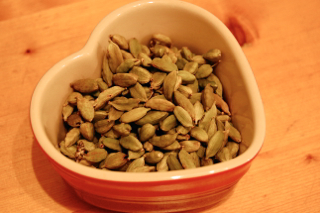
Cardamom – Cardamom is one of the most balanced of the spices and for me this makes it the true spice of love. It is both slightly stimulating, like most spices, as well as calming and centring. As I mentioned above, it is often a combination of stress and resulting fatigue that stops us from giving time and attention to our beloveds, so balancing herbs, like all those mentioned here, are exactly what the love doctor ordered.

All these herbs help us to feel loved in order to feel loving. They work at the meeting point of relaxation and stimulation, of uplifting and of soothing. Essentially they work from a place of balance from which all things can flower, not just love for a partner, but love for ourselves, for the wider context of people and other sentient beings and in the knowledge that there is no real difference anyway. After all, love is just love and when it is in our hearts, all will benefit from its radiance.

Here are just a few of the ways you can combine these herbs to make some deliciously delectable treats, for Valentine’s or any other day.

Tea – A simple tea of cardamom (gently crushed in a pestle and mortar), rose petals and oatstraw makes a lovely soothing and heart opening blend for drinking anytime. To make an extra special tea, add some Ashwagandha root which is a traditional adaptogen and aphrodisiac of Ayurvedic medicine. To make the tea gently simmer about half a tablespoon of ashwagandha root in a pan for about 15 mins. Turn off the heat and add the other 3 herbs leaving to steep for another 15 mins before straining and serving with a little honey. Ashwagandha can be a little bitter in flavour so the addition of the honey makes it more deliciously balanced.

Ashwagandha root and rose buds

Bath – A lovely romantic bath can be made by mixing rose petals and rolled oats with a drop or two of cardamom essential oil and tying up in a small square of muslin. Tie this around the taps as the bath is running, making sure you squeeze out all the creaminess of the oats as you go.

Honey – Infuse rose petals and cardamon seeds in honey for a delicious aromatic treat.

Massage Oil – Cardamom and rose are both divine as essential oils and a beautifully romantic massage oil can be made by combining them both with a base oil such as almond, olive or jojoba. To 50 ml base oil add 5 -10 drops each of rose and cardamom oils.

And last but not least…

The Flapjacks of Love – 
Combining oats, rose, cardamom and other delicious ingredients into a sticky sweet treat that is sure to delight anyone you serve them to.

Ingredients:
250 g rolled oats
125 g coconut oil
75 g muscovado sugar
3 tablespoons maple syrup
Small handful of broken up walnut or pecan pieces
1 tsp rose petals (dried is fine)
1 tsp ground cardamom
1 tsp ground ashwagandha root (optional)
1/2 tsp ground ginger
1/2 tsp ground cinnamon
Pinch salt

Preheat the oven to 180C and grease a baking tray ready. Mix all the ingredients well in a mixing bowl, I find it easier to melt the coconut oil first. Transfer to the baking tray and spread evenly. Cook for about 25 minutes until golden brown then remove from the oven and score into rectangles. Allow to cool thoroughly giving the coconut plenty of time to set. Enjoy with some cardamom, rose and avena tea and a small smile of satisfaction.
A Song of Ice and Fire

Well Imbolc arrived a few days ago, heralding the beginnings of spring… and bought with it the winter.

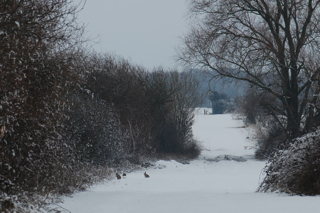
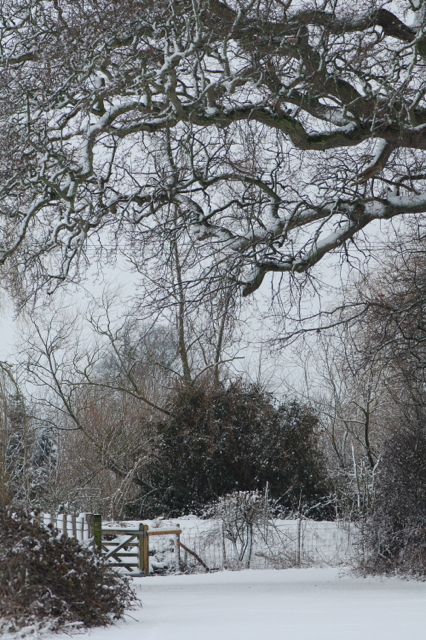
Last week we had the first really cold days of the season and today we woke up to a blanket of snow.

The perfect weather for a stroll down the lane, marvelling at how different everything looks after the snow comes.

The few colours to be seen in the starkly beautiful landscape are that much more present and vibrant in contrast with their surroundings.

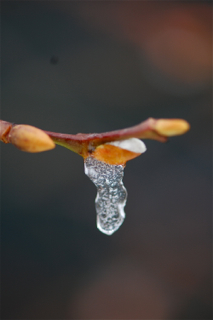
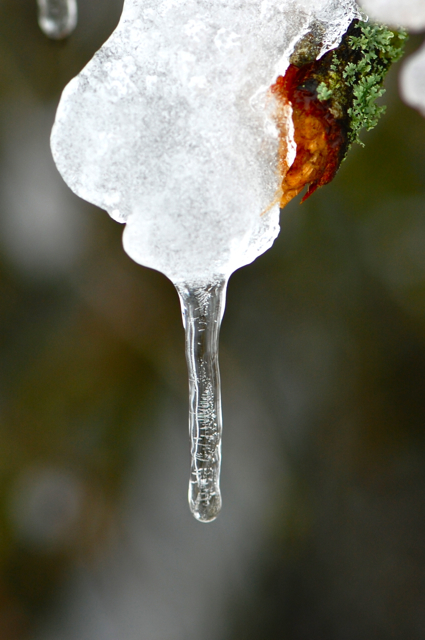
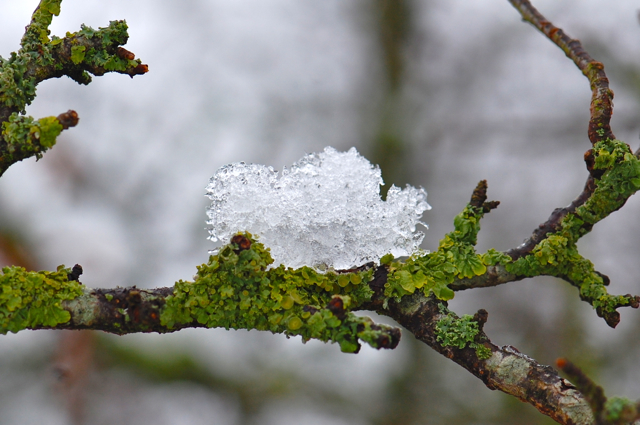
Icicles hang from the branches, frozen in time, mid-drip.

And teasels bow their heads under the weight of the snow.

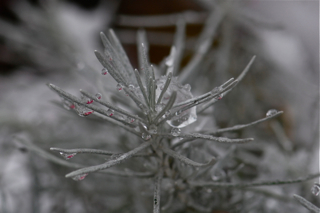
The Helichrysum, or curry plant, in the garden looked particularly beautiful, its silvery leaves caught between ice and morning light.

I love the way this weather highlights different aspects of the trees, making me see their forms in a new and inspiring way. Branches of oak and willow looked particularly lovely, their forms intensified by snowlines.

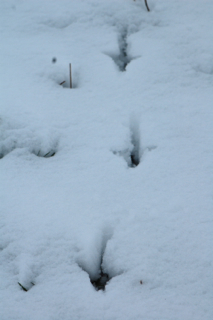
We saw tracks of rabbits, pheasants and foxes alongside our own great stomp-prints.

Can you see the little rabbits out on the lane?

 Some were understandably less enthused at venturing out of their burrows.

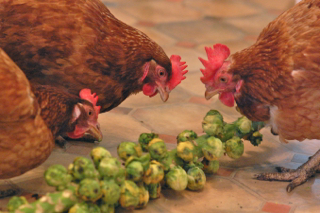
Whilst others were very happy to come inside, warm their claws and discover new treats on the kitchen floor.

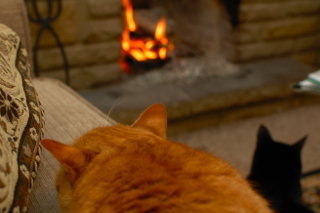
Whilst we are warming up by the fire, I spare a thought for all the other creatures who will find it difficult to gather enough food today and make sure there is plenty of seed out for the birds.

Cream Update!

Many apologies! When publishing the cream recipe last night I doubled the fat portion to make 200ml of cream and forgot to double the water part ingredients. If you receive these posts via email the quantities for the waters will be wrong. I have updated the post now so please check the recipe on the blog for correct amounts.

What can I say, I obviously haven’t been taking my rosemary of late.

At last, here is the final instalment in our cream making series, apologies that it’s over a month late!

Of the three recipes I have shared this one is the most complicated as it requires precise temperatures and the use of not one, but two emulsifiers. Once you have done it a couple of times though it’s fairly straightforward and it is a reliable cream that I have never had any problems with.

This method is taught by Aromantic in their course which I attended a couple of years ago and is very popular amongst herbalists that I have spoken to.

Pros are that it makes a light and professional looking cream with a very good finish. Cons are that it involves processed ingredients like emulsifiers and cetyl alcohol and that it does really need a preservative due to the very high water content. The high water to oil ratio could be a pro or a con depending on what you want to achieve. If your key ingredients are water based, for example a strong infusion or floral water, this would be an ideal recipe to follow but if they are oil based, such as infused calendula or St. John’s Wort, then one of the previous recipes would suit your needs better.

Ingredients:

Fats:
25 ml vegetable oil/ infused oil
4 g cocoa butter
4 g cetyl alcohol
5 g VE emulsifier

Waters:
140 ml spring water/ herbal infusion/ floral water
4 ml glycerine
9 g MF emulsifier

Extras:
2 ml Vitamin E
1-2 ml Essential oils
Preservative of choice

VE and MF emulsifiers are both available from Aromantic, see the link above, and are vegetable derived, usually from coconut or palm oil. Preservative 12 and Preservative Eco are also available here.

Method:
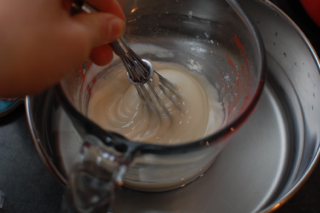
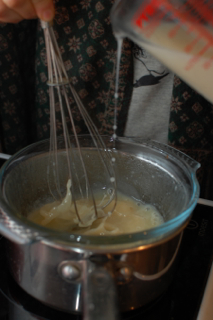
Begin by melting all the fat based ingredients in a bain marie or double boiler. At the same time heat the water/ infusion in a separate pan or double boiler and then add the other water based ingredients, whisking well to ensure the MF powder is completely dissolved in the liquid and no lumps remain. Continue heating until both mixtures have reached between 75 and 80 C.

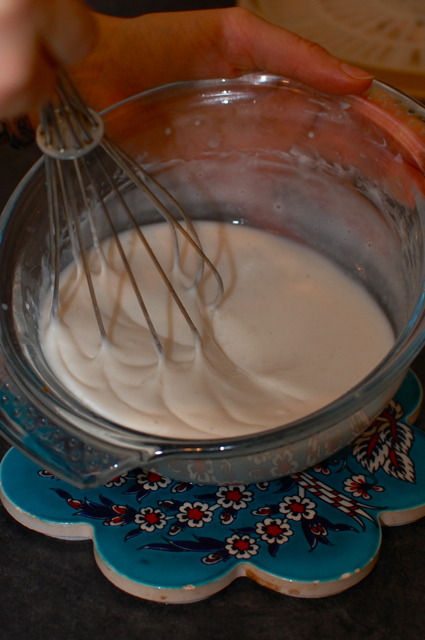
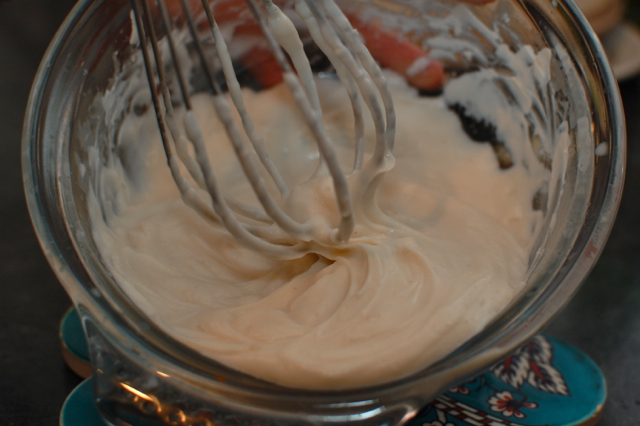
When both parts are at temperature, turn them off the heat but leave the water part above the bain marie to ensure it remains hot. Pour the oils in a steady stream into the waters whilst whisking gently from side to side. Don’t beat the cream too vigorously or too much air will be introduced. Continue whisking in this way for five minutes to ensure everything is well mixed then remove from above the hot pan to allow for quicker cooling. At this stage I place the container in a pan of cool water to allow it to set quicker and continue gently whisking until it is cooled to below 30 C and nicely thickened.

At this point I stir in the essential oils, vitamin E and preservative and spoon into jars.

And that my friends is all there is to it. Happy cream making and a very happy Imbolc to all for tomorrow.

Connections and Change

Today has been cold and rainy and now that I am settled for the evening, in front of a warm fire, I find myself in the mood for a little philosophising.

“This walk on Bindon Hill brings to the fore three important themes of landscape reading: everything changes, everything is connected, and everything has multiple causes.” Patrick Whitefield – Permaculture teacher.

For the last few years I have felt a convergence between many of the different facets of my life and an awareness of the subtle threads that run through my various perspectives. What is interesting to me is that these things are all based on experience and observation of the world around me, though they may be presented within different philosophies, ideas or world views.

Two such things which are fundamental to both my experience of nature and my love of Buddhist teachings for example, are the truth of connection and flow – or Interbeing, and the truth of change.  I may call myself a ‘buddhist’, ‘nature lover’, ‘permaculturist’ or any other number of labels, but ultimately these are just concepts that help give structure to the actual experience of living in the world.

Two of the key principles of Buddhism are that all phenomena are impermanent and that they have no inherent self. This is what I see reflected in the natural world at all times, these simple truths of change and interbeing which underpin our entire existence. As humans we tend to want things to be solid, linear, permanent and unchanging as all these qualities make life easier for the mind to conceptualise and create pattern, formula and theory from. But if we look closely we can see that nothing exists without dependence on numerous other factors in a delicate balance which allows for continuous change and transformation. Ultimately, these two truths are really one because when everything is seen to be in a state of change and flow, there cannot be said to be any independent or inherently existing self, only a kind of beautiful dance and the awareness thereof.

‘When we take a step on the green earth, we are aware that we are made of air, sunshine, minerals and water, that we are a child of earth and sky, linked to all other beings, both animate and inanimate. This is the practice of non-self.’  Thich Nhat Hanh – Buddhist monk, teacher and peace activist.

Walking on the green earth with Thich Nhat Hanh in Plum Village, France.

It seems to me that the perceived tension between the natural world and modern Western society is a reflection of the tension between our own true nature and ego or independent identity.

Where as the natural world can be clearly seen to be inter-dependant, constantly changing, selfless, connected and whole, the world of modern man is an attempt to build something lasting, stable, individual and solid. It is an attempt to shut out what, in our deepest hearts we know ourselves to be and instead create more and more strands to weave into the web that is the illusion of a separately existing self.

The current scientific culture provides a similar example. Nothing can be considered logical or ‘true’ unless the mind  can create a theory from it. Again we can see the attempt to make definitive ‘laws’ of the universe as an attempt to create something unchanging, ‘real’, and solid in order to pacify this egoic state of delusion that we are all subject to at some point. The thing that is often overlooked however is that theories themselves are continually changing. One idea of the universe is disproved and gives way to another and another and yet at each stage of development, we hang on to these theories as if they were a lifeline and desperately try to stamp on anyone whose ideas are conflicting. And it is a lifeline –  a lifeline for the ego which will destroy everything in its attempt to keep hold of the fallacy that it is a separate, unique and independently existing entity.

Life, death, decay and back again - the cycle of change.

Many of us experience a pull to nature, just as underneath the cultural obsessions with shopping, celebrity and the mundane details of life there is always a pull into own own hearts. This conflict is written through our landscapes and our lives, even though the resolution lies closer than our own breath. The clues are everywhere; in how each wave is unique but is really just part of the ocean, in how the clouds arise and pass but do not obscure the sky, how the seasons in the forest are ever changing and how the cells of our bodies die and are renewed so many times in our lifespan.

If we can open our eyes and open our hearts to look around us, we see the whole world is whispering this most plain, yet most secret of truths, and it is saying ‘we have not forgotten who we are, we have not forgotten who we are.’

My Dad and his ‘shrooms

While chatting on the phone to my Dad over the autumn months, he mentioned several times how amazing the fungi around where they live have been this year, so it was exciting to look at his photos when we visited over Christmas.

There were some really fascinating species, including some that I have never seen before, so I thought I would share a selection of his pictures along with a few tidbits of information that I gleaned along the way.

I must warn you that I am far from an expert in mushroom id and I may well have wrongly identified some of these, so if anyone out there knows better please let me know. And of course don’t pick or eat anything without being 100% sure of the species.

First up we have this little beauty, Russula emetica, better known as The Sickener, it won’t take much imagination to work out why!

Also lots of common puffballs which can grow singly or in large groups and are edible when young.

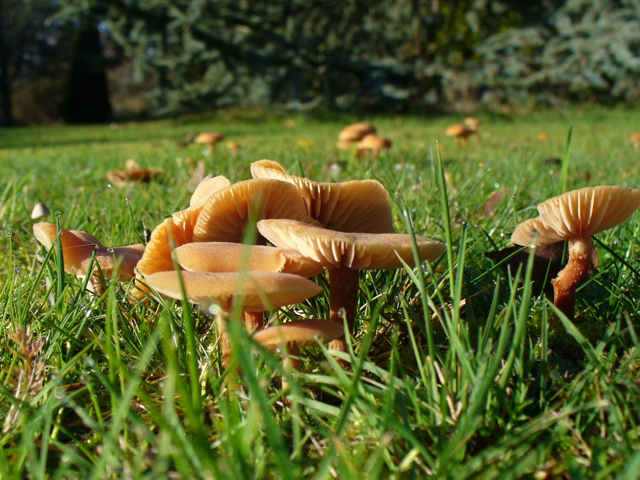
These amazing fellows are Laccaria spp., I think Laccaria laccata which is the most ubiquitous, though as their common name is The Deciever and cap colours are variable, I could have got it wrong!

They start off flatish, then curl up into themselves looking like some kind of exotic sea creature and most species are edible.

There were plenty of Fly agaric, Amanita muscaria, a mushroom which never fails to bring me joy. It’s no wonder they have worked their way so firmly into folklore and the popular imagination, looking as magical as they do.

These unusual looking visitors are actually the fairly common Yellow Club but the white version below, sometimes called Fairy Fingers, is quite rare.

Here are some Common Inkcaps which, though edible, cause nausea, palpitations and other unpleasant effects when taken with alcohol. According to Roger Phillips they were once used to cure alcoholics in an ingenious form of aversion therapy!

I was very excited to see this Earthstar, Geastrum triplex, which I had read about in Christopher Hobbs’ book on Medicinal Mushrooms. Apparently it has been used in Chinese Medicine as a tonic for the lungs and throat. According to my guide books it is not considered edible but Hobbs says it is decocted into tea and drunk to reduce inflammation in the respiratory tract.

Here’s some beautiful Parasols, before and after opening.

I thought this one was a Shaggy Parasol but my Dad thought it was another common one , what do you think?

I think this is a Butter Waxcap because of the faint striations at the margin of the cap.

I’m not too sure about any of these though… ideas are most welcome!

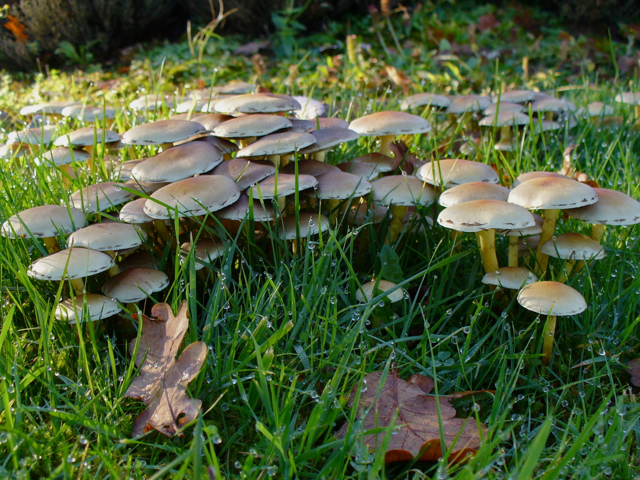
Lots of honey fungus grows on the roots of an old cherry tree.

And last but not least and somewhat more easily identifiable, here is the man himself, in full Yule regalia. Doesn’t he look grand?

Learning more about local mushrooms and which ones can be used medicinally is high on my agenda for 2012 so hopefully by the end of the year I’ll have some more interesting information to share with you.

Last January I wrote a post outlining how I like to approach the topic of detoxing at this time of year. It is essentially about finding a middle way between the extremes of cleansing and indulgence and you can read it here. This year I’d like to expand on this a little and talk about how cleansing and nourishing, which are so often considered to lie at opposite ends of the scale, are essentially the same thing when approached with a healthy attitude.

All our organs of elimination, the bowel, the liver, the kidneys, the skin and the lungs need good nutrition to function properly. The liver requires nutrients such as magnesium, amino acids and antioxidants to be able to effectively break down the toxins in our bodies. So we can see that when we eat a simple but varied and wholesome diet, cleansing and nourishing both happen at the same time and are taken care of naturally by the body.

Unfortunately we live in a culture of extremes. I remember one of my first teachers saying to me, ‘the people who need to build are the ones busy cleansing and the people who need to cleanse are the ones busy building’. He meant it as a joke but there’s a lot of truth in it too. We humans are creatures of habit and we also get very invested in ideas which can stop us from achieving a more balanced approach to our health as we let our minds overrule what our bodies are telling us, often through attachment to one idea or style of eating.

Sometimes recognising what is going on can be problematic. We may see someone who is feeling tired, sluggish and congested and has signs of liver stagnation, constipation and poor skin. They seem to be crying out for a good detox but first we need to go deeper to find out if they have ended up here through excess or deficiency. Some people really do have an excessive lifestyle and some level of detoxification may well be appropriate for them but others are actually deficient in many of the key nutrients that are needed for the body to do its own cleansing.

Often the pattern may have elements of both, a poor diet which is deficient in key nutrients so the vital organs cannot function properly but is excessive in other things, sugar, refined carbs, grease, additives etc. It can be tempting to throw a bucketful of liver herbs at someone like this but, before we even think about cleansing, it’s vital to build up nutrient levels so the body can effectively deal with what is being moved out. This is where a wholesome diet comes into its own. Having said that, in people where there is a lot of stagnation, mucus and congestion, some cleansing will need to be undertaken before the body will be able to be properly assimilate nutrients from the food. So you see it is always something of a balancing act.

When I studied naturopathy, the approach of cleansing was emphasised and I have certainly seen wonderful results in clinic when people with certain chronic conditions undertake detoxification protocols. Often what was considered a ‘detox’ however was not taking strong herbs such as laxatives and diuretics which is what we see in many commercially available detox products, but an emphasis on the old European naturopathic principles such as fresh air, gentle exercise, a wholesome diet and adequate rest. Essentially it is a focus on the simple principles of life, detoxing from the excesses of our culture which are not just dietary but in our working lives, social lives and the sensory stimulation that many of us are surrounded by. When liver, bowel or other cleanses were recommended they were done so with the specific individual in mind not as a one size fits all solution.

Another thing which strikes me as very important in our approach to this topic is our attitude towards the food we are eating. A plate of vegetables like the one above, deliciously prepared with fresh herbs and a variety of colours looks like a treat to me but to someone whose favourite food is a big mac, it may appear like torture. This is where it can be better to approach dietary changes from the perspective of inclusion rather than exclusion. Encouraging people to add healthy choices into their current lifestyle can be much more helpful than just giving them a list of foods to avoid. Ultimately food should be enjoyed and if mealtimes become associated with misery then it will be much harder for people to heal. And feeling like you choose the changes to your diet rather than having them imposed upon you is much more empowering.

Still there’s always some people that do need to eliminate certain foods due to intolerances but this can be done at the same time as providing alternatives that will help them to transition to a new way of eating.

Whilst different diets may suit different people, a happy and relaxed approach to eating will suit everyone. So what I’m actually getting at here is this: Eat good, wholesome food, enjoy it, listen to your body and don’t worry about it too much!

Wishing you all a happy 2012 filled with delicious food, beauty and simplicity.

Humans often have a very different idea from we Zen Kitties as to what constitutes success. They like to accumulate – possessions, trophies, medals, accolades, money, titles and so on and so on – where as we like to experience the wonder of each moment as it arises without any attachment or expectation (except of course, where biscuits are concerned.)

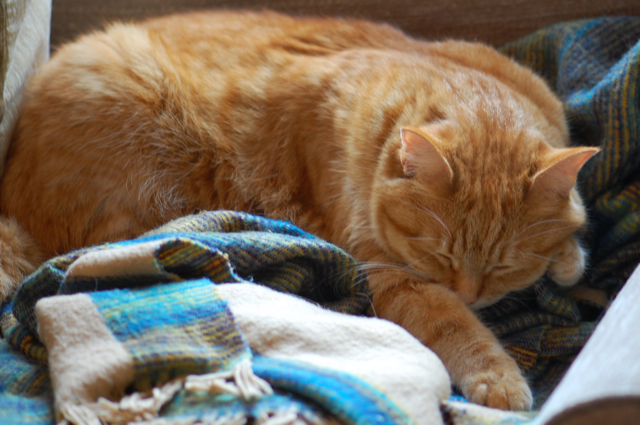
By human standards you might consider my life something of a failure. After all, I achieve little in the material sense and I am still that chubby ginger kitten with a bad leg who, once upon a time, nobody wanted. But I enjoy my life as a rich tapestry of experiences and few could claim to be as adored as I am now.

In fact, I consider myself to be the greatest success of all and perhaps you could also begin to think of yourself as such, no matter what anyone else might say.

“Just stop for a moment and turn your attention to life–whether it’s a good life, a bad life, a successful life, or a failure of a life. Life… Just the wonder of that can obliterate all of the dishonoring of it in an instant. In this instant.”   Ganga-ji

Wishing you all a splendidly, successfully open and present New Year!

Firstly, apologies for not having posted the final cream recipe yet, I ran out of time before Christmas and have been having a little holiday from the computer so it will be with you in the New Year instead.

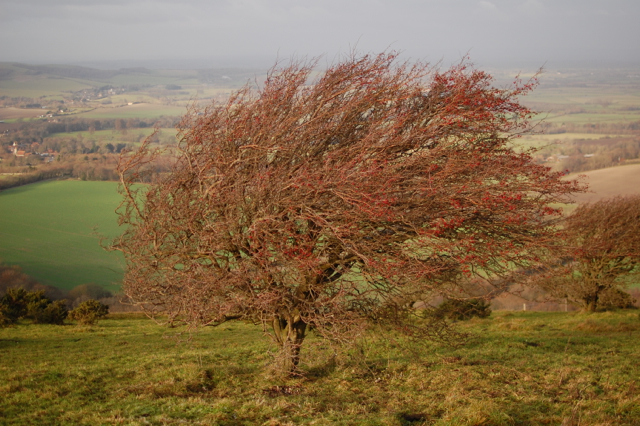
However as 2011 draws to a close, I would like to take a few moments to look back over the Hawthorn trees which I have been observing throughout the year as part of The Tree Year project. Inspired by the UN’s announcement that 2011 would be the International Year of Forests it encouraged people to pick a tree to observe closely for one year and record some of their findings in whatever way seemed appropriate to them.

I followed these trees which sit atop the Sussex Downs from Winter to Summer and back again, observing not only their individual transformations, but the way they have been shaped by their landscape and by the myriad influences of humans and nature.

For many years I have appreciated the Hawthorn as a fantastic source of medicine and food, not just for humans but for wildlife as well. This project gave me the opportunity to learn more about some of its other facets however and the more I learnt, the more I appreciated its story as that of a true survivor. It thrives in many environments, from cities and gardens to woodland edges, hedgerows and open grassland and it flourishes where other trees could not. The Downs themselves would once have been covered in woodland in all but the most exposed sites but centuries of animal grazing have ensured the trees have not returned. Only the hardiest survive atop these windswept and rain blasted escarpments with their shallow, chalky soil. And they are mainly gorse and hawthorn.

Sheep grazing the Downs prevent the return of natural woodland in more sheltered spots.

Here in the UK, the eighteenth and nineteenth centuries saw the privatisation of huge amounts of open fields and common land and the removal of  access rights of local people through the Enclosure Acts. This saw the planting of miles of Hawthorn hedging throughout the country as hawthorn grows quickly and densely and has sharp thorns – the perfect way to keep people out. This rapid growth gave rise to one of Hawthorn’s old common names, Quickthorn. I often think that perhaps one of the only good things to come out of such a travesty was the Hawthorn hedges which are now such a distinctive and cherished part of our countryside and support such a wide variety of wildlife.

The hawthorn is home to up to 300 different insects and provides food and shelter for many birds. Blackbirds, greenfinches, yellowhammers, robins and wrens all make use of it along with migrant birds like redwings and fieldfares. They spread seed through their droppings making this a mutually beneficial arrangement. Small mammals like voles and wood mice also eat the fallen berries and seek shelter amongst the dense growth of hawthorn branches.

Whilst I love the hedges, Hawthorns are by far the most beautiful when allowed to grow into their full splendour as small trees. They will grow well in most soil types, though they need some sun, as their root system is not too extensive and doesn’t require large amounts of nutrients. They are often seen standing alone on hilltops, each one a unique individual having been shaped by natural forces. In folk mythology it was thought that these lone Hawthorns were inhabited by faeries and Hawthorn is still considered one of the faery trees to this day.

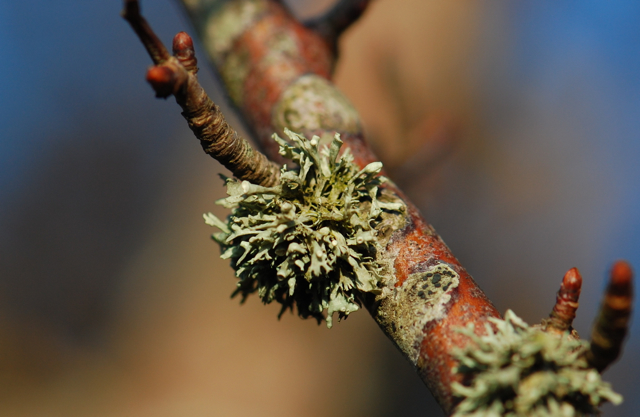
New leaf buds forming in early spring.

It is used as a rootstock for grafting pears and medlars and the wood was apparently one of those preferred by the Druids for making runes. A fascinating fact (which I am sure you will all find very useful) is that some myths claim hawthorn wood to be the best for staking vampires! I wonder if this refers to the long association with qualities of protection, part of which must come from all the many species it shelters and provides uses for.

Unfurling spring leaves – delicious in salads.

It is a tree that looks beautiful in each of its manifestations throughout the changing seasons. The small buds emerging early in the year give way to tender green leaves which are delicious in salads before they toughen up later in the year.

The blossom has equally fantastic medicinal properties as the berries and the two preparations are often used together by herbalists. You can read my accounts of some of the medicinal benefits of Hawthorn here and here.

Blossom buds.

One of the most beautiful sights of spring.

The blossom can be used to make teas, tinctures, herbal honeys, elixirs, flower remedies or to sprinkle on salads. Some people find the smell offensive but others, including myself, find its sweet headiness quite pleasant.

The oldest Hawthorn in the country is in a village in Norfolk and is thought to be about 700 years old! I would very much like to take a little trip to visit it this coming year. There is said to be one more than twice as old again in France, though apparently this hasn’t been verified.

Summer green glory.

The summer hawthorn is all green fullness and abundance. I often wonder how the leaves stay on in such windy conditions!

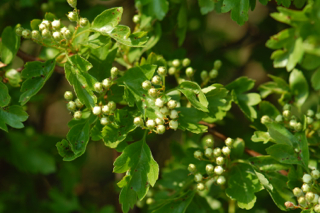
After the blossom dies back, small green berries begin to form which ripen into the wonderful red fruits we so associate with late summer and autumn. These can be made into all sorts of delicious syrups and elixirs as well as being used for tinctures and decoctions. You can read about my Hawthorn syrup here.

Early blushing berries.

Autumn harvest for wildlife (including herbalists!)

Hawthorn has a use for every season; food, medicine and wildlife habitat, it also keeps us warm in the winter months as its hard, dense wood burns hot without being too smoky.

The latin name, Crataegus, comes from the Greek word for strong. Whilst this is thought to reflect the qualities of the wood, I suspect it may actually refer to the nature of the tree itself which is resilient, tough, hardy and above all abundant and unfailingly generous.

Like many of the plants we consider weeds and many of our wilier animal friends like crows and foxes, the hawthorn has only survived and flourished in a changing habitat due to its ability to adapt.

I look forward to many more years of knowing, appreciating and working with this remarkable plant.

It’s time for the next instalment of our cream making recipes, this one using emulsifying wax.

Emulsifying wax can be made from either vegetable wax or petroleum wax mixed with a detergent, so do ensure that you know which you are getting. I always use the vegetable derived one which is what most herbal suppliers will be selling. It comes as a flaky white solid which melts at fairly low temperatures and helps to thicken and emulsify fats and waters to make a cream. You will see from the recipe that this cream includes a much higher proportion of water compared to the last one I posted about, enabling you to make a cream that is not quite so rich and sinks in easily.

Here in the UK many herbal suppliers sell emulsifying wax including Baldwins here, Neal’s Yard here, Woodland herbs here and Aromantic here. All these will ship internationally but I’m sure most countries will have their own suppliers.

Pros to this cream include that it is simple and potentially quite cheap to make, it doesn’t involve any special equipment, just a few bowls and a whisk, and it is more stable than the cream without emulsifiers which can tend to sweat when exposed to temperature fluctuations.

Cons are that it is not completely natural and can sometimes tend to leave a slight residue behind when massaged into the skin. With this recipe it’s important to use a preservative because it has a high water content and will potentially go off quite quickly.

This recipe will make about about half the quantity of the last one incase you didn’t want to experiment with quite such a large amount.

Ingredients:

Waters:
200ml of spring water, floral water or herbal tea.

Oils and Waxes:
20g emulsifying wax
10g beeswax
50ml herbal infused oil or plain base oil

Extras
2.5ml vitamin E
1 ml essential oils
Preservative of choice according to instructions

Method:
First melt the beeswax and emulsifying wax in a bain marie or double boiler adding the oil and waiting until it is all completely melted. Whilst that is happening place the waters in another pan and heat until fairly hot but not boiling. When both are ready turn the oils off the heat and place the waters in a heat proof jug and begin to pour very slowly into the oil mixture whisking vigorously as you go.

Keep pouring and whisking until all the waters are incorporated into the oils. As they are still hot they will have a thin texture, a bit like milk.

Keep whisking until it starts to thicken, then add in your vitamin E, essential oils and preservatives (I use Preservative Eco sold by Aromantic).

Keep stirring, it should end up fairly firm and deliciously creamy, by which time your arms will be ready to fall off!

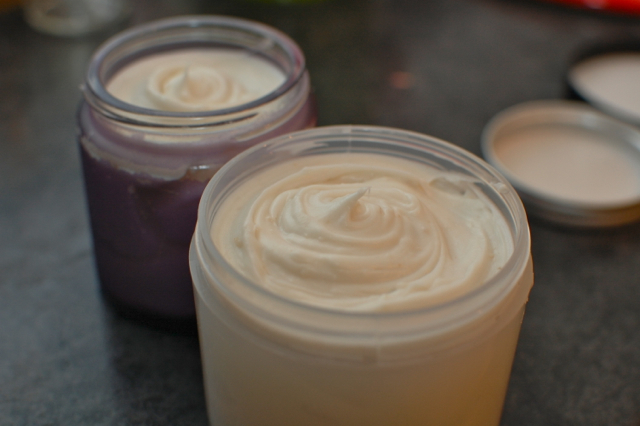
Spoon into jars, swirl the top and that’s all there is to it!