Feeds:
Posts
Comments

Archive for the ‘Blog Parties’ Category

SPOILER ALERT!!! This post contains information which may jeopardise some people’s surprise on Christmas Day. If you happen to be a close friend or family member I suggest you do the right thing and turn back now.

This months’ blog party is kindly hosted by Brigitte over at the lovely and informative My Herb Corner and is on the topic of Herbal Christmas Gifts.

Whilst I’m still struggling to believe that we are approaching the end of November, it certainly is time I started getting organised on the present front. I’m well known for pressing remedies on to my loved ones for their varying ailments, so at Christmas, I like to move away from the medicinal and create some herbal treats that are luxuriant and pampering as well as promoting good health in the winter months.

This year’s line up include some lovely bath and body oils, a deeply moisturising hand and foot cream, some soothing lip balms, a rejuvenating eye gel and some nourishing face cream.

Christmas Bath and Body Oils:

I always like to have some lovely oil blends on hand to add to the bath, use in massage or simply to moisturise my skin. Here are this year’s Christmas themed oil blends which consist of 2% essential oil in 100ml base oil. 2% usually works out as 40-50 drops of essential oil, depending on the size of the dropper. It’s important to blend essential oils in a base oil rather than just dropping them into the bath so as to avoid the possibility of irritating the skin as the essential oils do not always disperse well and can remain in concentrated blobs on top of the water. These oils do not use any emulsifiers therefore they will create an oily film on the water, though as you only need to use a tablespoon per bath, I have never found this a problem. Emulsifiers can be added which will make a more milky bath oil which disperses well in the water but the ones used for this purpose are usually synthetic so I like to avoid them where possible.

Winter Warmer- I created this blend with a couple of family members in mind who suffer from chilblains in the winter months and could use this in a bath or footbath to ease their discomfort. To 100ml of Apricot base oil I added 20 drops Rosemary essential oil, 20 drops Grapefruit and 10 drops Black Pepper. This not only stimulates the circulation and the lymphatic system but also makes a lovely revitalising morning bath for relaxing winter weekends. In fact I’ve just enjoyed one this morning.

Christmas Gifts-  To 50ml of Gold of Pleasure Oil (Camelina sativa) and 50 ml Sweet Almond I added 25 drops Frankincense, 15 drops Sweet Orange Oil, 5 drops Myrrh and 5 drops Clary Sage. This blend feels wonderfully Christmassy and promotes visual dreaming. I like to give it with a bar of Rococo’s Gold, Frankincense and Myrrh Chocolate. Enjoy the chocolate in the bath for ultimate indulgence.

Oh Christmas Tree- This blend was created for my husband who loves the smell of pine and also loves luxuritaing in the bath. To 100ml hazelnut oil I added 15 drops pine essential oil, 15 drops silver fir and 15 drops juniper berry. Earthy, fresh and cleansing this is great for washing away the pollution after a long day Christmas shopping in town or to bring the smell of the forest home with you after a brisk winter walk.

Luxury Hand and Foot Cream:
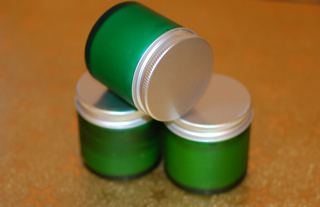

This was made with my mum and sister in mind, both of whom like to look after their hands and nails. The Comfrey is healing and mineral rich, the Avocado and Shea are deeply moisturising, the beeswax is protective and helps to emulsify the cream and the Horsetail is famous for its silica content which helps to strengthen the nails. The Jasmine makes it sexy and luxurious and the spearmint is reviving and refreshing for tired hands and feet.

40ml Comfrey root infused oil
40ml Avocado oil
40g Shea Butter
80ml Horsetail decoction (simmered 15 mins)
1 tbsp Vegetable Glycerin
15g Beeswax
2ml Vitamin E
10 drops Vitamin A
20 drops Jasmine essential oil
5 drops Spearmint essential oil

Melt the beeswax in a bain marie and add the shea butter and oil when it’s already soft.

In a separate container, mix the horsetail infusion and vegetable glycerine.

Take the oils off the heat and allow to cool until looking opaque. It’s important to get the oils and waters to the same temperature to enable them to mix properly, otherwise your cream will separate, I find I have better results when both parts are about room temperature or a little warmer. I use a small hand blender to mix them as I’m not making a large enough quantity to use my big blender. Begin to blend the oil mixture and slowly add in the waters, a drizzle at a time. Continue to blend until you have a nice smooth, even, creamy consistency.

Stir in the essential oils and vitamins E and A once it is cool and has thickened. Mix well and spoon into jars. This cream will last about a month out of the fridge (less if you life in a warm climate). It has a lovely thick, green appearance and is incredibly nourishing to dry and hard working hands.

I have a much more detailed description of cream making here which will be useful if you are new to the process.

Also a description of ingredients including preservatives here.

It’s really a myth that you have to use emulsifiers to get a properly mixed cream, it just takes dedication and a bit of practice, I had several disasters before I got the knack and even now I sometimes get it wrong. I do occasionally use emulsifiers to make a face cream as it’s hard to make a very light consistency without them, but I like to use all natural products where possible and the emulsifiers used in cream making, even when derived from natural products, are always highly processed in some way. Ultimately oil and water don’t want to mix but they can and do, only your will must be greater than theirs!

Soothing Lip Balm:

This is a simple and delicious lip balm recipe.

40ml Calendula infused oil
30ml Macadamia nut oil
15g Cocoa Butter
15g Beeswax
1ml Vitamin E
10 drops Vanilla Essential Oil

Melt the cocoa butter and beeswax in a bain marie, adding in the macadamia and calendula and stirring well until everything is dissolved. remove from the heat, add the Vitamin E and Vanilla, stir again and pot in 6 15ml jars. Leave on the side to cool. A good trick it to almost fill the pots, wait a few minutes, then top them up. This ensures an even surface on top of the balm, otherwise you can get a dent in the middle as it settles.

Rejuvenating Rose Hip Eye Gel:

This eye gel is also simple to make and is based on antioxidant rich rose hip.

80ml Rose hip infusion (1 tsp rose hips simmered in 100ml spring water)
5ml Witch Hazel distillate
1/2 tsp Xanthan Gum
1/2 tsp Vegetable Glycerine
1/2 tsp Eyebright tincture
I tsp Aloe Vera gel
2ml Rosehip seed oil
10 drops each Vitamins E and A

Whisk all ingredients lightly together except the xanthan gum – I actually use a stick blender in the little measuring jug that came with it to make this recipe which works well but there isn’t enough volume to use a large blender. Sprinkle  the gum slowly and finely into the mixture whisking all the time until a gel begins to form, whisk until there are no lumps in it. There is no preservative in this formula except the vitamins and tincture so I suggest it is kept in the fridge where it should last about three months. You need such a tiny amount of this gel that I recommend only using small jars so it does not get wasted.

Unfortunately I ran out of time this week to make the face cream but i will be sure to post the recipe when I get round to it.

Good luck with your Christmas shopping and making!
Read Full Post »

Spice up your life!

When Debs over at Herbaholics Herbarium announced the theme for this months blog party I didn’t know how I’d ever choose what to write about. The world of spices has always captivated people’s imagination and, in times gone by, some were worth more than gold. Here in Western Europe, where we have few local spices but can so benefit from their warming actions, the Spice Trade has been big business since Ancient times. Spices are the only non-local plant medicines I would never want to manage without, especially at this time of year when all I want is to settle down by the fire with a book, a cat and a cup of fresh ginger tea with a splash of elderberry syrup. Initially I wasn’t sure whether to take a more general look at spices and their uses as medicine and share some of my favourite recipes or whether to focus on one in particular and, if so, which one. My decision boiled down to black pepper or cardamom, both of which I use regularly in food, medicine and aromatherapy. In the end cardamom won the day, though don’t be surprised if a black pepper post pops up here too sometime over the colder months!

I have already written about cardamom (Elettaria cardamomum) and it’s natural affinity with rose in this post and in my chocolate recipe here. They both resonate with the heart and are famed for their aphrodisiac properties. Even though many spices are considered aphrodisiacs, for me, cardamom is the true spice of love.This is because it has a very balanced effect, being slightly stimulating- as are all spices to some extent- but also calming and centring. In Ayurvedic medicine cardamom has been used to enhance meditation for this very reason- whilst helping to pacify the mind it also aids in restoring focus and preventing you from dropping off to sleep on your meditation cushion! By increasing vitality, calming the spirits and improving concentration it is a great tonic for our busy 21st Century minds. In Asia it’s also been used in the treatment of depression.

Though it is native to India and South East Asia,  Guatamala and Mexico are now also large exporters, though the Indian cardamom is said to be highest in quality. Part of the ginger family, Zingerberaceae, it is a perennial herb with large leaves and fleshy underground rhizomes. The part we use medicinally is the pale green seed pods containing the small dark seeds which are rich in volatile oils.

Cardamom is best known in herbal medicine as a digestive remedy, especially when the problems are caused, or made worse by nervous tension. It has proved useful particularly for gas, bloating and nausea and can help calm vomiting. It is helpful to chew or drink as a tea after a heavy or rich meal or when one has the sense of having overeaten. The Ancient Egyptians are said to have used it in this way to sweeten their breath. It has also been found useful for headaches which are caused by indigestion. It is a helpful remedy for stimulating the appetite and some have used it with success in cases of anorexia. It’s ability to stimulate digestive secretions combined with its mood lifting properties would certainly make it a remedy worthy of consideration in such cases. As one of the safest digestives it is also suitable for children.

In my experience, Cardamom is a wonderful medicine for those constitutions who have a tendency to nervousness, over-thinking, anxiety and poor digestion. They can be prone to muscle contractions, stiffness, fatigue, low libido and poor concentration. This makes it beneficial for the Ayurvedic Vata types, or in Western energetic terms, those with a constricted tissue state. This is the person who never seems quite relaxed, who feels the cold and tends to worry, both of which may result in a stiff or contracted body posture.

In Ayurvedic medicine, cardamom is used as a remedy for clearing phlegm from the GI tract and the respiratory system. It helps drain damp and mucus from nose and sinuses and is warming and drying but not excessively so, therefore it is considered tridoshic, meaning it can be used with all constitutions, though in my small experience it’s true affinity is for those with a Vata constitution. To find out more about the Ayurvedic constitutions, or doshas,  and take a quiz to help you determine which one you are, have a look at this website here. Of course you really need to see a practitioner to get a true assessment!

Cardamom is also thought helpful for genito-urinary complaints. Anne McIntyre writes that it can help strengthen a weak bladder and according to some writers, it can help ease symptoms of PMT, though I have no expeience of using it in this way.

Here are some of my favourite Cardamon teas blends. Always crush the pods a little in a mortar and pestle to release the volatile oil containing seeds:

  • Cardamom and Rose – (of course.) To lift the mood, pacify the mind and instil feelings of love and wellbeing.
  • Cardamom, Chamomile and Peppermint – As the perfect after dinner beverage to settle the stomach, improve digestion and relieve gas.
  • Cardamom, Orange Peel and Elderberry – Make as a decoction for a warming and immune supporting winter tea.
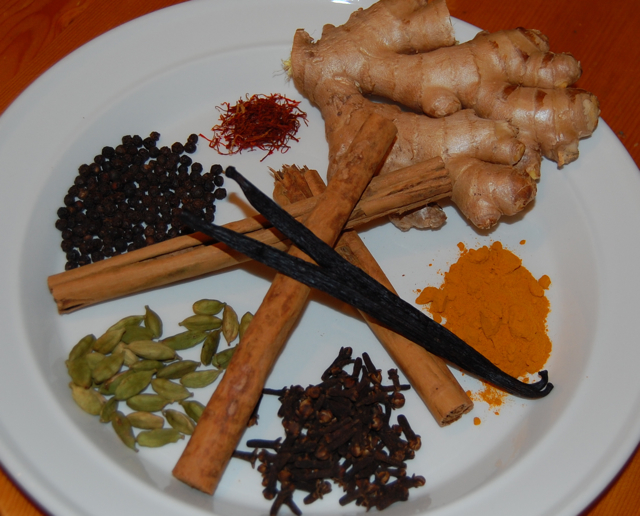
  • Cardamom, cinnamon, ginger, cloves, black pepper and rooibos – A delicious chai enjoyed with a little almond milk and honey.

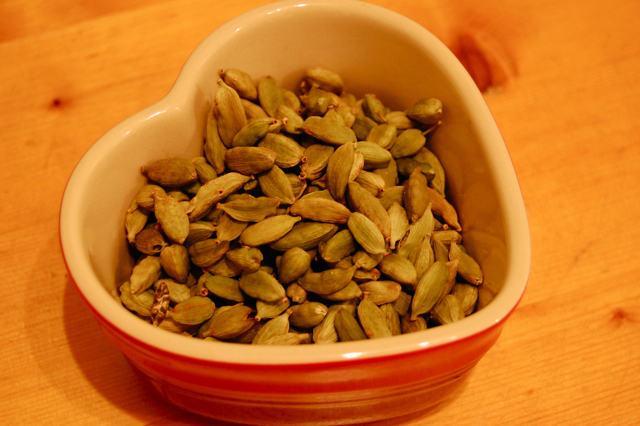
Cardamom pods

Cardamom can also be taken in tincture form and a little is a great addition to many formulas where digestion is a factor. It’s also lovely infused in honey or in a mixed spice vinegar or you can make a delicious electuary with ground cardamom, cinnamon, ginger, a little nutmeg and a little clove mixed with honey.

Cardamom as an essential oil is warming, invigorating, antiseptic, anti-spasmodic and aphrodisiac. It can be used in blends to massage the stomach to improve digestion or to ease muscle fatigue and it can be smelt straight from the bottle to alleviate nausea.

I love a few drops, mixed with a tablespoon of base oil, and added to the bath. Some of my favourite blends include – you guessed it – cardamom and rose; cardamom, black pepper and juniper; and cardamom, chamomile and mandarin, a blend which is also suitable for children in very small amounts.

Cardamom is of course also wonderful in foods. I use it to flavour rice and in curries and I also buy the ground cardamom to flavour cookies, smoothies, chocolates and cakes. Delicious.

I hope you get chance to enjoy this delightful, gentle and warming spice this autumn.

References:
The Complete Herbal Tutor – Anne McIntyre
The Yoga of Herbs – Dr. David Frawley and Dr. Vasant Lad
Bartram’s Encyclopedia of Herbal Medicine – Thomas Bartram
The Directory of Essential Oils – Wanda Sellar
Picture of botanical illustration of cardamom curtesy of wikipedia.com.

Read Full Post »

This month, I decided to join in the Herbwifery forum’s monthly blog party, hosted by Shamana Flora, the topic of which is ‘Adventures in Herbalism: or What wouldn’t we do for herbs.’

The idea is to write about any interesting, entertaining or downright outrageous stories from our work with the herbs and wild plants of our craft. We were invited to “share… a story of an adventure you’ve had collecting/wildcrafting herbs…i.e. collecting hops naked in the rain? hanging off a mountainside for elderberry collecting? eluding curious bystanders? etc etc.”

I thought this sounded like a great idea for a blog party but, when I came to consider it, I couldn’t really think of anything that adventurous I’ve done while collecting my plants. Of course there’s the inevitable trespassing, sneaking round under cover of darkness, wading through nettles in shorts, hanging over rivers and crawling around the undergrowth that is part of any wild herbalist’s work, but nothing that would really make a particularly enthralling story.

As I mulled it over however, it occurred to me that my whole interaction with plants and nature is an adventure, one that has transformed my world, my thinking, my feeling and my understanding. I’ve come to think that the true adventures in herbalism are inner adventures, the ones that alter our perceptions so radically that we come out of them utterly changed. Altered and awed.

I can remember very clearly the lightbulb moment when I realised that struggling and straining to learn how to communicate subtly with my plant companions was ridiculous. We are so conditioned into believing that we need to learn new skills through a process of practice and great effort that it never occurred to me that these kinds of interactions are part of our very being, easy as laughing, easy as breathing. Generally, when we think about breathing it becomes a complicated process, but in openness and letting go, the body’s own wisdom knows exactly what to do. The same is true with learning to share experiential understandings with plants. Just as animals interact so easily with their environments, we too are designed to fit into and be a part of a natural world which, in our culture, we are so used to separating ourselves from.

What do you think this one's saying?!

When we spend time in nature, observing with an open mind and heart, subtle shifts begin to creep up on us, everything seems brighter, more shining, more special. We can no longer pass by unaware and unseeing as we start to delight in every little thing around us. Even in the city I find myself stopping, enthralled by a tiny plant growing out of a wall, gazing at the trees in wonder and in gratitude. Something sleepy and wild begins to stir in the blood and we realise that we’ll never be quite ‘normal’ again.

So my greatest adventure in herbalism is the quiet, simple, day to day adventure of appreciation for all the gifts that plants give us, from shelter, food and medicine, to subtle understandings, realisations and the ability to extend our love beyond the the limited boundaries of friends and family, to begin to embrace the whole world, in all its myriad expressions.

We always assume it is pain and suffering that will break us, if we let them. So we avoid pain and with it we avoid much of our true experience, as shutting down will inevitably close us to all our sensations and potential for feeling. If we are lucky and some blessing or miracle happens upon us, then we come to see that it’s not pain that will be our undoing but wonder, and what an undoing it is. Imagine it, imagine a breaking that doesn’t reduce you but rather offers you the whole universe, yielding and divine. That is what the natural world offers us, the possibility of wonder, of surrender, of bewilderment and bliss.

In some ways the plants have already asked a lot of of me, but they have given so much more in return. So in answer to the alternative title for this blog party “what wouldn’t we do for herbs?” I must reply, ‘there’s nothing I wouldn’t do for them.’ My teachers, my guardians, my friends.

Read Full Post »

This month I am hosting the UK Herbarium’s blog party with the topic of Leaf and Blossom, Bark and Berry: My Favourite Tree Medicines. It’s always such a pleasure reading different people’s take on the same theme and this month is no exception!

Brigitte has written a lovely post all about her favourite trees and the medicines that can be made from them. What is particularly great about this post is how she describes her love of both the trees of her native Europe and those of her new home in New Zealand. She includes some lovely pictures and links to lots of great information on Hawthorn, Pine, Oak, Ash, Walnut and Apple as well as her newer friends, Eucalyptus and Manuka. Click here to be spoiled for choice! Also, if you haven’t looked at Brigitte’s Wiki yet I highly recommend you do so as it is literally jam packed with interesting information and recipes.

Lusach has written a wonderfully mouthwatering piece on Hawthorn berries which will leave you rushing to the store cupboard, or the hedgerow if you’re in New Zealand, to gather some berries for a decoction without further ado. She shares great tips on making a lovely brew that is full of goodness without being too bitter as well as sharing her experience and photos of harvesting and drying the berries. Along with the reasons why she loves this ubiquitous, yet precious, medicinal tree, she speaks of it’s importance in these transitional times which is very interesting. Click here for a Hawthorn inspired delight.

You can see my own post on the relaxing and healing properties of Linden blossom below.

I hope you enjoy reading these posts and are reminded of the unlimited gifts that trees give us every day.

Blessing for a happy solstice!

Read Full Post »

Wondering reverence amongst the Pines

Trees have captured our imaginations since people first walked amongst them. Possibly even before. There has never been a time when our lives did not depend on the majesty of these great beings, whether for food, shelter, fuel or medicine. As the daughter of a forester I suppose it was inevitable that my chosen path would in some way come full circle and include a special place for trees. I am so grateful for the healing provided by them, there always seems an extra special something in a blend of herbs when it contains some tree medicine!

I think trees function as nervines simply by their virtue of being. In my experience, nothing is a greater tonic to the nerves than a walk in nature, wandering through aged boughs and young saplings and feeling your gaze flooded with a thousand shades of green. The nervous system, down to the neurones themselves, bears a striking resemblance to trees, with their myriad branches and roots stretching out and connecting, sending messages and forming an incredible network, the like of which we have barely begun to understand.

A Neuron

Having said that, within herbal medicine, not many trees are considered nervines. The blossoms of Hawthorn have been described as such, Peach and Rose make great cooling remedies for the nervous system and then there’s the lovely Linden, one of my favourite trees that is also one of my favourite nervines. Linden, also known as Lime Tree (though no relation to the fruit!) is one of the herbalists greatest allies for soothing stress, tension and nervous excitation. The name comes from an Anglo Saxon root, though ‘Linden’ was originally an adjective, meaning ‘made of Lime wood’. In German, the verb ‘lindern’ means to alleviate, ease or soothe.

In various European cultures it has been associated with the divine feminine, being sacred to Freya and Frigga, Goddesses of love, fertility, domesticity and divination.

Limes are an ancient species, there is a small leaved lime in Westonbirt Arboretum that is at least 2,000 years old. Limes and elms were once the commonest trees in Britain, flourishing around 6,000 years ago, during the warm Atlantic period. These would have been our native species, Tilia cordata, or small leaved lime, and Tilia platyphyllos, the broad leaved lime. Both of these are now fairly rare, especially the broad leaved, and the lime trees common in parks and lining avenues are the common limes Tilia x europaea or Tilia x vulgaris.

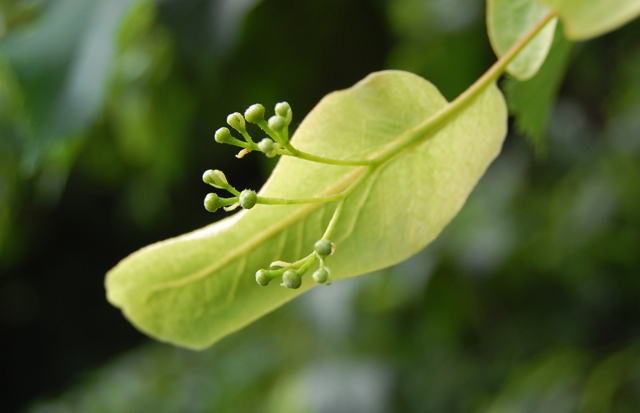
A Common Lime – just before flowering.

I was hoping the Limes would be in flower by now but everything is a bit late this year. I’m waiting on them blooming any day though! I was planning to share a few more of my recipes but I’ll do an update with some ideas for using the blossoms as soon as they are ready for picking. I’ll be doing some tincture, infused oil, a flower remedy (weather permitting!) and an elixir so do check back in a week or two for some medicine making ideas. Linden is one of the last trees to flower and the blooms are only fresh for about a week so everything has to be dropped as soon as the blossoms open and the bees start buzzing. Bees are the best guides to finding a Linden in flower as they can be heard making merry with the pollen, one of their favourites, from quite some distance. There is an altogether musical quality about this tree and it’s wood was a common choice for making instruments such as guitars and recorders due to its fine acoustics.

If the elder is a venerable and wise old grandmother then the linden is a kind and gentle mother, softly singing her child to sleep. You always feel cared for with a cup of linden tea in your hand. Due to it’s gentle nature and sweet honey like taste, Linden makes a lovely children’s remedy taken as a tea, with a little honey if required. It can soothe irritability in children and adults alike and makes a lovely footbath to aid a restful night’s sleep. In Peter Conway’s interesting book “Tree Medicine’, he writes. ‘If you are stressed, tense or overworked, you need limeflowers.’ Well thats most of us then! It is also highly beneficial to constitutionally nervous types whose anxiety goes to their digestion.

It’s list of actions include antidepressant, antispasmodic, demulcent, diaphoretic, expectorant, hypotensive, nervine, sedative and stomachic and as such, it’s is good for more then just stress.

Linden branch – note the heart shaped leaves.

It’s been traditionally used as a heart tonic, helping to reduce cholesterol and high blood pressure, especially if the cause is anxiety driven. It does this in part by relaxing the circulation. If you try clenching your fists hard you’ll notice the skin in your palm going white where the blood has been unable to flow before turning red as the blood rushes back in. Now imagine being in a constant state of anxiety, it creates constriction which results in shallow breathing, reduced circulation and eventually dryness where the blood has been unable to adequately nourish the skin. Linden effectively treats all these conditions, by relaxing the nervous system and the circulation and soothing dryness and inflammation with its high mucilage content. In this way we can see its energy as being expansive in opening up the channels of the body to allow relaxation and flow.

It’s also a valuable medicine for the immune system being regularly drunk as a hot tea in France for colds, flus and fevers. As a diaphoretic it helps the body produce sweat which can lower a high temperature and rid the body of infection. Its anti-inflammatory and expectorant properties make it useful in respiratory conditions where it helps remove phlegm, soothe irritated passages and boost the immune system.

Interestingly, some describe it as energetically cooling and others as warming and we can see both of these qualities if we consider its ability to stimulate and move (qualities traditionally thought of as warming) as well as it’s use in cooling the body by encouraging sweating and calming anxiety.

The bracts and almost opening blossom, both of which are used medicinally.

There are also a variety of external uses for lime blossom, as the high mucilage content helps to soothe irritation and inflammation when used an an infusion for compresses or baths or as an infused oil. It is also a valuable herb for beauty as it is high in antioxidants, helps to regenerate the skin and and is thought to help clear acne when used in facial washes. This year I plan to make a nourishing and softening blend of linden and elderflower infused oils to make into face creams. Lovely.

Linden shines as a tea, having such a palatable taste that there are few who will dislike it. I included my ‘Hug in a Mug’ recipe in my recent post on rose which contains linden blossom, rose and avena, but often I just make a simple linden blossom tea and float a few rose buds on top which gives it a beautiful flavour as well as aesthetic appeal. To enhance the diaphoretic effect it is lovely taken with elderflower at the onset of a cold or flu and can be combined with hawthorn to emphasise it’s ability to lower blood pressure and protect the heart. In very large doses it can cause nausea and may be damaging so stick to 3 or 4 cups a day long term or take larger doses for a short period only.

Linden and Rose Bud Tea

The Linden is truly a gift of healing and wonder. It is strong and ancient yet also elegant and and it teaches us lightness, grace and a subtle kind of merriment. I’m excited for the first blooms which should appear very soon and will be reporting on the harvest and the medicine making as and when it happens.

A Lullaby of Linden:
I would like to sit with you
In a silence
Punctuated only by song,
Strange and sweet
And whispering of stars that fell an age ago.
Stillness and lullaby are my gifts to you.
My honied words, a subtle kindness
That tells you, ‘Dear one, stop,
You are held, you are loved.’
I’ve seen your life in a blink of my own
But to me you are unique in whichever form you appear today.
My song is your medicine.
Stillness and lullaby are my gifts to you.

References:
Picture of a neuron available at http://www.sullenriot.com/media/images/article-images/neuron.gif
Tree Medicine – Peter Conway
The Desktop Guide to Herbal Medicine – Brigitte Mars
Hedgerow Medicine – Julie Bruton-Seal and Matthew Seal
The Living Wisdom of Trees – Fred Hageneder
Flora Britannica – Richard Mabey

Read Full Post »

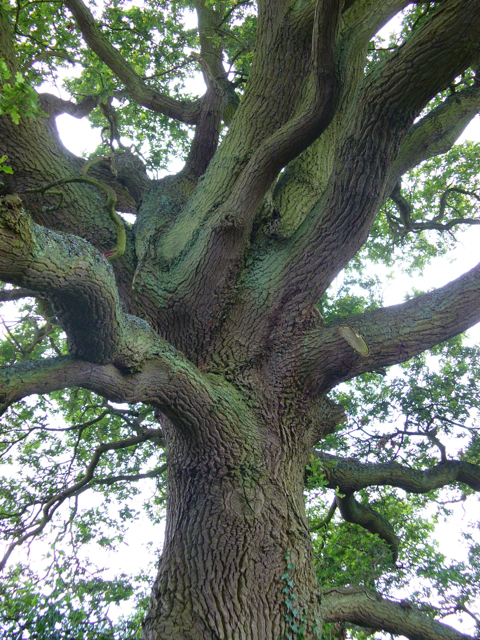
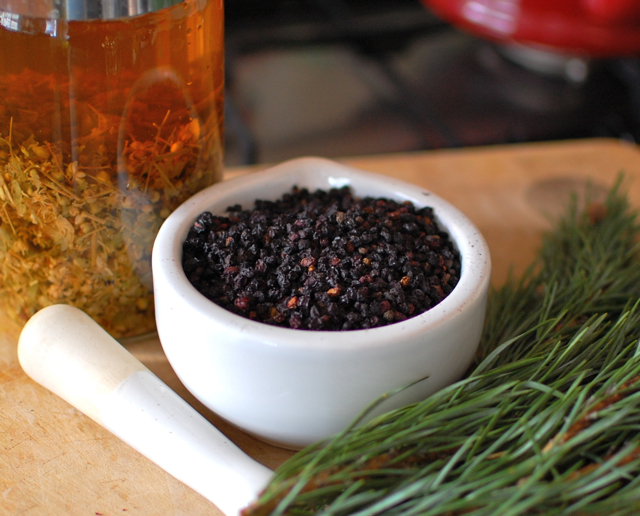
Tree Remedies- Linden Infusion, Elderberries and Pine Needles

This month I’ll be hosting my first blog party for the UK Herbarium bloggers and anyone else who fancies joining in. I’ve chosen the topic ‘Leaf and Blossom, Bark and Berry: My Favourite Tree Medicines’.

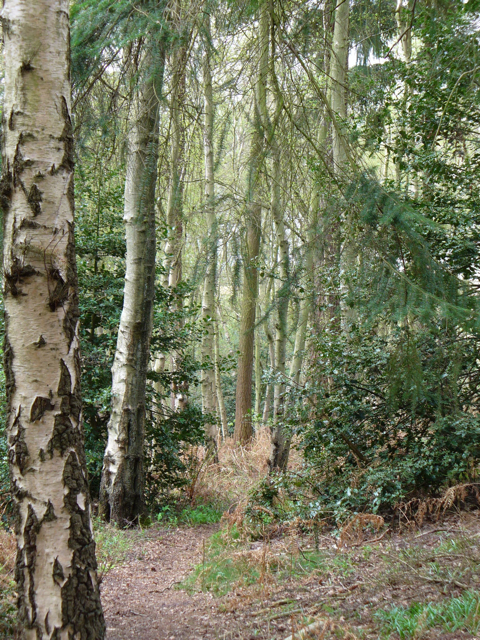
I chose this topic for two reasons. Firstly, and most simply, because I have a great love of trees, they were my closest companions when living in the country and have kept me sane whilst living in the city. Secondly, I wanted to honour the fact that many of our favourite herbal medicines are from trees. From Hawthorn to Birch, Cherry to Peach, Linden to Oak, we use many parts of trees in our healing, including berries, leaves, twigs, barks and blossom. For us here in the UK we’re mainly harvesting blossoms and some barks at the moment but our friends in New Zealand will be using entirely different parts. Some lovely essential oils also come from trees including Cedarwood, Sandalwood and, my favourite, Neroli. You can choose any part of any tree to write about and the topic is fluid so feel free to include shrubs in the definition of trees. We can also be creative with our idea of what is medicine, I know for me there is nothing more healing than a walk in the woods so please don’t feel limited to writing about a tree part and it’s medicinal uses, you can be as imaginative as you like with this topic. Whether your medicine is a tree essence, a healing syrup, a blend of oils, a story, or a simple expression of the benefit we get from trees through words or pictures, we’d love to read what you have to say.

If you have your own blog then add your post before June 20th and email me the link at whisperingearth@gmail.com  -I’ll post all the links here on the evening of the 20th.

If you don’t have a blog but would like to join us anyway you can email your piece as a word document to Debs at the UK Herbarium on debs at herbal-haven dot co dot uk and she will add it to the UK Herbarium blog as a guest post.

Into the Woods

Trees by Ruth Fainlight

Trees, our mute companions,
looming through the winter mist
from the side of the road,
lit for a moment in passing
by the car’s headlamps:
ash and oak, chestnut and yew;
witnesses, huge mild beings
who suffer the consequence
of sharing our planet and cannot
move away from any evil
we subject them to,
whose silent absolution hides
the scars of our sins, who always
forgive- yet still assume
the attributes of judges, not victims.

Read Full Post »

I can’t believe a month has gone by since we wrote about aches and pains in our April blog party, but the time is upon us once more and this month our kind hostess is Debs over at Herbaholic’s Herbarium. She will provide links to everyone’s posts on the 20th.

The topic she has chosen is ‘Local Wild Herbs, New Herbal Treasures’ and she has challenged us to cast our eyes a little further than our favourite, well used and loved, wild herbs and discover something we haven’t worked with before. She says, ‘The only rules are the herb has to come from the wild and has to be something you’re not familiar with using herbally.”

Though very common around these parts, a new and exciting medicinal discovery for me this spring is Speedwell. I have long loved her pretty mauve flowers but, until recently, I didn’t know that this herb could be used medicinally or that there were many different types.

At first I had some difficulty differentiating between the various species as my wild flower books seemed to carry slightly conflicting information. After a bit of cross referencing I’m fairly convinced that the species I see growing abundantly are Common Field Speedwell (Veronica persica), Germander Speedwell (Veronica chamaedrys) and Slender Speedwell (Veronica filiformis). There’s also an Ivy-Leaved Speedwell (Veronica Hederifolia), Brooklime (Veronica beccabunga) and Heath Speedwell (Veronica Officinalis), the later being the variety most commonly used in medicine, among many others.

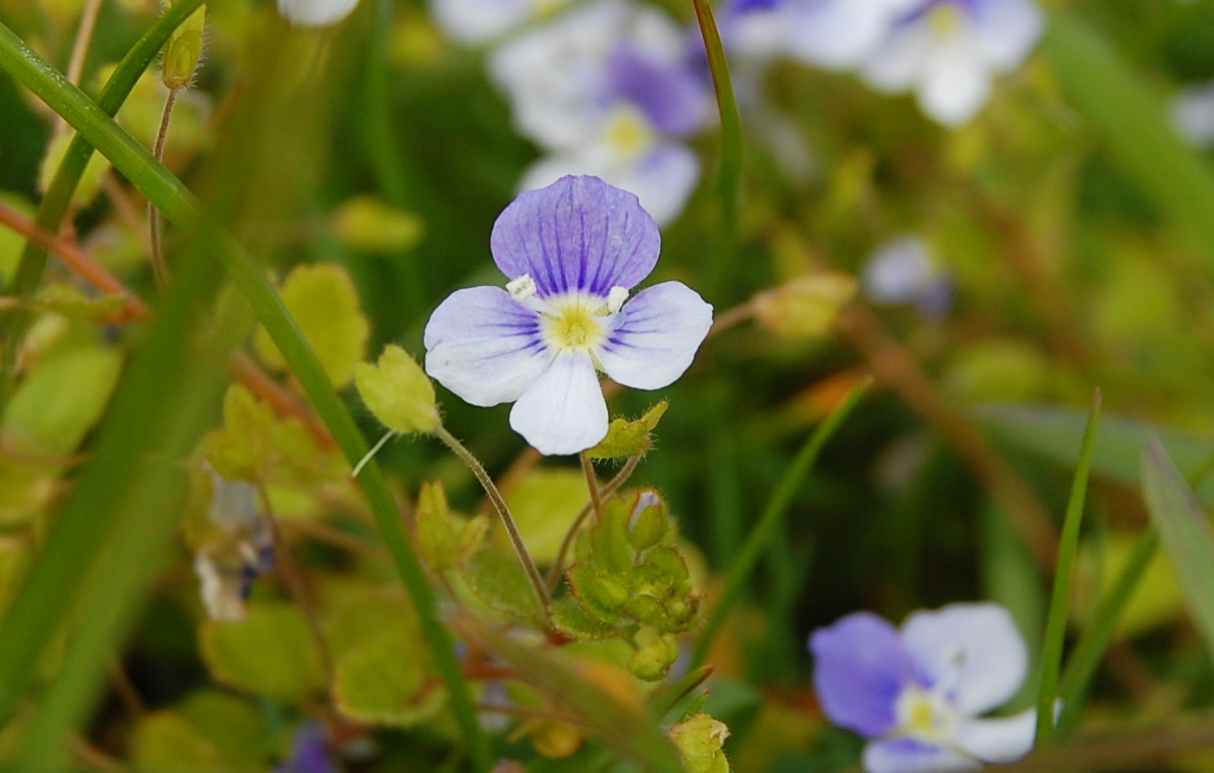
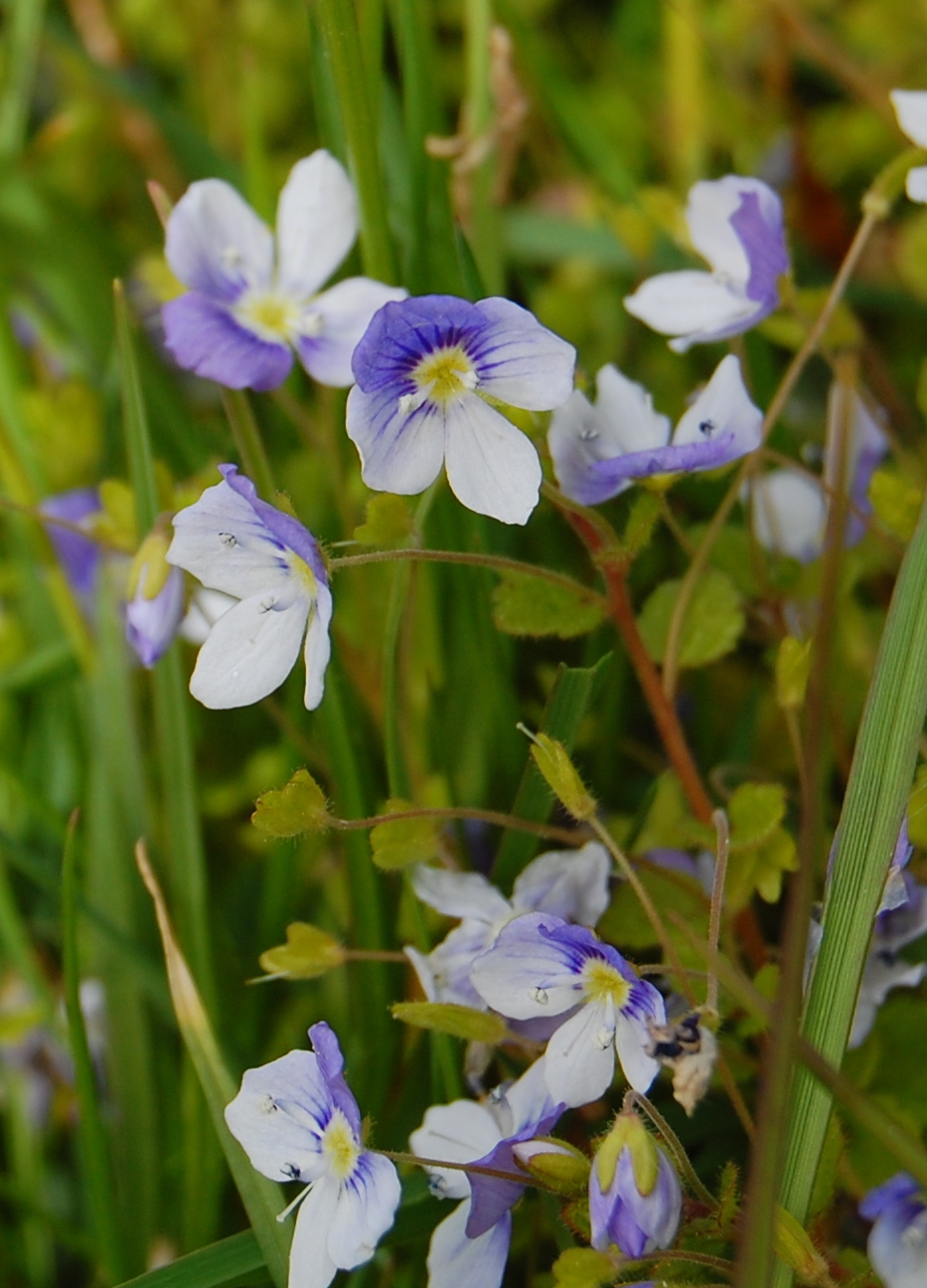
Germander Speedwell

Slender Speedwell

My next challenge was to discover some information on the medicinal properties, which unfortunately is a little thin on the ground, as Speedwell has fallen out of fashion in current herbal practice. The only references I found were in Maria Treben’s Health Through God’s Pharmacy, Gabrielle Hatfield’s Hatfield’s Herbal and Mrs Grieve’s A Modern Herbal. Most of the information online seems to be about how to eradicate Speedwell from one’s perfectly manicured lawn (grr) but there are some great articles and photos on Heath Speedwell over at Henriette’s Herbal. Treben tells us that it was once a highly esteemed herb and that the Romans would compliment each other by saying a person has as many good qualities as the Speedwell. The name too seems to indicate a speedy return to good health.

The only two species that are discussed in the above books are Heath and Germander, the former being the favourite of official medicine and the latter of folk healers, being the most abundant species in the UK. According to Mrs Grieve, both have been used primarily for coughs and skin complaints, reminding me of that other pretty, mauve spring flower, Viola. Both varieties also thought to be useful diuretics, as well as vulnerary and alterative, but Heath Speedwell is also diaphoretic, tonic and expectorant. Treben also recommends it for nervousness caused by mental exhaustion. There don’t seem to be any modern studies available but Hatfield claims it contains the glycoside, scutellarin, named after our calming friend, Skullcap.

According to references cited in Mrs Grieve, the constituents are well extracted in water so my first experiment was a nice cup of Speedwell tea. I followed this up by making an infused oil, to see if the skin healing properties could work in this medium as well as as a simple wash. I haven’t strained the oil yet so can’t report back until I do, but its certainly looking promising and has taken on a lovely light green shade.

Speedwell Infused in Sweet Almond

I very much enjoyed my tea, finding the smell soothing, earthy and fresh. The first sip had an immediate mental clearing effect and I felt soothed but not sedated, the effect being both relaxing and clarifying. I became very aware of the area around my head and I felt my meditative abilities heighten and my third eye and crown chakras open. My breathing deepened and I felt both more grounded and more connected. The taste is green, fresh and ever so slightly bitter without being unpleasant. To me it has an almost celery like quality too. The key things that came through for me were mental clarity and sense of peacefulness. It felt like a subtle medicine, working on the mind and emotions as well as the physical body, which prompted me to make a flower remedy using the Slender Speedwell which grows abundantly in one of my favourite walking spots.

I waited for a suitably sunny morning, then dashed out this weekend to grab the opportunity when it finally arose. Even so I only managed two hours of sun infusion before the clouds came a’rolling in but such is life for a flower essence maker in this variable UK climate!

Speedwell Flower Essence

One thing that strikes me about this little flower is her wonderful contradictions, she’s pale, delicate, frail looking, innocent and flimsy but, like all weeds, she’s also tenacious, clever, wilful and a true survivalist. She reminds me to never judge a book by it’s cover! I think it’s probably these contradictions which give the tea and essence this wonderful sense of being grounding yet also spiritually and emotionally uplifting. Compared to the other flowers around, mainly dandelions and daisies, that have these strong upright stems, that of Speedwell is fine and flexible, sometimes standing up, sometimes laying almost flat and creeping.

Both the colour of the flower and the signature of the central white and gold eye, seem to confirm my original feeling that this was a remedy which resonates with the third eye and crown chakras. I’ve only been taking the remedy a few days now but my initial feelings are that this is a flower to help us in seeing deeply, being conscious and aware and deepening our meditation.

Completed Essence and Sketch

I plan to try incorporating Speedwell into some of my tea blends, perhaps taking it with Plantain and Thyme for chest complaints or with Oatstraw and Rose for bringing out it’s peaceful properties. Treben recommends combining it with Nettle for treating eczema. When the oil is done, I’ll keep half to experiment with as a simple and add the other half into my favourite skin soothing Viola and Chickweed cream. As soon as I locate some Heath Speedwell I’ll be making a tincture too. It’s said to grow well in coastal areas so I should find some around if I continue looking.

I’d love to hear if anyone has any experience, or knows of any good references for using Speedwell so please share your weedy wisdom in the comments.

I’ll leave you with this lovely little verse written by James Rigg in 1810. It nice to see that not everyone sees this beautiful plant as something to be poisoned or purged from their lawns!

To The Common Speedwell

Where’er I meet thee, up doth Fancy fly
In thoughts celestial Image of the sky!
About thee shining, starry Daisies sing,
And from their hosts the joyous Lark doth spring;
While Dandelion suns around thee blaze,
And Lady’s-smock, dipped in Aurora’s rays,
Wafts o’er thy petals blue, an odour, sweet
As dawn of love let me thy beauty greet
With my faint song, dear, tender, fragile flow’r
That from the azure vault once drew thy dow’r!
When mine do gaze upon thy laughing eyes,
I have one wish to pluck thee as a prize;
But that I know thine eyes were never made
To mock the sky, save from the dewy glade:
Even as a modest maiden, reared amid
The pieties of Nature, that lie hid
In forms like thine, blooms fairest where she grows,
And of deceitful Art but little knows!
Thou art a jewel on the brow of May,
That, robed in scented garments, wings her way!
Emblem of Friendship rarest gem of blue
From me thou ever hast affection true!

Read Full Post »

Debs has just announced the theme for the next UK Herbarium blog party- Local Wild Herbs, New Herbal Treasures. I think it’s going to be a good one as we’ve all been challenged to write about a wild herb we haven’t used medicinally before. You can read the details on her blog here.
The closing date for submissions is May 19th and all entries will be posted on her blog on the 20th. Do join us if you can!

Read Full Post »


This months blog party is hosted by Sarah Head over at Tales of a Kitchen Herbwife on the topic of ‘Herbs for Aches and Pains.’

Most of us suffer from aches and pains from time to time and, whether it’s the odd twinge or continuous and debilitating muscle pains, herbs are here to help. Most aches and pains tend to fall into the category of either ‘hot’ or ‘cold’ conditions. A hot condition is likely to be inflamed, red, swollen and sore and could be due to rheumatic problems, strains, sprains or other injuries. Cold conditions might manifest as dull muscular aches that are better for warmth and pressure.
Here are a few of my favourite simple herbal tips for easing you through when these afflictions strike.

Baths- The first port of call for any cold, dull, achy, muscular pains is a good soak in a hot bath. Debs and Elizabeth have already mentioned how great Epsom Salts are for adding to the bath water in their posts and I agree whole heartedly! This is because Epsom salts are rich in magnesium, a vital mineral for aiding muscle relaxation and easing tension. Many of us are deficient in magnesium and stress depletes us further, so its important to make sure we are getting sufficient levels by consuming lots of leafy greens and enjoying nettle nourishing infusions regularly. Here is a great bath blend for driving out the ache;

3 cups epsom salts
1/2 cup mustard powder
3 drops black pepper essential oil
3 drops rosemary essential oil
Mix all ingredients thoroughly in a bowl and add to a full hot bath. Stay soaking for at least half an hour to get maximum benefit.

If you feel achey at the onset of a cold or flu try sipping a nice cup of Linden blossom tea whilst you bathe.

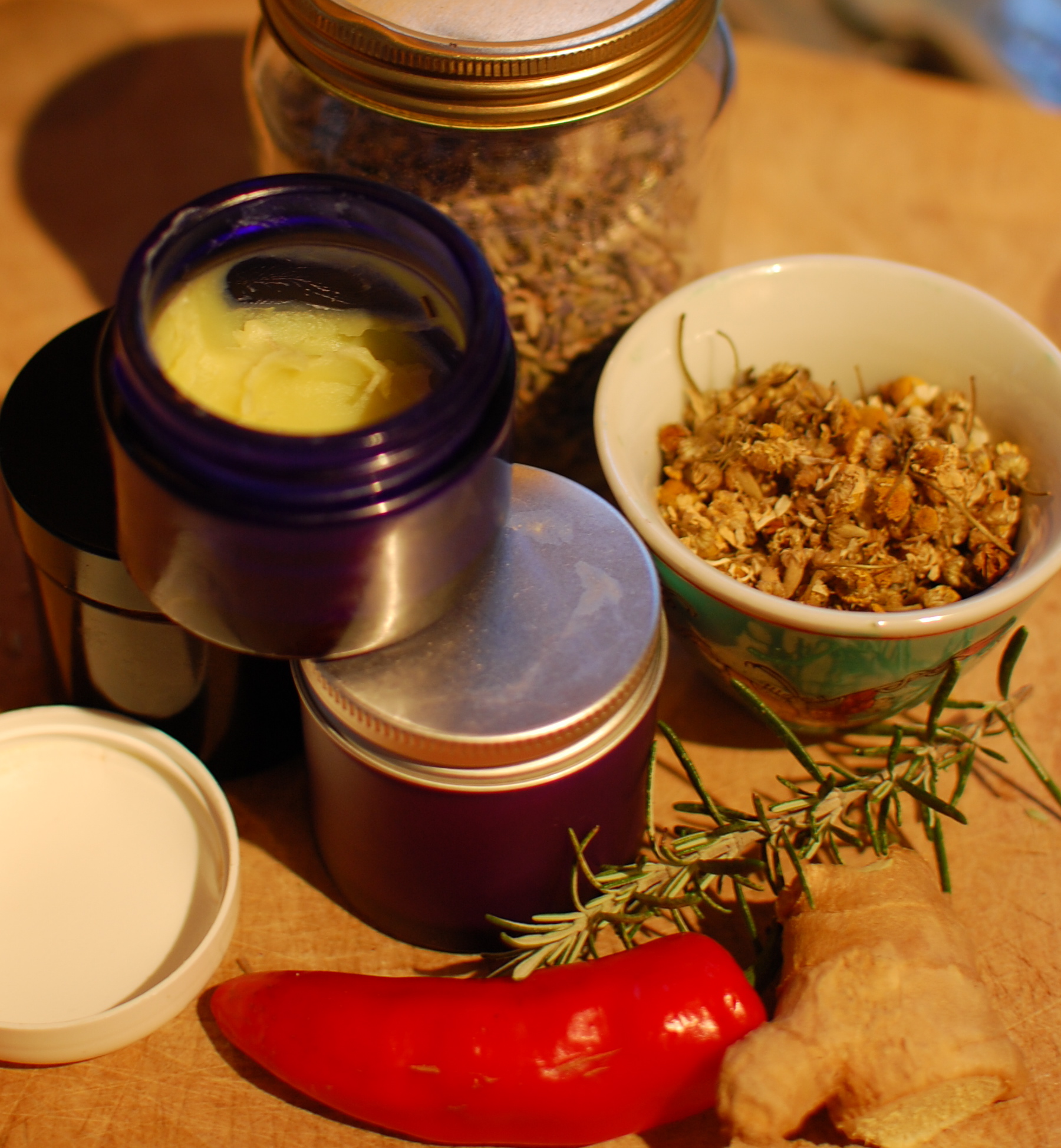
Oils- A good rub down with a herbal infused oil will do wonders for relieving stiffness and soreness and many infused oils are beneficial for aches and pains. If you’re experiencing a cold, dull ache, then oils that are warming and stimulating to the circulation will help ease the pain and tension. My favourite is a combination of Rosemary and Ginger infused oils but Cayenne is also great as, like ginger, it is anti-inflammatory and pain relieving.
If you have joint pains then a simple salve made of comfrey infused oil may be beneficial.
If there is nerve pain St. John’s Wort is the oil of choice, which it is also well suited to back pain.
Lavender and Chamomile infused oils are soothing and pain relieving for tired and aching muscles.

Poultices and Compresses- If the pain is localised, for example in a knee or the lower back, then this is a good way of delivering the healing properties of the herbs directly to the area.
For a cold, tense ache, a fresh ginger poultice can help. Just grate a good inch or two (depending on the size of the area) of fresh ginger root onto a muslin cloth or stretch bandage. Cover well with a couple off layers of the fabric so that the ginger is not in direct contact with the skin. Apply to the area and keep in place with more bandages. Remove immediately if it starts to irritate.
Hot or inflamed joints can benefit from fresh comfrey poultices or a compress of chamomile tea. The difference between a poultice and a compress is that compresses uses a cloth soaked in liquid, usually herbal infusion or tincture in hot water, whilst a poultice uses fresh plant material, moistened, grated or blended with water and laid on the skin, either directly or covered by light cloths. Horsetail infusion also makes a great compress for sore joints and Maria Treben recommends making a Horsetail poultice by steaming the plant material before laying on the problem area.

Teas and Tinctures- A simple chamomile tea can ease tension and sooth mild pain. The tincture of Crampbark, Viburnum opulus is a great muscle relaxant as it works on the smooth muscle found in the intestines and uterus as well as the striated, or skeletal muscle. I love the marshmallowy feeling Crampbark gives me and it seems to help muscle tension and menstrual pains as soon as I swallow it. You can also mix a few drops of Crampbark with a little comfrey salve to have a wonderfully relaxing and soothing topical effect. Wood Betony, Stachys betonica, is also a lovely nervine and pain soother, usually used for headaches and problems associated with the head but useful for aches and pains in general too.

I hope these are ideas prove useful and everyone is enjoying this fine Spring weather 🙂

Read Full Post »

This month’s herbal bog party, hosted by the inspiring Brigitte of My Herb Corner, is on the topic of My Herbal Treasures in March. Its so exciting to be thinking about all the new life beginning to stir at the moment as I’ve just started my first Spring harvests.

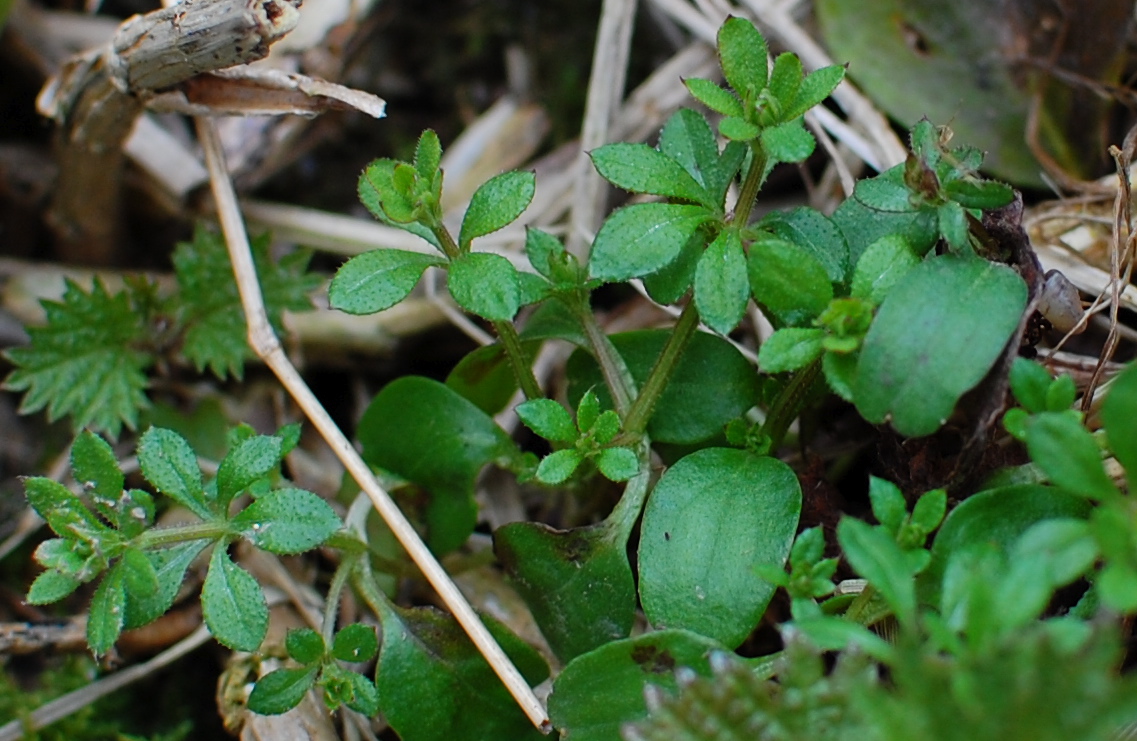
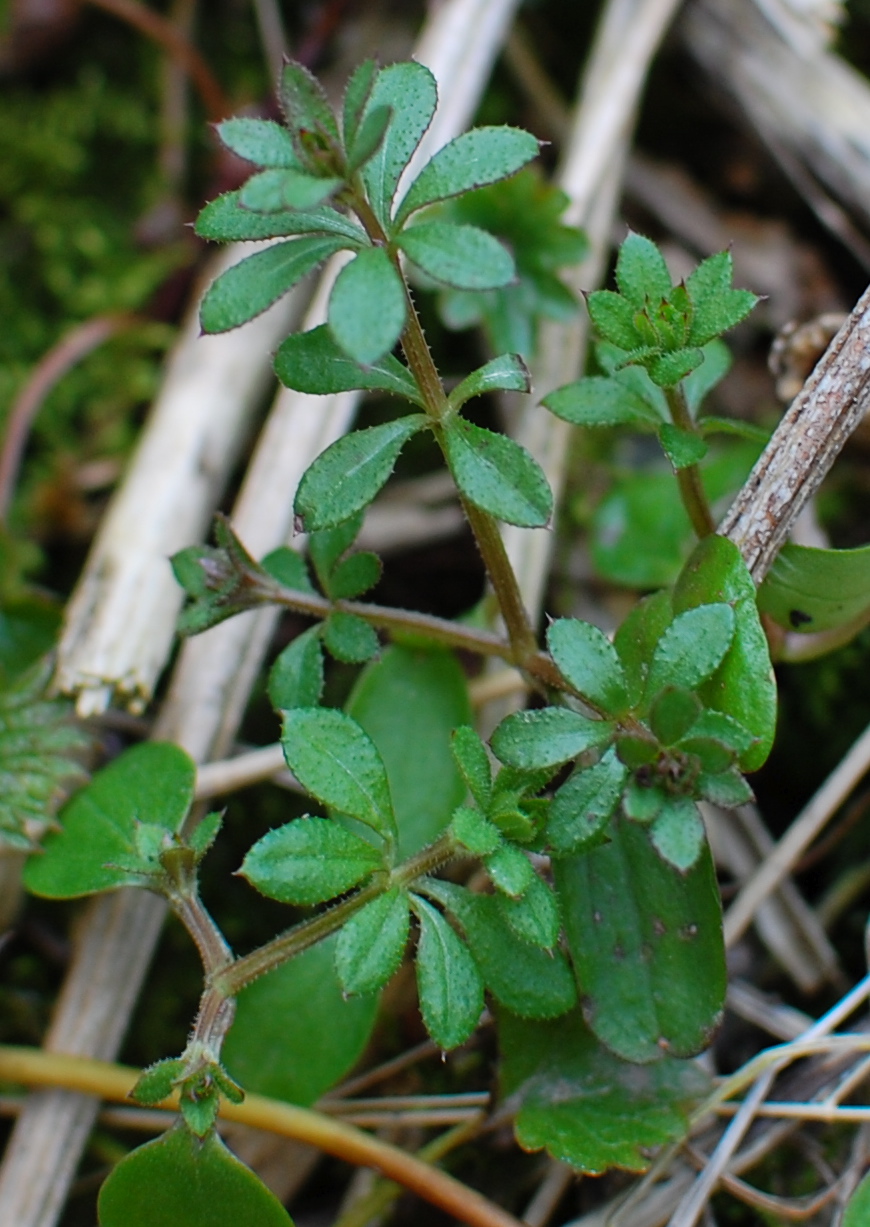
Its kind of an obvious one, but my favourite March herb is probably the dear and wonderfully weedy Cleavers. Galium aparine

Also known as Goosegrass or Sticky Willy, Cleavers is one of the first of our spring allies to appear, though it was perhaps a little later this year than I remember as I only managed my first harvest last weekend. It’s found mainly in woods and hedgerows and, along with its good friend stinging nettle, is one of the first wild herbs many people learn about.

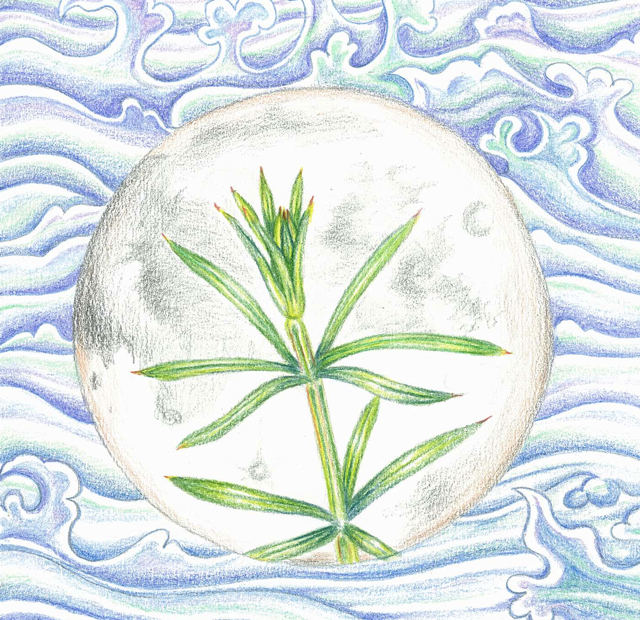
Cleavers is a herb of the moon and is governed by the element of water and this is key to my understanding of how it works in the body. As a medicinal herb it is most commonly used to treat the lymphatic system, a network of vessels which runs alongside the blood circulation carrying waste materials in lymph fluid ready for processing in the lymph nodes and organs such as the tonsils, thymus and spleen. The lymph has no pump of its own so is reliant on the movement of blood and muscles to aid its journey, so exercise is vital for a healthy lymphatic system. It’s functions are primarily to aid cleansing of the tissues and assist the immune system by transporting white blood cells and antibodies.

To me, the lymph relates very closely to the water element in us and, as we know, the moon affects fluids in all of nature by governing flows and tides. The nature of water is to be fluid, we can easily see how polluted stagnant water becomes, and the lymph must also be flowing in order to perform its functions within the body. In the winter we can become more stagnant and accumulations tend to build up, stressing the lymphatic system and resulting in lowered immunity, swollen glands and sluggishness.

Cleavers is all about getting things moving and flowing again. I see it as an initiator and indeed it is meant to be auspicious to drink it before a journey. It doesn’t force change, just gently encourages the body to wake and clear itself, helping to remove excess fluids through its diuretic action. This quality means it is also a good urinary tonic, especially in inflammatory conditions of the urinary tract as it is also anti-inflammatory. Its useful for clearing the skin, partly due to its general alterative properties, and it has been used to treat cancers, both internally and externally as a poultice.

The water element also governs the emotions and Cleavers can help us to gently let go of the past and be ready to embrace the new growth and change that Spring awakens.

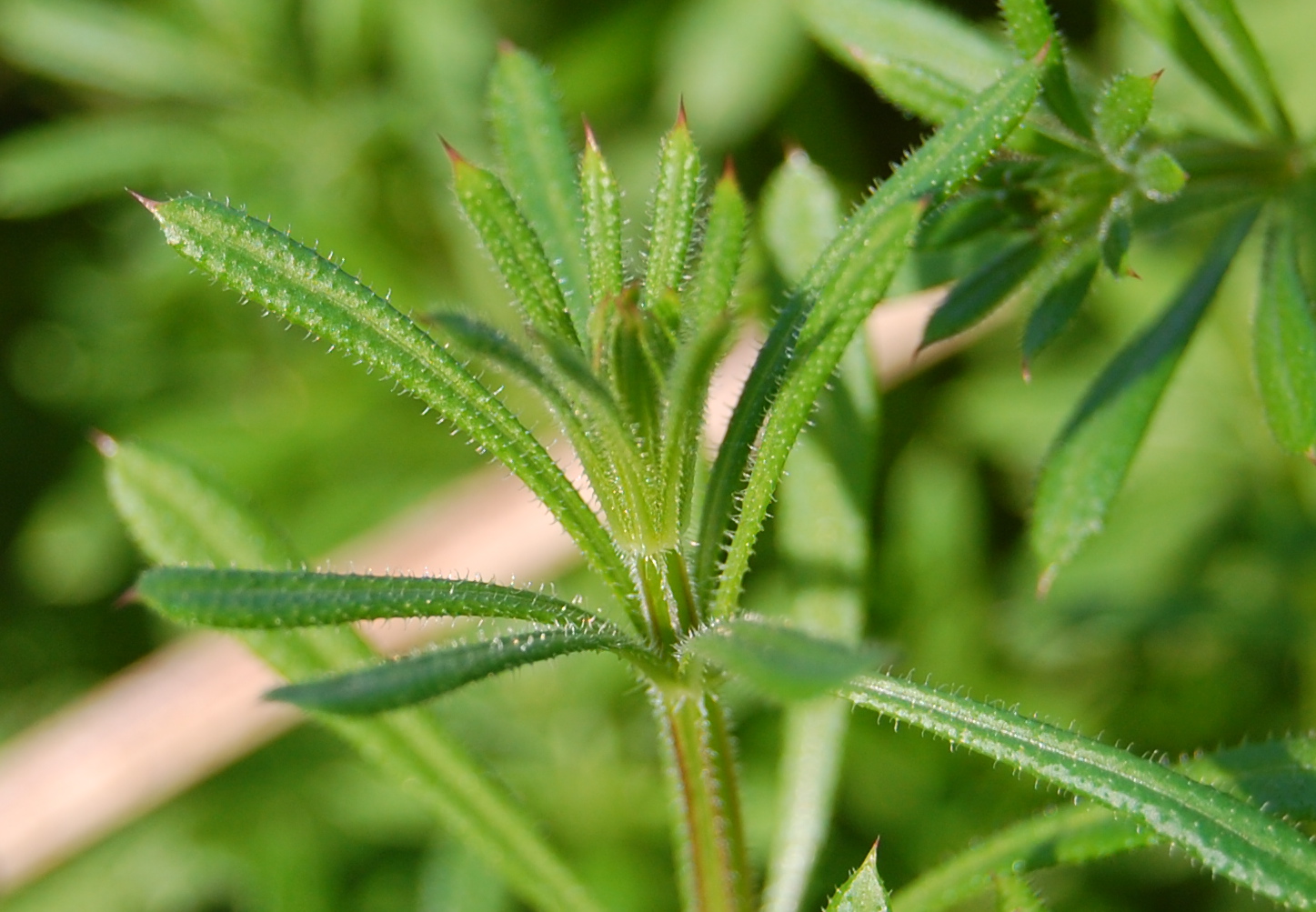
Cleavers is covered in tiny little hooked bristles which you can see in the close up below which I took last year, later in the season when the plant was more mature.

I see Cleavers as a plant of youth, not only because of it’s appearance early in the spring but due to it ability to entertain the child in us all when, on long walks, we can engage in the game I never grow tired of, how many cleavers can you stick on someone’s back before they notice 🙂

I think the real reason Cleavers grab on to us as we go by is because, in a damp climate like the UK, we could all do with a bit of lymphatic support and she is generously reminding us of the great service she can offer.

The plant itself is strong yet supple. It is flexible enough to be twisted round itself and apparently, country folk used to use it in this way to make a sieve for straining milk. It uses its little hooks to grow up other plants to get to the light, yet its strong enough to support them too when needed.

Here are a few ways to incorporate Cleavers into your life, they are always better used fresh than dried:

Cleavers Green Juice
Juice is my favourite way to take them and also the most potent as we are ingesting the life blood of the plant which is an incredible gift. It does require the use of a juicer but if you don’t have one you could whizz it in the blender with some water and then strain, though I haven’t tried it this way. I juice a big handful of cleavers with some apple, fennel, lemon, ginger and celery. This makes a delicious cleansing and revitalising drink for bright Spring mornings.

Cleavers Vinegar
Make your Cleavers into a delicious green vinegar by lightly packing a jar with them then covering in unpasteurised apple cider vinegar. Cap with a plastic not metal lid (vinegar corrodes metal) and allow to infuse for three weeks before straining and rebottling. This makes a lovely spring salad dressing with a drizzle of olive oil.

Cleavers Salad
At this time of year you can finely chop the young cleavers and add to salads, though later in the Spring they become too tough and stringy. Enjoy them now while they’re tender!

Cleavers Cold Infusion
Many people prepare their cleavers as a cold infusion by popping a handful in a glass, covering in cold water and leaving overnight to infuse. Strain and drink in the morning for a refreshing start to the day.

Cleavers Succus
This one comes from Matthew and Julie Bruton-Seal’s wonderful book Hedgerow Medicine which I would recommend to anyone interested in wildcrafting herbs. Juice fresh cleavers, measure it and add an equal amount of runny honey. Bottle and label. It will last much longer this way and would be a lovely soothing and effective remedy for tonsilitis.


In early Spring the Cleavers Moon
Draws up from depths of wintery slumber
Our waking tides.
From ripple to wave she speaks of cycles
Of change, of flow,
Of newest growth already held in visions.
She invites us too to grow, along with her,
Weedy and wild,
Supple yet unyielding as the waters she guides
She helps to carry us all.

Some other things to be happy about in March:
My first dandelion.
Young Comfrey leaves appearing.
Fresh, young nettles.

Also Lesser Celandine (or pilewort), Viola and other lovelies are out and about.

Spring love and loveliness to all.

Read Full Post »

« Newer Posts - Older Posts »