Feeds:
Posts
Comments

This is my absolute favourite cream recipe. It’s rich, it’s luscious, it leaves my skin silky smooth and it can be adapted in numerous ways. Though it has a higher oil content than creams which use emulsifiers and can therefore feel quite oily when applied, my experience is that it sinks in really well when applied to damp skin and doesn’t leave any residue.
In some ways it is the most simple of the recipes and certainly the most natural as it uses no emulsifiers (though the beeswax can help to bind it) and potentially no synthetic preservatives. In other ways it is the most complicated as it requires waters and oils to mix and can take a few tries to get just right, though if you follow these instructions and use good quality ingredients it should turn out well first time.

Other pros include the fact that it is almost edible so fits with that old saying, ‘you shouldn’t put anything on your skin that you wouldn’t put in your mouth.’ The high oil content makes it great for dry skins or skin conditions – it’s the recipe I used to make my calendula and chamomile cream which you can see here and also this wonderfully protective and strengthening hand cream here. You only need to use a tiny amount so it lasts for ages and it has a lovely look and feel to it.

Cons are that it can be more expensive to make than many other creams (which have a high amount of water and only a little infused oil or butters) and it will not last that long if you don’t add a preservative. Also it can be too rich for some people who like very light creams or have oily skins. Finally this recipe requires a fairly decent blender, it doesn’t have to be top of the range but if it’s a very cheap one you may find it hard to keep the motor running for long and have to add small amounts of water at a time, turning the blender off in between which can increase the chances of it separating.

N.B. Being in Europe I do my measurements in grams rather than ounces. I hope that is not a problem for those in the US, there are online conversion charts or if that is confusing let me know and I will attempt to convert it myself for you.

Ingredients: (variations in brackets)

Waters
250ml Herbal infusion or floral water (or 200 ml waters with 50ml aloe vera juice)
1 tsp vegetable glycerine

Oils
175ml herbal infused oil (or plain base oil)
75g Coconut oil (or a mixture of coconut and cacao)
25g beeswax

Extras
5ml vitamin E
2.5ml Essential oil

Method:

Melt your beeswax and butters in a bain marie or double boiler, then add the liquid oils and allow to become completely liquified, like so.

Melted oils in a bain marie

Pour these oils into your blender and allow to cool.

Whilst that is happening mix together the waters. You can use just floral water but the glycerine does add an extra silkiness. Aloe vera is great to add for sensitive skins or use herbal tea cooled to room temperature (make it double strength) for additional therapeutic value.

After a short while, depending how warm your room is, the oils should turn from this…

In the bottom of the blender

To this…

Butters and oils starting to cool

Like in the picture below, it will appear to be setting but when you move the jug you see that it is still liquid though much thicker than when you first poured it in. Don’t let it over solidify, though there may be a small amount on the sides that is set. If so just get a small spatula or wooden chopstick and scrape it down – don’t worry if it looks a bit lumpy at this stage.
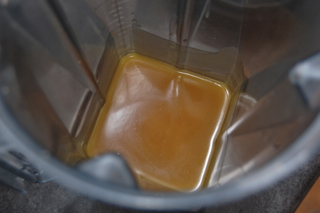
Opaque but still fluid

Now turn the blender on to a lowish speed and start to pour the waters in in a slow trickle. If the blender gets stuck turn it off, scrap the sides down with a spatula and turn it back on again adding a bit more of the water part at a time till the full amount is incorporated. After which the cream should look like this.

Mix in the vitamin E and essential oils of choice by hand and pour into suitable jars.
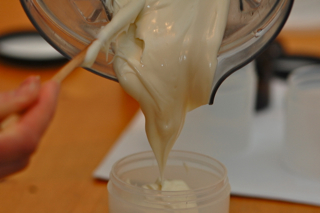
Thick but just about pourable!

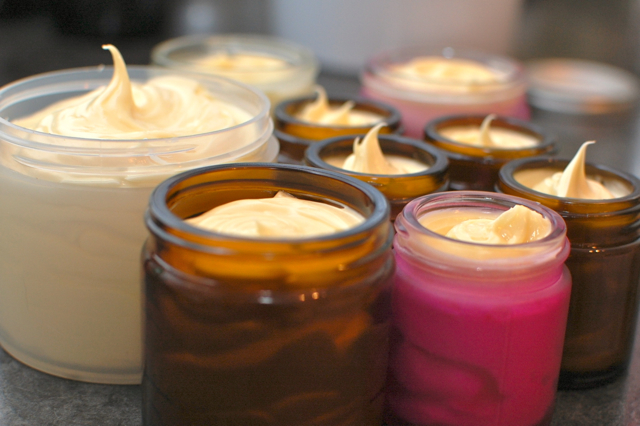
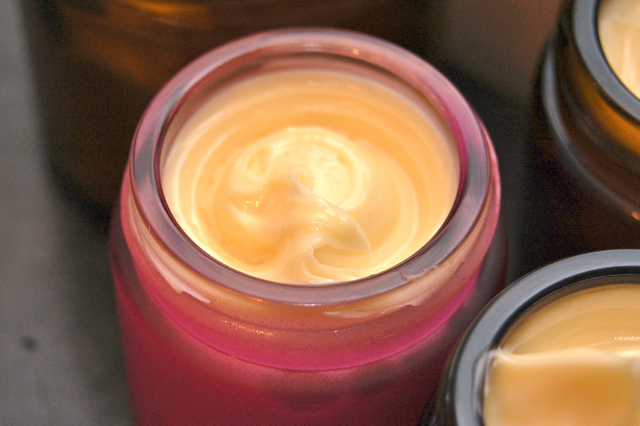
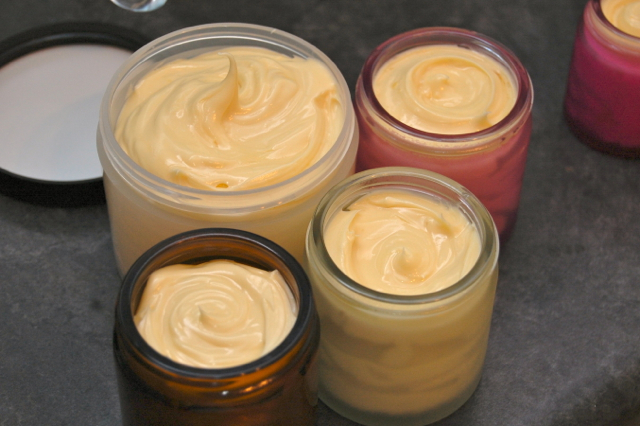
Spoon the last bits in then use a chopstick to swirl the top so it looks like the icing on a cupcake.
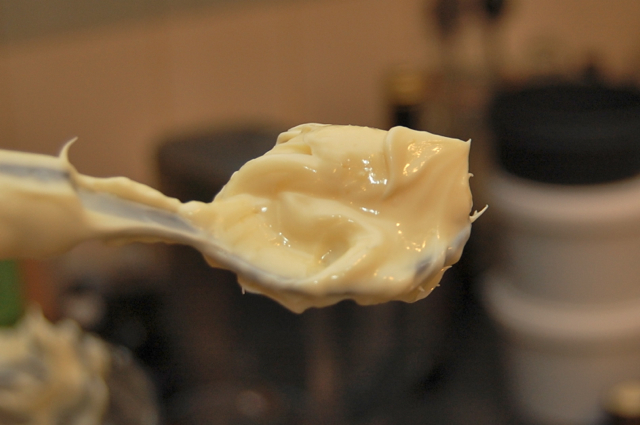
Almost edible!

This recipe contains no preservatives but if you would like it to last longer than a month you will need to add one. As it has a higher oil to water ratio compared to most creams it will last much longer however the inclusion of any water in a recipe makes it susceptible to bacteria. If you live in a warmer climate it would be advisable to store it in the fridge. I have never had mine go off and I’ve kept jars for a few months but I live in a cool climate. Also it is good to be aware that creams can be going off before they show visible signs of doing so.

You would need to add add a synthetic preservative if you wanted to ensure your creams lasted longer or were planning on selling them. (See part I of this series for more information on preservatives.) I would say if you are just making them for gifts, then keep them lovely and all natural but be sure to use them up quickly.
With the weather staying mild so late this year, Christmas has snuck up on me before I am ready for it and I realise now, with just three weeks to go, that it’s time to get into action.

Since beginning this blog, the topic I have been questioned about more than any other is how to make creams. Unlike simple salves and balms  cream making can be notoriously tricky as it requires mixing together oils and waters which naturally want to separate. There are a number of ways to achieve a nice cream with a good consistency and, over the next couple of weeks, I’ll be posting the main recipes I have used, hopefully in time for you to make some for your own Christmas presents too.

In this post I want to introduce some of the ingredients which can be used in cream making to enable you to adapt the recipes more to your own specifications. There are so many different base oils, herbs, essential oils etc. that its impossible to cover them all here, but I’ll include the main ones I have found useful after much experimentation. If you have any questions or want anything clarifying then do ask in the comments section and I will try to answer if I am able.

The three recipes I will post are:
A simple cream involving no emulsifier – my own variation on Rosemary Gladstar’s classic.
A cream using emulsifying wax – as seems to be most popular in herbal recipe books.
A cream with VE and MF emulsifiers – as used by many UK herbalists and popularised by Aromatic in their courses.

In my experience, different recipes work better for different people. I’m a firm fan of the first but others I have met prefer to use emulsifying wax. It’s all down to personal preference as some like a richer cream whilst others like something lighter with a higher water content. If your cream is for therapeutic use then you need to consider whether the condition you are treating is dry, flaky and in need of protection, in which case a richer cream with a higher oil content is preferable, or whether it is red, itchy, weeping  and hot, in which case a lighter cream with a higher water content and cooling, astringent oils will have better results.

Ingredients used in Creams include the following:

Base oils and herbal infused oils – Base oils are usually vegetable oils, pressed from nuts, seeds, kernels and other fatty parts of fruits and vegetables. Things to be aware of when choosing base oils include the consistency and smell. Some oils are rich and moisturising and good for drier skins like avocado, hemp, macadamia, argan and rosehip. Often you would only use these in a smaller percentage along with a lighter oil like almond or apricot. Oils like rosehip, hemp and macadamia can have quite a strong aroma, especially if they’re high quality and unrefined so factor this into your recipe and don’t use too much. Lighter oils that are good for oiler skins include hazelnut, grapeseed and jojoba. Sensitive skins respond well to apricot oil. As this topic is something of a vast one, I will dedicate a post to exploring some different base oils in further detail soon. Be aware that some wonderfully nutritious skin oils like borage and evening primrose have a very short shelf life, around 6 months, so ensure you get them from a good supplier and store them in the fridge. Never buy oils that smell rancid and be aware of using nut oils on those with allergies. Herbal infused oils are simply vegetable oils infused with herbs. You can read my post on how to make them here.

Solid oils and butters – These include cacao butter, coconut oil, avocado butter, mango butter and shea butter and they are rich and moisturising as well as adding body to a cream. For a lighter effect which sinks in to the skin easily use coconut, or for a rich, nourishing hand cream opt for shea. Cacao is nice in both body and face creams and, if you get it food grade, it lends a delicious chocolatey aroma to your finished product.  Somewhere between a liquid oil and beeswax or plant waxes in consistency, fats will partly absorb into the skin but will leave something of a protective film behind.

Beeswax and plant waxes – These thicken and add body to creams and also help a little with emulsification. They are not well absorbed into the skin creating a protective barrier that helps it maintain its own moisture and keeps it hydrated, especially during these wintery months with their high winds.

Waters – These include spring water, floral waters, herbal teas and aloe vera. You can vary them endlessly to suit your purpose. If you are making a plain base cream try using just spring water or if it’s a luxury face cream then use rose floral water. If you want a soothing cream with anti-inflammatory properties then try a strong tea of chamomile and calendula.

Vegetable Glycerine – Glycerine is a sweet, syrupy, clear liquid that helps draw moisture to the surface of the skin. In very dry climates it can apparently take the moisture from deeper layers of skin so best to avoid using it, but if you live in the damp UK, it can be a nice addition and improve the consistency of your creams.

Tinctures – A small proportion of a suitable herbal tincture will add therapeutic value as well as helping to preserve your cream. Try calendula in a soothing cream, comfrey in a bruise healing cream or yarrow in an anti-inflammatory cream. Do beware though that alcohol can irritate sensitive skins.

Essential Oils – The volatile oil content of the plant is distilled, pressed or extracted with solvents leaving a highly concentrated and powerfully aromatic liquid that can be used for strong therapeutic benefits or simply to make the product smell delicious.

Emulsifiers – These help the water and oil parts of a cream to mix and leave a homogenous finish. Common ones include emulsifying wax, vegetal and VE/MF emulsifiers all derived from vegetable sources, albeit after some intense processing! Another commonly used and readily available emulsifier is borax, though I have heard mixed reports of its safety and prefer not to use it myself.

Vitamins and minerals – These can be added to creams and usually come as a powder or in liquid form. Vitamins A, C and E are the ones most commonly used as they are good anti-oxidants and can help prevent oils going rancid.  Sometimes minerals like zinc are added to sun creams to create a barrier against the suns rays.

Natural preservatives – These include rosemary extract and grapeseed extract. Both are powerful anti-oxidants that can increase the shelf life of creams. They have some anti-bacterial action but most agree it is not powerful enough for products sold commercially. Grapefruit seed extract is more powerfully anti-microbial but there is much evidence out there that suggests it is harmful so I suggest reading the research yourself before using it.

Synthetic preservatives – Creams are much like food. If you plan to use them quickly (how quickly will depend on the recipe) and keep them cool then you have no need to go down this route but if you are planning to keep them for longer than a few weeks or if you wish to sell them you will need to add a synthetic preservative which will protect against moulds, yeasts, bacteria etc. Though there is conflicting evidence as to whether all types of parabens are carcinogenic, I personally avoid them altogether. Some of the safest ones seem to be Preservative 12 and Preservative Eco, both sold by Aromantic. I often avoid using these where possible but for creams with a high water content they are always necessary.

I will post the first recipe in the next couple of days so check back soon.

Zen Kitties know there is a big difference between pain and suffering.

Pain may be unavoidable in life as we will all experience discomfort, sickness, losses and accidents at some point. Much as we try, we cannot control every facet of our existence at all times.

BRAMBLE!!!!!!!

What we can control however is how much of this pain we turn into suffering. Suffering is what happens when our mind takes hold of the pain we experience and turns it over and over, creating anxiety, restlessness, turmoil, insomnia, depression and any number of other ills.

The Zen mind allows everything to be just as it is. Even in experiencing pain we are free because we allow it to come and go without struggle.

Then we can get back to the much more important business of chilling out.

Early Winter Sun

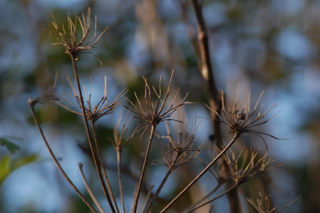
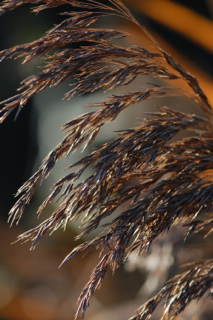
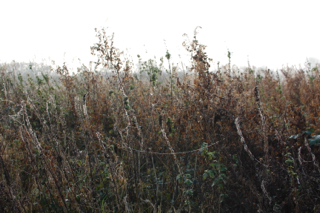
Despite the warmer weather we are merely days from December and, even if the temperature is mild, the low winter sun orientates me at the change of season. I love to go out walking on days like these when the sun gleams through the leaves and even the dead stems of roadside plants are lit up with beauty.

The juxtaposition of vibrantly green grass, golden leaves and bare grey/brown branches against a bright blue sky makes for a starkness that is at once deathly and vibrantly alive.

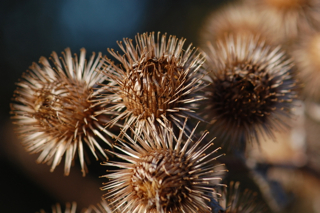
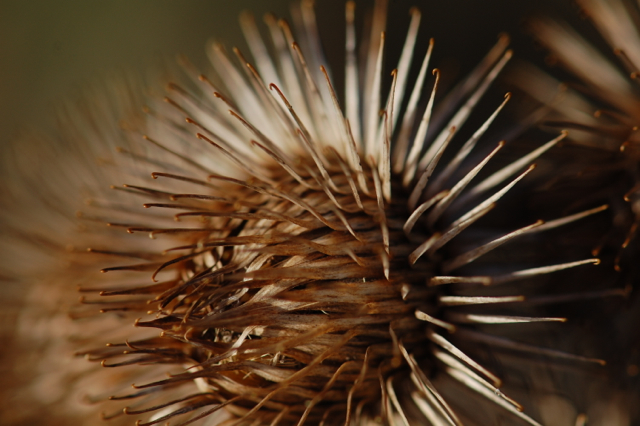
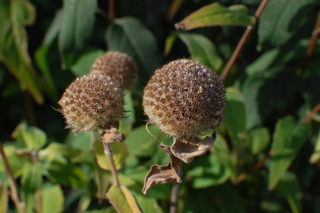
The Burdock seeds catch on my coat and ensure I slow down enough to appreciate their perfect form and subtle beauty. Can you see all the little hooks they use to ensure they are carried near and far? Look a little closer…

Rosehips still bedeck the hedgerows with little flashes of colour whilst Hawthorns are now browning and becoming dull. Their sinewy branches and great thorns look somehow prehistoric and wild as the leaves die back and expose them fully in all their savage beauty.

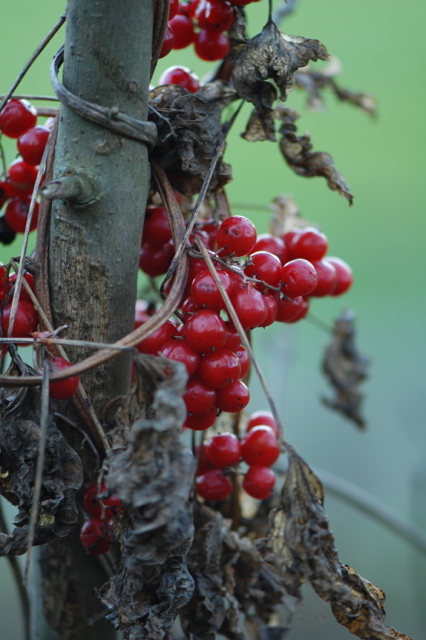
One of the plants that catches my eye most at this time of year is the wonderfully witchy Black Bryony which winds and twines amongst the branches of other plants. She dangles temptingly juicy red berries like little Christmas ornaments draped through the trees, just ready to seduce the unwary passer by into an eternal sleep. Though it was once used sparingly in herbal medicine, the whole plant is highly poisonous. Maude Grieve tells us, “Death in most painful form is the result of an overdose, while the effect of a small quantity, varying not with the age only, but according to the idiosyncrasies of the patient, leaves little room for determining the limit between safety and destruction.”

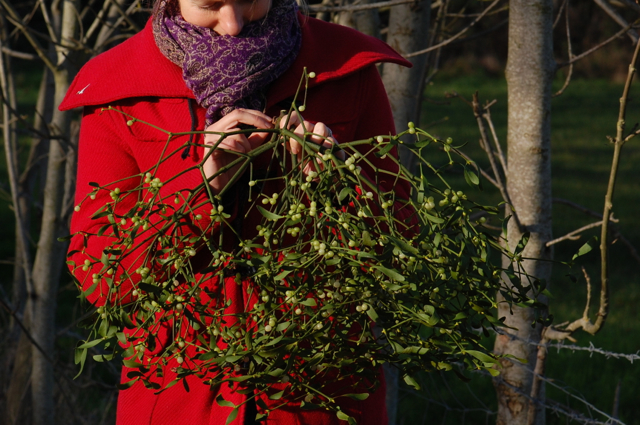
And on the subject of Christmas decorations. It’s almost time to hang some mistletoe in our house, just to ensure a maximum number of kisses throughout the month of December!

A Simple Breast Massage Oil

I love to make up blends of herbal oils and often give the people I see a little bottle of something to use externally alongside taking their herbal tinctures or teas. It could be a neck and shoulder rub, a stomach massage oil, a foot massage oil or something for helping to heal scar tissue. I believe that taking some time to massage a part of your body that needs some love and attention is a wonderful technique for healing as it brings our awareness to the places that need it and encourages an attitude of self care and nurturing. The blend I have given out more than any other is my breast massage oil so I thought I would share the recipe with you here.

Before I started to see clients I don’t think I was really aware of how many women suffer from sore or tender breasts, often with lumps and swellings, which can vary a lot with hormonal fluctuations throughout their cycle. The breasts are made up of glandular tissue (which includes lymph nodes and milk producing lobes), fatty tissue and fibrous or connective tissue. The lymphatic system does not contain its own pump so it relies on the movement of muscles to keep it flowing nicely around the body. As there are no actual muscles within the breasts themselves, massage becomes even more important for healthy breasts and lymphatics.

You can use any nice base oils to perform the massage but herbal infused oils add extra therapeutic value alongside that special something which I like to think of as the plant’s own consciousness. The base of my breast massage oil is violet (Viola odorata) infused in sweet almond oil, though a good quality, organic sunflower oil could also be used quite happily.

If you don’t have any violet infused oil (and now is of course the wrong time to be making it from fresh) you can use dried plant material infused into the oil using the heat method which I outlined in this post. I personally prefer the fresh oil because the flowers impart a delightfully gentle aroma but using the dried leaf will still be effective.

Calendula oil, which can be found in many health food shops, makes a lovely substitution, especially when mixed 50/50 with lavender infused oil which can be made from dried flowers all year round. A small amount of yarrow or chamomile infused oil makes a useful addition if there is inflammation. Rosemary infused oil can be added at about 25% if there is a need to increase circulation and many people also recommend dandelion flower infused oil. Rose infused oil is another delightful addition, though I tend to stick with a few drops of the essential oil as it has a stronger aroma which resonates so much with the heart and with feelings of self-love. You can also add castor oil which is useful for removing congestion but, as it’s ridiculously sticky, I’d keep it to around 5%.

If you really want to keep things simple then stick with a plain almond, apricot or coconut oil, all of which have wonderful healing properties of their own.

The recipe I use as an all purpose breast massage oil is as follows:

28ml Violet infused oil
2ml vitamin E oil
2 drops each geranium and rose essential oils
Combine all the ingredients in a 30ml bottle and use to massage the breasts regularly.

Geranium essential oil is one of the best oils for balancing the endocrine system so is lovely for sore breasts due to fluctuating hormone levels. It also has a very balancing effect on the mind and emotions too.

When massaging the breasts I like to do a combination of circular movements with gentle kneading and a sort of pulsing action which is great at getting the lymph flowing. There is a good video here which outlines some techniques for this lymphatic pumping action.

Another great tip for getting the lymphatics flowing well in the breast area is to splash them with cold water after a hot bath or shower. Alternatively you can alternate a few splashes of hot water (though not unbearable of course) with cold water for a few minutes.

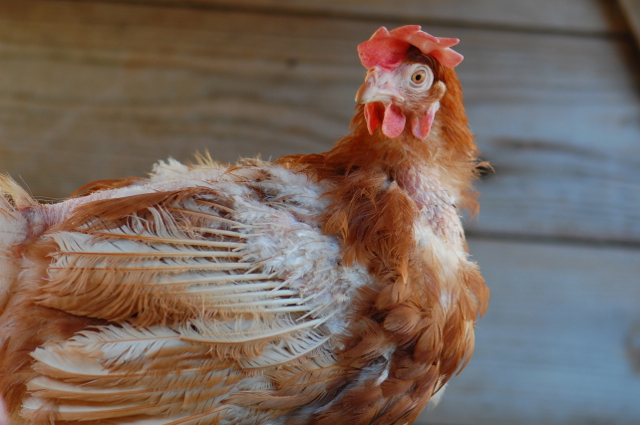
Finally, (in something of an aside) while we are on the subject of lovely ladies with voluptuous breasts, regular readers of this blog may remember the rescue hens we adopted during the summer. One of them, the delightful Primrose, has shot to stardom and is appearing in the British Hen Welfare Trust’s 2012 calendar, having fought off hundreds of other hopefuls to become Miss June.

This is how Primrose looked when we first got her:

And this is her calendar girl shot, only a couple of months later.

All the money from the sale of the calendars goes to support the charity, so if you or someone you know is a hen lover, you can pick up a copy here!

This Too Shall Pass

Many have heard the story of the great king and his search for truth but, as this evening is a cold one and I hope you are sitting at home around the fire, perhaps sipping some chai or a little sloe gin, I shall wait for you to get comfortable and then I will tell it. At least I will tell it as I think it may have happened.

Once upon a time, in a land far away to the east, there lived a wise old king. His palace was great, his court was fine and his accomplishments were many. He never wanted for anything and was constantly engaged in one entertainment or another. He was very learned and had read the great treatises and scriptures of many a land and many a faith. Though he had realised much and people far and wide thought him to be deeply wise, still he felt something was missing.

So one day he gathered together the very cleverest of his advisers and all the wise men and great sages of the land and he charged them with finding something that was always true. Something that was true when he was happy and true when he was sad, that was true in the springtime and true in the winter and that was true in his greatest victories and also in his greatest defeats. The wise men were perplexed, ‘what is that which is always true?’ they asked themselves. They each set off to the far ends of the Kingdom and then further beyond still, to many distant lands, intent on discovering this truth that the king had asked from them. They agreed to meet back at the Kingdom after one full year and tell the King what they had discovered.

All but one.  He stayed in his little cottage at the edge of the woods and tended to his garden. When the villagers and courtiers passed by they said, ‘ that is the lazy wise man, he hasn’t even gone to meet with the priest in the next town, just sits in his garden watching the birds and the clouds or gazing into the trees. The King surely won’t be pleased with him.’  And so the year went on and the wise man observed how the spring turned to summer which turned to autumn and how the plants in his garden died and returned again. He saw how the birds came and went and even the great trees would pass eventually, and when they did, they would give new life to many insects and creatures.

After the year had gone by all the wise men met up in the Court ready to astound people with all the clever things they had learnt. They told tales and riddles from lands far and near, spoke words of subtlety and cunning and made every man’s head present hurt with the thinking. But the King was still not satisfied. Finally our own wise man, from the cottage by the woods, stepped forward and said to the king, ‘Sire, I have seen that which is true. It is true in my garden and true in the forest.’ At this the people laughed, ‘silly old fool’ they thought. ‘It is true throughout your Kingdom and true even to the very ends of the Earth. And it is true in my own heart.’

‘So’ said the King, ‘what is this truth of which you speak?’

The old man bent his head and spoke softly as the last leaves of Autumn drifted through the windows and on to the Palace floor. ‘And this too shall pass’ he said, then turned away and walked back to his cottage in the forest.

At last the King was satisfied.

A whole year has rolled round since Zen Kitty’s last autumn retreat, once again leaving me, Witch’s Kitty, to wish you a happy Samhain.

Whilst Zen Kitty spends most of her time reclining in meditative equipoise, we familiars have a busier life, ensuring that the Hawthorn syrup doesn’t bubble over, that the chamomile tea is perfectly brewed and observing the humans’ haphazard gardening attempts with a disapproving eye.

Above all though, our task is to remind them continually about the whisper of magic that underpins all life, from the quivering leaves, to the scurrying squirrel to the sound of their heartbeats as I lie on their chests in the early morning. Humans tend to believe that magic is something they do, another thing to control in this, at times frighteningly confusing, life. But we know, and serve as constant reminders to them, that magic is what you are, not what you do. It is the very fabric that you are woven from and you can no more be apart from it than you can from your own breath.

Remember this as the Celtic year draws to a close and the New Year begins, first with the darkness of winter when we sow our intents and wishes, then into the brightness of spring, when all things burst forth in wonderment.

Wishing you a most magical and happy Hallowe’en!

A few people commented that they would like the recipe for the soup and herbal stock that featured at the end of my last post so, somewhat belatedly, here it is!

Herbal stocks are a great way of getting extra nourishment into our diets, especially at this time of year when we can use small amounts of immune supporting herbs to sneak extra medicine into our day through the most natural of all methods, our food.

When making a herbal stock I use whatever I happen to have in the cupboard so it will vary every time. This also means you can be very fluid with it and if you don’t have all the ingredients it’s no problem, you can just use one or two. This stock below had a number of different herbs in it but you could do equally as well using just echinacea root and elderberry or any of the other ingredients listed depending on your preference. You can play about with other herbs too, I remember Danielle mentioning that she uses astragalus root in her soups.

When making stock, I tend to just use herbs that I would not blend into the soup directly such as tough roots and bay leaves etc. The ginger, rosemary, chilli, powdered cinnamon and other soft ingredients I generally put straight into the soup as normal, but as this is merely a guide, feel free to play about as you feel inspired.

Herbal Stock Ingredients (for a soup to serve 4):

1 tsp Echinacea root – for boosting the immune system
1 tsp dried Elderberry – for nourishing the immune system
1 tsp dried Hawthorn berry – for supporting heart and circulation
1 tsp Burdock root – for gentle cleansing and nourishing
2 Bay leaves – for flavour and supporting digestion
4 slices dried Reishi mushroom – for nourishing the immune system (and too many other things to go into here!)

Simmer all ingredients together in about a litre of water for 20 mins approx then strain and add into your soup.

Soup Ingredients:

1 squash or small pumpkin
2 medium onions
6 cloves garlic
chunk of ginger to taste
coconut oil for frying
Herbal stock
1 tsp turmeric powder (optional)
salt and pepper to taste

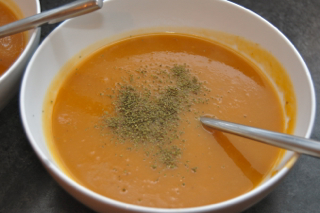
This soup is an incredibly simple one which just involves lightly frying the onions, garlic and ginger in the  coconut oil, then chopping the squash and adding to the pan with the turmeric, salt, and pepper. Stir for a few mins then add the strained herbal stock. Simmer until the squash is soft, blend and enjoy with any number of delicious, seasonal toppings…

sprinkled with nettle seeds…

topped with steamed kale (as inspired by my friend Deborah)…

or, my personal favourite, a large helping of finely sliced mushrooms fried in a little oil and tamari.

I hope you are also enjoying lots of seasonal and nourishing goodies to keep you strong in body and mind.


More Autumnal Delights

I have never been able to decide which is my favourite season, they all have their beauty and each fills me with its own unique sense of magic. Right now though, I can’t imagine what could be better than these bright autumn days and chill evenings spent reading and drinking chai by the first fires of the cold months to come.

There are so many things to love about this time of year. The crackle of fallen leaves…


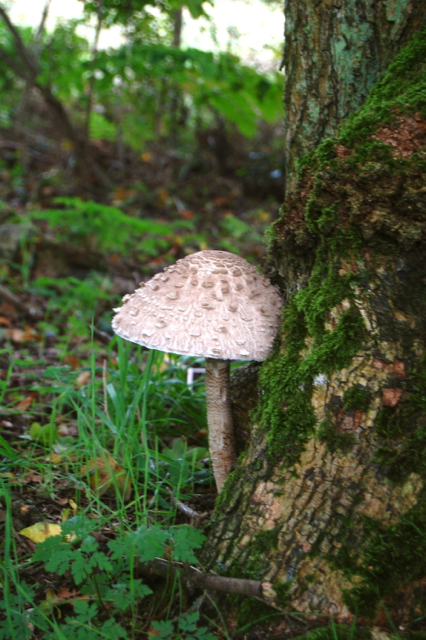
and the fantastic fungi.


This last one I believe is Ganoderma adspersum a native relative of the much celebrated Reishi mushroom. You can read Stephen Church’s account of it’s medicinal uses here.

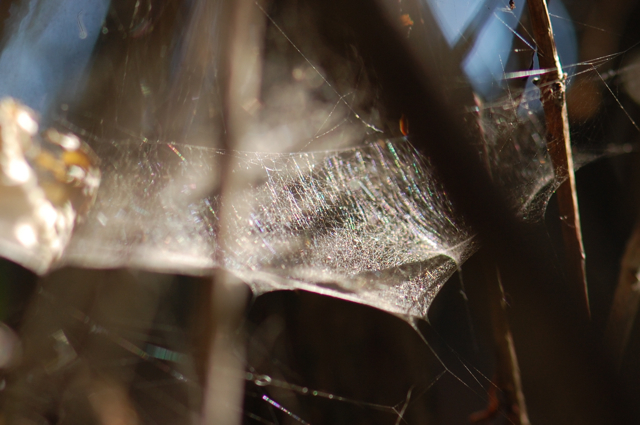
The glistening cobwebs that catch the light and leaves as if gathering mementos of the season’s fading beauty.

And of course the trees themselves, all burnished bronze and breathtaking in their passing.

Then there is the food too. Squashes and berries, fresh walnuts cracked open with a hammer, kale and  mushrooms. From the first ripening berries through to the last fading leaves, autumn is truly a season to delight the senses.

Now is the time for nourishing our bodies, our minds and our souls with good food, rest, time spent in nature and loving company before the arrival of the harsh winter months. This simple pumpkin soup was blended with plenty of onion, garlic and ginger and topped with tamari fried mushrooms. Easy to digest and full of goodness, it’s perfect for this time of year.

After spending this morning sorting out receipts and trying to get my tax return organised I was more than ready to pass a bit of time in the garden and then come indoors to make up some nice nurturing body care recipes.

First up was some face washing grains. Washing grains have a long history of use in various cultures and are essentially a mix of powdered clays often with ground almonds, oats or similar gently exfoliating natural substances. My first encounter with them was when I was a teenager and used The Body Shop’s Japanese Washing Grains (anyone remember them!). Rosemary Gladstar also has a lovely recipe which she calls her ‘Miracle Grains’ which this version is loosely based on.

Ingredients:
1/2 tbsp dried chamomile flowers
1/2 tbsp dried lavender
1/2 tbsp dried rose petals
1/2 tbsp dried calendula flowers
2 tbsp porridge oats
2 tbsp ground almonds
2 tbsp green clay
2 tbsp kaolin clay

Grind the herbs and oats in a blender to a fine powder then stir in the clays and ground almonds. You can substitute the herbs for anything you fancy, elderflowers and cowslips are two of my other favourite skin herbs. I made double this quantity so I could store half the powder dried to be mixed up at a later date. The other half I mixed well with the following ingredients.

10ml herbal infused almond oil
4 tbsp vegetable glycerine
2 tbsp honey

This gave me a thick paste which can be easily mixed with a bit of water and massaged onto damp skin, then washed off. Don’t mix your grains with water in the pot unless you plan to use them up within a week as it will encourage spoiling. This way they should last a couple of months as long as they are kept in a cool dry place.

I used them this evening and my skin now feels very smooth! My husband has just tried them too and his verdict was ‘amazing’, which is always good to hear.

Being a general disliker of dentists, I’ve wanted to make up a herbal mouthwash for a while and finally got round to it this evening.

I used the following tinctures and essential oils which I’ll keep undiluted in the bottle, mixing 2.5 ml with a little water just prior to use. I will then swill for as long as I can manage and spit out.

Herbal Mouthwash Ingredients:
25 ml Calendula tincture
25ml Myrrh tincture
25ml Lavender tincture
25 ml Echinacea root tincture
5 drops each lavender and peppermint or spearmint organic essential oils

This, if used regularly, should keep the gums and teeth in good nick and prevent any unnecessary trips to the evil ones in white coats with their frightening array of torture implements.

I hope you had a good Sunday too.

N.B. Mint essential oils should be avoided by anyone with epilepsy and in pregnancy or with children under 12.